
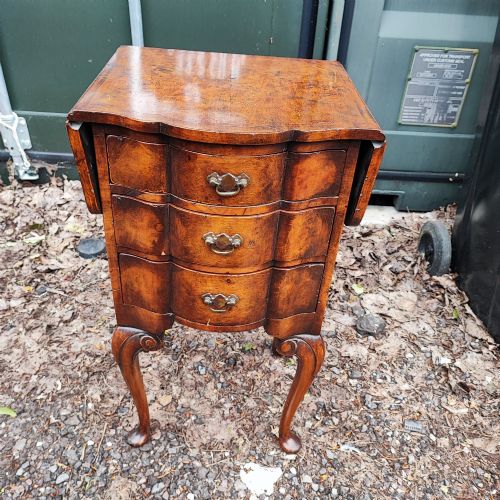



Small Walnut Drop Leaf Table
A small walnut drop leaf table brings practical folding timber into compact rooms, offering rich grain and historic utility.
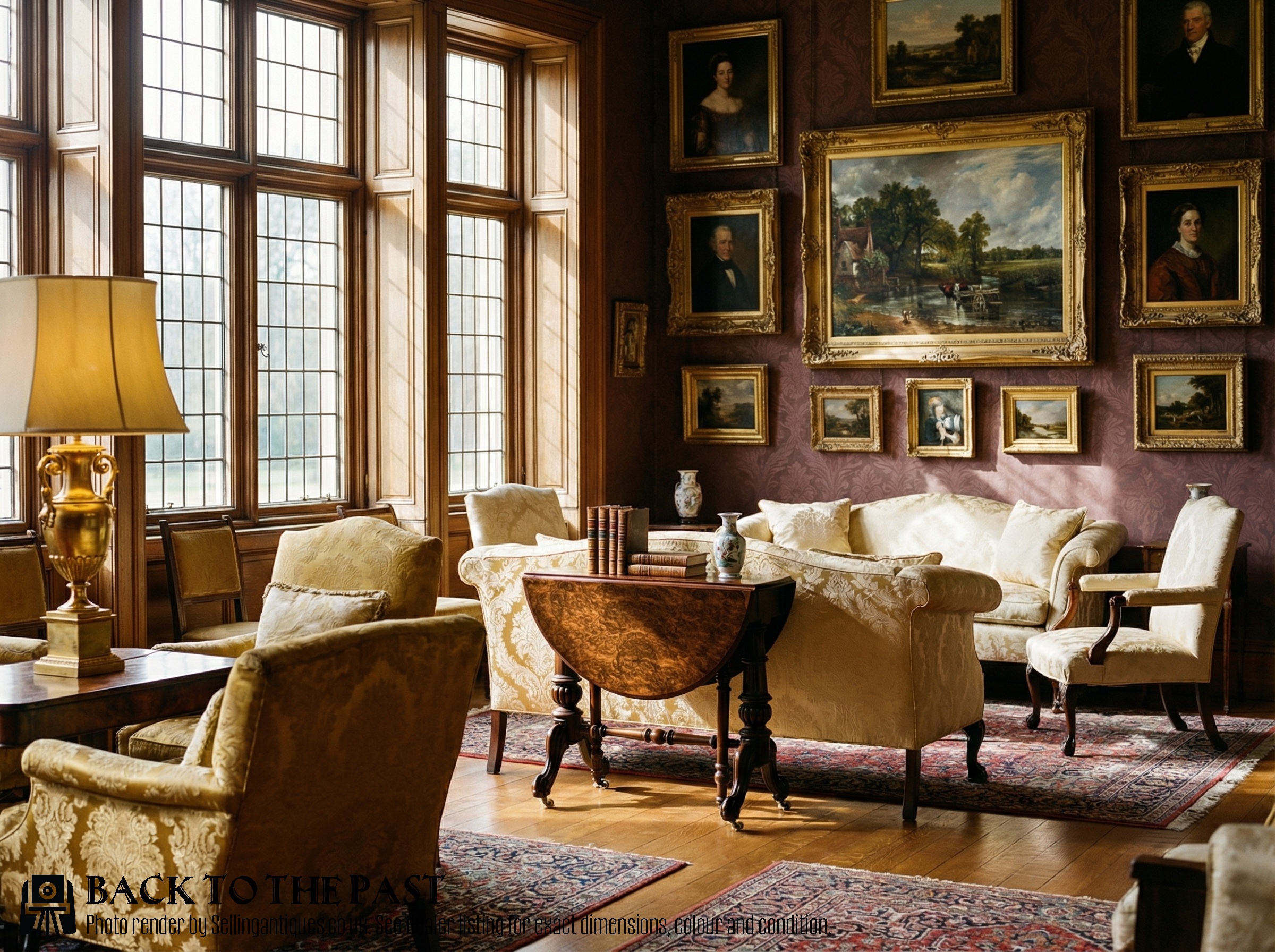
Small Walnut Drop Leaf Table
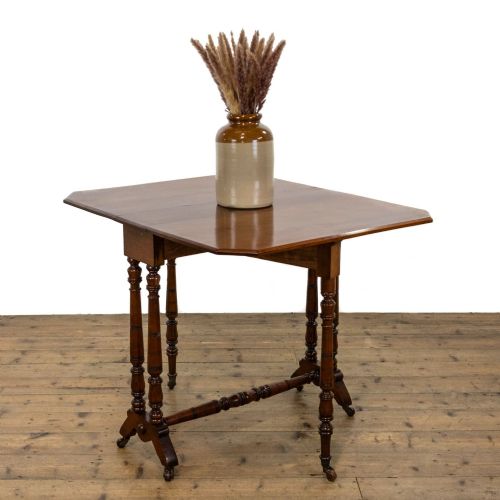
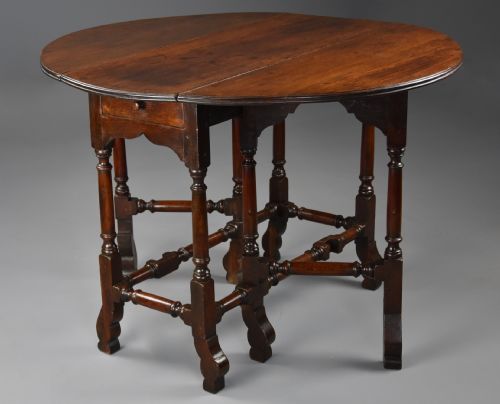
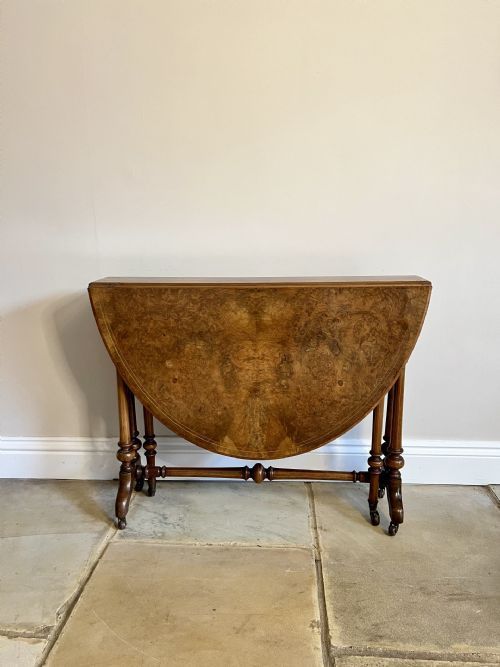
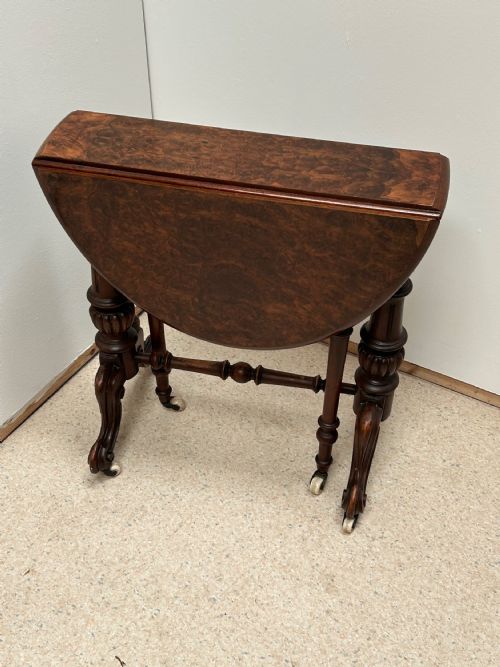
A small walnut drop leaf table is most frequently encountered as a Victorian Sutherland table, alongside gateleg, occasional, and coffee table formats. These compact pieces date predominantly from the nineteenth century, with examples extending into the Edwardian and later periods.
Makers utilised various forms including oval and rectangular drops, miniature proportions, and slender gateleg supports designed to tuck beside seating or stand against walls when folded.
How they were made
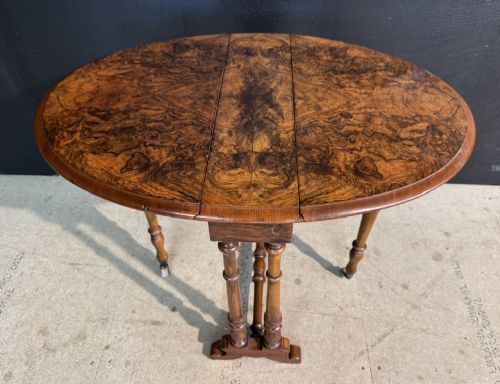
Cabinetmakers selected walnut and burr walnut veneers for their figured grain, frequently combining them with solid timber frames and applying wood inlay or marquetry details.
Structural joints relied on traditional turning for legs and gatelegs, incorporating brass hinges and castors to manage the folding flaps.
Listings span the Victorian era, Edwardian period, and early twentieth century, constructed primarily in walnut, burr walnut, and mahogany.
What varies in quality
Quality rests in the choice and matching of burr walnut veneers, the crispness of marquetry work, and the stability of the folding mechanism.
Finer examples maintain tight joints in the gateleg action and retain a deep, polished patina across the walnut surfaces.
The Small Walnut Drop Leaf Table Glossary
- Sutherland table
- A narrow drop leaf table with exceptionally slender legs and gatelegs that support wide folding leaves.
- Burr walnut
- Timber taken from a tree growth that produces intricate, swirling grain patterns highly prized for decorative veneer.
- Gateleg table
- A table with hinged legs that swing outward to support the drop leaves when raised.
- Marquetry
- Decorative patterns formed by fitting together thin pieces of wood veneer on a surface.
Small Walnut Drop Leaf Table: Frequently Asked Questions
Where do I put a small walnut drop leaf table?
These compact tables fit neatly beside seating or against hallway walls when folded down, taking up minimal floor space in smaller rooms.
Opening the leaves provides extra surface area for lamps, drinks, or books when guests visit.
How do I identify a Victorian Sutherland table?
Look for the characteristically narrow central underframe paired with pivoting gatelegs that swing out to support wide, hinged drop leaves.
Most surviving examples utilise burr walnut veneer and delicate turned supports dating from the nineteenth century.
What is burr walnut?
Burr walnut comes from a wart-like growth on the walnut tree, yielding dense, swirling patterns of wood grain.
Cabinetmakers sliced this timber into fine veneers to adorn the top surfaces of occasional and drop leaf tables.
Are these tables sturdy when opened?
The gatelegs swing outward from the central frame to hold the drop leaves securely in place during everyday use.
Original brass hinges and solid timber framing ensure the folding flaps remain level and stable.