


Compact Drop Leaf Occasional Table
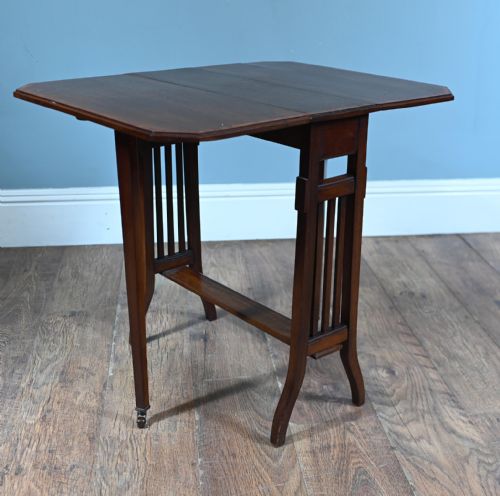
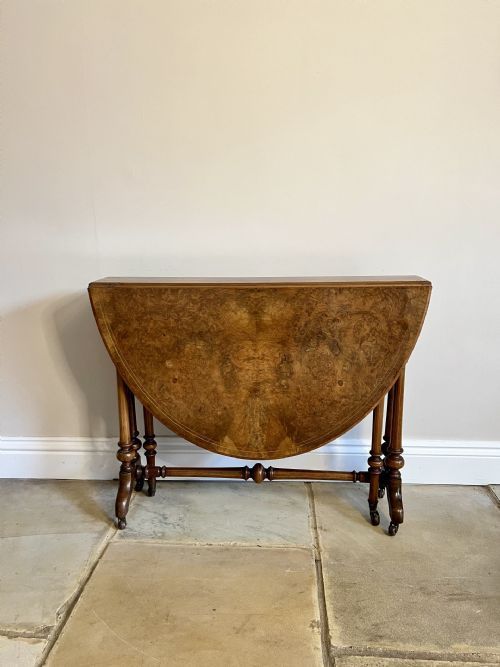
These compact drop leaf occasional table examples provide versatile folding surfaces crafted from timbers such as mahogany, walnut and oak across Victorian and Edwardian periods.
Compact Drop Leaf Occasional Table
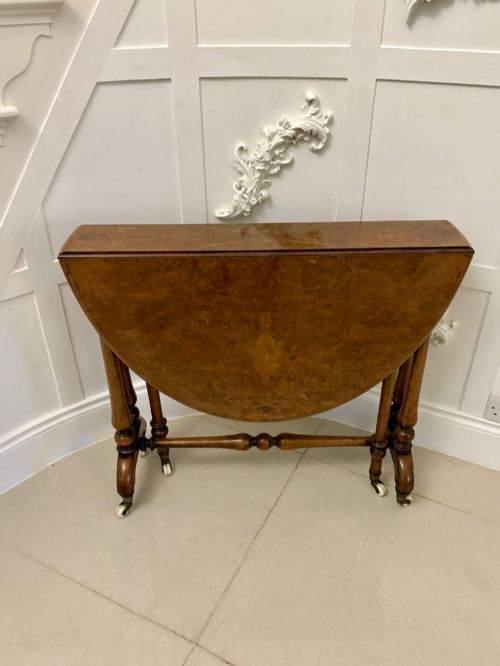
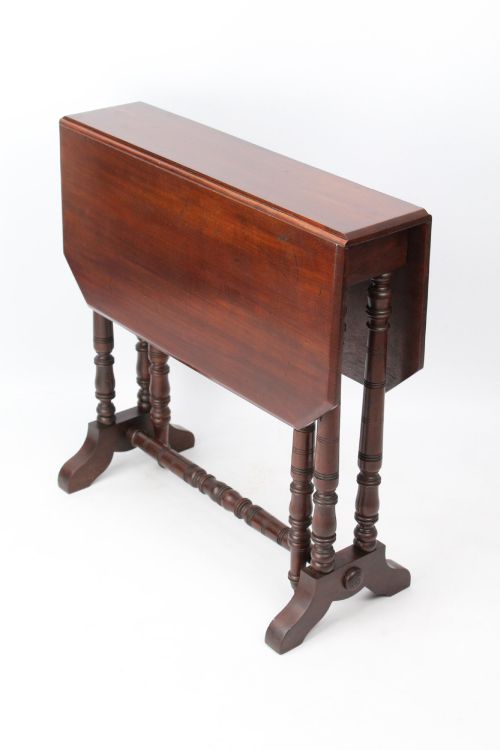
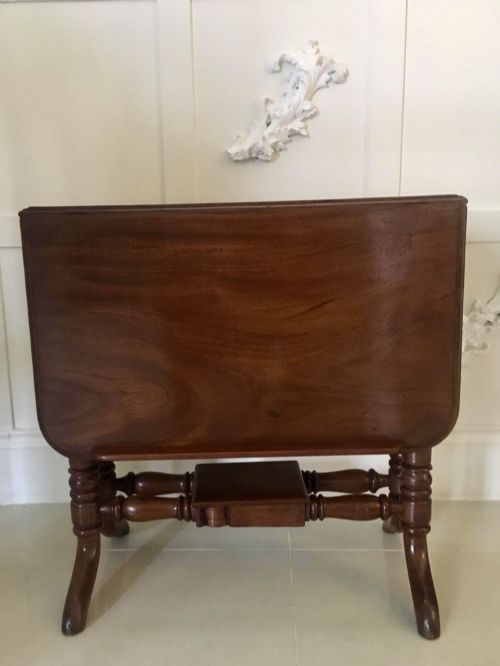
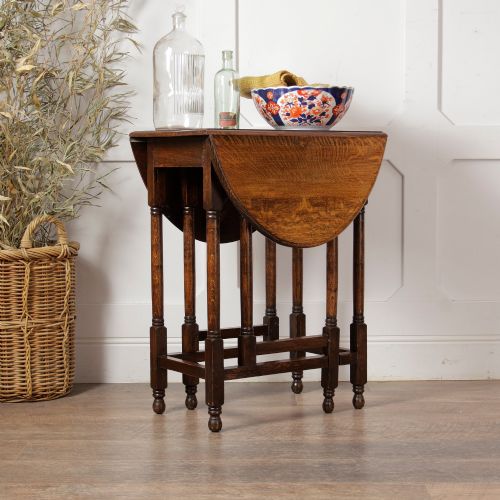
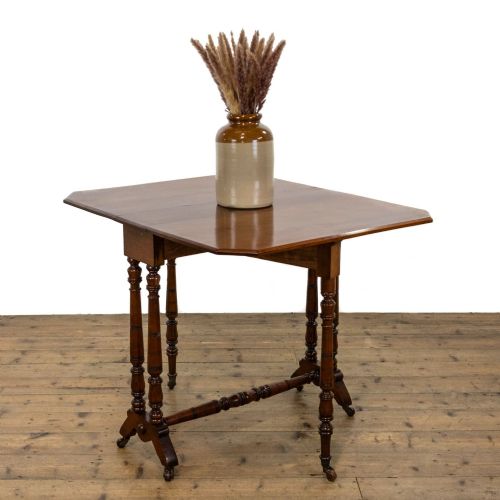
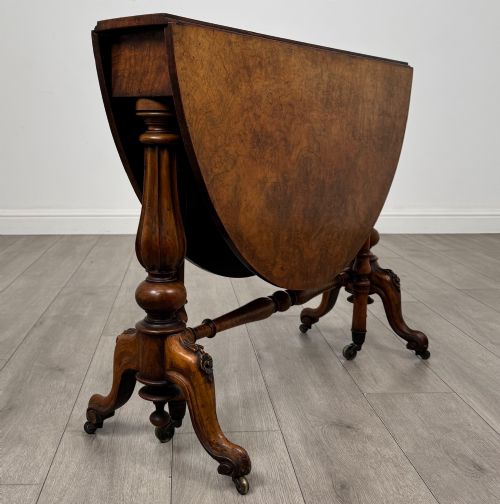
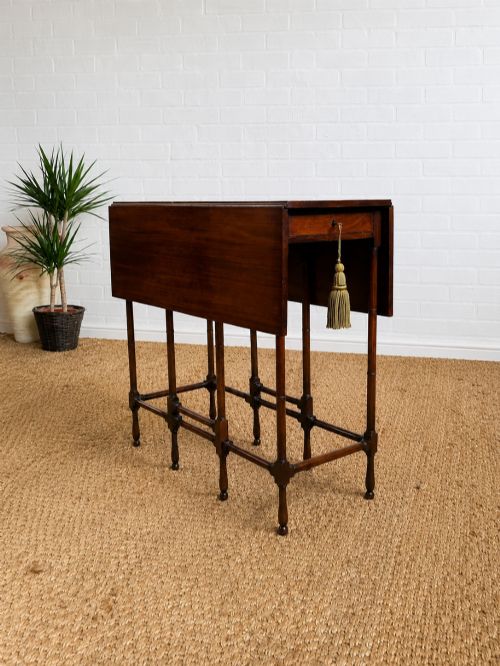
A compact drop leaf occasional table is a practical folding furniture piece designed to save space in smaller rooms. Buyers searching for a compact drop leaf occasional table generally encounter nimble gateleg designs, slender spider leg constructions and particularly the characteristic narrow Sutherland table format.
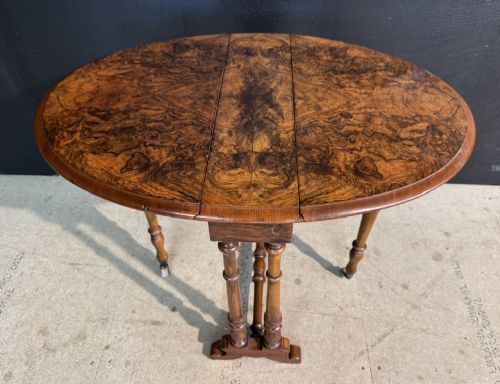
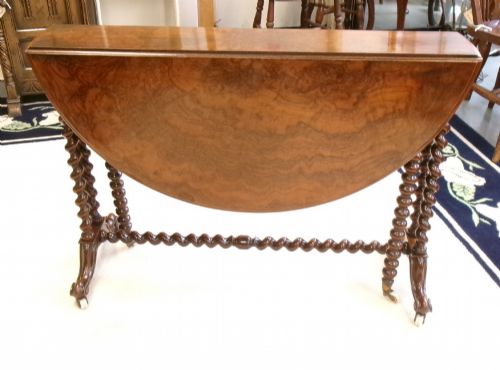
The pieces on this page span the Victorian and Edwardian eras alongside specific examples from the eighteenth, nineteenth and early twentieth centuries. Timber choices run from figured burr walnut and rich mahogany to sturdy oak, satinwood and rosewood.
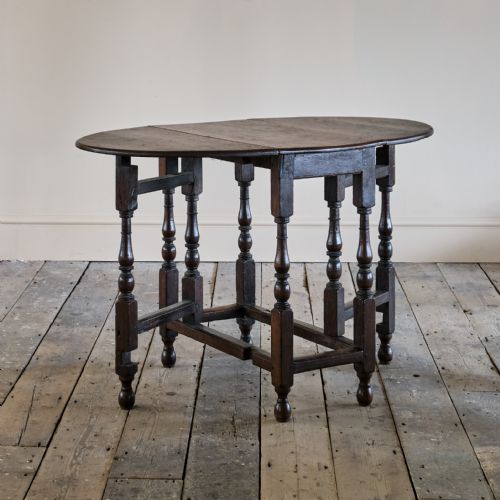
Forms vary from reading tables and tea tables to coffee tables and small side tables. Many incorporate folding flaps supported by swinging gate legs, allowing the surface area to expand or contract as needed.
How they were made
Cabinetmakers utilised solid and veneered hardwoods, applying figured burr walnut and mahogany veneers over stable secondary timbers to create rich decorative surfaces. Tables often feature turned legs, such as bamboo-turning on Edwardian examples, or delicate spider legs that provide rigid support with minimal visual weight.
Hinges and gateleg mechanisms allow the drop leaves to pivot smoothly and lock securely into position when raised. Inlaid details, marquetry and contrasting timber stringing appear on refined Edwardian and Victorian pieces to embellish the tops.
Listings feature woods including mahogany, burr walnut, oak, satinwood, rosewood and brass fittings across Victorian and Edwardian periods.
What varies in quality
Quality reveals itself in the selection of timber figures, particularly the grain and depth of burr walnut or figured mahogany veneers chosen for the top. Superior examples demonstrate tight joinery at the hinge knuckles and sturdy pivoting action in the gate legs that keeps the extended leaves level.
The refinement of the turnery on the legs and the crispness of any inlaid marquetry or stringing distinguish finer workshop production from standard utility items. Original finish, preserved patination and sound structural integrity elevate a piece above simpler utilitarian versions.
Maple and Co
The Compact Drop Leaf Occasional Table Glossary
- Sutherland table
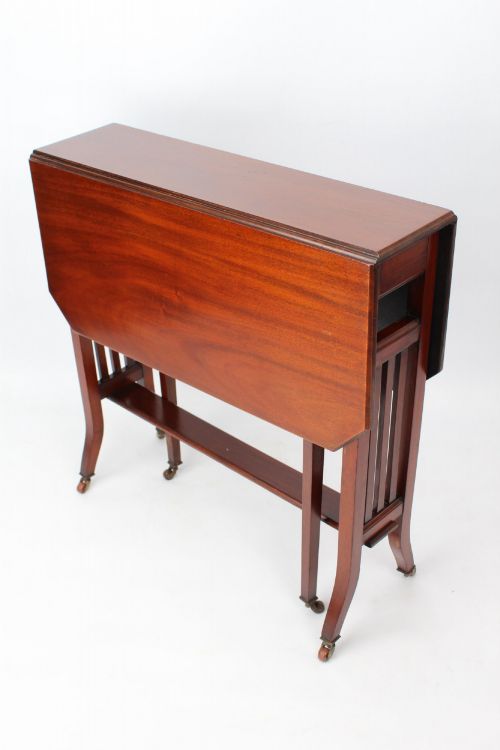
- A narrow drop-leaf table with exceptionally slender folding flaps and gate legs, designed to fold down flat when not in use. It became immensely popular during the Victorian period for drawing rooms and parlours.
- Gateleg table
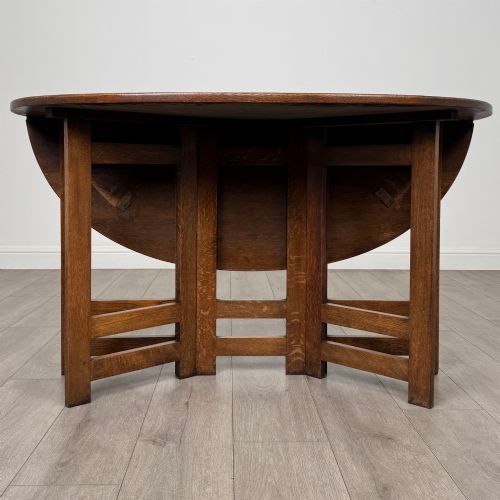
- A table featuring one or more hinged legs that swing outward like a gate to support a drop leaf. This clever framing provides sturdy weight distribution beneath an expanding surface.
- Spider leg table
- A small occasional table supported by exceptionally thin, delicate turned legs braced by low stretchers. The style requires dense hardwoods like mahogany to maintain structural stability.
- Burr walnut
- A highly prized wood timber taken from the gnarled growths on walnut trees, yielding complex swirling grain patterns. Cabinetmakers sliced it into thin veneers for decorative table tops.
- Pembroke table
- A drop-leaf table featuring two hinged flaps on opposite sides and frequently incorporating a small drawer. The design originated in the eighteenth century as a versatile breakfast or writing table.
Compact Drop Leaf Occasional Table: Frequently Asked Questions
What is a Sutherland table?
A Sutherland table is a specific type of drop leaf table characterised by very narrow fixed centre leaves and long folding flaps. When the leaves drop down, the table occupies minimal floor space.
Victorian makers built these tables extensively for smaller drawing rooms where furniture needed to be moveable and adaptable for serving tea or reading.
How do you use a gateleg table?
To use a gateleg table, you lift one or both of the hinged drop leaves and swing the supporting leg outward from the frame. The pivoting leg locks beneath the leaf to bear the weight.
This mechanism allows the table to function as a compact side console or open up into a larger surface for entertaining.
What woods were used for these tables?
Cabinetmakers primarily used mahogany, walnut, burr walnut and oak across the nineteenth and early twentieth centuries. More decorative pieces also incorporated satinwood, rosewood and marquetry inlay.
Softer pine appears in painted rustic furniture, while dense hardwoods provided the structural strength needed for slender legs.
How to tell Victorian from Edwardian tables?
Victorian tables often display darker finishes, heavy burr walnut veneers, and robust turnery reflecting mid to late nineteenth-century tastes. Mahogany and rosewood were dominant.
Edwardian pieces tend to feature lighter timbers like satinwood, delicate bamboo-turned legs, and refined inlay work characteristic of the early twentieth-century Arts and Crafts influence.