


Small Upholstered Footstool
These small upholstered footstool examples bring low-profile comfort and period craft directly to firesides and dressing tables.
Small Upholstered Footstool
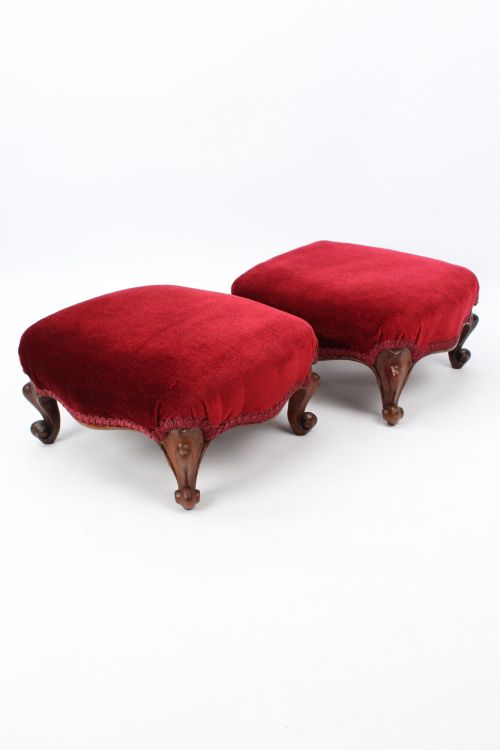
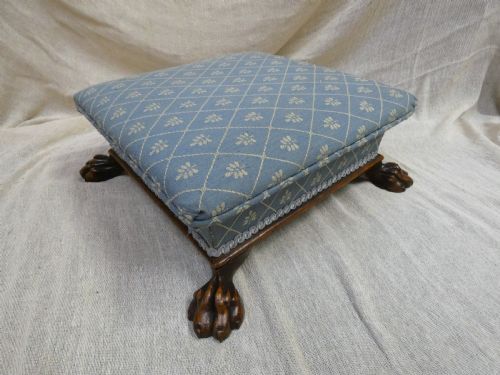
A small upholstered footstool provides a compact low seat or foot rest for fireside and dressing table use. Buyers searching for a small upholstered footstool encounter items spanning the Regency, Victorian, and later nineteenth century periods.
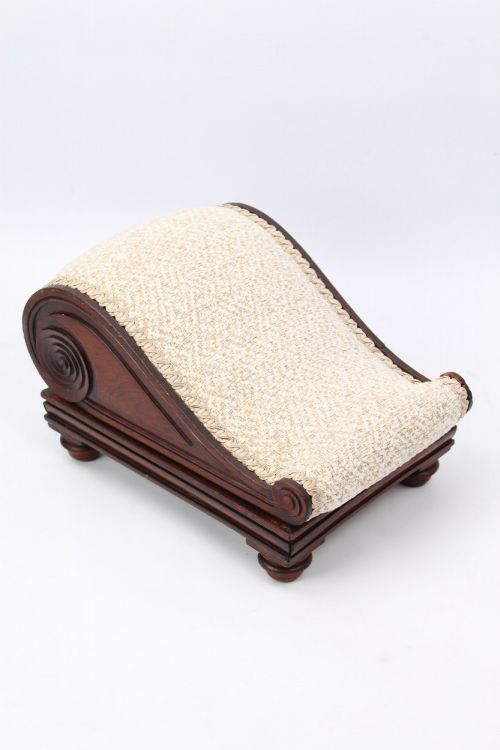
The pieces appearing here include single stools alongside matched pairs. Common forms range from simple low blocks to gout stools and X-framed resting seats.
Victorian examples dominate the selection, frequently utilising dense timbers paired with textile or needlework tops. Walnut and mahogany frames appear alongside rarer ebony or oak structures.
How they were made
Makers built these frames using traditional hardwoods such as mahogany, walnut, and oak. Timber selection defined the formality of the piece, with richly figured walnut and polished mahogany reserved for principal rooms.
Upholstery methods involved textile coverings like velvet, tweed linen, and wool tapestry. Needlework panels including petit point appear on pieces designed to rest tired feet.
Listings feature woods spanning mahogany, walnut, oak, and ebony, paired with wool tapestry, velvet, and tweed linen.
What varies in quality
Quality rests in the sculptural execution of the wooden frame and the integrity of the joinery. Carved walnut or mahogany demonstrates a higher standard of workshop output than plain turned supports.
The choice of covering material and the intricacy of the tapestry work distinguish standard examples from finer commissions. Petit point needlework and heavy woven textiles indicate superior workshop investment.
The Small Upholstered Footstool Glossary
- Gout stool
- A specialised low foot rest designed to elevate a foot affected by gout or strain. These pieces often feature an adjustable incline.
- Petit point
- A fine needlepoint stitch worked on single-thread canvas. This technique allowed makers to create detailed pictorial tapestry tops.
- X-frame
- A structural design where intersecting wooden members form an X shape beneath the seat. This form appears on Regency period pieces.
- Aesthetic Movement
- A late nineteenth century style emphasising artistic design over rigid historicism. Pieces from this movement display distinct decorative restraint.
Small Upholstered Footstool: Frequently Asked Questions
Where were footstools used?
These low seats sat primarily by the fireplace or beside dressing tables in nineteenth century homes.
They provided practical leg support during long evenings seated in upright drawing room chairs.
How do I date a footstool?
Dating relies upon identifying the primary timber, decorative carving style, and upholstery remnants. Regency pieces often show X-frames, while Victorian examples favour walnut with heavy textile tops.
Secondary woods and construction methods inside the frame further clarify the era of manufacture.
Are pairs common?
Pairs of small stools do occur within nineteenth century seating, though single examples appear more frequently.
Matched sets were typically commissioned for formal parlours where symmetrical arrangement mattered.
What fabrics were used?
Original coverings included wool tapestry, velvet, tweed linen, and detailed petit point needlework.
Many surviving pieces retain later replacement textiles applied during routine domestic reupholstery.