
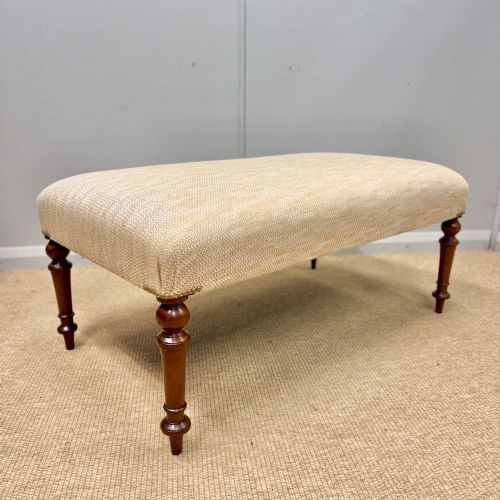
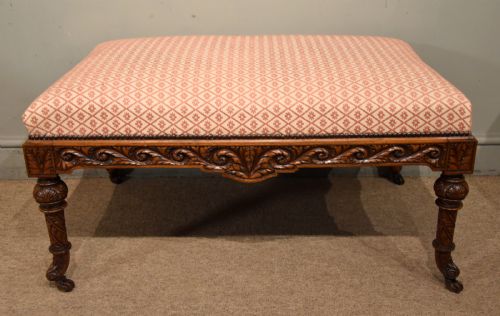
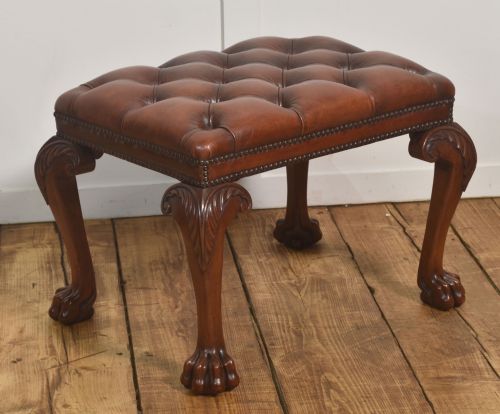
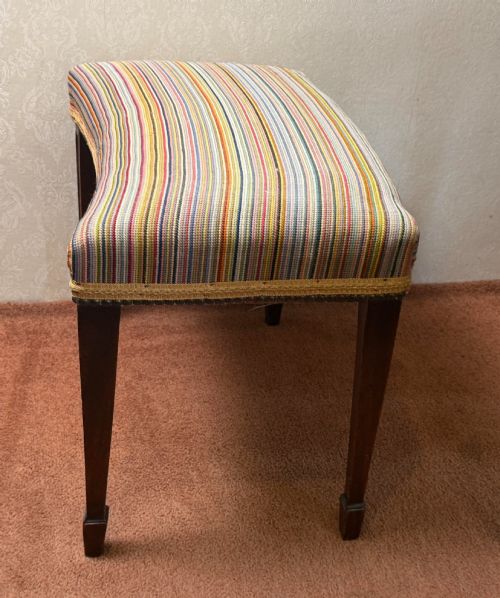
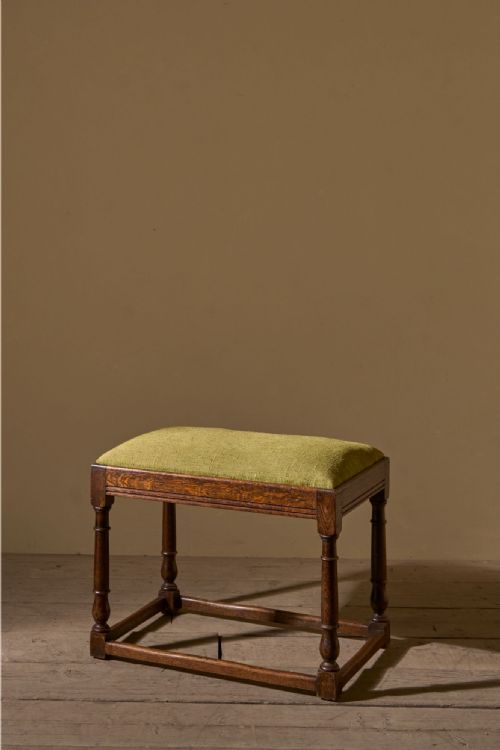
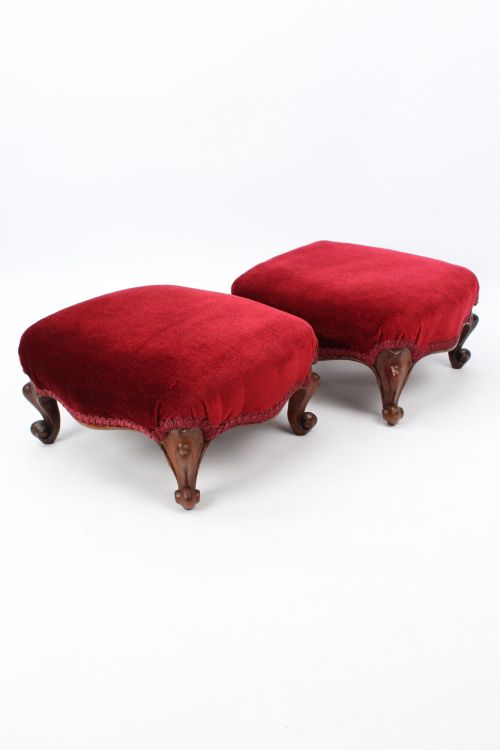
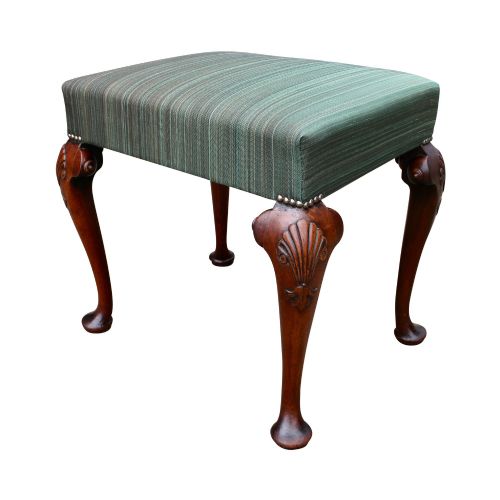
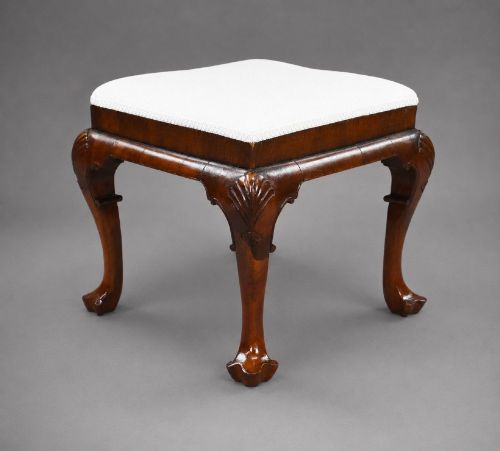
Low Footrest Stool
A low footrest stool brings comfort to a fireside, resting tired feet near the floor with period timber frames and textile tops.
Low Footrest Stool
A low footrest stool is a compact seating piece designed to support the feet while seated in a larger chair or by a hearth. When searching for a low footrest stool, buyers encounter numerous Victorian examples alongside pieces spanning the nineteenth century, Edwardian era, and the early twentieth century.
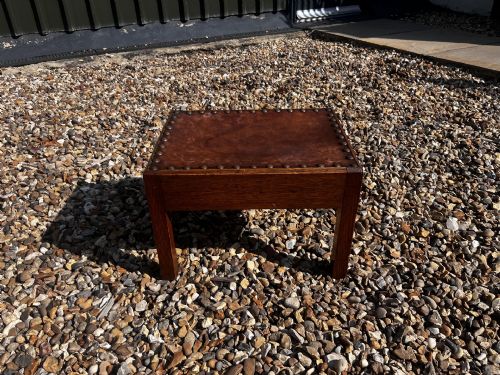
The timber frames appear in mahogany, walnut, oak, rosewood, pitch pine, and beech, often shaped in Victorian, Queen Anne Revival, Arts and Crafts, and Edwardian styles. Common forms include small single footstools, dressing stools, fireside stools, and occasional pairs intended for companion seating.
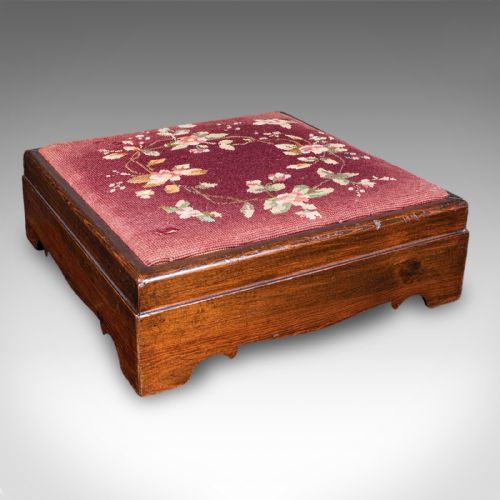
Makers and workshops across England, France, and India produced these items using hardwoods and softwoods, frequently pairing carved or turned legs with upholstery in leather, woven rattan, heavy green linen, tapestry, and modern fabrics.
Materials and construction
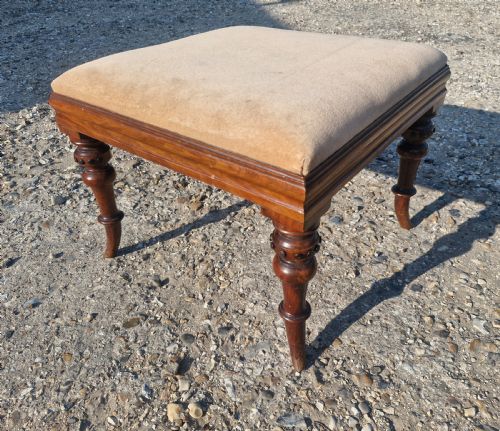
Makers constructed the frames using solid timbers such as mahogany, walnut, and oak, employing traditional joinery such as mortise and tenon joints to ensure stability. Legs were carved, turned, or tapered, occasionally terminating in brass castors.
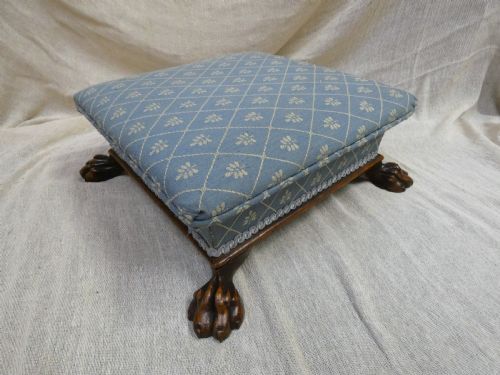
Upholstery methods involved securing supportive webbing and stuffing directly to the wooden base before covering the top in leather, woven cane, tapestry, or heavy textile. Details like brass studs, carved lion heads, or lacquered chinoiserie surfaces finished the woodwork.
Listings feature timbers including mahogany, oak, walnut, rosewood, and pitch pine across the 19th Century, Victorian, and Edwardian periods.
Judging quality in footstools
Quality depends on the crispness of the timber carving and the structural integrity of the frame joints. Denser hardwoods like rosewood and well-figured mahogany show superior cabinetmaking compared to simpler utilitarian beech or pine frames.
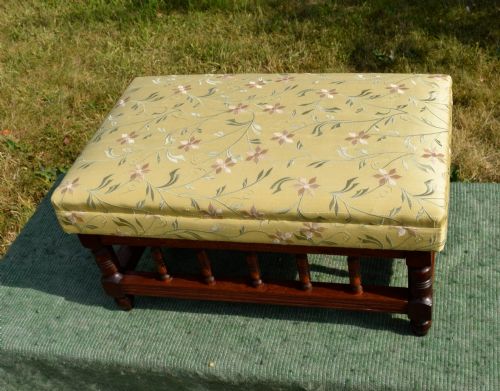
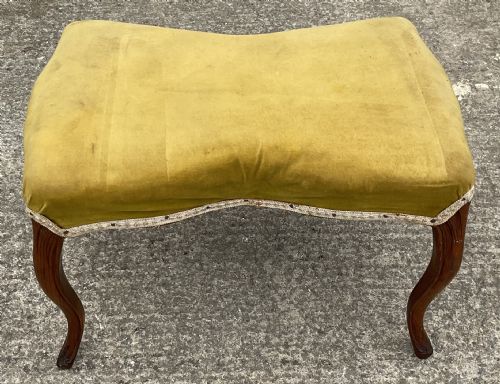
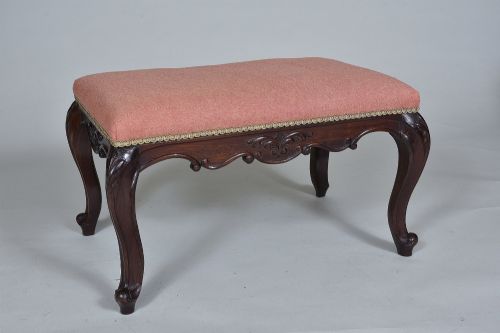
The proportion and finish of the legs distinguish finer pieces, especially when cabriole legs, square tapering legs, or turned spindles are executed with precision. Original upholstery materials and period castors add to the integrity of the piece.
Arthur Simpson Of Kendal·Mathew Gregson·Loidrault Freres Paris
The Low Footrest Stool Glossary
- Cabriole leg
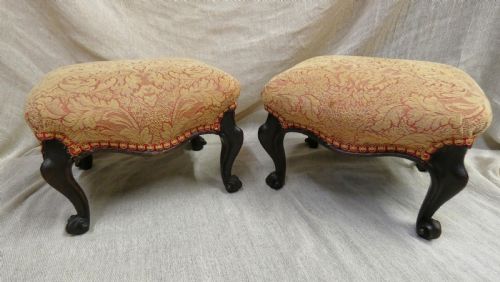
- A furniture leg shaped with two curves, curving outward at the knee and inward at the ankle. This style appears frequently on Queen Anne and Victorian revival frames.
- Fireside stool
- A low stool intended to sit near a fireplace for warming feet. These pieces often feature textile or leather upholstery.
- Joint stool
- A sturdy wooden stool constructed with mortise and tenon joinery held together by wooden pegs. These typically date to earlier periods of English craftsmanship.
- Rattan
- A climbing palm material woven into seats or panels. It provides a flexible and breathable surface on nineteenth-century seating.
- Giltwood
- Wood coated with a thin layer of gold leaf. This finish appears on decorative French revival frames.
Low Footrest Stool: Frequently Asked Questions
How were low footrest stools used?
These low items served primarily to elevate the feet off cold floors while sitting in armchairs or by fireplaces. They also functioned as small seats for dressing tables or as low coffee tables in reception rooms.
Their compact dimensions allowed them to tuck easily beneath larger furniture when not in use, making them versatile additions to nineteenth-century and early twentieth-century interiors.
What woods were used for these stools?
Cabinetmakers utilised a variety of hardwoods including mahogany, walnut, oak, rosewood, and bird's-eye maple. Softer woods like beech and pitch pine also formed the structural frames of simpler pieces.
Dark polished timbers dominated the Victorian and Edwardian periods, while lighter oak and pine appeared in country and Arts and Crafts designs.
Are the upholstery fabrics original?
Many surviving examples feature modern replacement upholstery because antique textiles wore out through daily use. Some pieces retain period leather, tapestry, or woven rattan where conditions allowed for careful preservation.
Listings frequently note whether a piece comes newly upholstered or retains its older covering, guiding buyers who plan to recover the frame themselves.
How do I identify a Victorian stool?
Victorian examples often display heavier carved rosewood or mahogany frames, cabriole legs, and occasionally brass castors. Stylistic revivals such as Queen Anne or Rococo influences commonly appear across this mid to late nineteenth-century period.
Turned wooden legs and deep buttoned leather or heavy fabric tops further point toward Victorian and Edwardian manufacturing traits.