
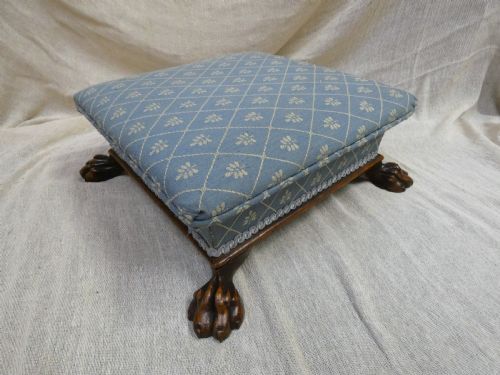


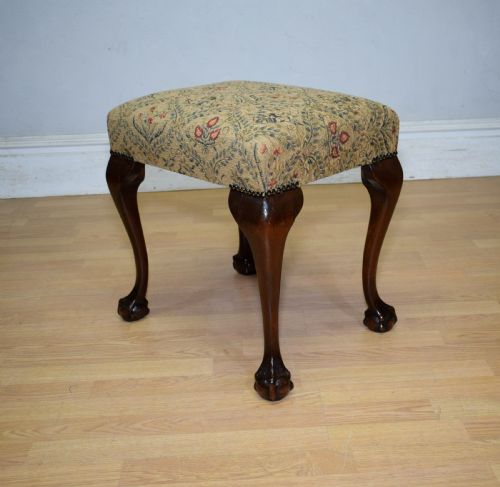


Carved Claw Footrest
These carved claw footrest pieces are solid wood supports designed to rest feet, appearing here primarily in mahogany and walnut across periods from the Regency era to the 1930s.
Carved Claw Footrest
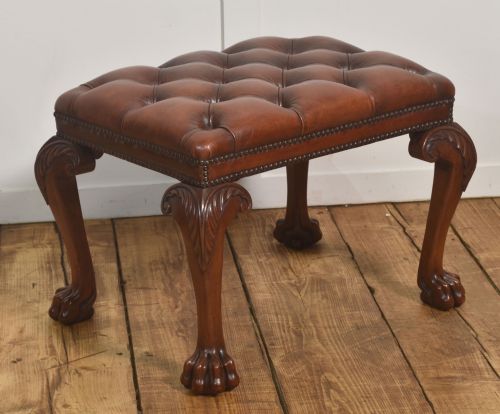
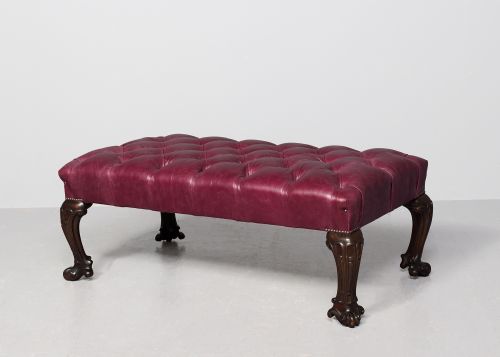
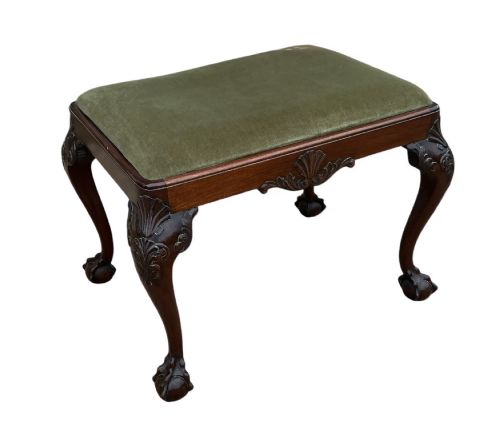
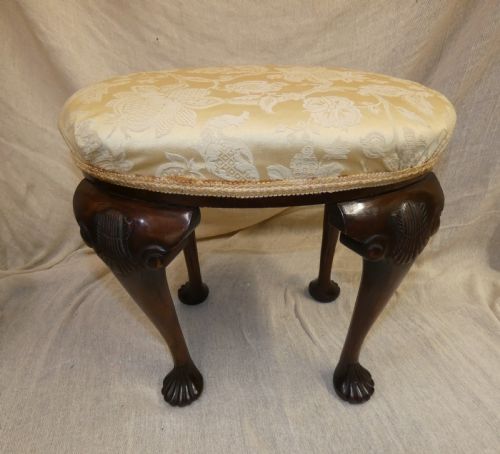
When you search for a carved claw footrest, you encounter low wooden stools and ottomans designed to support the feet while sitting. The examples on this page span the Regency period through to the 1930s, encompassing various revival aesthetics.
The dominant forms on this page include Chippendale style, Georgian style, and Queen Anne revival stools framed in mahogany and walnut. You also find Victorian pieces alongside Anglo-Indian and Art Deco examples.
Upholstery materials vary significantly across these items, ranging from leather and buttoned red hide to fabric, velvet, textile, and wool. Foot designs incorporate brass details alongside traditional carved wooden claws and lions paw feet.
How they were made
Carpenters constructed the primary frames of these footrests using solid hardwoods, specifically mahogany, walnut, and rosewood. These timbers provided the structural strength required for carved legs and feet.
Craftsmen shaped the wood manually to create the characteristic claw and paw feet, sometimes incorporating brass elements. Upholstery methods included buttoned red hide, leather, velvet, and various textiles fixed directly to the wooden frames.
Listings feature mahogany, walnut, and rosewood frames paired with leather, velvet, and wool upholstery across various 19th and early 20th-century periods.
What varies in quality
The depth and precision of the woodwork define the craftsmanship of each piece, distinguishing simple turnings from intricately carved claw motifs. Timber selection also plays a role, with dense figures in mahogany and walnut indicating better stock.
The condition and original integrity of the upholstery materials, whether leather, wool, or velvet, affect the overall presentation. Pieces retaining their original hide or textile coverings sit at a different level from later re-upholstered examples.
The Carved Claw Footrest Glossary
- Chippendale Style
- A design approach drawing on the mid-18th-century patterns associated with Thomas Chippendale, often featuring carved cabriole legs and claw feet. This style experienced several revival periods during the 19th and early 20th centuries.
- Mahogany
- A durable tropical hardwood with a reddish-brown colour that became a primary material for British furniture from the 18th century onward. It accepts fine carving work particularly well.
- Ottoman
- A low, upholstered seat or footstool typically lacking arms or a back, used for resting feet or as casual seating. Versions appear in Regency and later styles on this page.
- Cabriole Leg
- A furniture leg that curves out and then narrows inward, typically ending in a carved foot such as a claw or paw. This form is common in Queen Anne and Chippendale revival pieces.
- Hide
- Untanned or tanned heavy animal skin used for durable upholstery on seating and footstools. Buttoned red hide variants appear frequently on Georgian-style items.
Carved Claw Footrest: Frequently Asked Questions
What periods do these footstools date from?
The listings span from the Regency era and 19th century through to the 1920s and 1930s. Revival aesthetics such as Chippendale style and Queen Anne style appear frequently among the later Victorian and Edwardian dates.
Craftsmen produced these variations across different decades, meaning a Georgian style piece may date from the early 20th century rather than the 18th century.
What materials were used for the upholstery?
Upholstery materials include leather, buttoned red hide, velvet, wool, and general textiles. Some pieces feature simple fabric coverings while others utilise traditional hide.
These surfaces often reflect either the original period of manufacture or subsequent re-upholstery work carried out to maintain the piece.
How do I identify a claw foot design?
Claw feet typically depict an animal talon grasping a ball or resting directly on the floor. On these stools, they are carved from solid mahogany or walnut, sometimes accompanied by brass elements.
Variations include lions paw feet and standard claw motifs found on Chippendale and Georgian style frames.
Are these pieces suitable for daily use?
These wooden frames and upholstered tops function as practical footrests and low seats. Their solid hardwood construction in mahogany and walnut provides the necessary structural support.
Consider the condition of the upholstery and joints when planning regular placement in a modern room.