

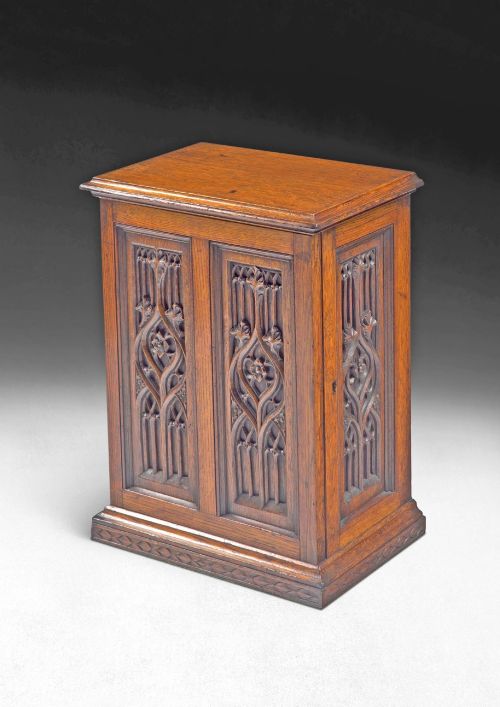
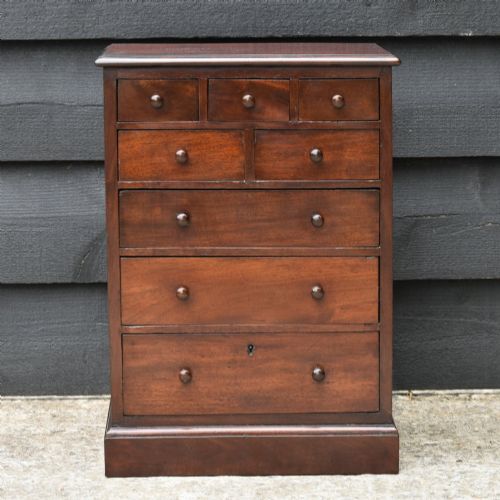

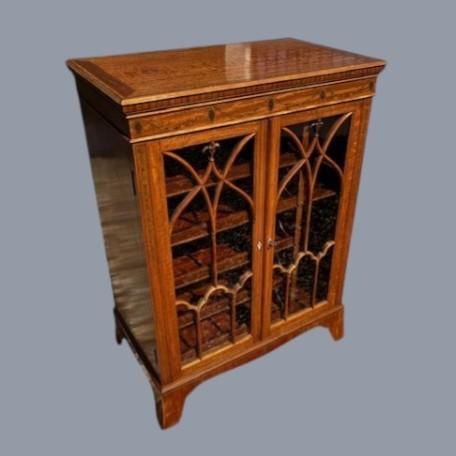
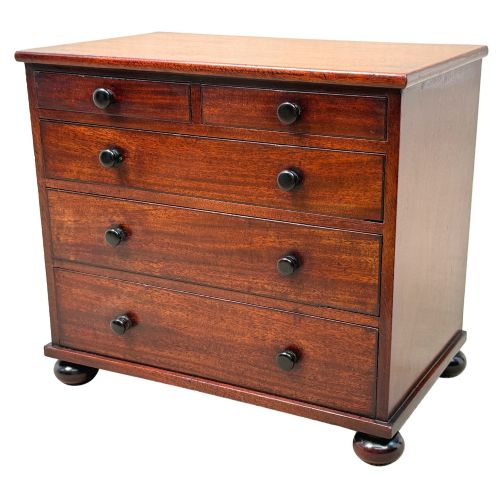
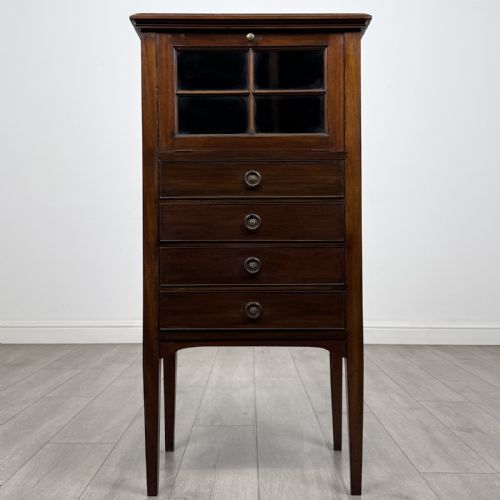
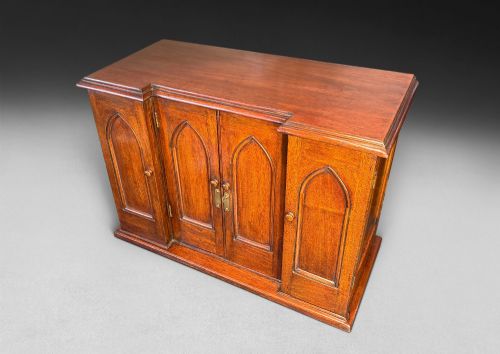
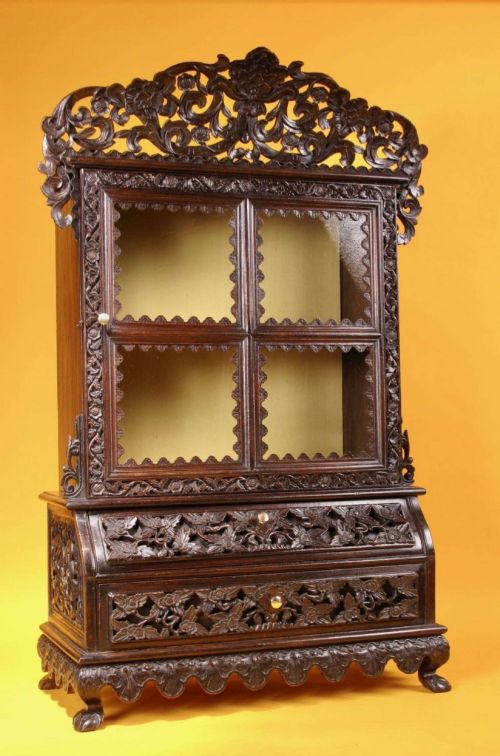
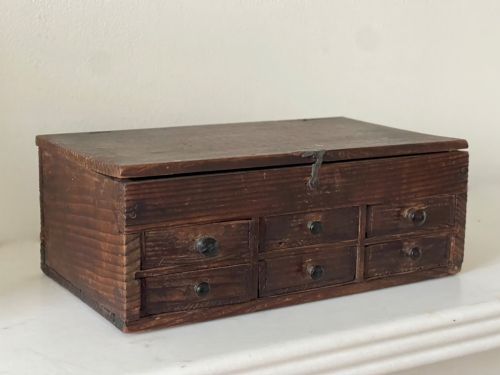

Small Specimen Cabinet
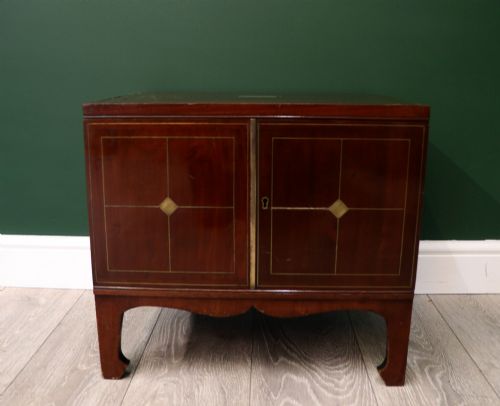
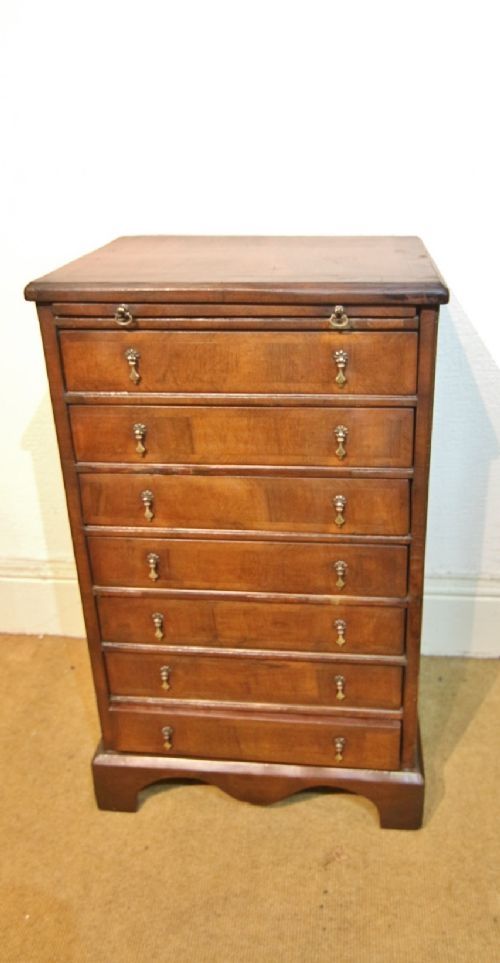
These small specimen cabinet designs offer tidy storage for natural history objects, coins and curiosities, combining compact scale with careful compartment work.
Small Specimen Cabinet
A small specimen cabinet is designed for organising and protecting modest collections such as fossils, shells, coins, or medical samples. Buyers searching this phrase look for table-top units, miniature chests of drawers, and small wall cases.
The versions most commonly met on this page date from the Victorian and Edwardian eras, alongside pieces spanning the eighteenth, nineteenth, and early twentieth centuries. Forms range from multi-drawer banks and Wellington chests to glazed display cases and spice cabinets.
Makers constructed these pieces in wood and glass, incorporating functional hardware such as brass handles and locking keys. Their origins stretch across various English and regional workshops, intended for domestic display or professional use.
Materials and construction
Makers utilised hardwoods and softwoods including mahogany, oak, walnut, rosewood, satinwood, pine, and hardwood. These timbers were selected for stability and grain, often finished with marquetry inlay or staining.
Metal fittings played a practical role, with brass used for recessed handles, campaign mounts, and hinges. Glass panels appeared in doors and lids to allow observation of contents without opening the drawers or cases.
Small Specimen Cabinet Retail Price Guide 2026
Typical asking prices for small specimen cabinet among the pieces listed under this phrase on Sellingantiques today, from the lower quarter to the upper quarter. They describe what is for sale here now, not the wider market.
Listings feature pieces spanning the Georgian, Victorian, Edwardian, and Regency periods, constructed in mahogany, oak, walnut, and pine.
What separates the best pieces
Quality rests upon the precision of the drawer construction and the harmony of the timber selection. Finer examples display figured veneers such as burr walnut or satinwood, paired with subtle marquetry and well-fitted internal divisions.
Hardware and secondary elements distinguish standard utility items from superior pieces. Original brass handles, functional locks with keys, and clean glazing indicate higher workshop standards.
Luxmore's of Ilfracombe·D Napier & Sons
The Small Specimen Cabinet Glossary
- Wellington chest
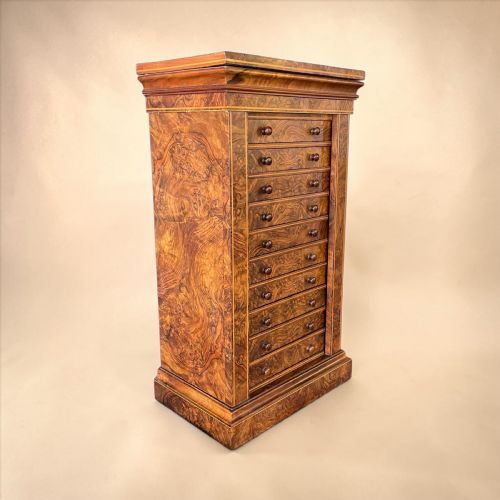
- A tall, slender chest of drawers secured by a locking hinged side stile. This design originated in the nineteenth century and provided secure storage for documents or small objects.
- Apprentice piece
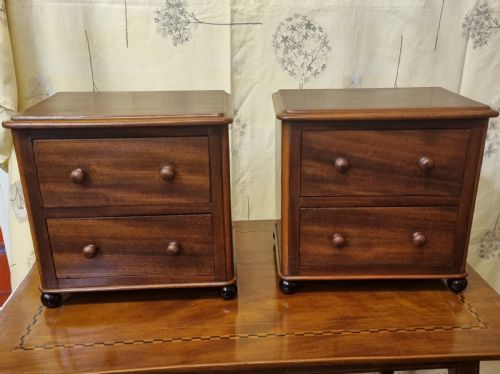
- A miniature item of furniture demonstrating a craftsman's skill before gaining full guild membership. These pieces replicate full-scale furniture accurately in every proportion.
- Marquetry
- Decorative patterns formed by fitting contrasting wood veneers into a prepared surface. This technique added ornamentation to cabinet doors and drawer fronts.
- Apothecary chest
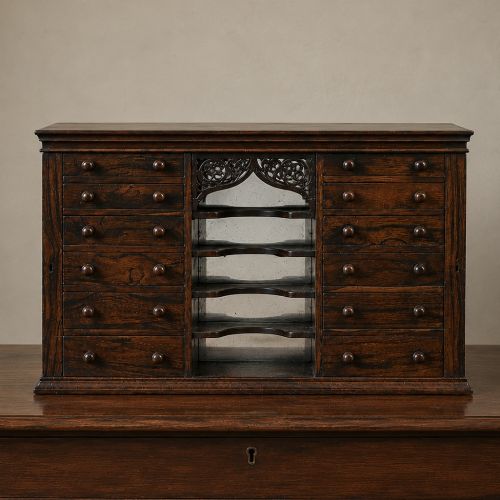
- A multi-drawer cabinet originally built for storing medicines, herbs, and medical apparatus. They often feature numerous small drawers and occasionally retain glass bottles.
- Campaign style
- Furniture designed to be easily packed and transported during military travel. It typically incorporates flush brass handles and protective corner brackets.
Small Specimen Cabinet: Frequently Asked Questions
What were small specimen cabinets used for originally?
These cabinets served naturalists, collectors, and professionals for storing delicate items such as insects, minerals, coins, and watch parts. The multiple shallow drawers kept specimens sorted and protected from light and dust.
Medical practitioners and apothecaries also utilised similar multi-drawer chests for powders, remedies, and instruments. Their compact scale allowed them to sit conveniently on tables or desks.
How do I date a wooden specimen cabinet?
Dating relies on timber choices, construction methods, and stylistic details recorded across periods from the Georgian era to the early twentieth century. Mahogany and oak dominate eighteenth and nineteenth-century pieces, while satinwood and specific inlay patterns often point towards Victorian or Edwardian workshops.
Examine the drawer joints, secondary woods inside, and hardware such as brass handles or locks. Machine-cut timber and standardised screws typically suggest a date towards the end of the nineteenth century or later.
Where should I place a small cabinet at home?
Table-top cabinets and miniature chests suit side tables, desks, and dressers where their scale can be appreciated. Wall-hanging or standing display cases require positions away from direct sunlight to protect sensitive contents inside.
Ensure the surface is level and stable enough to support the weight of the timber and any collection housed within. Placing them in rooms with stable humidity protects the wood and historical finishes.
Can I use these cabinets for modern collections?
These cabinets remain well suited for holding modern collections of small items such as jewellery, fountain pens, stamps, or fossils. The shallow drawers provide ideal dimensions for organising flat or miniature objects.
Ensure that the drawer interiors are clean and free from old residues before storing delicate modern items. Regular gentle dusting preserves both the antique exterior and the objects placed inside.