





Small Satinwood Cabinet
A small satinwood cabinet brings pale timber, subtle figuring and refined proportions into a room.
Small Satinwood Cabinet
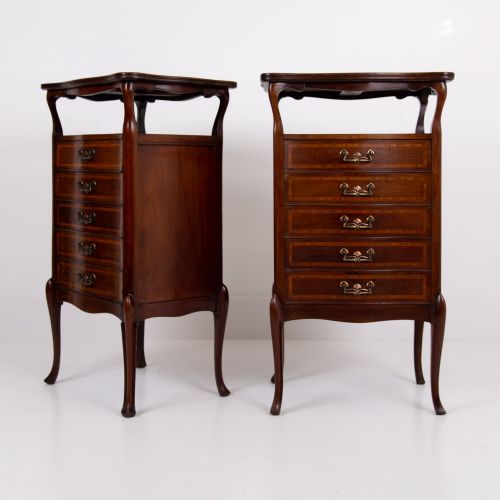
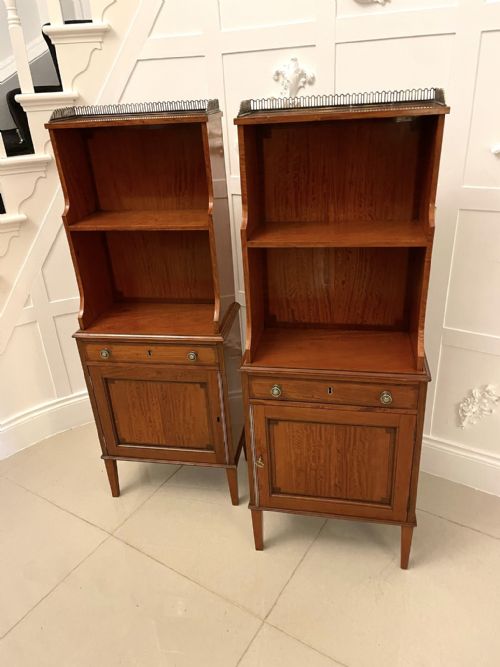
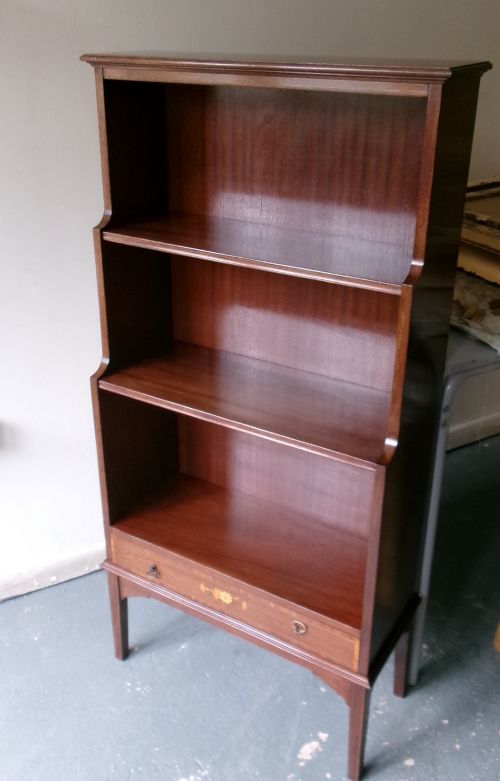
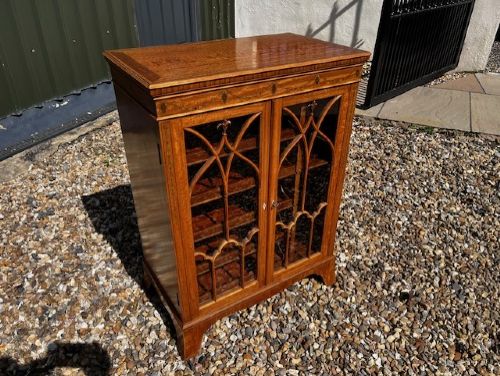
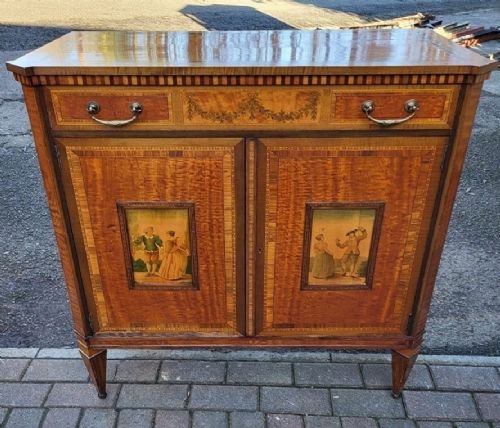
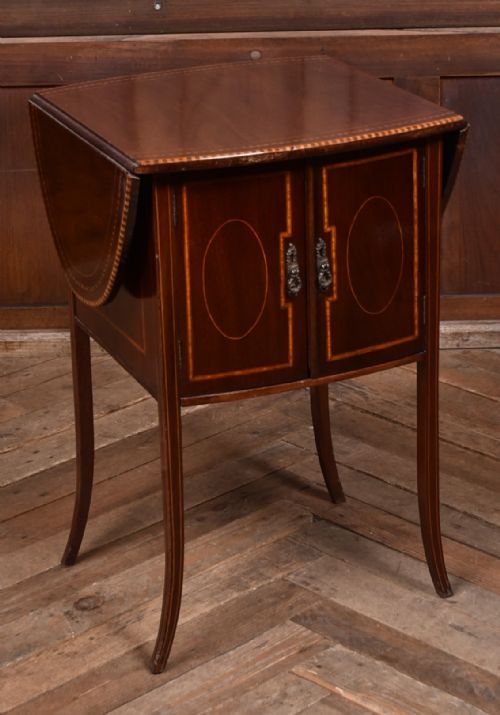
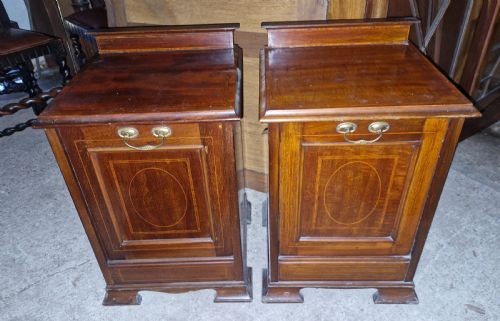
A small satinwood cabinet combines compact storage with light reflective timber, appearing frequently in Edwardian, Victorian and eighteenth-century forms. The selection encompasses bedside cupboards, display cabinets, side pieces and diminutive writing desks.
The Edwardian era supplies many inlaid mahogany pieces featuring satinwood banding, alongside dedicated satinwood vitrines and bedside cabinets. Eighteenth-century examples include Sheraton period commodes and bonheur du jour desks.
Buyers encounter specialised storage in the form of collectors cabinets, smokers cupboards and miniature display cases. These diverse formats share a modest footprint suited to smaller spaces.
How they were made
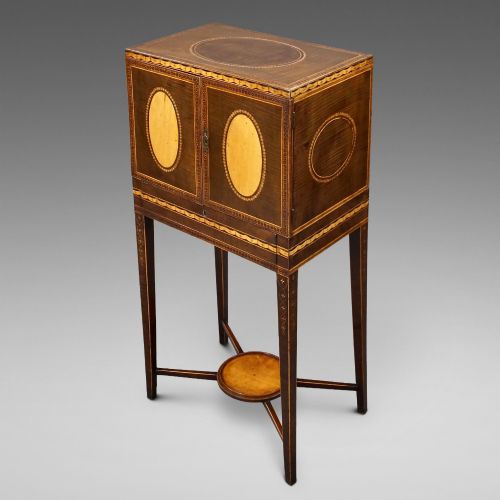
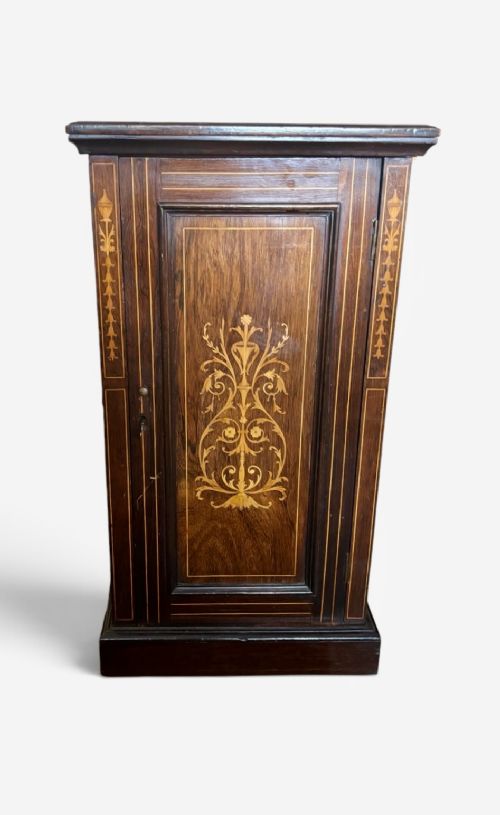
Cabinet makers utilised satinwood veneers over sturdy secondary timbers such as mahogany or pine, applying contrasting boxwood and ebony stringing. Marquetry inlay depicts floral motifs, scrolls and neoclassical urns.
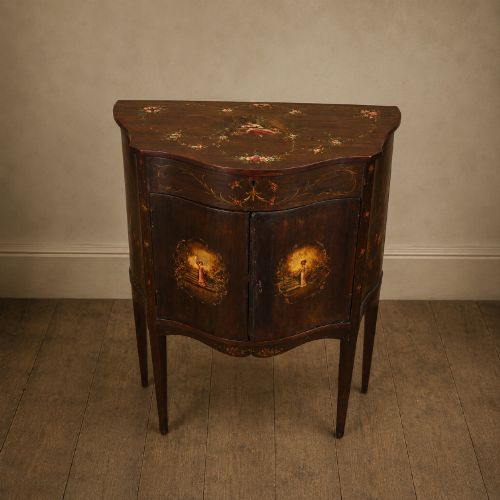
Surfaces frequently receive hand painting or intricate crossbanding, complemented by brass handles, escutcheons and glass panels for display sections.
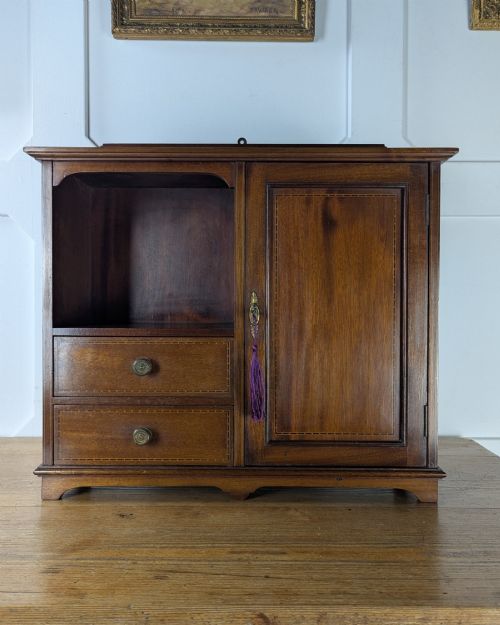
Smokers cupboards tucked away in late nineteenth-century parlours kept tobacco and pipes neatly locked away from curious guests.
What varies in quality
The refinement of the timber figure and the precision of the marquetry define the upper tier of production. Finely executed hand painting and balanced proportions elevate certain pieces above standard commercial output.
Makers known for exceptional cabinet work utilise superior joinery techniques and carefully matched veneers that retain their warm honey tone over centuries.
Gillows·Maple and Co·Edwards and Roberts·Holland and Son
The Small Satinwood Cabinet Glossary
- Satinwood
- A dense tropical hardwood prized for its golden lustre and reflective sheen. It takes a high polish and serves as both a solid timber and a decorative veneer.
- Marquetry
- The art of forming decorative patterns using thin veneers of various woods applied to a carcass. Craftsmen cut contrasting timbers to create pictorial designs.
- Bonheur du jour
- A light ladies writing desk featuring a small cabinet or tiered superstructure on top. The form developed in France during the eighteenth century.
- Crossbanding
- A border of veneer laid around the perimeter of a panel so the grain runs perpendicular to the centre. This technique frames the primary wood.
- Vitrine
- A glass-fronted display cabinet designed for porcelain, curiosities and bijouterie. The construction maximises visibility through glazed doors and sides.
Small Satinwood Cabinet: Frequently Asked Questions
Where should I place a small satinwood cabinet?
These compact pieces fit easily beside a bed, in a corner, or against a hallway wall where floor space is limited.
The pale timber brightens darker rooms while providing practical surface area and enclosed storage for small items.
How do I care for satinwood furniture?
Keep the wood away from direct sunlight and radiators to prevent the dry air from cracking the delicate veneers.
Dust gently with a soft cloth and apply quality beeswax occasionally to maintain the golden sheen.
What is the difference between Edwardian and Georgian cabinets?
Georgian pieces from the eighteenth century demonstrate classical restraint, hand-cut joinery and solid construction methods.
Edwardian interpretations often revive Sheraton styles using machine-sawn veneers, lighter framing and painted decorative motifs.
Can I use a collector cabinet for modern items?
The small drawers and glazed display shelves suit the storage of jewellery, documents and small collections.
Their interior compartments protect delicate objects while keeping them visible and organised.