



Small Satinwood Accent Table
These small satinwood accent table pieces bring figured timber and classic proportions to domestic rooms, offering compact surfaces for lamps and display.
Small Satinwood Accent Table
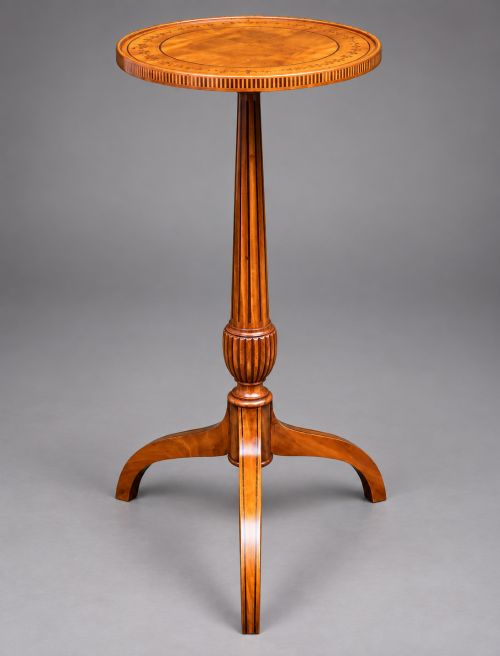
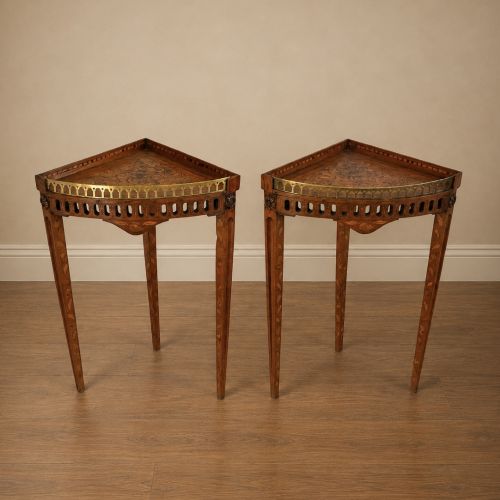
A small satinwood accent table is a compact surface piece designed for occasional use in domestic spaces, appearing in forms such as occasional tables, wine tables, side tables, and corner tables. You encounter these pieces across periods including the eighteenth century, the Victorian and Edwardian eras, and the early twentieth century.
The primary material is satinwood, frequently paired with mahogany or enhanced with contrasting timbers. These tables serve practical functions while displaying decorative wood figure and inlay work suited to drawing rooms or studies.
How they were made
Cabinetmakers utilised satinwood veneers and solid timbers, often combining them with contrasting woods like mahogany, boxwood, and ebony. This combination created balanced colour contrast across table tops and borders.
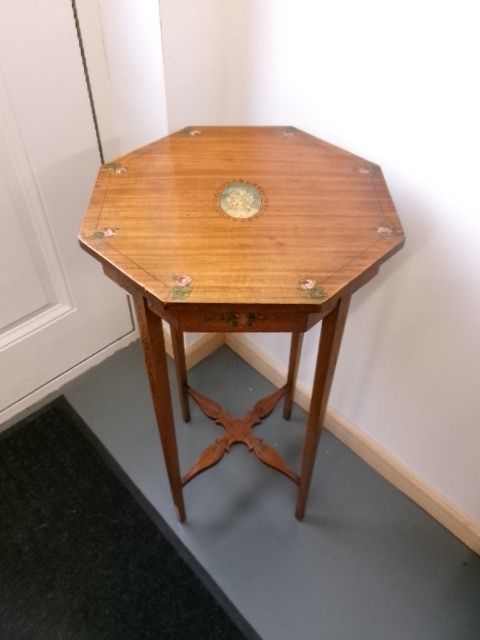
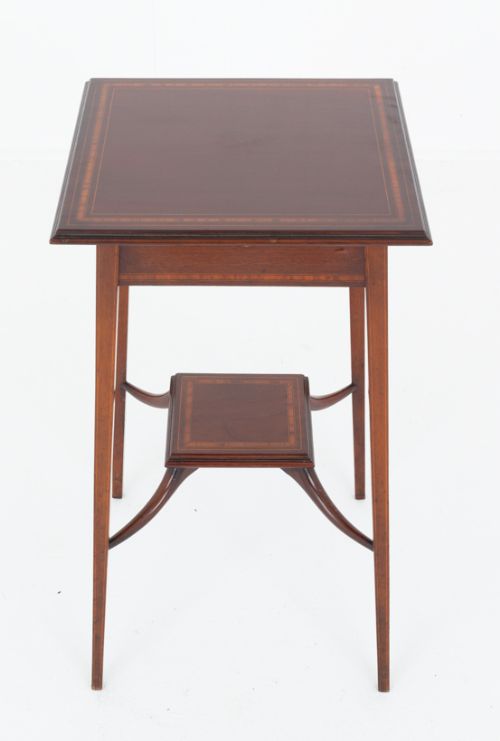
Inlay and marquetry techniques defined the decorative surfaces of these tables, utilising multi-wood veneers to form floral or geometric motifs. Brass galleries and stringing lines were also applied to edges and panels to frame the grain.
Periods represented span the eighteenth century, the Victorian era, and the Edwardian period.
What varies in quality
The fineness of the timber figure and the precision of the multi-wood inlay determine the visual caliber of an example. Subtle variations in the depth of the satinwood grain and the crispness of the Sheraton-style or neoclassical details separate standard production from finer workmanship.
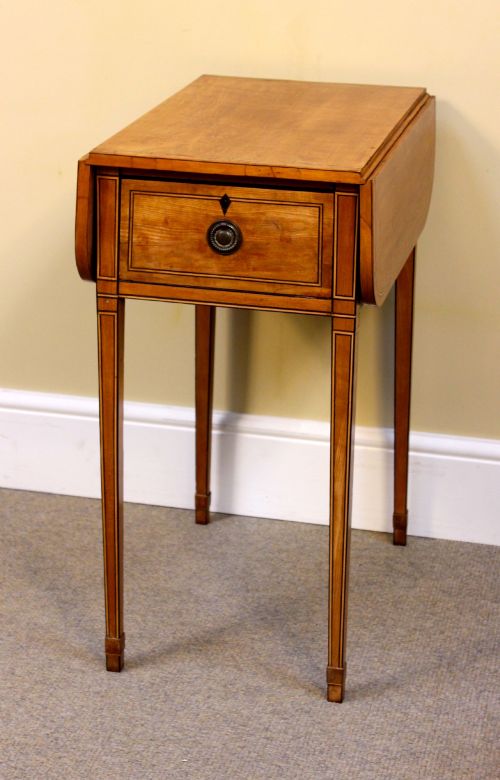
Construction methods such as the neatness of dovetails in drawers, the stability of drop-flap mechanisms, and the integrity of brass galleries indicate the original standard of manufacture.
Williamson
The Small Satinwood Accent Table Glossary
- Satinwood
- A lustrous, fine-grained hardwood native to tropical regions, prized for its golden yellow sheen and used extensively for veneering furniture.
- Sheraton Revival
- A late nineteenth and early twentieth-century design movement inspired by the neoclassical furniture of George Sheraton, characterised by light proportions and delicate inlay.
- Marquetry
- The art of applying pieces of veneer to a structure to form decorative patterns, often utilising contrasting timbers like boxwood and ebony.
- Occasional table
- A small, movable table designed for a specific, non-permanent function within a room, such as holding a lamp or book.
- Stringing
- Thin inlay lines of contrasting wood used to outline panels, drawers, or table tops.
- Drop-flap table
- A table featuring hinged leaves that lower or rise to alter the surface area as required.
Small Satinwood Accent Table: Frequently Asked Questions
Where should I place a small satinwood accent table?
These tables suit corners, beside armchairs, or adjacent to sofas where surface space is needed without dominating the room.
Their compact footprints allow them to function as lamp tables or wine tables in sitting rooms and hallways.
How do I identify an Edwardian satinwood table?
Edwardian pieces often display lighter proportions, refined shell or floral inlay, and Sheraton Revival influences.
Construction details and secondary timbers inside drawers or beneath tops help confirm the early twentieth-century date.
Are these tables suitable for daily use?
Most occasional and side tables function well for holding light objects such as books, drinks, or small lamps.
Care should be taken with polished satinwood surfaces to avoid moisture and direct heat exposure.
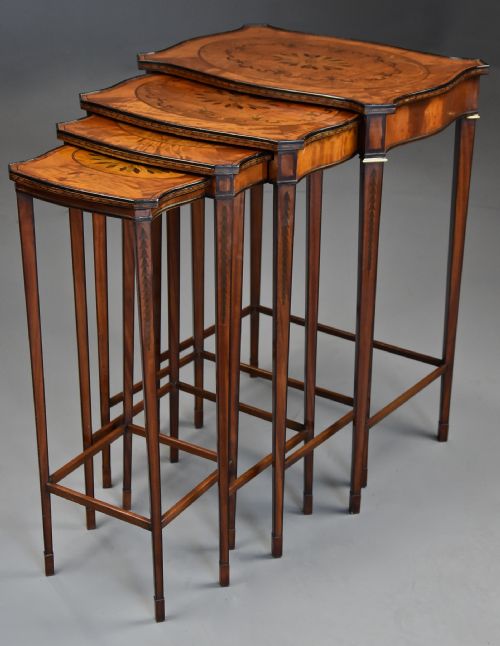
What is a quartetto nest of tables?
A quartetto nest comprises a set of four graduated tables designed to slide neatly beneath one another when not in use.
This form gained popularity during the Edwardian period, often executed in satinwood with serpentine edges.
How do I care for satinwood furniture?
Dusting with a dry, soft cloth maintains the polished finish of the timber without building up residues.
Avoiding placement near heat sources protects the veneer and underlying structure from drying out.