

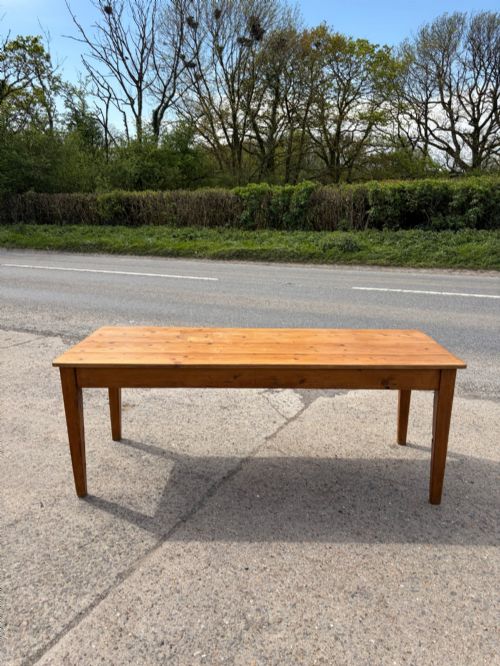


Victorian Tapered Leg Table
A victorian tapered leg table brings understated nineteenth-century grace to a room through slender supports and rich timbers.
Victorian Tapered Leg Table
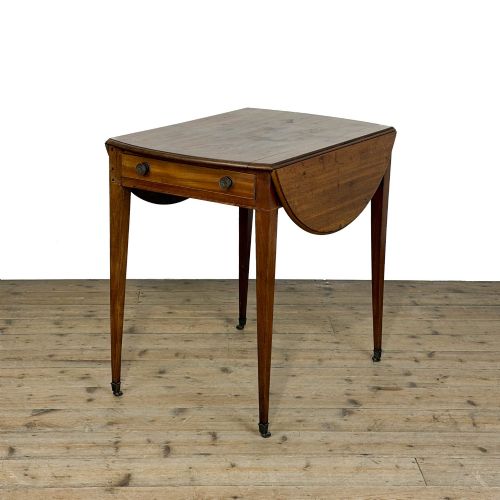
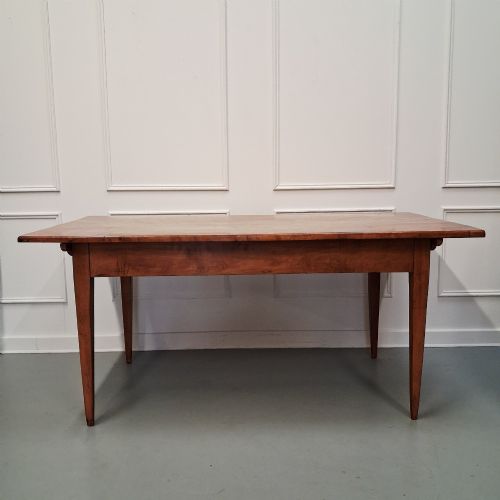
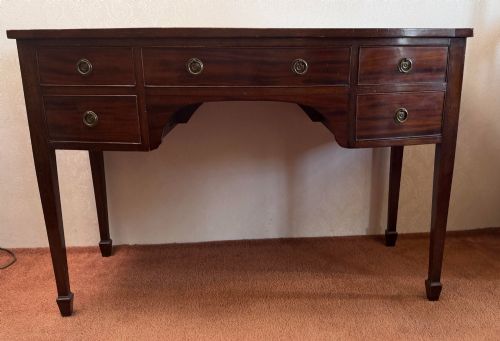
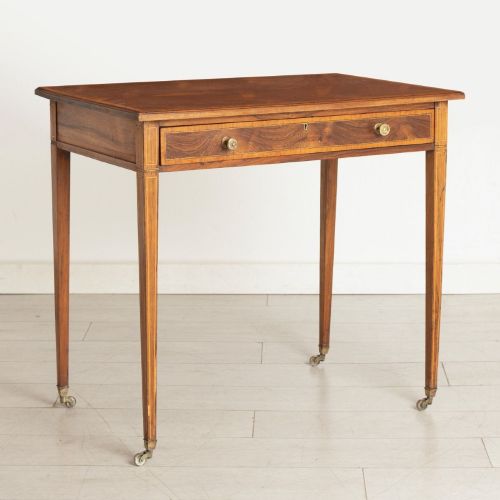
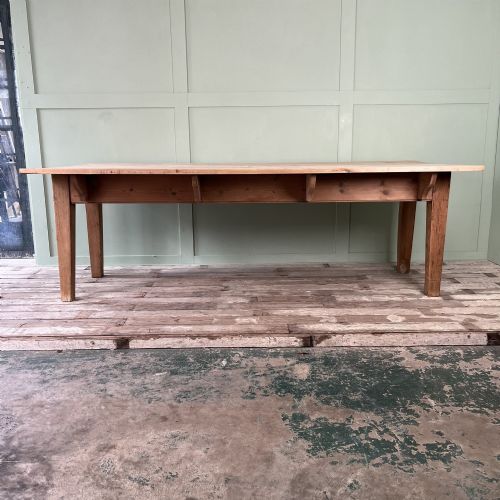
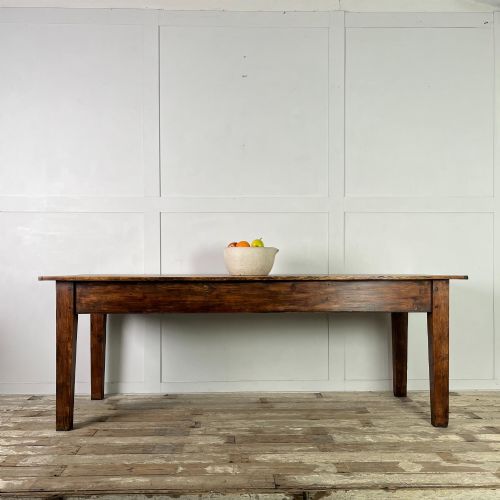
When you search for a victorian tapered leg table, you encounter nineteenth-century dining tables, writing desks, and side tables shaped by the periods and revivals of the era. The form spans utilitarian pine farmhouse tables and polished mahogany or satinwood pieces designed for the drawing room.
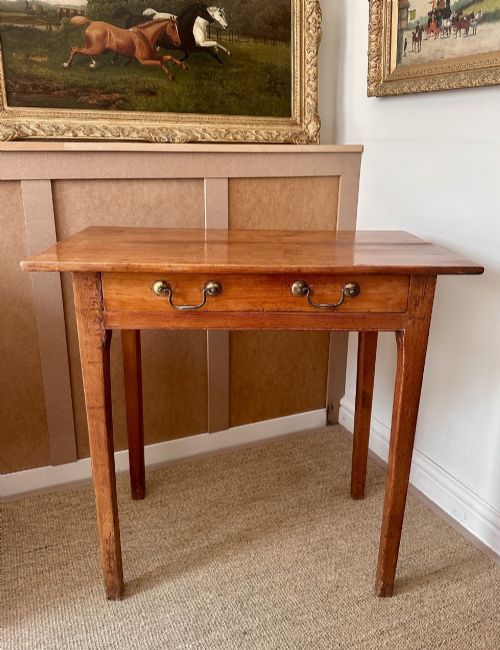
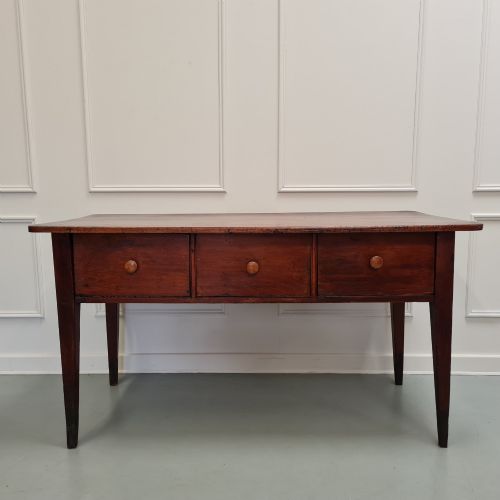
The version you meet most frequently on this page is the nineteenth-century pine or mahogany table featuring single drawers and straightforward lines. These pieces originate from diverse contexts, ranging from country houses to urban workshops, and display styles from simple rustic farmhouse to refined Sheraton and Georgian revivals.
Smaller occasional pieces, such as lamp tables and demi-lune console tables, appear alongside larger dining formats. Each object relies on the characteristic tapering leg to lift its mass and impart a sense of proportion.
How they were made
Cabinet makers constructed these tables using dense hardwoods like mahogany, rosewood, and walnut alongside domestic softwoods such as pine. Surfaces often received marquetry inlays, hand-painted decoration, or burr ash veneers to enhance the visual texture of the timber.
Structural integrity depended on traditional joinery techniques, while brass fixtures and leather inserts provided functional and decorative accents on desks and writing tables. Painted finishes and polished satinwood also appear where lighter aesthetic schemes prevailed.
Patience tables await lonely card games, offering nineteenth-century solitude on slender tapered legs.
What varies in quality
The distinction between ordinary and superior examples rests on the selection of timber and the precision of the joinery. Tables featuring figured veneers, intricate marquetry, or hand-painted details stand apart from utilitarian pine counterparts.
Proportion and execution define the upper tier of these pieces. Well-balanced tapered legs and smoothly functioning drawers indicate a higher degree of workshop competence.
Robson & Sons
The Victorian Tapered Leg Table Glossary
- Demi-lune
- A half-moon shaped piece of furniture designed to stand flush against a wall. These console or pier tables often feature inlaid satinwood or mahogany.
- Marquetry
- Decorative veneer work arranged in geometric or pictorial patterns using various coloured woods. This technique frequently appears on late nineteenth-century desks and work tables.
- Frieze
- The horizontal architectural band directly beneath the tabletop, which often houses one or more drawers. Single drawers positioned centrally are common in nineteenth-century side tables.
- Satinwood
- A hard, durable timber with a characteristic golden-yellow sheen used extensively in decorative nineteenth-century furniture. It serves as a solid medium or as a fine veneer.
- Pembroke table
- A small, versatile table with hinged drop leaves on either side. These pieces often incorporate a single drawer and tapered legs.
Victorian Tapered Leg Table: Frequently Asked Questions
What rooms suit a victorian tapered leg table?
These tables adapt easily to various domestic spaces due to their varied forms, which include compact side tables and extended dining formats.
Smaller occasional and console variants fit hallways or drawing rooms, while pine farmhouse tables anchor kitchens and dining areas.
How do I distinguish pine from hardwood versions?
Pine examples typically present a simpler, more rustic appearance associated with country houses and utility rooms. They often feature visible grain patterns typical of softwoods and straightforward construction.
Hardwood versions in mahogany, rosewood, or satinwood display denser grain structures and usually incorporate formal decorative elements like inlay or veneer.
Were these tables used for writing or dining?
The evidence shows both functions clearly represented among the listed nineteenth-century forms. Dedicated writing desks and tables often incorporate drawers, leather inserts, or cylinder fronts.
Dining and farmhouse tables provide larger surface areas designed for seating multiple people, lacking the specialised compartments found on writing desks.
What stylistic revivals influence these pieces?
Nineteenth-century makers frequently drew inspiration from earlier Georgian and Sheraton designs, alongside Adams and Regency aesthetics. These revival styles impart classical proportions and decorative motifs onto Victorian forms.
Other pieces adhere to a distinct Victorian country or rustic farmhouse aesthetic, prioritizing unpretentious utility over classical ornamentation.