


Small Rosewood Pedestal Table
A small rosewood pedestal table brings rich grain and sturdy central support to corners and beside seating, offering timeless utility in compact spaces.
Small Rosewood Pedestal Table
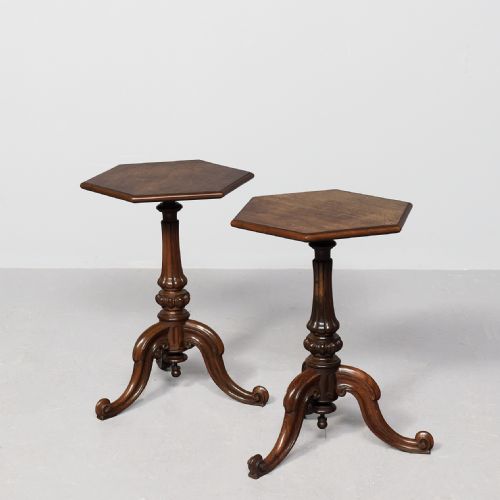
A small rosewood pedestal table serves as an occasional, side, or lamp table, resting on a central pillar and stable base rather than four corner legs. These compact surfaces appear frequently from the Regency and Victorian periods, alongside later twentieth-century interpretations and Chinese export examples.
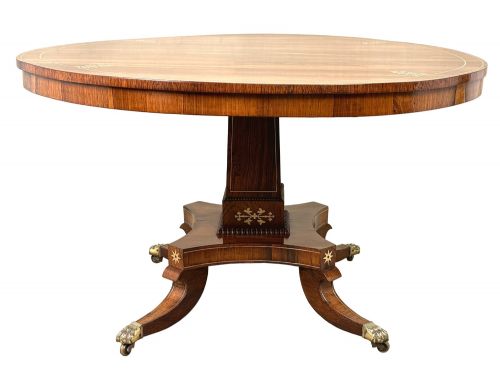
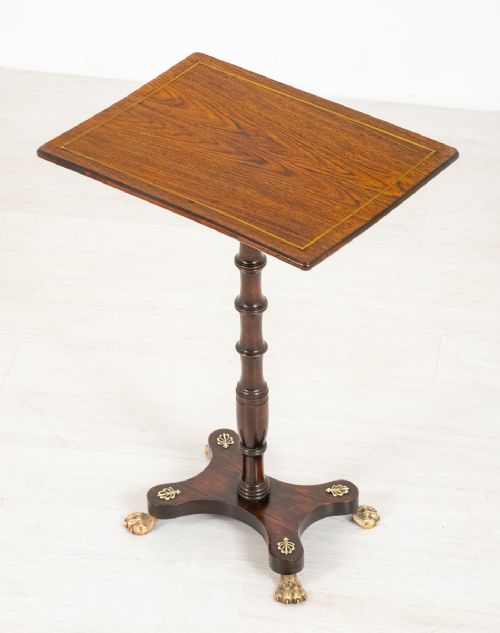
The form spans various specialised types including wine tables, jardiniere stands, and drum tables. The selection ranges from circular tops with brass inlay to barley twist stems and rectangular side pieces with drawers.
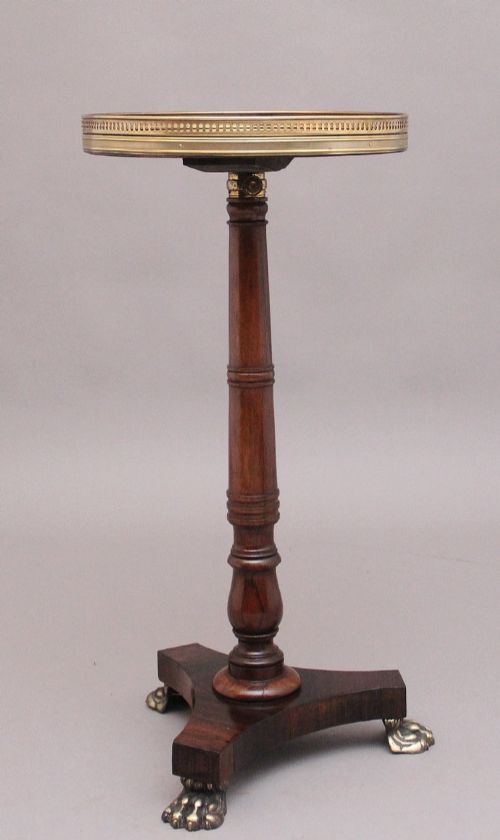
Makers designed these items to fit smaller domestic spaces while providing a solid resting place for lamps, books, or decorative plants. The rich reddish-brown tones of the timber dominate the selection, often complemented by marble inserts or brass details.
Materials and construction
Cabinet makers utilised dense rosewood for its deep colour and durability, often pairing the primary timber with hardwood carcases and brass mounts. Tops were frequently turned or cut into circular and rectangular formats, supported by pillars fitted to tripod bases or heavy plinths.
Certain pieces incorporate contrasting materials such as inset marble tops for plant stands or intricate brass inlay along the edges of Regency tables. Turning techniques created slender columns, barley twist stems, and sturdy pedestals capable of bearing weight without wobbling.
Even the tiniest wine table managed to find room for a candle and a glass.
Quality and craftsmanship
Quality rests upon the selection of the rosewood timber and the precision of the joinery connecting the pillar to the top and base. Superior pieces exhibit seamless grain matching, crisply carved pedestals, and stable tripod legs that sit flat without rocking.
The refinement of decorative elements, such as fine brass inlay or neatly turned barley twist stems, separates standard utility items from finer parlour furniture. Structural integrity at the central joint remains paramount, as poor past repairs compromise the balance of the table.
The Small Rosewood Pedestal Table Glossary
- Pedestal table
- A table supported by a single central column attached to a base. This design allows maximum legroom for seated users.
- Occasional table
- A small, movable table used for specific, temporary purposes in a room. They appear beside chairs or in empty corners.
- Jardiniere stand
- A tall, slender table designed to hold a plant pot or flower arrangement. Many examples feature marble tops to resist water damage.
- Barley twist
- A type of turning that resembles a spiral rope wrapped around a column. This decorative technique appears frequently on Victorian supports.
- Tripod base
- A three-legged support system common on pedestal tables. It ensures stability on uneven floors by keeping all feet in contact with the ground.
Small Rosewood Pedestal Table: Frequently Asked Questions
What is a pedestal table?
A pedestal table is a piece of furniture supported by a single central pillar that rises from a stable base or tripod feet. This construction frees up floor space around the perimeter.
These tables serve multiple functions in compact areas, acting as lamp stands, side tables, or display surfaces for decorative objects.
How do I date a rosewood table?
Dating relies on stylistic clues, construction methods, and the specific characteristics of the period such as Regency brass inlay or Victorian barley twists. Comparing the turning style and wood finish helps narrow down the era.
Cabinet makers adapted their designs across the nineteenth century, shifting from classical Regency proportions to heavier Victorian forms and later twentieth-century interpretations.
Where should I place a lamp table?
A lamp table fits well beside armchairs, sofas, or in dark corners that require both illumination and a surface for small items. Their compact footprint makes them versatile additions to living rooms and studies.
The central pedestal design allows the table to tuck neatly into tight spaces without corner legs obstructing surrounding furniture.
Can I use a jardiniere stand for plants?
Jardiniere stands were specifically constructed to support heavy plant pots and floral arrangements within domestic interiors. Many feature durable surfaces like marble to protect the timber from moisture.
These taller stands elevate greenery to eye level, adding height and natural texture to room corners.