
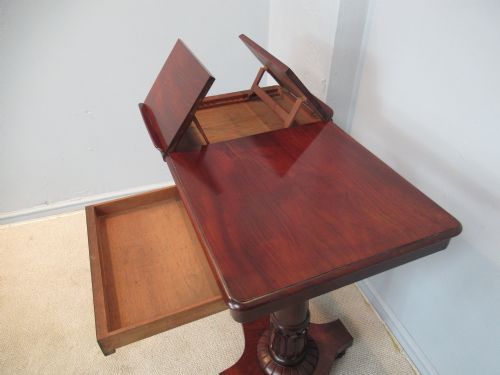
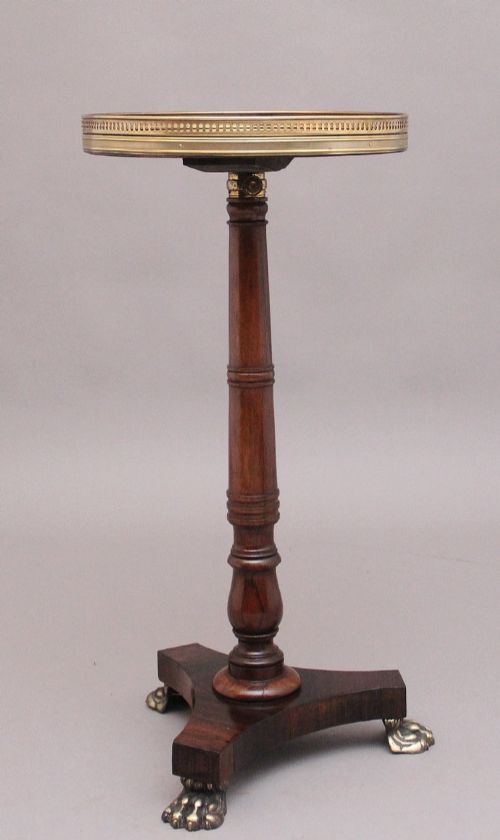

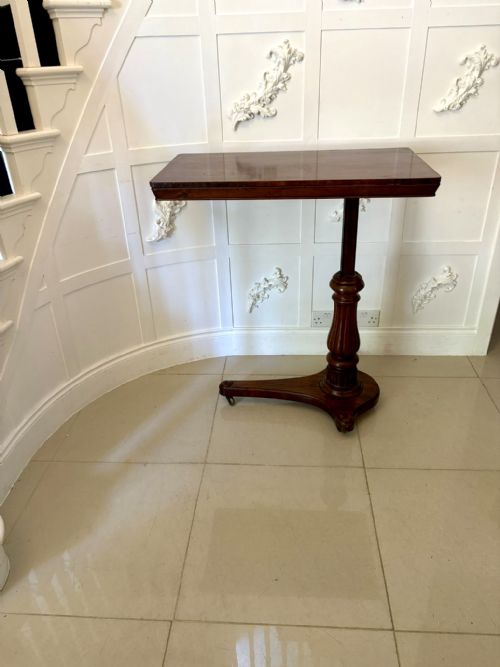


Adjustable Pedestal Table
An adjustable pedestal table brings mechanical ingenuity to your room, offering height or angle changes for reading, shaving or display.
Adjustable Pedestal Table
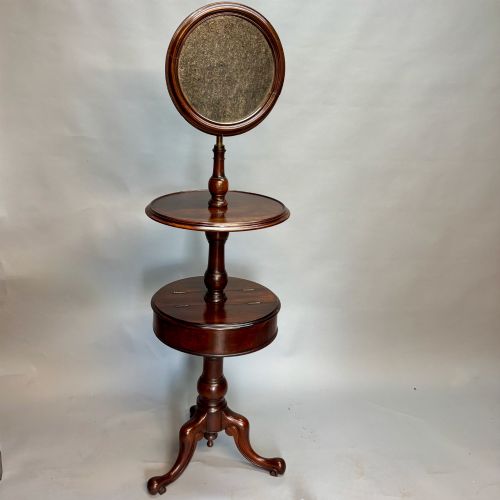
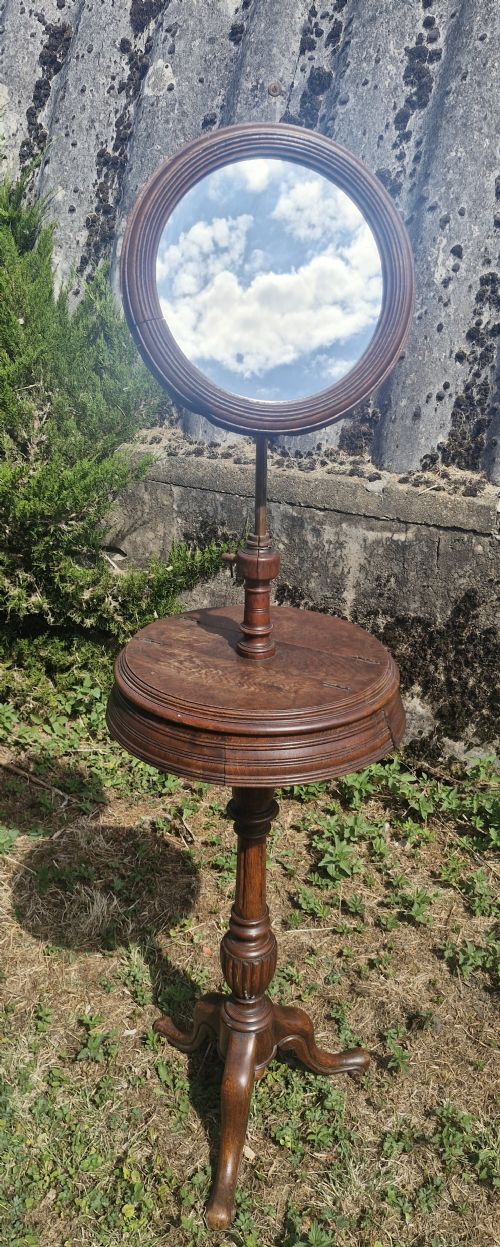
An adjustable pedestal table serves functional daily tasks through mechanisms built into a central column or tripod base. When you search for an adjustable pedestal table, you encounter Victorian shaving stands, reading tables, and music stands alongside occasional tables.
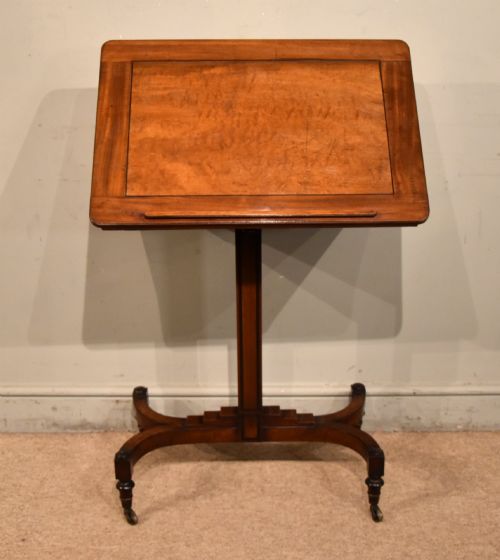
The selection ranges from Regency reading tables to Edwardian occasional pieces, with Victorian shaving mirrors forming a large part of the inventory. These items often feature telescopic adjustments or tilting surfaces designed to suit specific domestic activities.
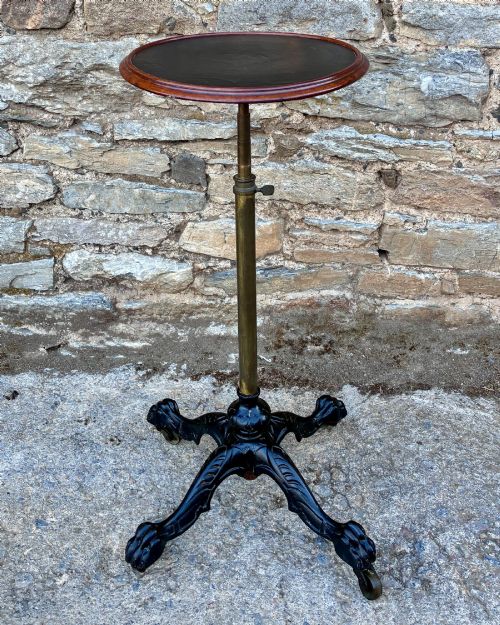
Materials span mahogany, rosewood, oak, and walnut, frequently combined with brass or cast iron components for the height-adjusting mechanism. The forms vary from simple tripod stands to elaborate desks and display tables.
How they were made
Cabinet makers utilised dense timbers like mahogany, rosewood, walnut, and oak to construct the shafts and table tops. These hardwoods provided the structural strength required for moving joints and weight-bearing pedestals.
Metal components in brass, bronze, cast iron, and chrome formed the functional screws, ratchets, and telescopic stems that allowed movement. Inlay work and turned woodwork added decorative detail to the central columns and tripod bases.
Listings feature items spanning the Georgian period through the 1930s, constructed in mahogany, rosewood, oak, walnut, brass, and chrome.
What varies in quality
The refinement of the mechanical movement distinguishes finer examples from simpler workshop output. Smooth travel on a telescopic brass column or a precisely engaging ratchet dictates the standard of execution.
Timber selection and secondary framing methods reveal the ambition of the piece. Well-figured mahogany or rosewood matched with solid brass fittings indicates a higher grade of manufacture than basic pine or secondary woods.
Gillows
The Adjustable Pedestal Table Glossary
- Telescopic
- A mechanism allowing one tube to slide inside another to alter height. This construction appears frequently in adjustable reading tables and shaving stands.
- Pedestal
- A single central support or column resting on a foot or tripod base. It carries the weight of the table top or mirror.
- Tripod
- A three-legged base providing stability for a central pedestal column. This format prevents rocking on uneven floors.
- Metamorphic
- An item designed to change shape or function through folding, raising or extending. These pieces combine multiple domestic uses in one object.
Adjustable Pedestal Table: Frequently Asked Questions
What is an adjustable pedestal table used for?
These tables served various practical functions in historic homes, from holding books and sheet music to assisting with shaving or grooming. The adjustable mechanism allowed users to alter the height or angle to suit their immediate requirements.
Today, they function well as versatile accent pieces or reading stands in a sitting room or study. Their mechanical interest adds a layer of engagement beyond static furniture.
How do I operate the height adjustment?
Depending on the era and design, adjustment is managed via a brass thumbscrew, a sliding telescopic inner shaft, or a ratcheted reading rest. Turning the collar or screw releases the inner column so you can raise or lower the surface.
Care should be taken when operating these mechanisms to support the weight of the top. Older metal threads and wooden collars require gentle handling to prevent binding or stripping.
How do I date an adjustable pedestal table?
Dating relies on timber choices, leg profiles, and the engineering of the metal hardware. Regency and William IV examples often show heavier rosewood and finely turned columns, while Victorian versions frequently incorporate cast iron or brass winding screws.
Later Edwardian and early twentieth-century pieces might feature simpler turned shafts or alternative materials like chrome. Comparing the construction details to dated examples helps narrow the period.
Where should I place one in my home?
An adjustable pedestal table suits spaces where flexibility is useful, such as beside an armchair for a book or drink. Their compact footprint on tripod bases allows them to fit neatly into corners or beside larger furniture.
Keeping them away from direct heat sources protects the polished hardwood surfaces and prevents the movement of wooden joints. Regular gentle dusting preserves the finish of both the timber and the metal fittings.