





Small Roll Top Bureau
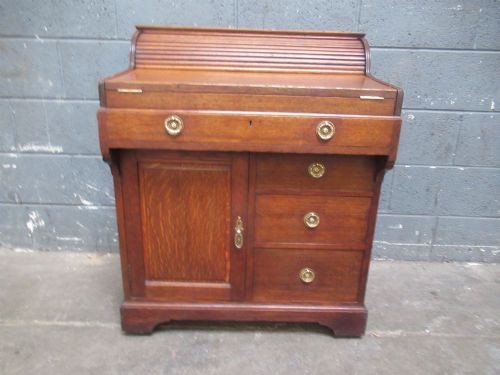
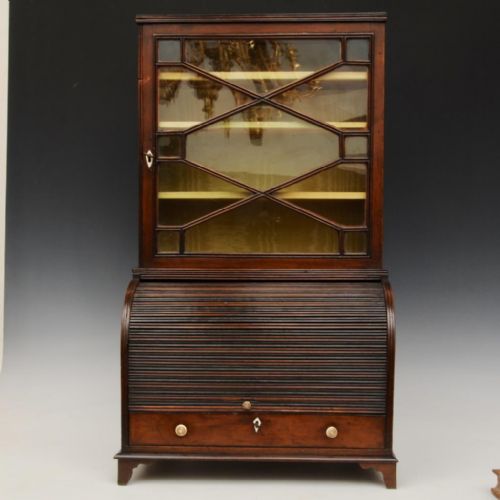
A small roll top bureau brings neatness and hidden compartments into a room, offering a compact writing surface enclosed by a curved cylinder lid.
Small Roll Top Bureau
A small roll top bureau combines a writing surface with enclosed storage, keeping papers concealed beneath a curved cylinder or tambour shutter. When you search for a small roll top bureau, you encounter compact desks designed for writing and correspondence rather than sprawling administrative work.
The pieces listed on this page span several eras, including the Georgian, Regency, and Victorian periods. You are most likely to meet mahogany and burr walnut examples, alongside French-influenced styles like Louis XV and Directoire.
Formations range from standard ladies desks and cylinder escritosires to miniature furniture and tambour writing tables. Each variation serves the fundamental purpose of providing a private writing space that locks shut when not in use.
How they were made
Cabinetmakers constructed these desks primarily using solid mahogany and walnut timbers, often applying rich burr walnut or satinwood veneers to the exterior surfaces. Inlaid details and fine parquetry further decorated the woodwork, showcasing the precision of period joinery.
Fittings frequently incorporated brass handles, locks, and gallery rails, while the writing slopes themselves were often inset with tooled leather surfaces. Some French examples integrated marble tops and intricate cylinder mechanisms that operated smoothly with internal linkage.
Small Roll Top Bureau Retail Price Guide 2026
Typical asking prices for small roll top bureau among the pieces listed under this phrase on Sellingantiques today, from the lower quarter to the upper quarter. They describe what is for sale here now, not the wider market.
Listings feature woods including mahogany, burr walnut, and satinwood, alongside decorative accents of brass, glass, and marble.
What varies in quality
The refinement of the cylinder mechanism dictates much of the distinction between pieces, where superior examples glide effortlessly without binding in the runners. Superior construction is also evident in the selection of timber figure, such as well-matched burr walnut veneers rather than plain secondary woods.
Internal arrangement determines another tier of distinction, with finer desks featuring meticulously fitted pigeonholes, secret drawers, and substantial brass hardware rather than rudimentary compartments.
The Small Roll Top Bureau Glossary
- Bureau
- A desk with a sloping lid or cylinder shutter enclosing compartments for writing materials and papers. It provides a secure place to store correspondence.
- Cylinder desk
- A writing table featuring a rounded, quarter-circle wooden shutter that slides back to reveal the writing surface and interior drawers. This mechanism covers the entire desk top when closed.
- Tambour
- A flexible shutter made from narrow vertical strips of wood glued to a canvas backing, allowing it to slide around a curved track. It functions similarly to a roll top.
- Parquetry
- Geometric mosaic woodwork used for decorative veneer on furniture surfaces. Craftsmen arrange small pieces of contrasting timbers to create patterns.
- Davenport desk
- A compact small desk featuring a sloped writing lid and drawers opening to the side. It gained popularity during the nineteenth century for drawing room use.
Small Roll Top Bureau: Frequently Asked Questions
How do I use a roll top bureau?
Slide the cylinder or tambour shutter upward to reveal the writing surface and internal pigeonholes. This action opens the workspace while keeping your papers neatly contained.
Lower the shutter and engage the lock when you finish writing to secure the contents. The curved mechanism protects your correspondence from dust and view.
Where should I place a small bureau?
Position your desk in a study, drawing room, or bedroom where floor space is limited. Because these pieces are compact, they fit well against smaller wall sections.
Ensure the room humidity remains stable to protect the timber veneers and leather writing surfaces. Keep the desk away from direct heat sources to prevent wood movement.
How do I identify a Georgian bureau?
Look for restrained proportions, solid mahogany construction, and understated brass hardware characteristic of the eighteenth century. These pieces rely on architectural lines rather than heavy ornamentation.
Examine the secondary woods inside the drawers, such as oak or pine, which help confirm the period of manufacture. Hand-cut dovetails provide further indication of age.
What is the difference between cylinder and roll top?
A cylinder desk uses a solid, single-piece curved wooden shell that slides along a curved track. It represents a more formal and structurally demanding construction method.
A roll top typically employs a tambour shutter made of multiple slatted strips. This flexible construction allows the shutter to follow tighter curves around the desk mechanism.