


Small Porcelain Urn
A small porcelain urn brings concentrated decoration and form to a mantel or cabinet, offering the refinement of larger vessels in miniature.
Small Porcelain Urn
When you search for a small porcelain urn, you encounter compact decorative vessels, cabinet pieces, and miniature vases created across the nineteenth and twentieth centuries. These objects frequently take the form of campana shapes, twin-handled vases, and bud holders designed for display rather than utility.
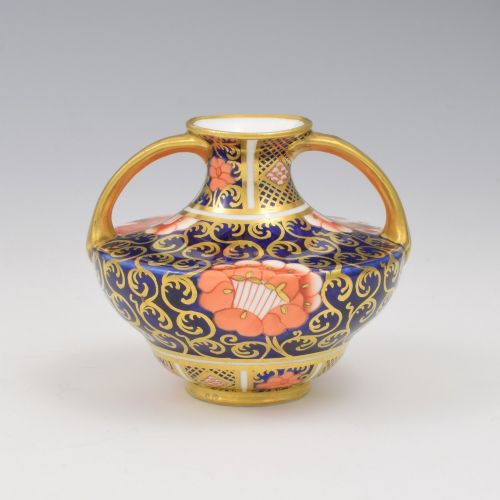
The versions most commonly met on this page span the Victorian and Edwardian eras, alongside Japanese Satsuma and Imari wares from the Meiji period. Makers such as Royal Crown Derby, Royal Worcester, and Doulton produced these diminutive pieces to showcase hand painting, gilding, and intricate enamel work.
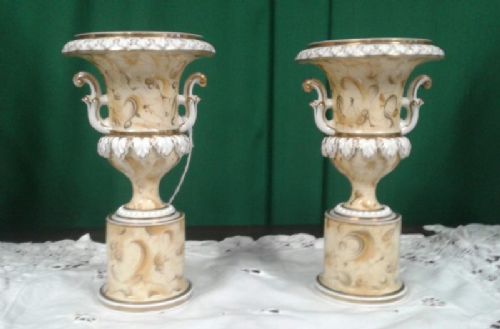
Forms range from pairs of matching mantel ornaments to single cabinet specimens decorated with birds, floral panels, and cobalt glazes. Each piece reflects the prevailing revival styles of its period, drawing upon Rococo, classical, and Japanese aesthetic influences.
What varies in quality
The standard of a small porcelain urn depends upon the crispness of its moulding and the precision of its hand-painted decoration. Superior examples display finely rendered brushwork, secure gilding, and balanced proportions that elevate a miniature form into a work of art.
Maker attribution also influences standing, as established potteries like Royal Worcester or Royal Crown Derby maintained rigorous standards for their ceramic bodies and enamels. Pieces with intact gold leaf, vibrant cobalt colours, and well-preserved patterns represent the finer end of the range.
A tiny hand-painted bird perched among gilded peony blossoms on a miniature porcelain vase.
Royal Crown Derby·Royal Worcester·Doulton Lambeth·Meissen·Moorcroft Macintyre
The Small Porcelain Urn Glossary
- Campana
- A bell-shaped vessel with a flared rim, inverted body, and pedestal foot, frequently utilised for classical urn designs. This silhouette originates from ancient Roman pottery.
- Imari
- A style of Japanese export ceramic characterised by a palette of underglaze blue, iron red, and gold. Victorian and Edwardian European potteries frequently produced their own interpretations of this aesthetic.
- Gilding
- The application of gold leaf or powdered gold to the surface of porcelain or ceramic. It highlights rims, handles, and decorative borders.
- Enamel
- Opaque vitreous composition fused to the surface of porcelain through firing to provide rich colour. It allows for intricate, raised patterns on cabinet pieces.
Small Porcelain Urn: Frequently Asked Questions
What were small porcelain urns used for?
These vessels served primarily as decorative ornaments on mantelpieces, side tables, and within display cabinets during the nineteenth and early twentieth centuries. Their compact size allowed them to bring colour and refined form to interior spaces without occupying significant room.
Some specific forms functioned as bud vases or posy holders for single stems, though many remained purely ornamental items designed to showcase ceramic artistry and hand painting.
How do I date a small porcelain urn?
Dating relies upon maker marks stamped or painted on the base, stylistic clues such as Victorian revivalism or Edwardian Imari patterns, and the specific composition of the ceramic body. Examining the style of hand painting and the nature of the glaze provides further chronological context.
Reference guides for specific factories like Royal Crown Derby or Doulton help match base ciphers and pattern numbers to exact production decades between the late nineteenth and mid-twentieth centuries.
How should I display them at home?
Small porcelain urns suit enclosed cabinets, mantelpieces, or dedicated display shelves where their detailed hand painting and gilding can be examined closely. Grouping pairs or small collections creates visual balance and highlights matching forms.
Because of their miniature scale and delicate painted surfaces, place them away from high-traffic areas where they might be accidentally knocked or displaced.
Are Japanese and European urns different?
Japanese examples from the Meiji period, such as Satsuma and Imari wares, typically feature distinct earth-based bodies, intricate enamel work, and dense patterns often incorporating gold leaf. European pieces from factories like Meissen or Royal Worcester generally utilise refined porcelain bodies with classical shapes or transfer-printed and hand-painted motifs.
Both traditions influenced one another during the late nineteenth century, leading to European adaptations of Japanese aesthetic styles alongside traditional export production.