

Small Occasional Table Drawer
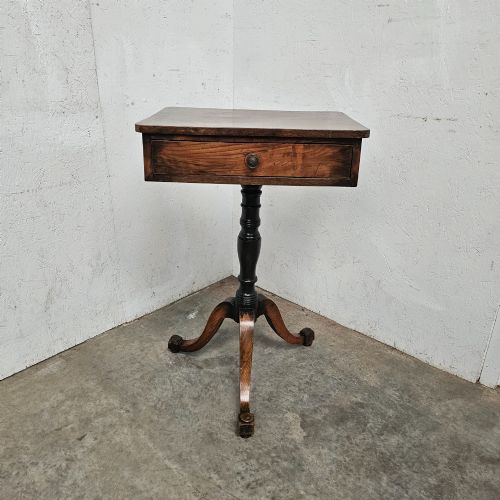
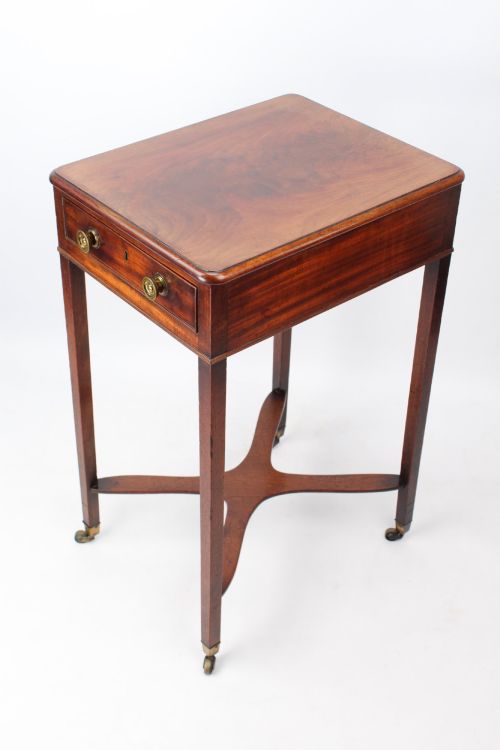
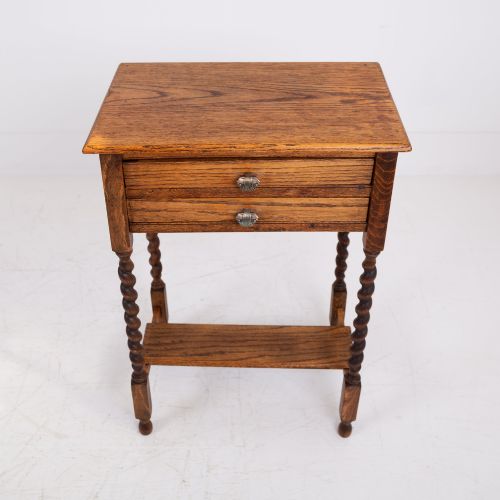
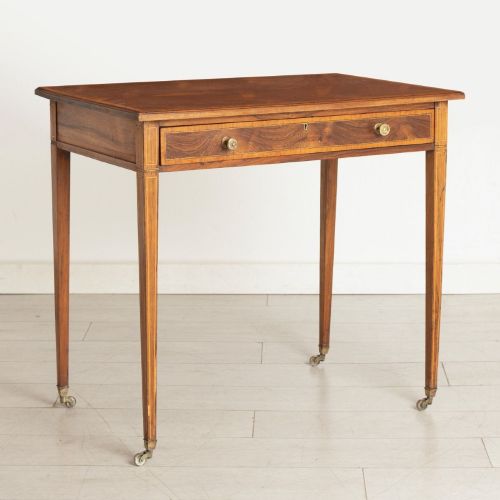
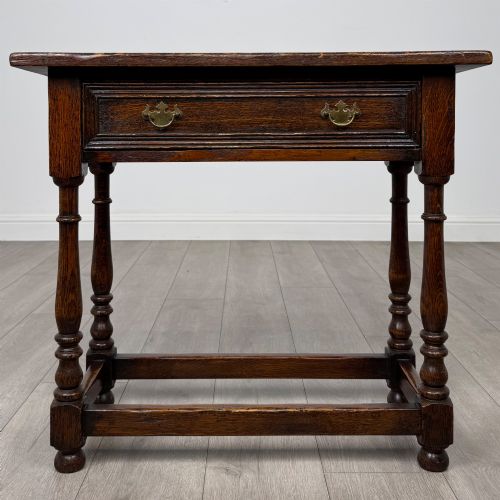
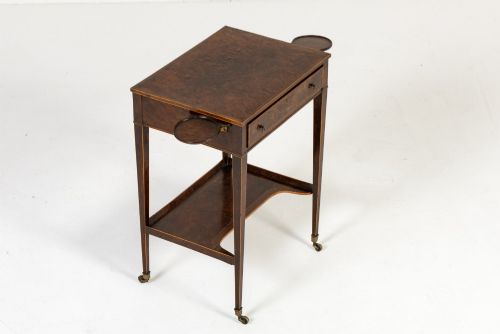
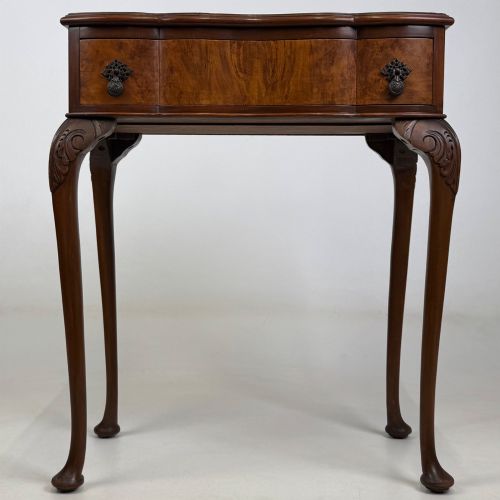
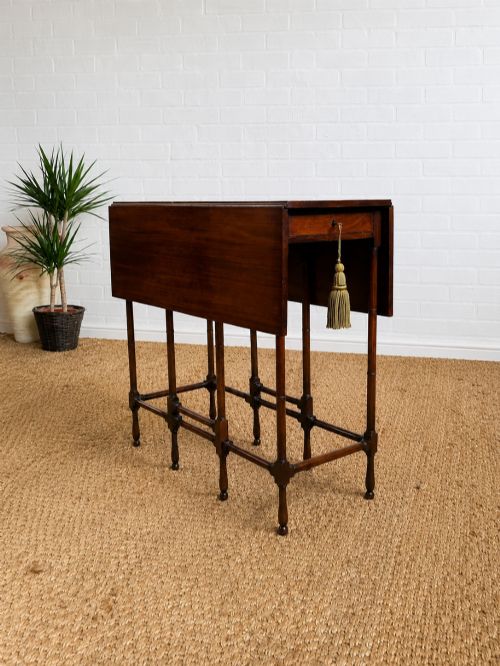
These small occasional table drawer pieces offer compact surface space and neat storage, spanning periods from the seventeenth century through to the Edwardian era.
Small Occasional Table Drawer
A small occasional table drawer provides a compact surface paired with a functional compartment for small items, fitting easily beside seating or against walls. When searching for a small occasional table drawer, buyers encounter forms ranging from Georgian lowboys to Edwardian lamp tables and Pembroke tables.
The selection includes pieces spanning the seventeenth century, the eighteenth century, the nineteenth century, and the early twentieth century. Common formats take the shape of side tables, writing tables, and bedside tables, reflecting diverse domestic uses across different eras.
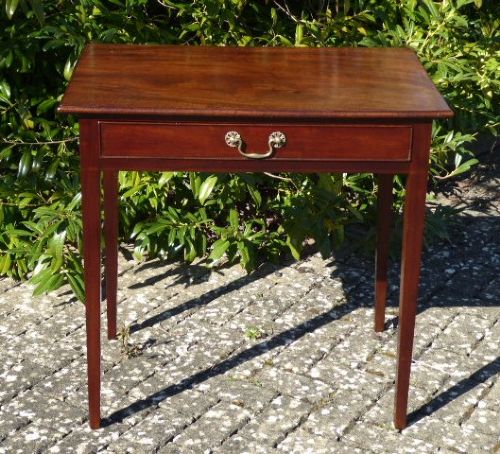
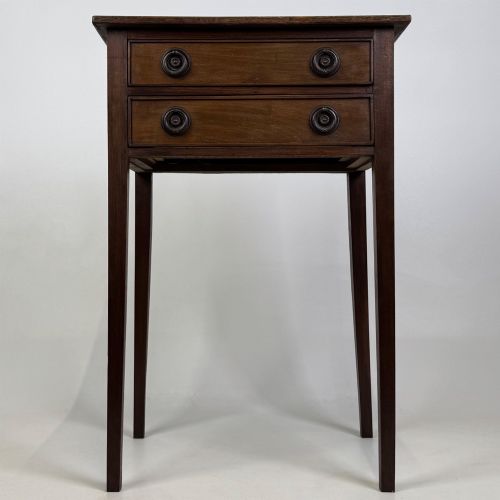
Mahogany and oak dominate the available forms, alongside walnut, burr walnut, rosewood, and fruitwood. These timbers appear across distinct stylistic revivals, including Jacobean Revival, Queen Anne Revival, and George III designs.
How they were made
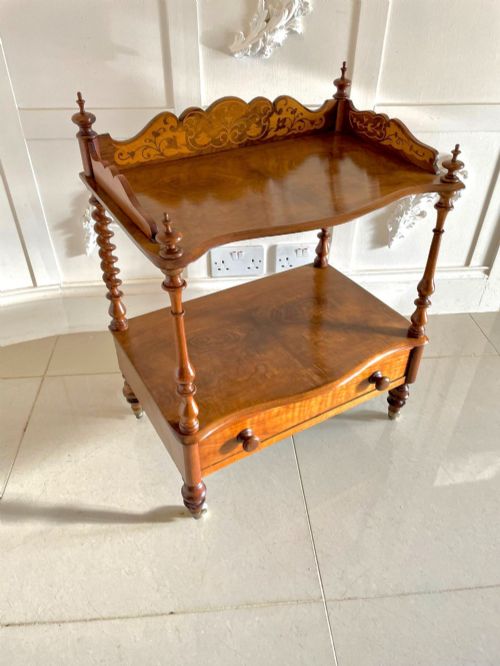
Cabinet makers utilised solid hardwoods such as mahogany, oak, and walnut, frequently enhancing surfaces with figured veneers, burr walnut, or burr yew wood. Joinery relied on traditional construction methods suited to compact furniture frames.
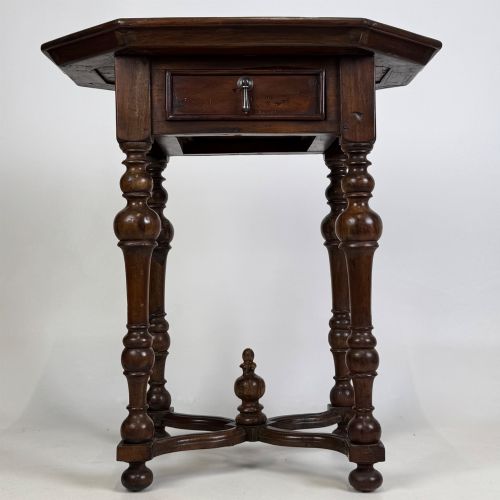
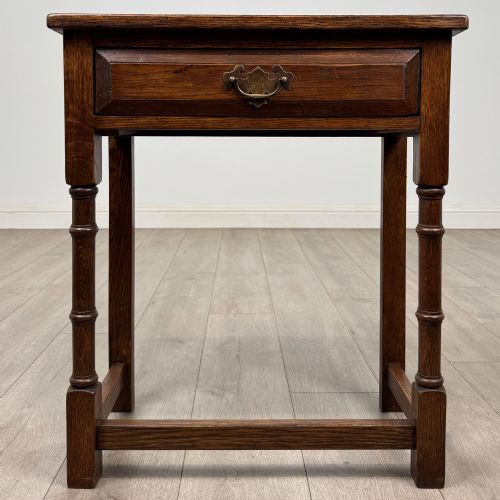
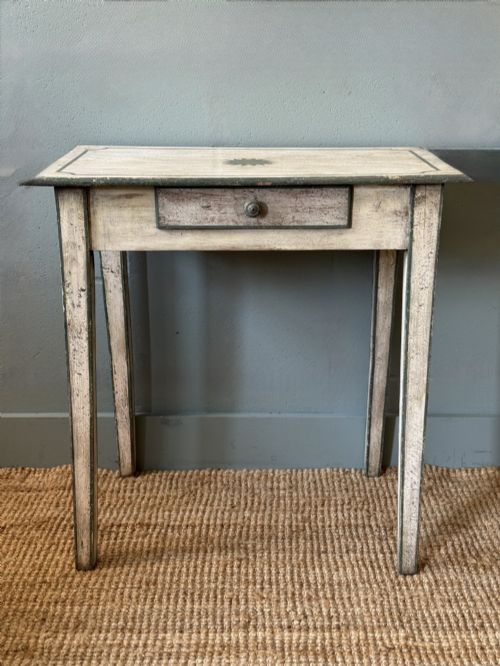
Hardware details typically include brass handles and pulls fitted to the integrated drawer compartments. Turning techniques produce varied leg designs, from bamboo-turned supports to barley twists and straight tapered legs.
Listings feature woods including mahogany, oak, walnut, burr walnut, rosewood, fruitwood, and burr yew wood.
What varies in quality
The refinement of timber selection defines the upper tier of pieces, particularly where figured veneers or burr timbers display deliberate grain patterns. Subtle details such as finely drawn proportions and careful edge moulding elevate simpler forms.
Structural integrity depends on the precision of the drawer construction and the stability of the legs and joints. Original hardware and uncompromised timber surfaces distinguish better-preserved examples from heavily altered pieces.
The Small Occasional Table Drawer Glossary
- Lowboy
- A small dressing table or side table featuring one or more rows of drawers beneath the work surface. These low tables date primarily from the eighteenth century.
- Pembroke table
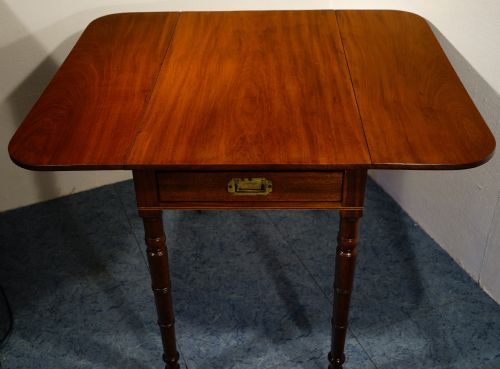
- A rectangular drop-leaf table with hinged flaps on either side, frequently incorporating a single drawer at one end. This form gained popularity during the Georgian period.
- Drop-leaf table
- A table equipped with hinged leaves that fold down to save space when not in use. Such mechanisms allow the footprint of the furniture to alter quickly.
- Burr walnut
- Wood taken from the gnarled growth of a walnut tree, yielding complex, swirling grain patterns. Cabinet makers utilised these highly decorative veneers for tabletops and drawer fronts.
- Jacobean Revival
- A nineteenth or twentieth-century design style imitating the robust oak furniture of the early seventeenth century. Pieces in this style often display dark finishes and turned supports.
Small Occasional Table Drawer: Frequently Asked Questions
Where were these tables used?
These compact tables served multiple functions throughout the home, acting as lamp tables, writing surfaces, or bedside stands. Their modest proportions allowed them to fit easily into smaller rooms or narrow hallways.
Drawers provided convenient storage for writing equipment, candles, or personal items, keeping surfaces clear for daily use.
How do I date a table?
Dating relies on identifying the primary timber, construction methods, and stylistic cues present in the legs and handles. Eighteenth-century pieces often show simpler geometric drawer linings compared to later Victorian or Edwardian examples.
Revival pieces from the early twentieth century borrow motifs from earlier periods, requiring careful inspection of the timber ageing and internal secondary woods.
What is a lowboy?
A lowboy is a small table with a low frame and integrated drawers, functioning historically as a dressing table or side table. Georgian examples in mahogany or walnut represent traditional forms of this furniture type.
Their restrained height and practical drawer storage made them versatile additions to bedchambers and parlours alike.
Are these tables sturdy?
Solid hardwood construction in timbers like oak, mahogany, and walnut provides inherent durability for daily placement. Turned legs and framed joints offer structural stability across side tables and occasional pieces.
Drop-leaf mechanisms require sound hinges and support brackets to ensure the folding flaps remain secure when raised.