
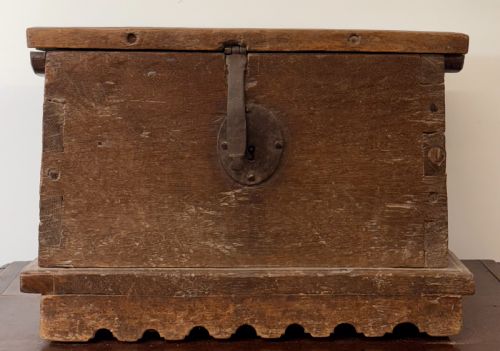
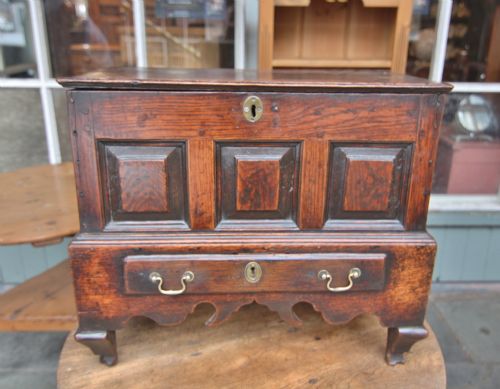
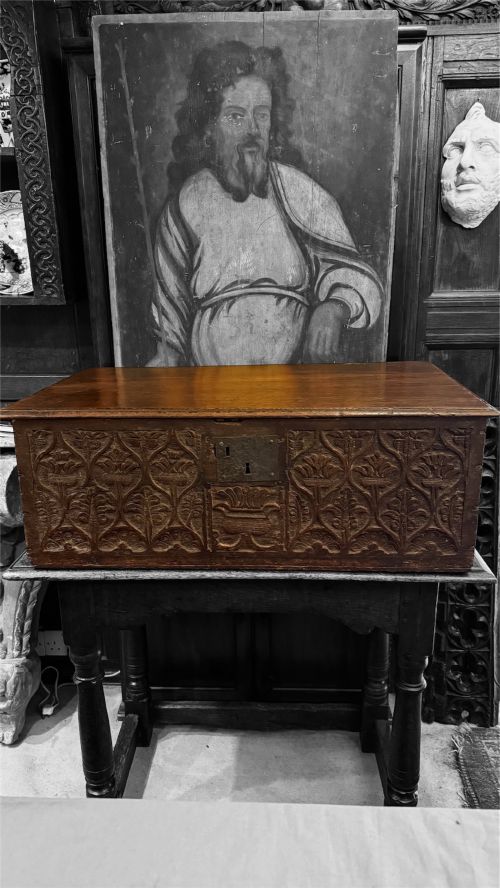
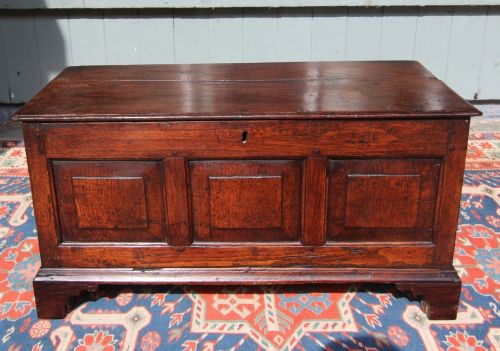
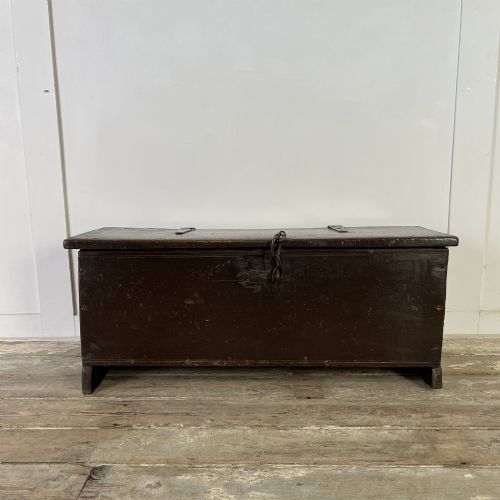


Small Oak Wooden Trunk
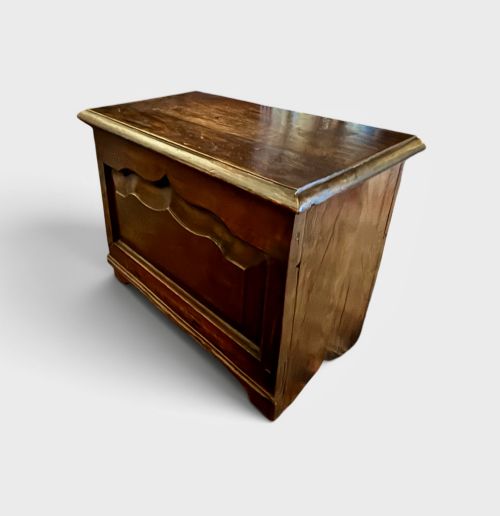
A small oak wooden trunk brings robust storage and centuries of craft into a room.
Small Oak Wooden Trunk
A small oak wooden trunk serves as a durable receptacle for household goods, blankets and documents. Buyers searching for a small oak wooden trunk encounter pieces spanning from the sixteenth century through the Georgian period up to nineteen hundred.
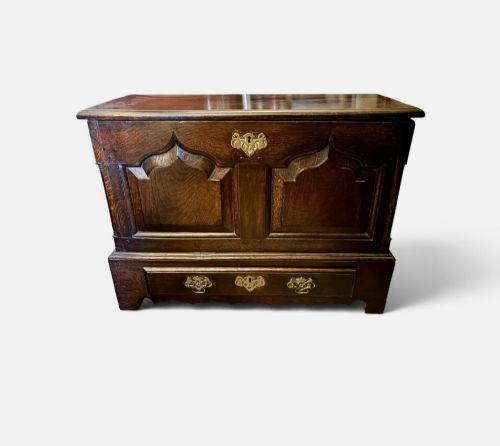
The assortment includes regional forms such as the Welsh coffer bach, alongside miniature boxes and mule chests. Seventeenth-century English examples and Flemish imports appear frequently among the listings.
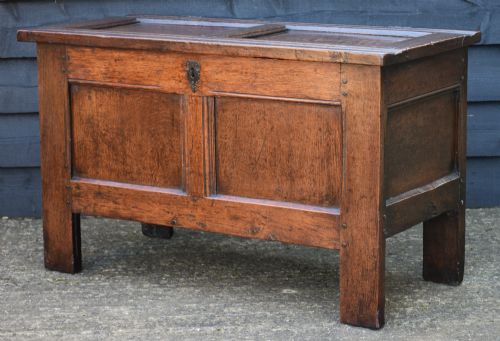
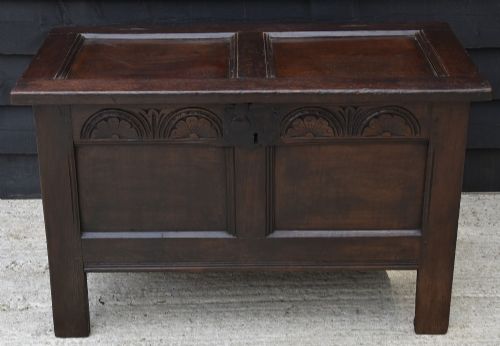
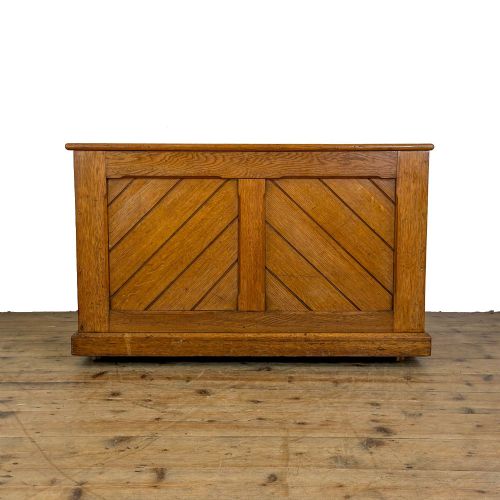
These compact chests range from plain boarded constructions to intricately panelled or carved variants. Their modest proportions make them suitable for bedside storage or fireside placement.
Materials and construction methods
Solid oak forms the primary structural material of these pieces, often supplemented by secondary elements of iron, brass and wrought iron for hinges, locks and brackets. Wood inlay and painted wood appear on specific decorative variants.
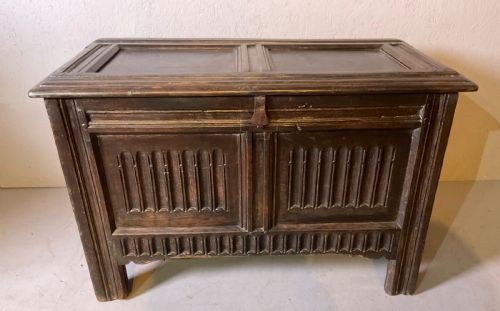
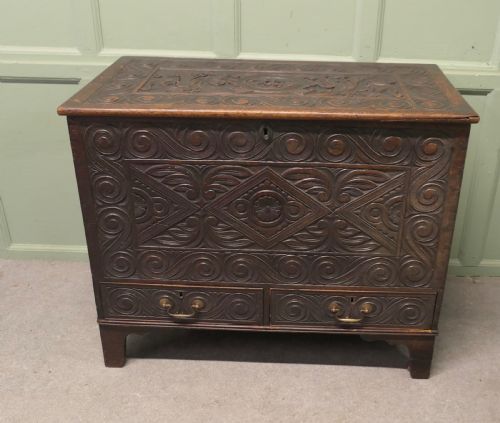
Makers utilised traditional joinery techniques including panelled framing and pegged joints to construct sturdy storage boxes. Bone details and hand-carved surfaces, such as linen fold panels and Green Man motifs, decorate particular examples.
The site listings feature solid oak construction spanning the sixteenth century to nineteen hundred, including regional Welsh coffer bach forms and English document boxes.
Judging quality and proportion
Quality rests in the crispness of the timber selection and the restraint or skill of the carving. Early pieces with untouched surfaces and original ironwork stand apart from heavily restored variants.
Proportion dictates desirability, particularly in miniature forms like the coffer bach where diminutive scale requires delicate balance. Finer items display tight grain in the solid oak and precise joinery that survives centuries of use.
The Small Oak Wooden Trunk Glossary
- Coffer bach
- A small Welsh chest traditionally used for holding linen or personal valuables. These miniature pieces often sit upon short legs or drawers.
- Mule chest
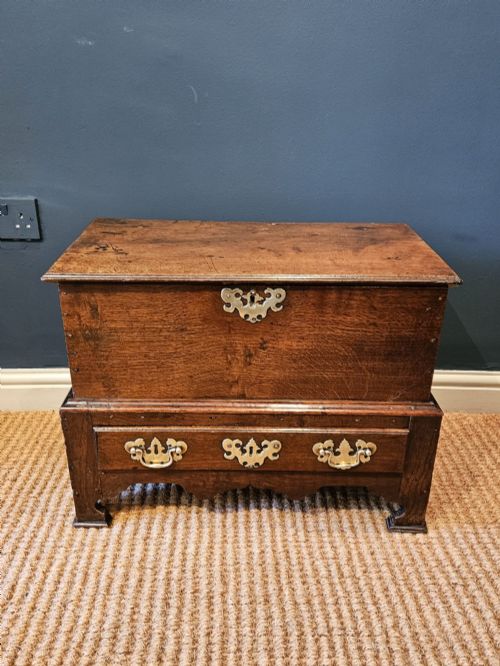
- A storage chest fitted with one or more drawers beneath the main compartment. They bridge the functional gap between a standard box and a chest of drawers.
- Linen fold
- A carved wooden panel motif resembling folded cloth. This style appears frequently on seventeenth-century English woodwork.
- Kist
- A regional term for a traditional wooden storage chest or box. They utilise sturdy boarded construction for domestic utility.
- Document box
- A compact receptacle designed for storing papers and legal deeds. These smaller lidded boxes often include internal compartments.
Small Oak Wooden Trunk: Frequently Asked Questions
What is a coffer bach?
A coffer bach is a small Welsh chest made to hold valuables or linen. These miniature pieces often include a single drawer beneath the main storage compartment.
Craftsmen built them in domestic workshops across Wales during the seventeenth and eighteenth centuries. Their small scale made them popular gifts for marriages or significant family events.
How old are these small trunks?
The available pieces span multiple centuries from the late sixteenth century onwards. Seventeenth-century Jacobean and Elizabethan examples sit alongside Georgian items and later nineteenth-century interpretations.
Construction details, timber patination and lock mechanisms help indicate the specific period of origin. Earlier pieces often display pegged joints and hand-riven oak boards.
Where were these small chests used?
People placed these compact boxes on tables, desks or the floor for daily storage needs. They served to keep legal documents, Bibles, linen and personal trinkets secure.
Today they function as bedside boxes, fireside bins or decorative surface storage in living spaces. Their modest footprint allows them to fit easily into modern rooms.
What woods were used in making them?
Solid oak serves as the predominant timber across the entire selection of trunks and coffers. Artisans selected quarter-sawn oak for its strength and distinctive grain figure.
Some examples incorporate minor decorative elements in painted wood, bone or inlay. Iron and brass hardware provided necessary functional reinforcement for the lids and corners.