

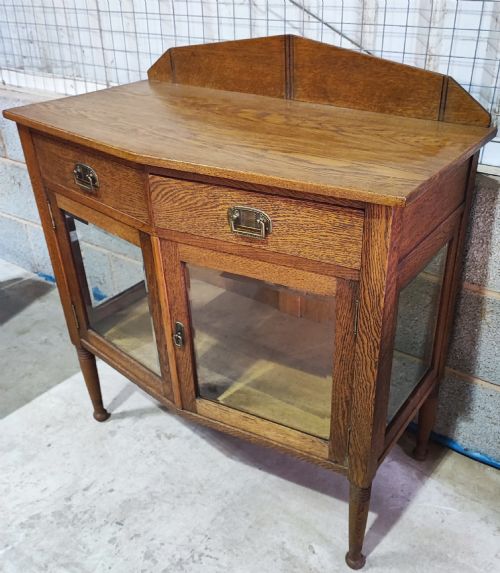
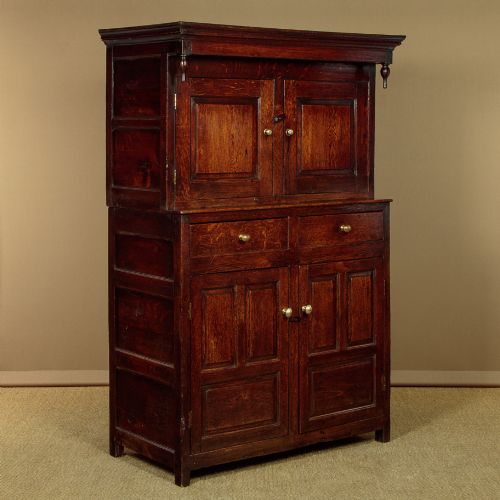
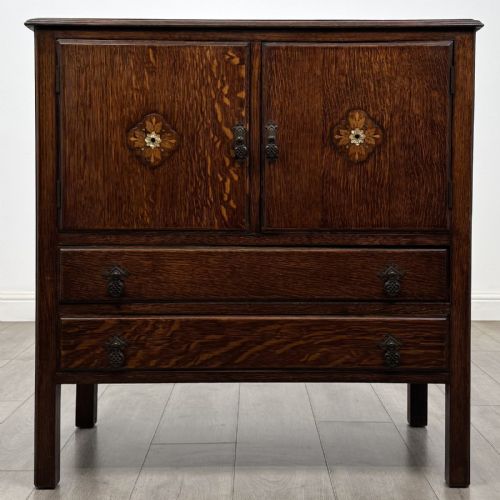
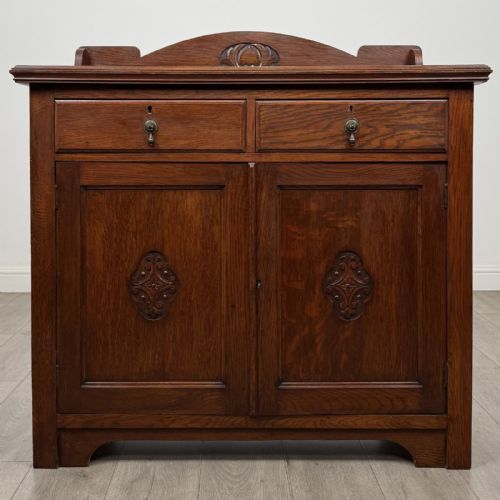


Small Oak Sideboard Cabinet
These small oak sideboard cabinet pieces bring enduring timber storage into compact rooms.
Small Oak Sideboard Cabinet
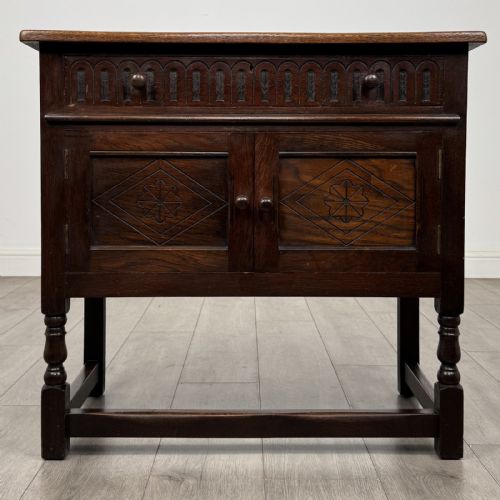
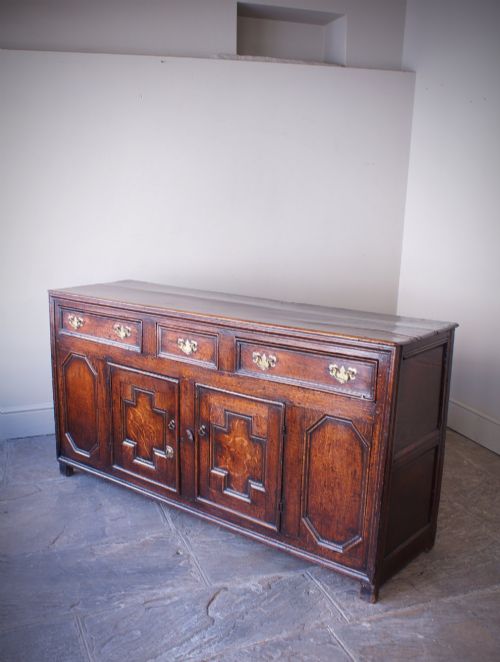
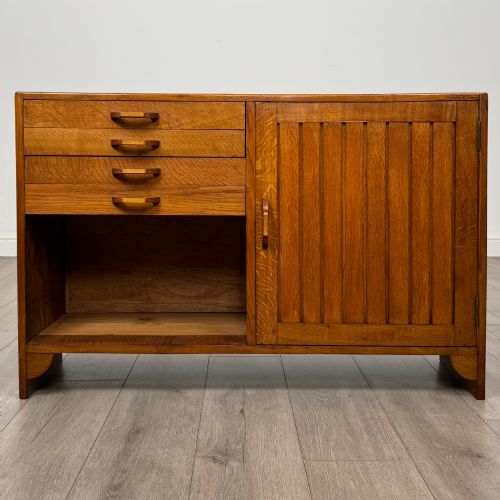
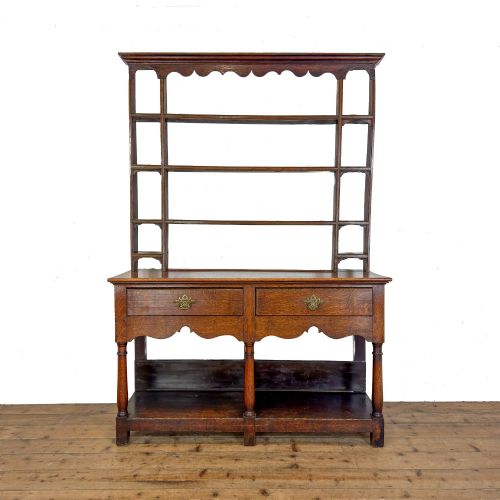
When you search for a small oak sideboard cabinet, you encounter compact timber storage spanning several centuries of British cabinet making. The selection on this page ranges from early seventeenth-century country pieces and eighteenth-century Welsh examples to Edwardian revivals and nineteen-twenties modernist designs.
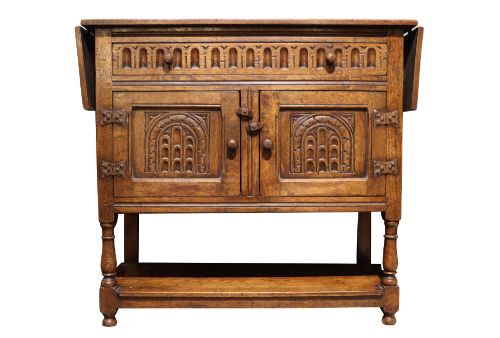
Most pieces you meet here originate from the Edwardian period or the nineteen-twenties, often taking the form of low cupboards, drop-leaf side cabinets, or mirrored sideboards. These smaller proportions suit modern domestic spaces while retaining traditional timber construction and historic character.
Materials and construction methods
Makers built these pieces primarily using solid oak, frequently enhanced with brass handles, iron hinges, and occasionally glass or painted elements. Workshops utilised traditional joining techniques, framing solid timber panels to allow for natural seasonal movement in the wood.
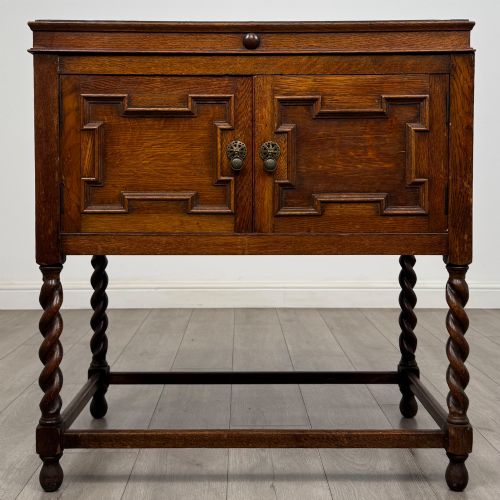
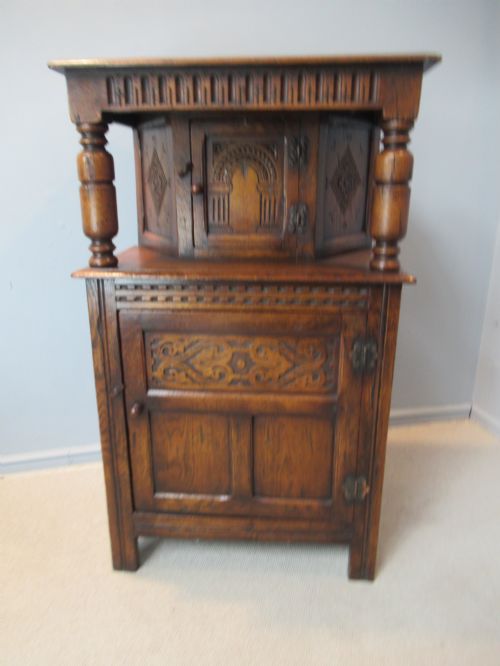
Surface treatments vary widely across the periods represented, including limed finishes, golden wax polishes, and heavy hand-carving in Jacobean or linenfold styles. Specialised pieces feature distinct decorative details such as tambour doors, barley twist legs, and raised galleries.
Small Oak Sideboard Cabinet Retail Price Guide 2026
Typical asking prices for small oak sideboard cabinet among the pieces listed under this phrase on Sellingantiques today, from the lower quarter to the upper quarter. They describe what is for sale here now, not the wider market.
One robust side cabinet bears original sign-writing for the Steinkeller Beer Keller, hinting at a lively past life.
Distinctions in quality
Quality in these cabinets rests upon the selection of timber, the crispness of hand-carving, and the integrity of the original construction. Superior examples display thoughtful grain matching and robust framing that withstands daily use without shifting.
Maker attribution and original hardware elevate certain pieces significantly above standard commercial production. Subtle variations in proportions and the retention of honest surface patination distinguish finer workshop output from simpler vernacular furniture.
Peter Waals·Heals of London
The Small Oak Sideboard Cabinet Glossary
- Jacobean Revival
- A nineteenth and twentieth century style imitating seventeenth-century furniture forms. It typically incorporates dark oak, geometric mouldings, and heavy turned supports.
- Linenfold
- A style of wood carving that resembles folded parchment or linen cloth. Cabinet makers frequently applied this motif to door panels during revival periods.
- Tambour door
- A flexible door constructed from narrow strips of wood glued to a canvas backing. This mechanism slides horizontally around a curved track on smaller sideboards.
- Court cupboard
- A traditional standing cupboard featuring an upper recessed section supported by pillars. Miniature and small versions serve as decorative storage units.
- Welsh dresser
- A dual-purpose dining room item comprising lower base cupboards and an upper plate rack. Smaller vernacular examples provide compact surface and shelf storage.
Small Oak Sideboard Cabinet: Frequently Asked Questions
Where should I place a small oak sideboard cabinet?
These compact cabinets fit well in dining rooms, hallways, and living spaces where floor space is limited. Their modest proportions allow them to function as serving surfaces or storage units without overwhelming smaller rooms.
Ensure the piece sits clear of direct heat sources to protect the solid oak timber and historic polishes from drying out over time.
How do I care for antique oak furniture?
Maintain the timber by applying a quality beeswax polish sparingly and buffing with a soft cloth. Avoid synthetic cleaning sprays that can damage older wax and oil finishes.
Keep the room at a stable humidity level to prevent the oak panels from expanding or contracting excessively.
What is the difference between an Edwardian revival and a 17th century piece?
Seventeenth-century furniture exhibits hand- cleft timber, peg joints, and centuries of natural patination acquired through use. Edwardian revival pieces replicate these early styles using modern workshop machinery and standardised hardware.
Examining the drawer construction, backboards, and tool marks helps determine the true age of the timber framework.
Can I use these cabinets for modern media storage?
Many of these smaller cupboards and sideboards accommodate books, glassware, and tableware effectively. Certain designs with open shelves or side compartments adapt well to contemporary living requirements.
Check the internal depth and shelf clearance carefully before storing bulky modern items.