


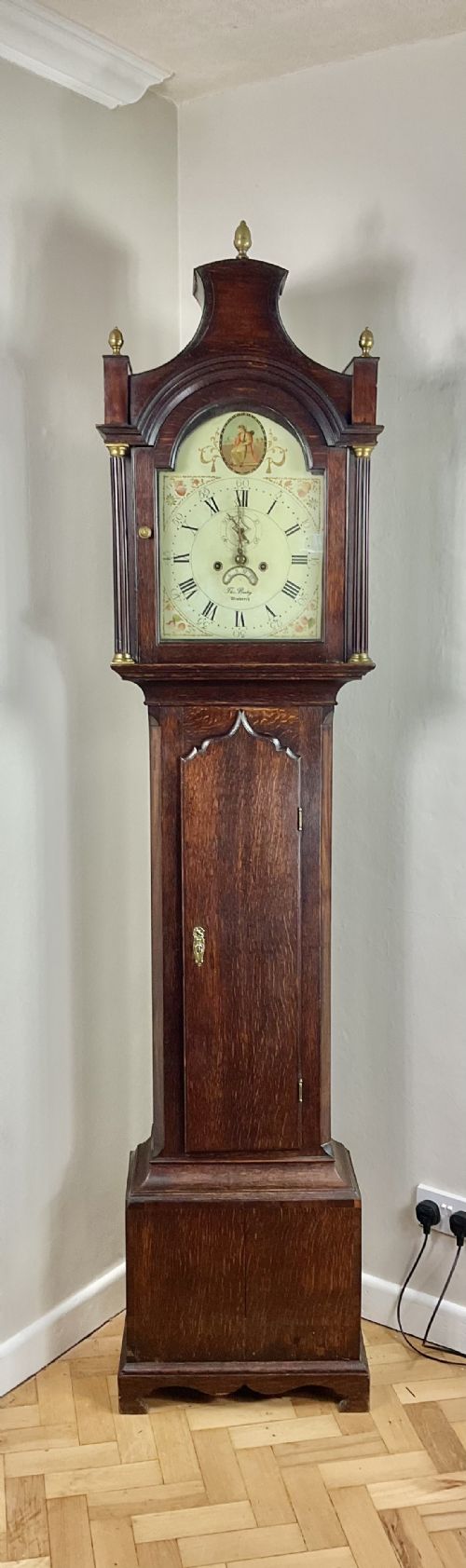


Small Oak Longcase Clock
A small oak longcase clock brings architectural presence and reliable timekeeping to a room without dominating the floor space.
Small Oak Longcase Clock
A small oak longcase clock represents a scaled-down version of traditional floor-standing timepieces, frequently referred to in records as grandmother or grandfather clocks. These compact versions span centuries of cabinetmaking, with examples emerging from the seventeenth century through the Georgian era and into Edwardian and later revivals.
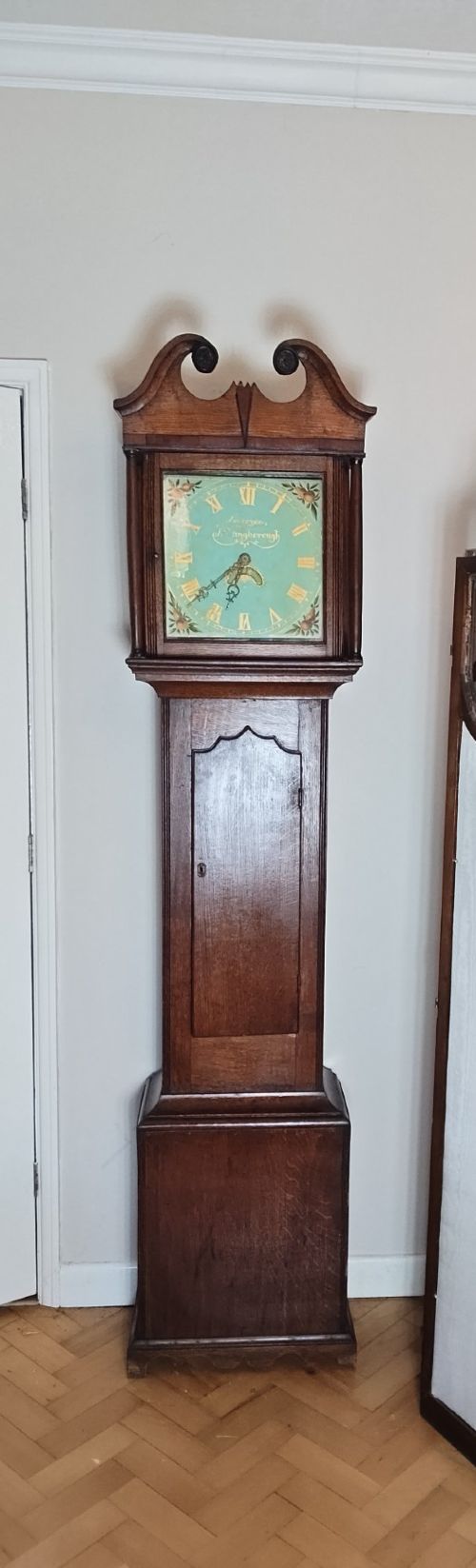
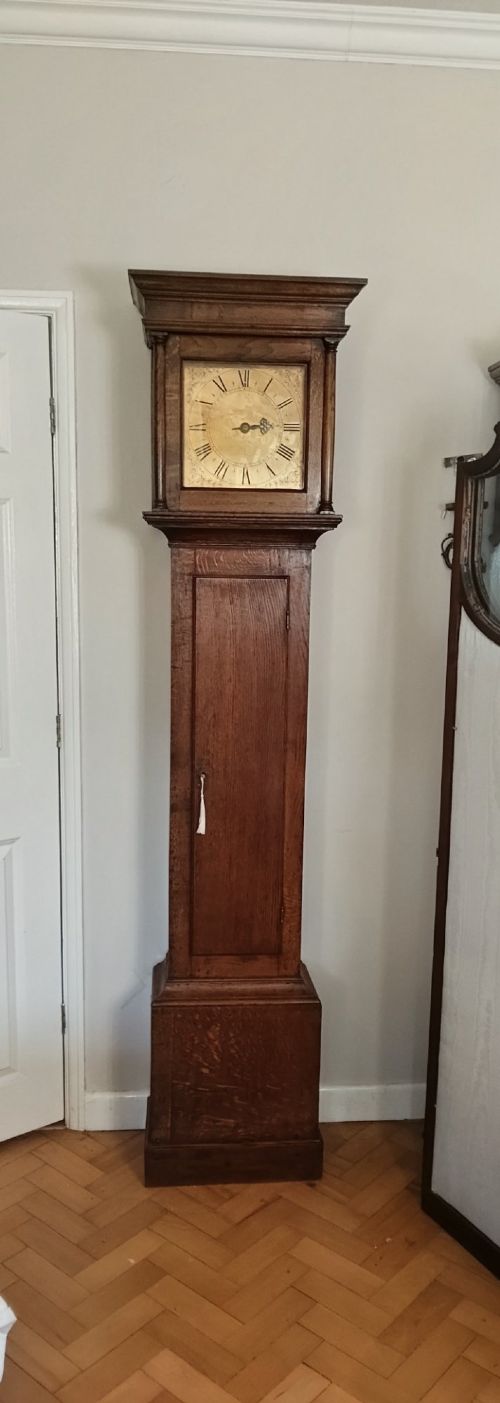
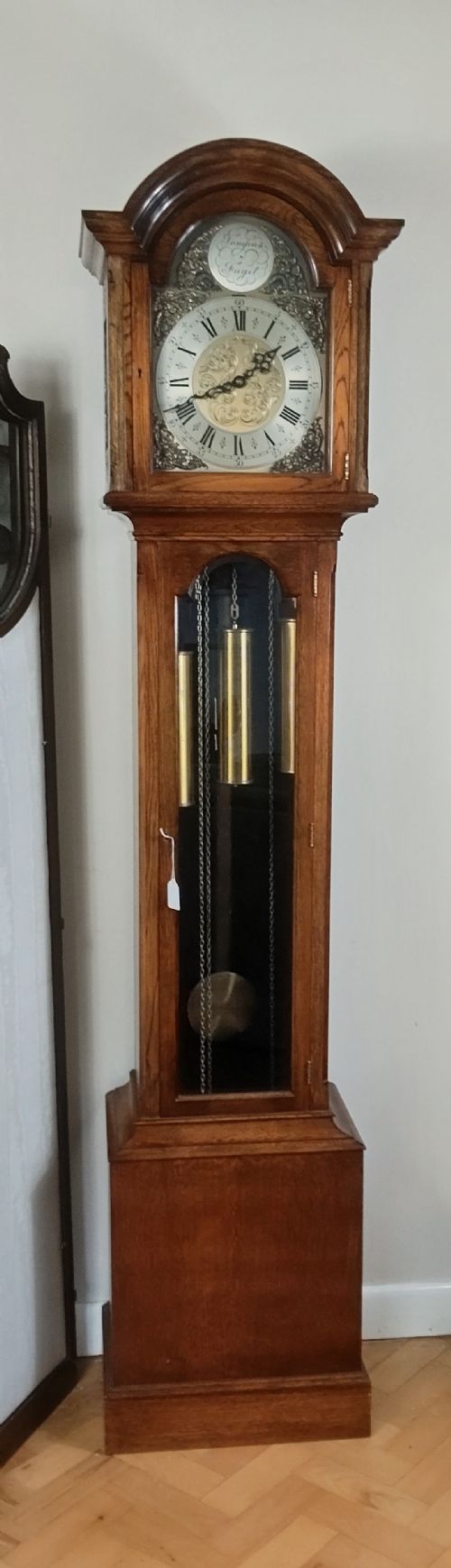
Buyers encounter variations featuring brass dials, painted iron faces, and compact proportions designed for lower ceiling heights or narrower hallways. The structural forms range from early thirty-hour cottage movements to later triple-weight chiming mechanisms housed in golden or honey-toned oak cases.
Materials and construction
Cabinetmakers utilised solid oak for the primary case construction, sometimes incorporating secondary woods such as mahogany or walnut for contrasting crossbanding and decorative detail. Glass panels protect the dial face and trunk door, allowing visibility of the swinging pendulum and weights.
Movements incorporate brass and iron components, with many later iterations featuring painted iron dials decorated with floral motifs or gilt figures. The joinery combines traditional pegged mortise and tenon construction with turned columns, bracket feet, and occasionally glazed trunk doors.
Some compact models squeeze triple-weight musical chime trains and underslung gongs into cases scarcely taller than a lucky owner.
Factors determining quality
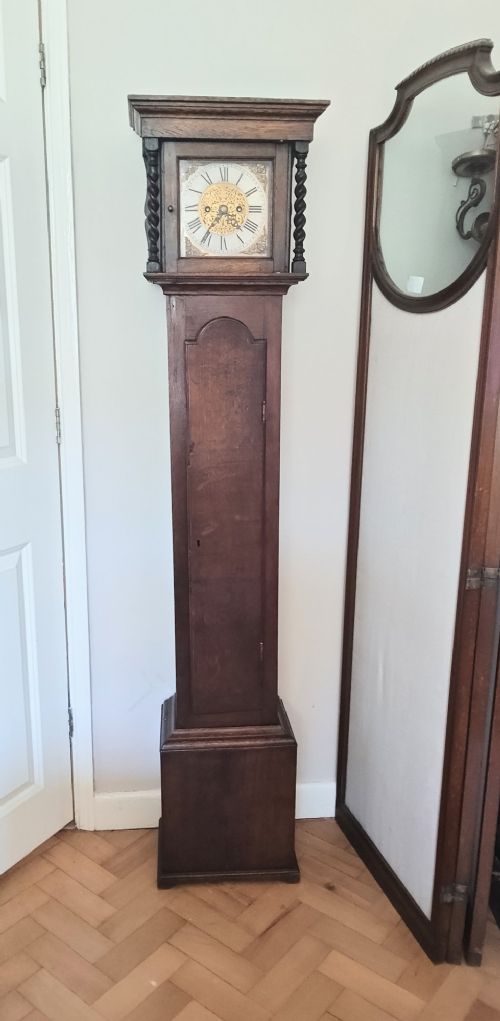
The refinement of the cabinet proportions and the crispness of the timber grain dictate much of the visual appeal. Cabinets featuring well-figured oak, harmonious detailing like barley twist columns, and balanced dial layouts sit at the upper end of the scale.
Mechanical complexity also separates examples, moving from basic thirty-hour movements to eight-day strikes and intricate triple-weight musical chiming trains. Original dial signatures and untouched movement components enhance historical integrity.
Mercer Hythe Kent·William Noke of Shropshire·Smith Chester·John Morse of Malmesbury·Summerhayes of Ilminster·John Higgs of Wallingford·Kirk of Kibworth·Hancock of Yeovil
The Small Oak Longcase Clock Glossary
- Grandmother clock
- A smaller version of the traditional longcase clock, typically measuring under seventy-two inches in height. These slender timepieces became popular during the twentieth century and late nineteenth century.
- Thirty-hour movement
- A clock mechanism requiring manual winding once a day. These simpler movements often feature in early cottage clocks.
- Eight-day movement
- A clock mechanism designed to run for slightly over a week before needing rewinding. This system uses two or three weights suspended by cords or chains.
- Dial
- The face of the clock where the hours and minutes are displayed. These can be made of engraved brass, painted iron, or silvered metal.
- Trunk door
- The long hinged door on the front of the clock case that provides access to the pendulum and weights. Some styles incorporate glass panels or astragal glazing bars.
Small Oak Longcase Clock: Frequently Asked Questions
How tall is a small longcase clock?
These compact floor clocks generally measure under seventy-six inches, with many grandmother clocks dropping lower to fit standard modern ceiling heights. Their reduced proportions make them suitable for smaller rooms where standard grandfather clocks would look out of scale.
Despite their shorter stature, they retain the traditional weight-driven mechanisms and pendulum operations of their taller counterparts.
What is the difference between a grandfather and a grandmother clock?
Historically, the distinction lies primarily in height and movement scale rather than strict terminology. Grandfather clocks traditionally stand taller, while grandmother clocks represent the slender, shorter variants produced in larger numbers during the Edwardian period and early twentieth century.
In marketplace records, the terms often overlap for slim oak floor clocks measuring around seventy inches high.
How do I wind an eight-day oak longcase clock?
Winding requires using a crank key to raise the weights inside the trunk via the winding holes on the dial face. Care must be taken not to overwind the movement and to allow the pendulum to settle into an even beat afterward.
Most eight-day models require attention roughly once a week to maintain accurate timekeeping.
How can I tell the age of an oak case?
Dating relies on examining the construction methods, hinges, timber patination, and dial style. Seventeenth-century and early Georgian examples display hand-cut nails, pegged joints, and brass dial plates, while Edwardian versions often house complex musical chime barrels and machine-toothed movements.
Changes in dial sizing and decorative motifs like bracket feet or inlaid mahogany crossbanding also point to specific stylistic periods.