


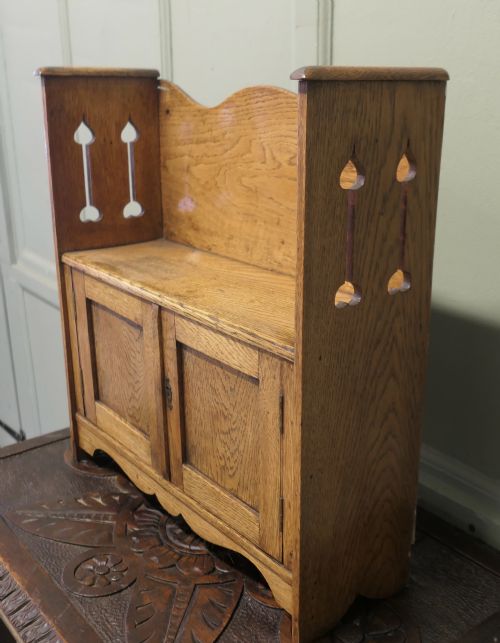
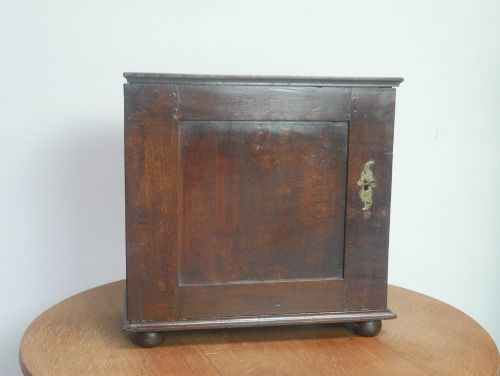
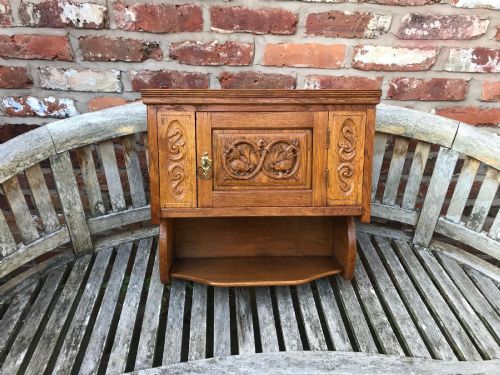
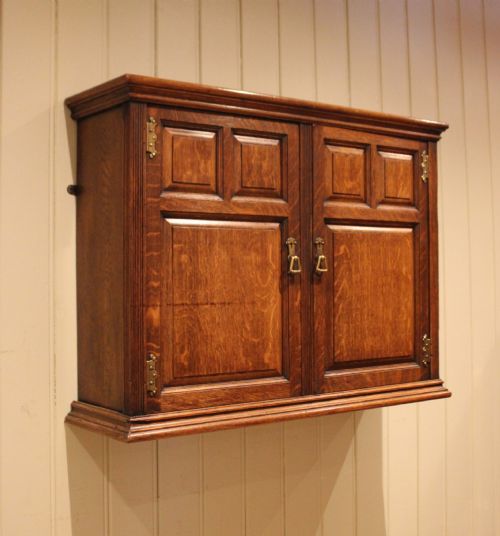
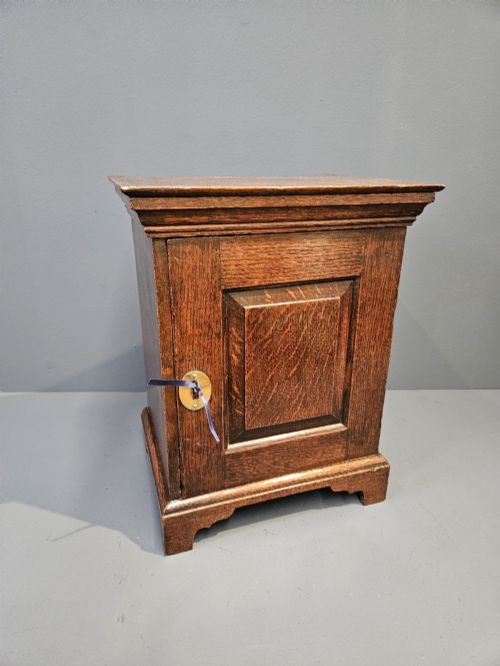
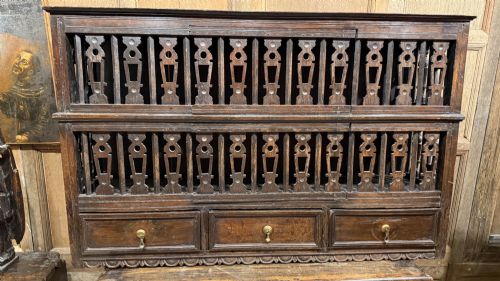
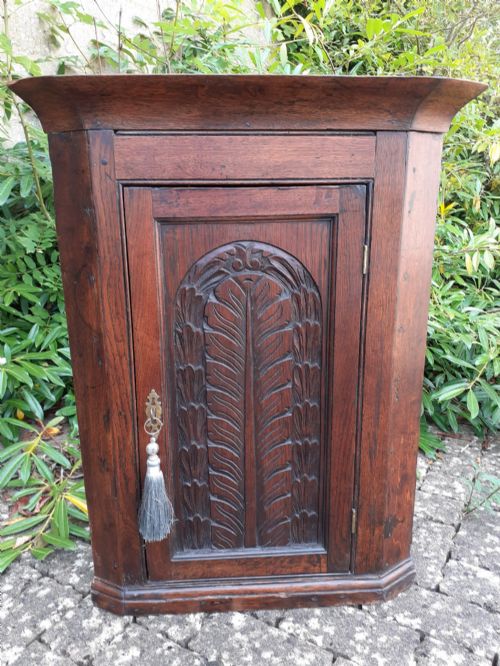


Small Oak Hanging Cupboard
A small oak hanging cupboard solves the eternal problem of storage in tight spaces while anchoring a room with honest timber.
Small Oak Hanging Cupboard
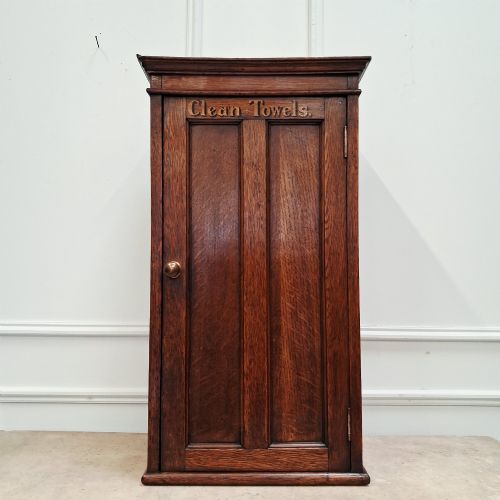
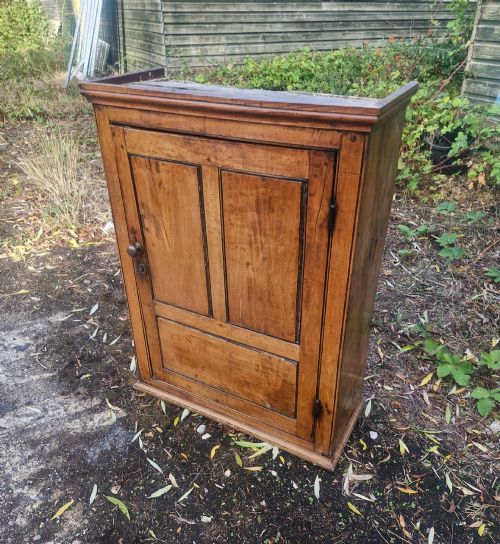
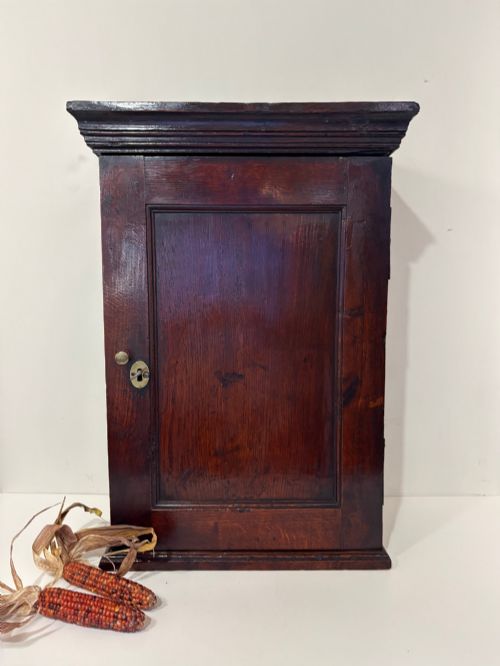
A small oak hanging cupboard is primarily designed to mount directly to a wall, freeing up valuable floor space in modest rooms. You will frequently encounter corner cupboards and spice cupboards meeting this exact description across the centuries.
The material palette centres firmly on solid oak, often paired with brass hinges, iron latches, and occasionally glass or fabric panels. Workshops ranging from provincial English makers to continental cabinetmakers produced these domestic wall units for everyday storage.
Examples stretch from the 17th century through the Georgian and Victorian eras into the Arts and Crafts period. The surviving forms include simple food cupboards, key cabinets, and fitted spice compartments with small internal drawers.
Materials and Construction
Carpenters relied on solid oak planks assembled with traditional joinery such as mortise and tenon frames. Secondary woods like pine sometimes appear on internal shelves or backboards.
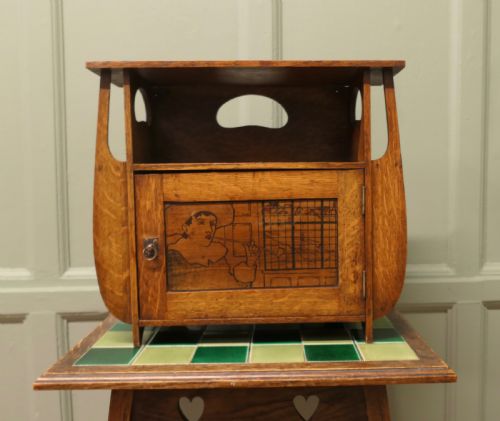
Iron and brass hardware, including butterfly hinges and escutcheons, secure the doors and provide structural reinforcement for wall mounting. Carving, pokerwork, and inlay occasionally decorate the primary surfaces depending on the period and style.
Materials appearing across the current inventory include solid oak, brass, glass, iron, pine, and fabric.
Understanding Quality
Quality rests in the integrity of the timber selection and the crispness of the original joinery. Grain alignment and the weight of the solid oak panels distinguish standard utility pieces from finer vernacular examples.
The survival of original brass or iron hardware and unaltered hanging brackets elevates a piece. Subtle details like hand-carved panels, disciplined inlay, or integrated spice drawers reflect the maker's proficiency.
The Small Oak Hanging Cupboard Glossary
- Spice cupboard
- A compact wall-mounted cabinet traditionally fitted with multiple small internal drawers for storing dry goods and aromatics. These represent some of the earliest surviving domestic wall boxes.
- Corner cupboard
- A specialised cabinet built with a triangular footprint designed to fit snugly into the meeting point of two walls. They maximise awkward junctions in smaller rooms.
- Vernacular
- Objects made by local craftsmen using regional traditions rather than high-style metropolitan designs. Welsh vernacular pieces frequently display distinct regional timber choices and construction habits.
- Escutcheon
- A protective plate surrounding a keyhole, usually fashioned from brass or iron. They prevent the timber around the lock from splitting through repeated use.
- Pokerwork
- A decorative technique using heated metal tools to burn designs into the surface of wood. This art form gained particular prominence during the Arts and Crafts movement.
Small Oak Hanging Cupboard: Frequently Asked Questions
How were small oak hanging cupboards used historically?
These cupboards served multiple domestic roles depending on their internal layout. Spice cupboards held valuable provisions, while corner cupboards displayed ceramics or stored household items out of the way.
Larger wall units functioned as food safes or key cabinets in hallways and kitchens. Their elevated mounting kept contents safe from damp floors and household pests.
Where should I hang a wall cabinet?
Mount these cabinets on structurally sound walls capable of supporting the weight of solid oak timber. Corner positions make excellent use of dead space in kitchens, dining rooms, or hallways.
Ensure the hanging brackets or internal fixing points are securely anchored into studs or masonry. Positioning them at eye level allows easy access to internal shelves and drawers.
How do I tell an 18th-century cupboard from a Victorian one?
Examine the construction marks, timber patina, and hardware styles for chronological clues. Earlier 17th and 18th-century pieces often display hand-sawn board marks, pegged joints, and wrought iron H-hinges.
Victorian and Arts and Crafts examples frequently incorporate machine-sawn elements, standardised brass fittings, and revival decorative motifs like chip carving or geometric inlay.
Can these cupboards support heavy items?
Solid oak construction provides robust durability for everyday objects like glassware, spices, and small books. The structural limit depends entirely on the integrity of the antique hanging brackets and wall fixings.
Avoid overloading internal shelves beyond what the original backboards and joints can safely bear. Distribute weight evenly across the available shelving space.