
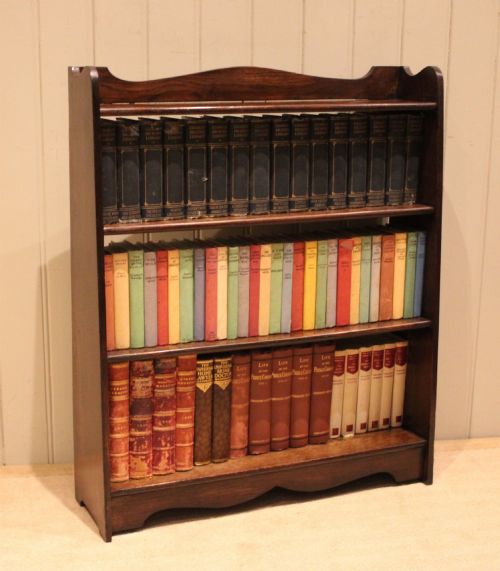
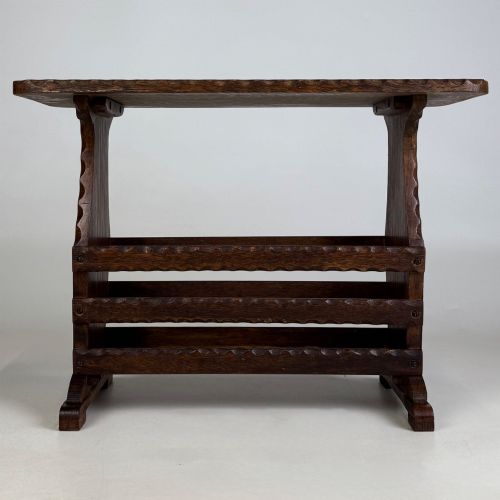
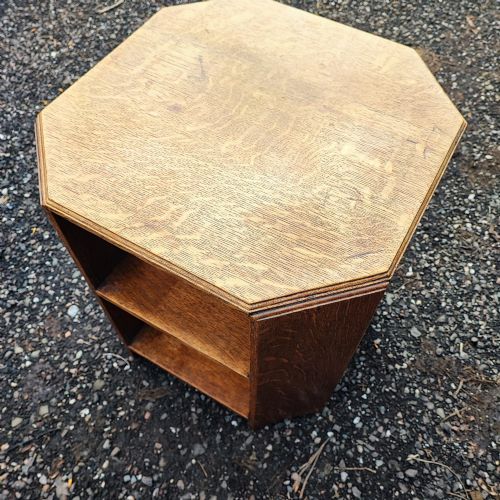
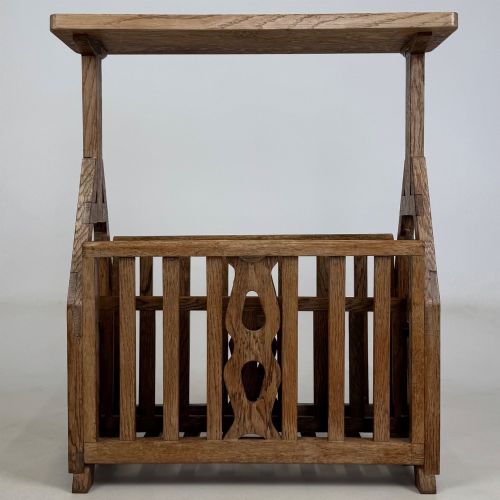


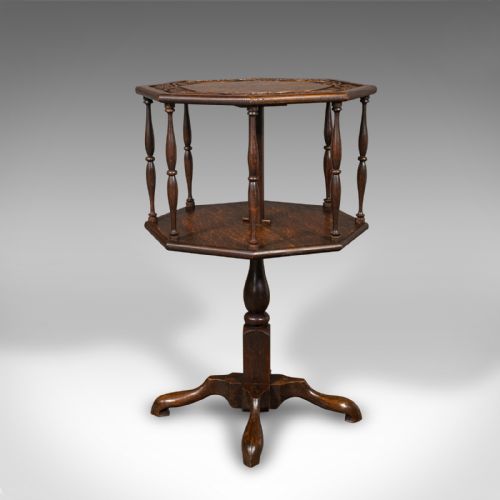

Small Oak Book Trough
These small oak book trough pieces are compact desktop or tabletop holders designed to keep volumes tidy, combining practical storage with period character.
Small Oak Book Trough
A small oak book trough sits on a desk, table, or side surface to hold a selection of volumes upright within easy reach. These compact holders appear in forms ranging from simple open troughs and slope-shelf bookcases to revolving table-top stands and occasional tables with integrated shelves.
Buyers browsing this selection most frequently encounter Edwardian and Arts and Crafts examples, alongside Victorian Gothic pieces and occasional Art Deco variations. The forms vary from straightforward two-tier bookcases and open angled designs to specialised novelty rests and book stands.
How they were made
Makers utilised solid oak to construct these pieces, often selecting golden oak or rich darker tones to suit the prevailing interior tastes of the nineteenth and twentieth centuries. Construction methods rely on traditional joinery suitable for domestic furniture intended for everyday use on tables or sideboards.
Design details reflect the stylistic movements of their time, incorporating the functional simplicity of the Arts and Crafts style, the pointed arches of Victorian Gothic, or the clean geometric lines associated with Art Deco.
The listings here span the Victorian era, Edwardian period, and the 1930s, showcasing oak construction across styles from Arts and Crafts to Art Deco.
What varies in quality
Quality in a small oak book trough rests upon the integrity of the timber, the crispness of any carved detailing, and the structural stability of the joints. Finer examples show thoughtful proportion and careful selection of grain, whereas simpler utilitarian items rely on basic construction.
Attribution to known workshops, such as the circle of Heal's, elevates the standing of a piece, while robust framing and well-executed decorative touches distinguish superior craftsmanship from standard production.
The Small Oak Book Trough Glossary
- Oak
- A durable hardwood native to Britain and Europe, prized for its strength and distinct grain pattern. It serves as the primary material for the majority of these pieces.
- Arts and Crafts
- A design movement spanning the late nineteenth and early twentieth centuries that emphasised handcraftsmanship, simple forms, and honest construction. Pieces in this style often display visible joinery and subtle carved ornamentation.
- Edwardian
- Pertaining to the reign of King Edward VII, spanning from 1901 to 1910, though often used broadly to describe furniture made in the first decade of the twentieth century. This era favoured lighter forms and revived historical styles.
- Revolving bookcase
- A compact bookcase mounted on a hidden rotating mechanism, allowing access to books from multiple angles while resting on a table or desktop.
- Victorian Gothic
- A style drawing inspiration from medieval architecture, characterised by pointed arches, heavy timber, and solemn decorative motifs.
Small Oak Book Trough: Frequently Asked Questions
What is a book trough used for?
A book trough holds a small selection of frequently read volumes in an upright position on a desk, table, or shelf. They keep books organised and accessible without requiring a full-sized bookcase.
Historically, they served scholars, readers, and office workers who needed their reference materials close at hand in domestic or professional studies.
How do I date an oak book trough?
Dating relies on stylistic clues, construction methods, and materials recorded across periods like the Victorian era, Edwardian years, and the 1930s. Arts and Crafts pieces often show hand-carved details or distinct joinery.
Later pieces from the Art Deco period introduce geometric lines and sleeker profiles that reflect changing twentieth-century tastes.
Where should I place a small book trough?
These compact pieces fit well on top of side tables, desks, sideboards, or deep windowsills where floor space is limited. Their small footprint makes them versatile additions to studies, living rooms, and bedrooms.
They function effectively as tabletop focal points while keeping current reading material neat and tidy.