



Arts and Crafts Bookcase Table
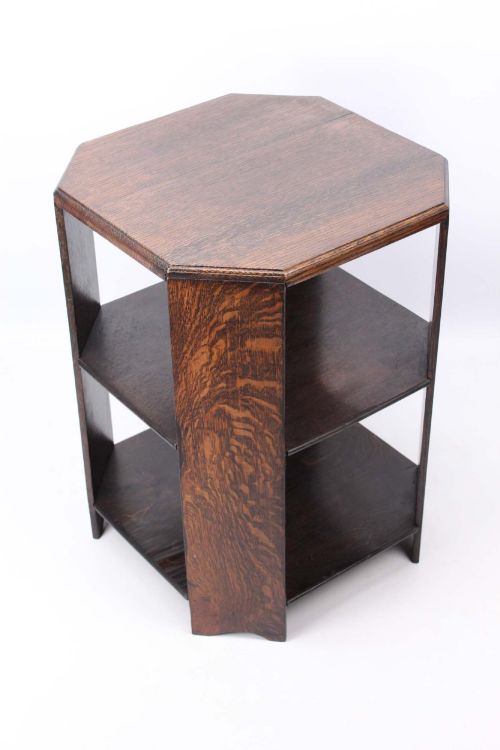
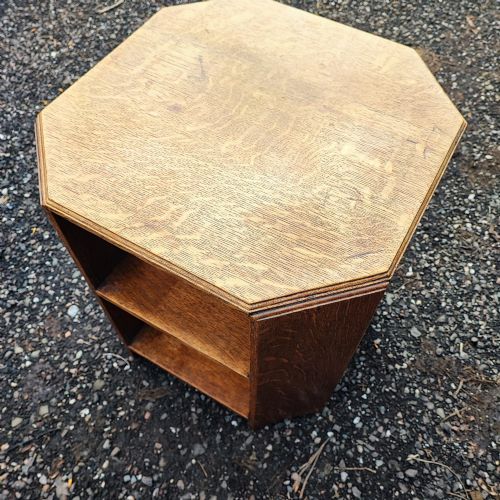
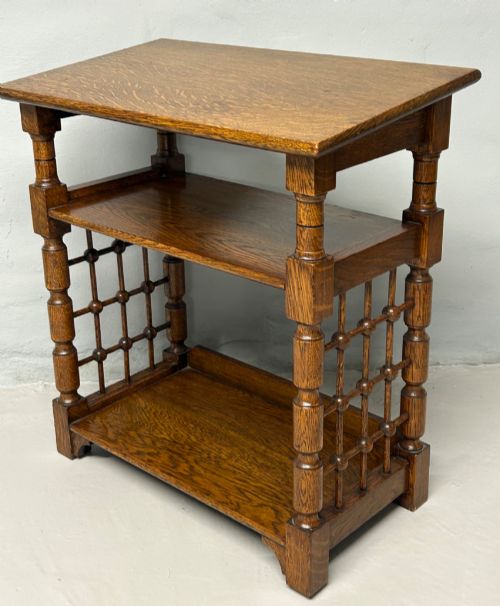
These arts and crafts bookcase table pieces combine surface space with shelving, giving you a practical dual-purpose item that suits daily book storage.
Arts and Crafts Bookcase Table
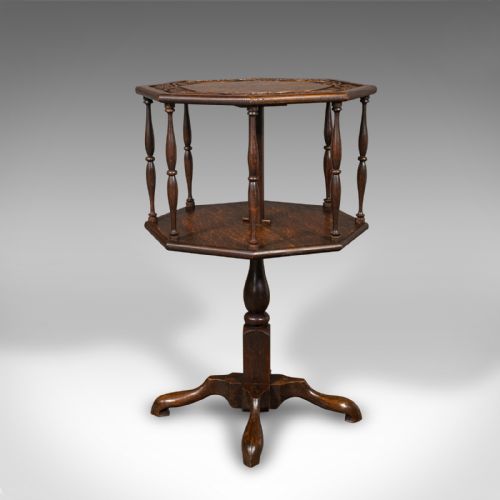
An arts and crafts bookcase table brings together a display surface and integrated storage for volumes, appearing across forms such as book stands, revolving bookcases, occasional tables, and slope-shelf bookcases. You meet these primarily in oak, alongside mahogany pieces that occasionally carry inlay.
The material palette spans Edwardian, Victorian, and early twentieth-century periods, including specific dates around 1880, 1900, 1910, 1920, and 1930. Makers during these decades sometimes attributed designs to workshops like Heal's, blending structural utility with straightforward movement.
Freestanding adjustable bookcases sit alongside small table-top revolving models and octagonal occasional tables featuring lower book shelves. The selection covers compact proportions as well as open-front sloping shelf formats designed for everyday reading access.
How they were made
Construction relies heavily on solid oak and mahogany, shaped into adjustable shelves, revolving mechanisms, and slope-shelf book troughs. Wood inlay, satinwood, and fruitwood are utilised for decorative detailing on select mahogany surfaces.
Brass hardware appears alongside cane and wood elements, securing adjustable components and facilitating the smooth rotation of revolving table models. Joinery focuses on straightforward functional assembly appropriate for domestic library use.
One attributed piece carries the distinct mark of Heal's, proving that even humble book stands occasionally wore high-society tailoring.
What varies in quality
The refinement of the timber selection dictates the overall presence of the piece, with solid golden oak and figured mahogany sitting above standard utility grades. Finishes that preserve the natural grain without heavy modern intervention retain historical character more successfully.
Mechanical components such as revolving platforms and adjustable shelf ratchets separate standard examples from superior items. Smooth operation in these moving parts indicates careful original manufacturing and precise joinery.
The Arts and Crafts Bookcase Table Glossary
- Revolving bookcase
- A rotating table-top or freestanding unit designed to hold accessible volumes on multiple sides. It turns on a central pivot mechanism.
- Book trough
- A V-shaped or open-topped rack designed to hold books upright on a table or desk surface. It keeps current reading material close to hand.
- Slope-shelf bookcase
- A shelving unit featuring angled tiers that display book spines clearly for easy reading. The tilted format supports volumes at an ergonomic angle.
- Occasional table
- A small, movable side table built with an integrated lower shelf for storage. It provides surface space alongside utility.
- Inlay
- A decorative technique where contrasting woods or brass are fitted flush into the primary surface. It creates patterns within the timber.
Arts and Crafts Bookcase Table: Frequently Asked Questions
What is an arts and crafts bookcase table?
It is a dual-purpose item combining a display surface with integrated book storage. These pieces range from small revolving stands to octagonal occasional tables.
The design prioritises straightforward utility and timber grain, reflecting the aesthetic movements of the late Victorian and Edwardian eras.
How do I use a revolving bookcase?
Place the unit beside a chair or desk where books need to be reached easily from multiple angles. The rotating mechanism allows you to access a full selection without moving the piece.
Keep weight distributed evenly across the compartments to maintain a smooth turning motion.
Are these pieces adjustable?
Certain freestanding designs feature adjustable shelves that can be repositioned to accommodate volumes of different heights. Look for slotted uprights or internal mechanisms that allow shelf movement.
Table-top and revolving models generally retain fixed compartments due to their compact scale.
What woods were used?
Oak is the predominant timber, appearing in solid golden tones and dark finishes across Edwardian and Victorian examples. Mahogany is also utilised, often paired with satinwood or fruitwood inlay.
Secondary materials include brass fittings and cane accents on specific shelf designs.