


Small Mahogany Writing Bureau
A small mahogany writing bureau combines compact proportions with secret compartments, offering a practical writing surface that fits neatly into domestic spaces.
Small Mahogany Writing Bureau
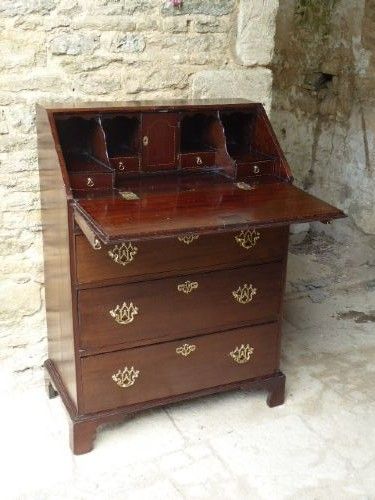
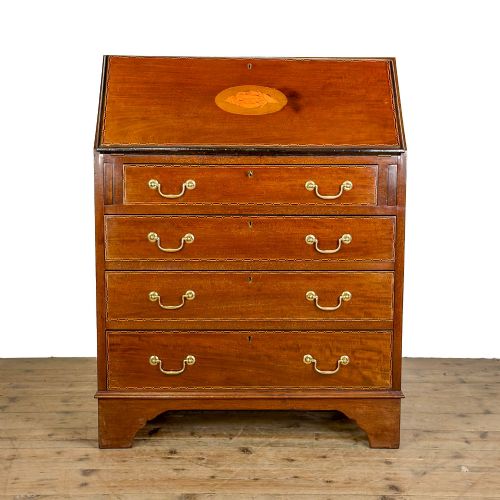
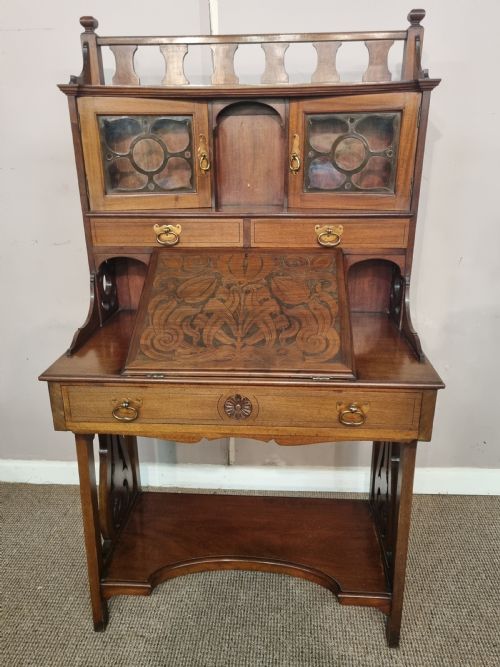
A small mahogany writing bureau is a dedicated writing cabinet featuring a sloping fall-front that opens to reveal fitted pigeonholes and small drawers. These pieces range from restrained 18th-century Georgian and George III examples to later Regency, Victorian, and Edwardian interpretations.
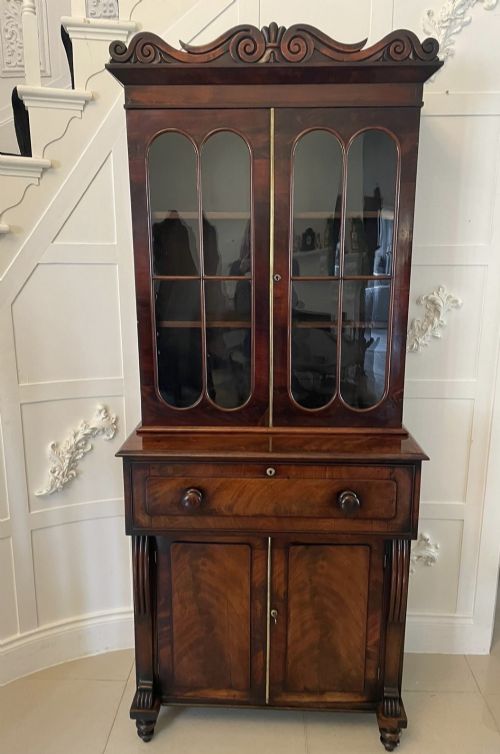
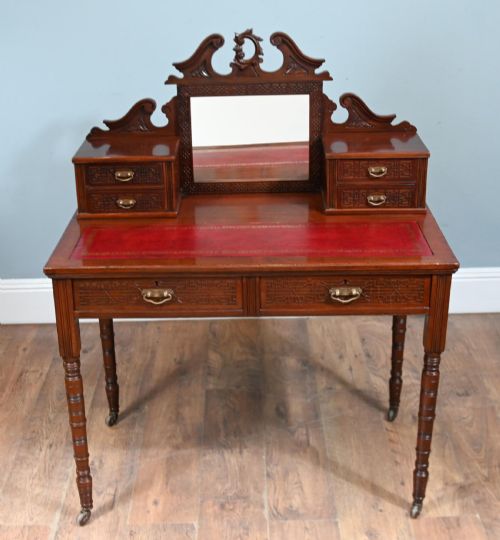
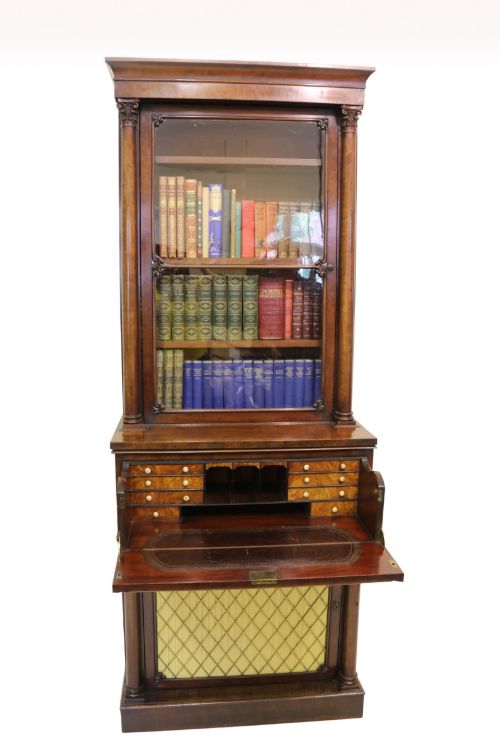
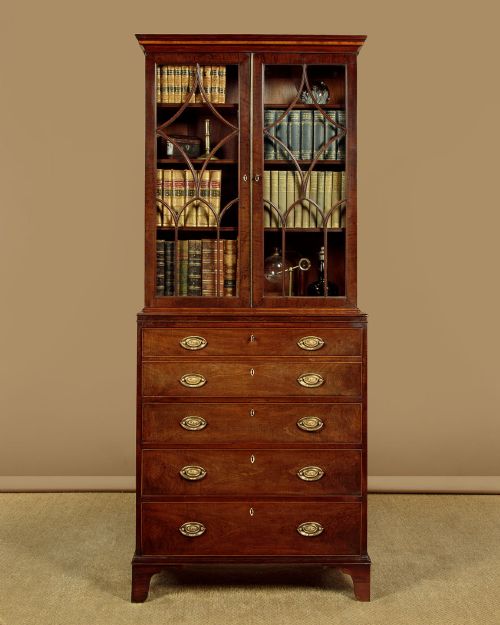
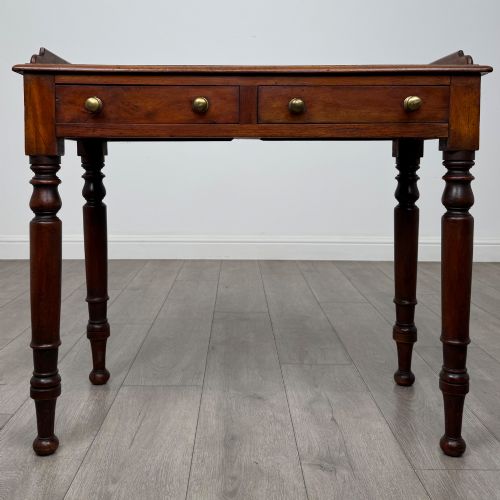
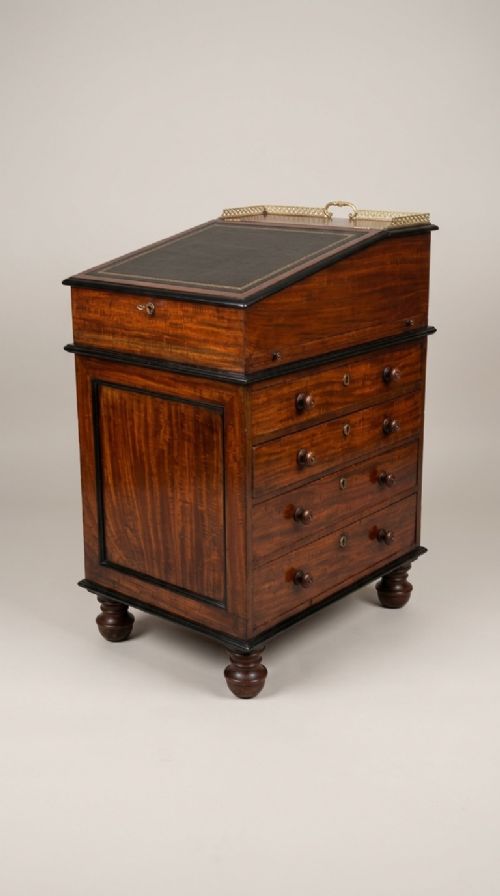
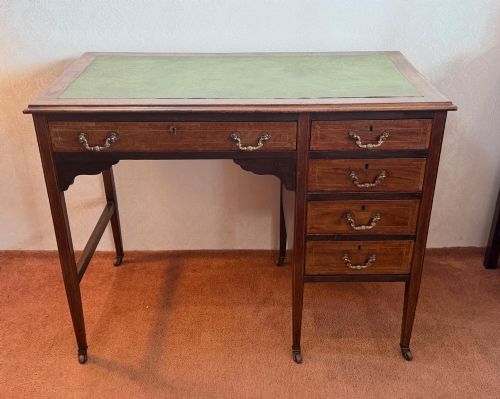
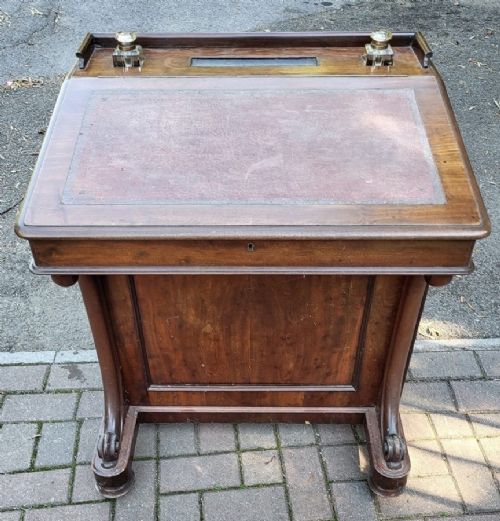
The most common formats encountered on this page include drop-front slant desks, upright secretaire bookcases, and compact Davenport writing desks. Makers often designed these pieces for ladies' chambers, smaller reception rooms, or efficient home administration.
How They Were Made
Cabinet makers constructed these bureaux primarily using solid and veneered mahogany, frequently pairing rich timber grains with contrasting satinwood stringing or inlay. Secondary interior woods like oak and pine appear inside drawer linings and backing boards.
Structural hardware relied on cast brass handles, escutcheons, and working locks with keys to secure the fall-front. Surfaces received traditional hand finishes including french polish, which enhanced the natural figure of the timber.
Materials appearing across these desks include solid mahogany, brass, leather, glass, satinwood, oak, marble, and ebonised wood.
What Varies in Quality
Quality rests upon the selection of timber figures, such as highly figured flame mahogany veneers, and the crispness of internal drawer construction. Superior examples display dovetail joints made by hand and thoughtful interior organisation with secret compartments.
Proportion and restrained decoration dictate the standing of a piece, distinguishing workshop-produced furniture from later revival items. Original brasses, functioning locks, and undisturbed patination elevate the status of an antique bureau.
Gillows of Lancaster
The Small Mahogany Writing Bureau Glossary
- Bureau
- A writing cabinet with a sloping fall-front that encloses a nest of small drawers and pigeonholes. It often sits upon a chest of drawers or a kneehole frame.
- Secretaire
- A piece of furniture containing a pull-out or drop-front writing drawer, sometimes concealed within the upper section of a bookcase or chest. This term indicates a multi-functional item meant for correspondence.
- Davenport
- A compact desk featuring a sloping, hinged writing top above a pedestal of side drawers. First popularised in the early nineteenth century, it provides storage within a minimal floor footprint.
- Fall-front
- A hinged panel that drops from a vertical position to form a horizontal writing surface. It rests upon lopers when open.
- Lopers
- Wooden pull-out brackets positioned beneath a fall-front desk to support the writing flap when lowered. They slide directly into the frame when the bureau is closed.
Small Mahogany Writing Bureau: Frequently Asked Questions
How do I use a bureau desk?
Using a bureau involves pulling out the wooden support lopers and lowering the front flap to create a stable writing surface. The internal pigeonholes and miniature drawers organise stationery, letters, and modern writing implements.
When writing is finished, documents can be stored inside before closing the flap and securing it with the key. This conceals paperwork and restores the tidy appearance of a cabinet.
How can I tell an 18th-century bureau apart from a Victorian one?
Eighteenth-century pieces, such as those from the Georgian period, generally display hand-cut dovetails, secondary oak linings, and understated bracket feet. The mahogany timber often exhibits a rich, deep patination developed over centuries of use.
Victorian and later Edwardian examples frequently incorporate machine-sawn elements, varied internal woods like pine, and styles that draw heavily on earlier historical revivals. Examining the construction methods inside the drawer boxes reveals the manufacturing era.
Are all small bureaux fitted with bookcases?
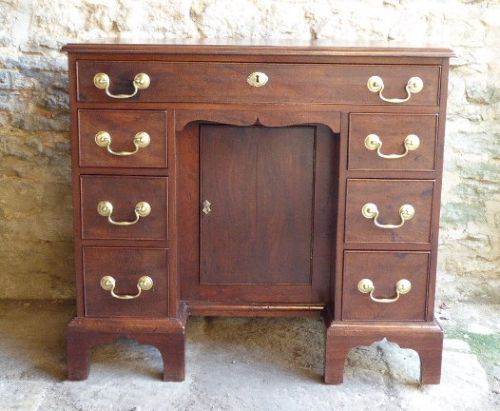
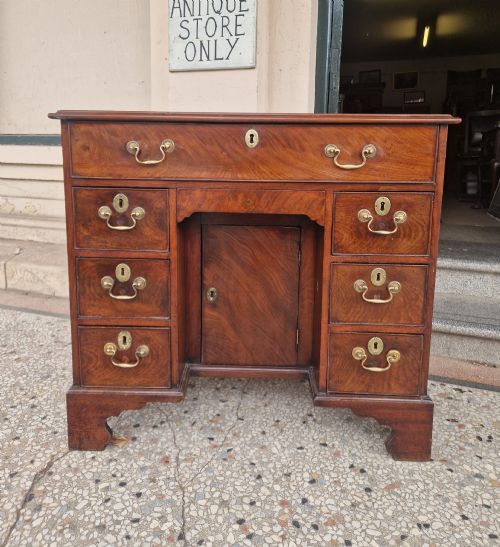
Not all small bureaux include upper bookcases, as many exist solely as standalone desk cabinets or kneehole tables. Items with upper shelving units are typically referred to as secretaire bookcases.
Free-standing slant-front bureaux and Davenport desks make up a large portion of available pieces, offering writing space without vertical cabinetry. The choice depends entirely on the storage requirements for books versus writing materials.