

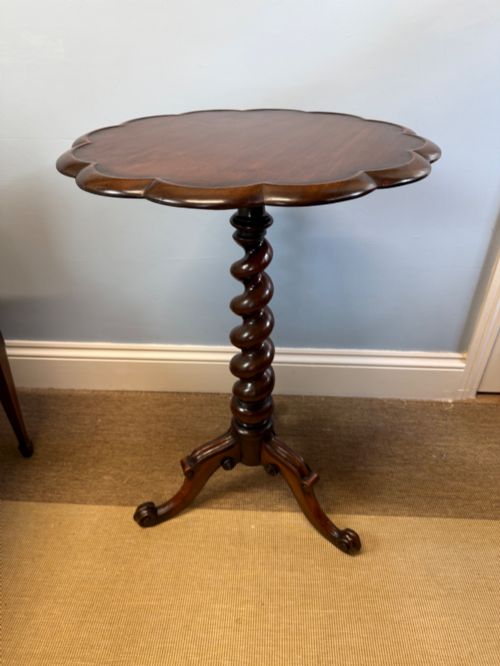
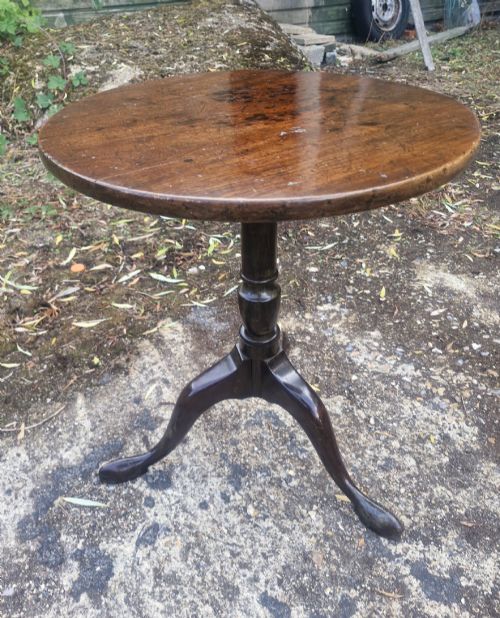
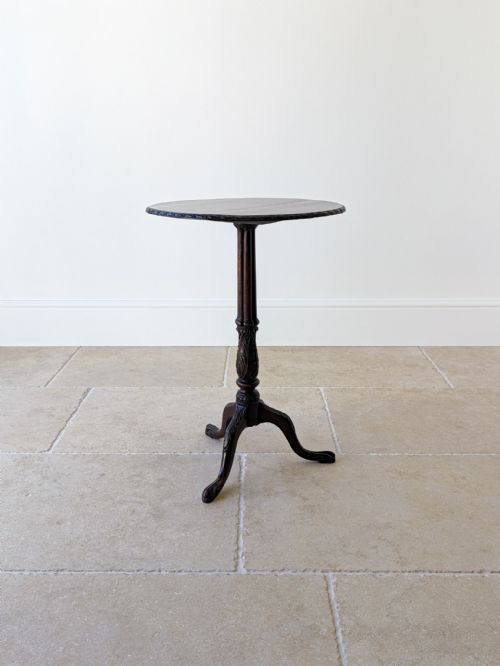
Small Mahogany Tripod Stand
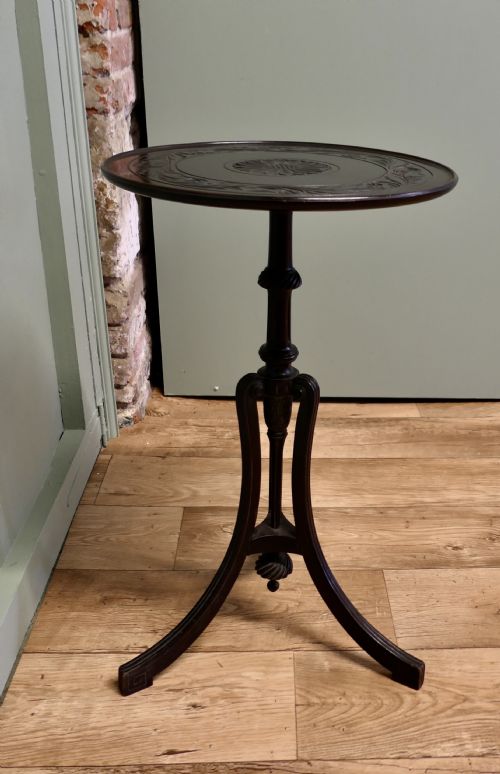
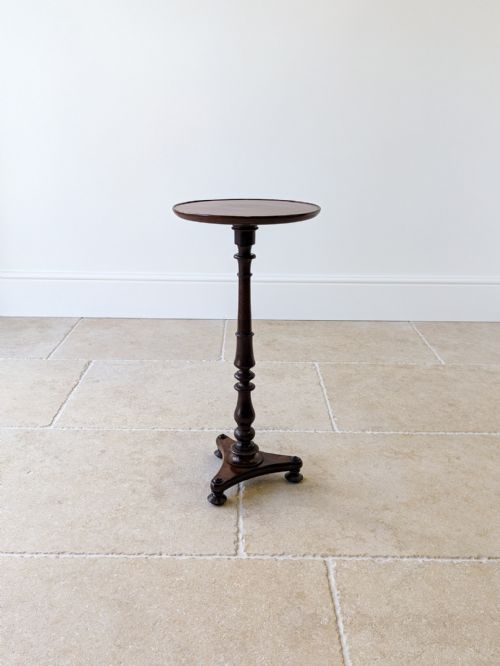
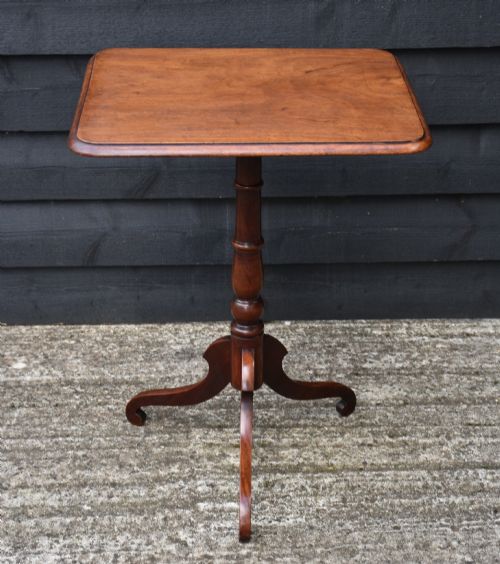
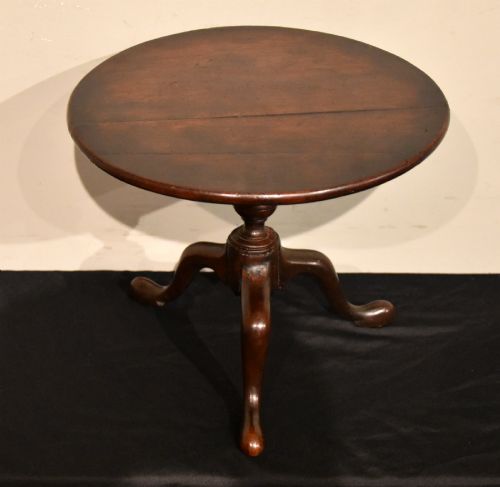
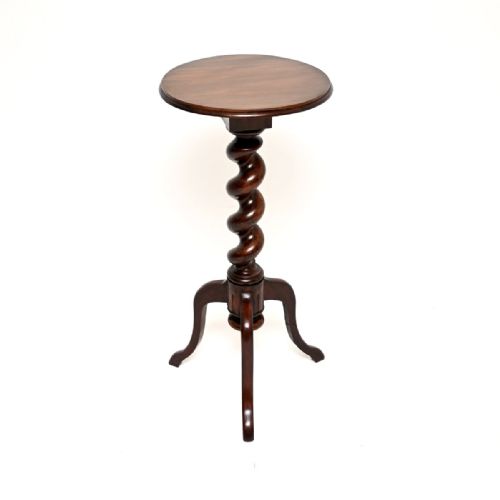
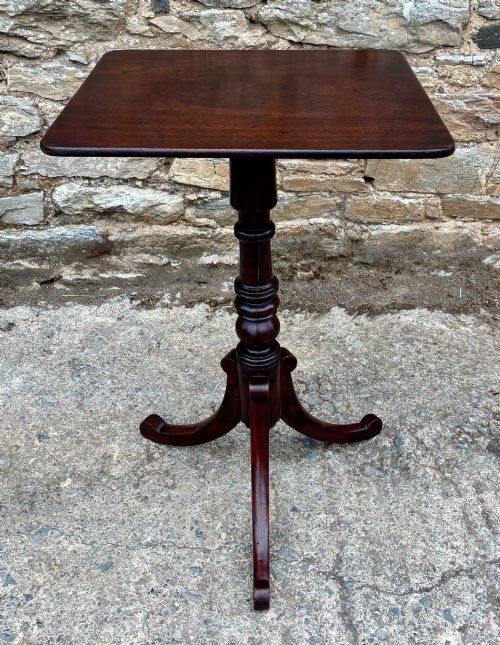
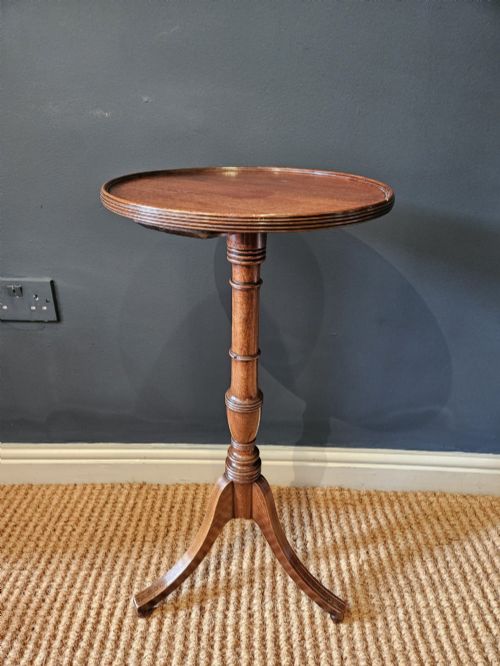
A small mahogany tripod stand offers compact utility and classic timber character, serving nicely beside a chair as a wine or lamp table.
Small Mahogany Tripod Stand
When you search for a small mahogany tripod stand, you look at compact occasional furniture designed to hold a single glass, book, or small lamp. These pieces span from the mid eighteenth century through the Georgian, Regency, and Victorian eras into the Edwardian period.
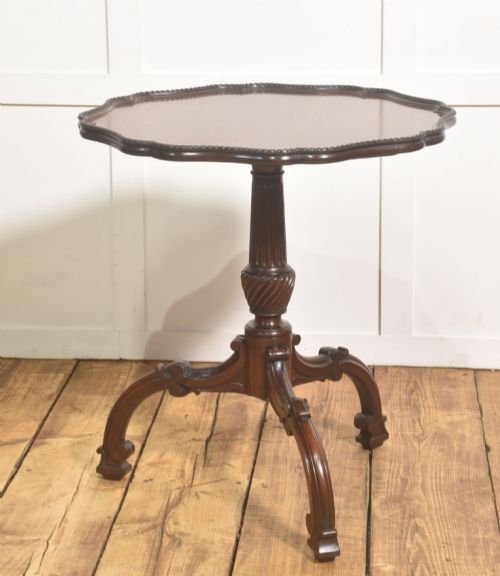
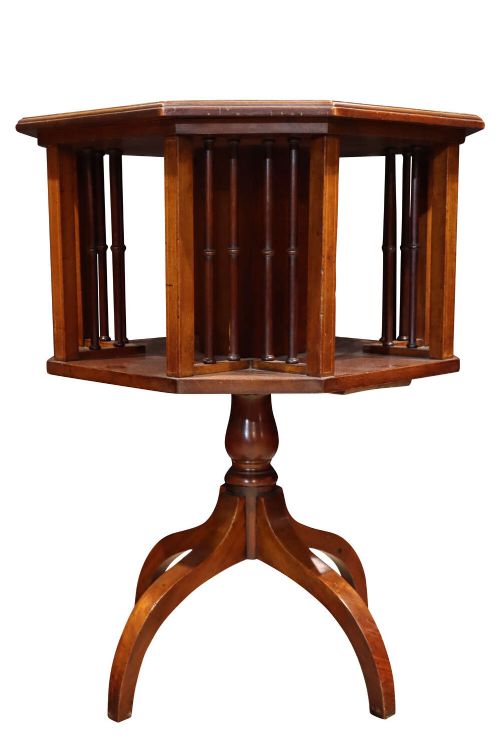
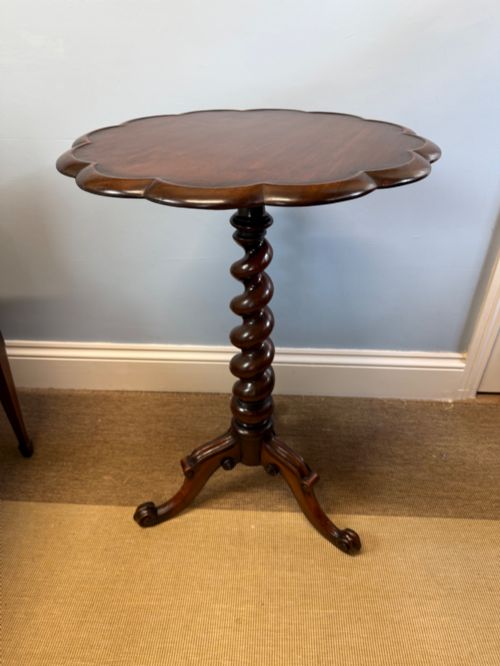
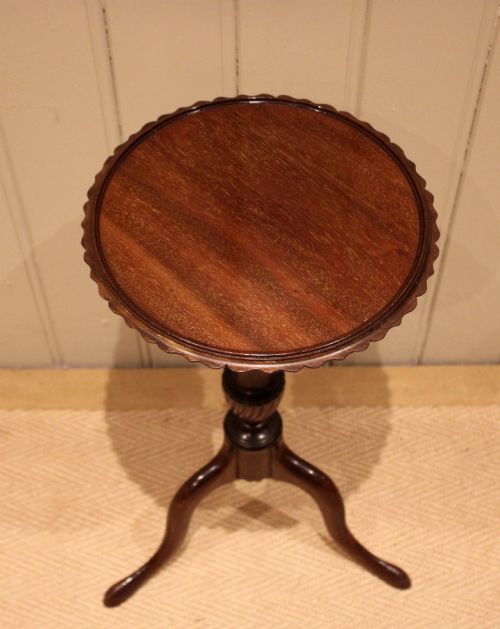
The most common version you meet on this page is the wine table, often fitted with a circular top supported on a central pillar and three splayed legs. Occasional tables, kettle stands, and candle stands appear alongside them in various timber finishes.
Originating primarily from English workshops, these stands reflect changing domestic habits where portable surfaces became essential for tea, wine, and lighting. They survive in forms ranging from plain utilitarian surfaces to elaborately shaped tilt top designs.
How they were made
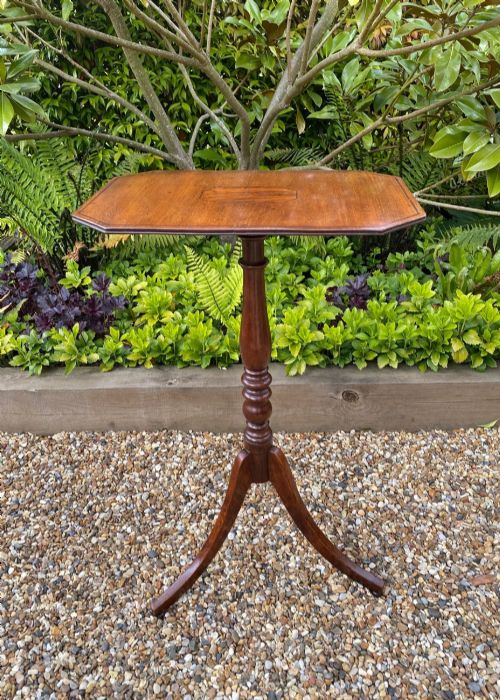
Cabinet makers constructed these stands predominantly from dense, figured mahogany, sometimes incorporating secondary timbers like oak or walnut. Selected pieces display decorative boxwood or wood inlay to the top and legs, adding subtle contrast to the dark grain.
The distinctive three legged tripod base required precise joinery to ensure stability on uneven floors without excessive weight. Central pedestals frequently turned on lathes, while tops were secured with fixed or tilt top mechanisms depending on the period.
Current listings demonstrate a broad span of periods, ranging from mid eighteenth century George III pieces to Edwardian and early twentieth century interpretations.
What varies in quality
The grade of timber and the depth of its polished finish dictate much of the distinction between ordinary pieces and superior examples. Richly figured grain and careful selection of mahogany indicate a maker who prioritised visual presence.
Structural harmony in the turning of the pedestal and the tapering of the tripod legs separates refined work from heavier, utilitarian production. Attention to proportion ensures the table balances its height against the spread of the base.
The Small Mahogany Tripod Stand Glossary
- Tripod table
- A small stand supported by a central pillar resting on three legs. This construction provides a stable footprint for portable use.
- Tilt top
- A hinged mechanism allowing the table top to pivot vertically when not in use. This clever design saved valuable floor space in smaller period rooms.
- Wine table
- A diminutive occasional table intended for holding glasses or decanters during evening gatherings. They frequently feature circular or shaped tops.
- Pie crust rim
- A raised, carved edge shaped in undulating curves reminiscent of pastry crust. It prevented glassware from sliding off the surface.
- Boxwood
- A pale, dense wood used traditionally for contrasting stringing and inlay details. Artisans set it into dark mahogany to outline borders and geometric motifs.
Small Mahogany Tripod Stand: Frequently Asked Questions
What were small mahogany tripod stands used for?
These versatile stands served primarily to hold wine glasses, teacups, or portable lighting beside seating areas. Their compact dimensions allowed servants to move them easily around the room as social gatherings shifted.
Over time, owners adapted them to support small decorative objects, books, or lamps in various corners of the home. Their portability remained a key advantage in period domestic interiors.
How do I tell an 18th century stand from a later revival piece?
Eighteenth century examples display the natural patina, tool marks, and timber shrinkage consistent with significant age and hand construction. Cabinet makers of that era used specific construction methods and native secondary woods that differed from later Victorian or Edwardian workshops.
Revival pieces made during the nineteenth or twentieth centuries often utilise machine sawn components and standardised fixings. Examining the underside and the joint where the pillar meets the legs reveals these manufacturing transitions.
Can I use a wine table as a bedside surface?
The compact footprint and elevated surface make these stands suitable for holding a small reading lamp, book, or glass of water next to a bed. Their modest diameter ensures they fit comfortably in tight spaces where a standard bedside cabinet proves too bulky.
Because many period tops are relatively lightweight, placing very heavy items on them is discouraged. Ensuring the tripod legs remain stable on carpeted floors also prevents accidental tipping.