

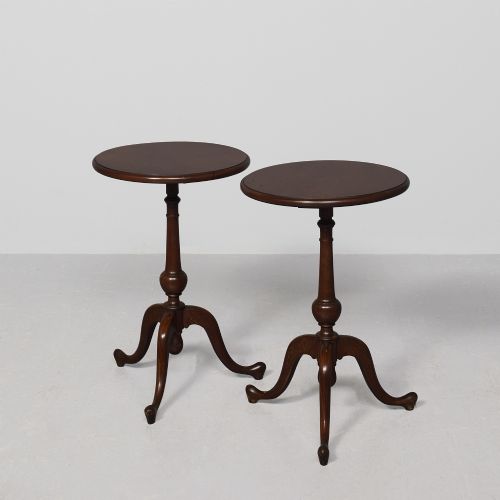
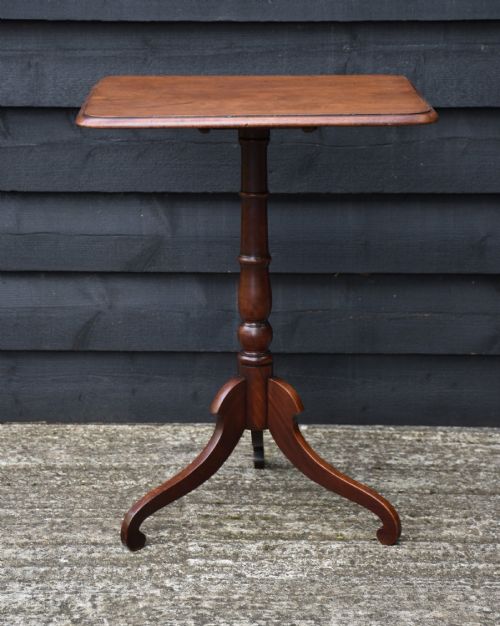
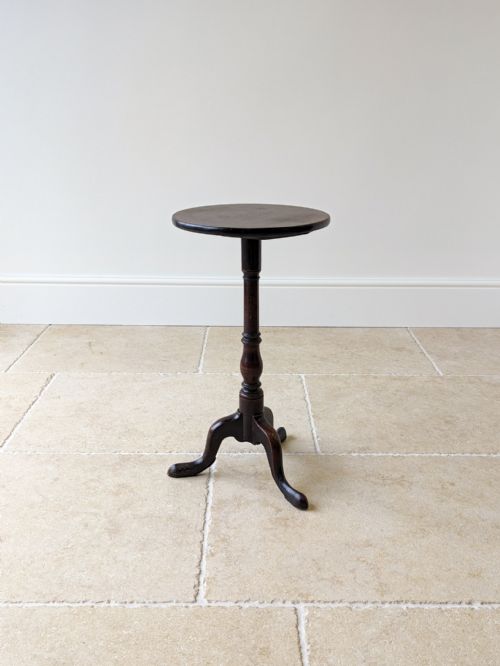
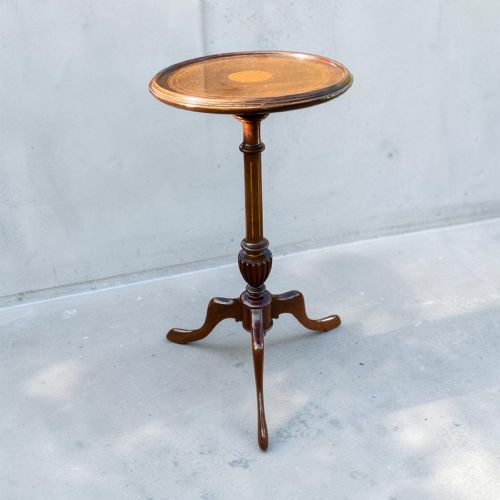
Small Mahogany Pedestal Stand
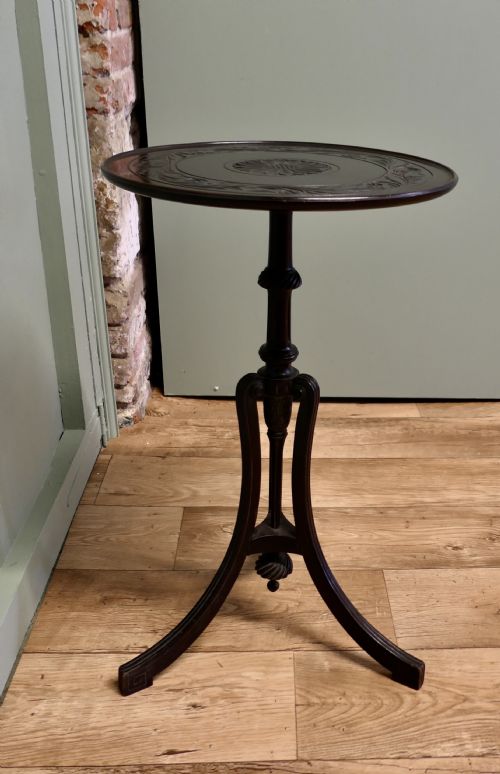
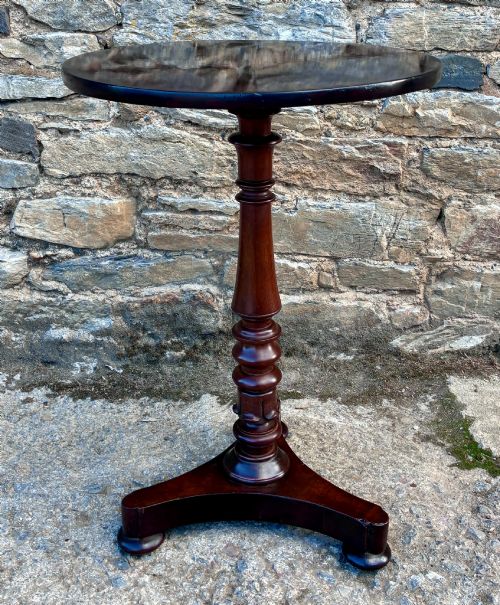
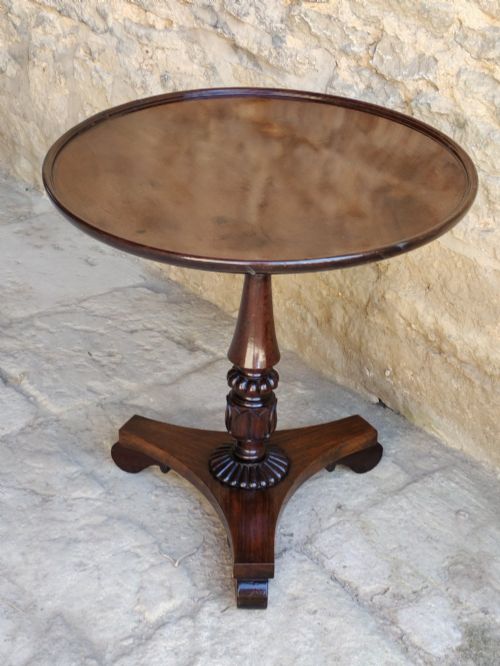
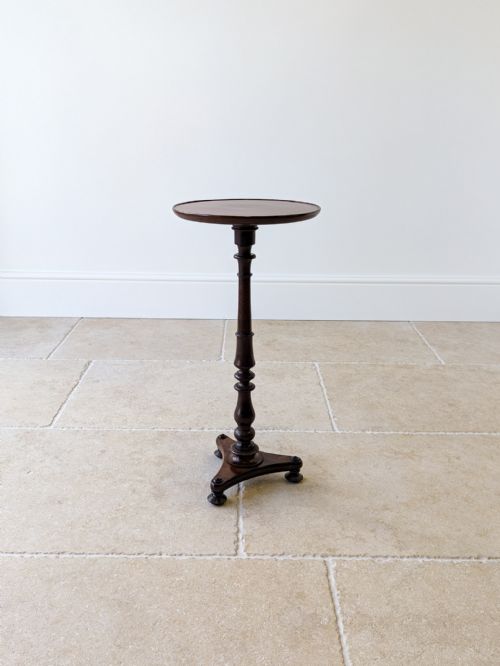
A small mahogany pedestal stand brings compact utility and traditional timber grain into a room, serving as a versatile surface for lamps, books or wine.
Small Mahogany Pedestal Stand
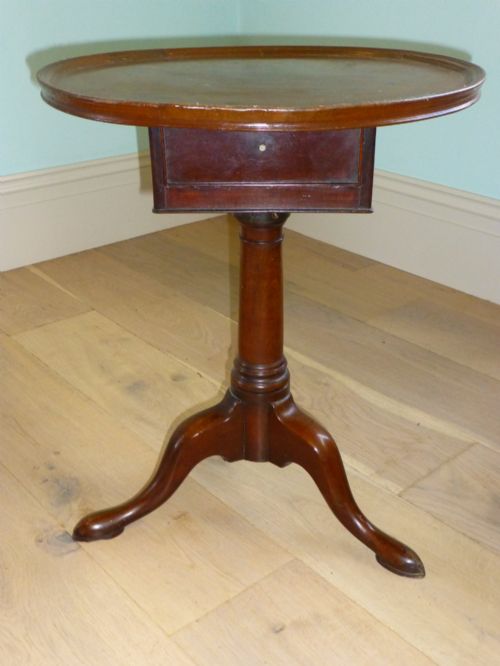
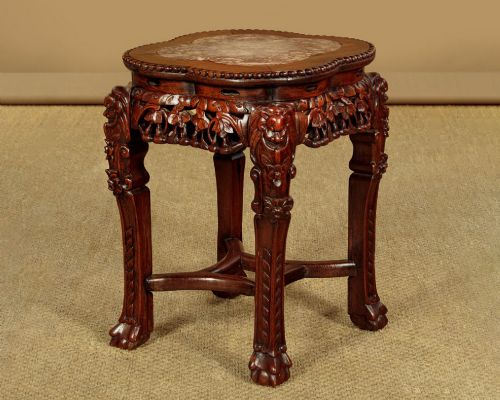
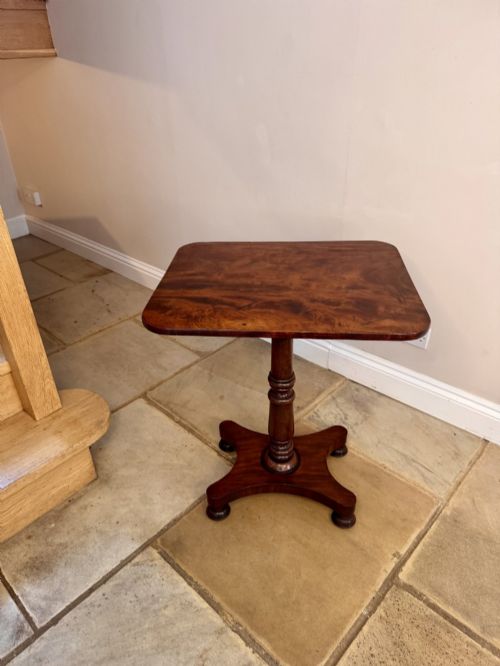
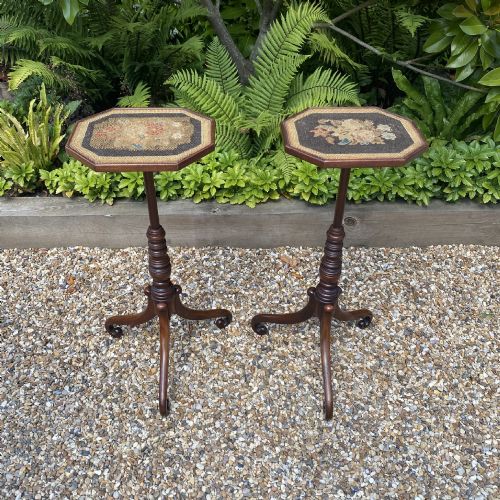
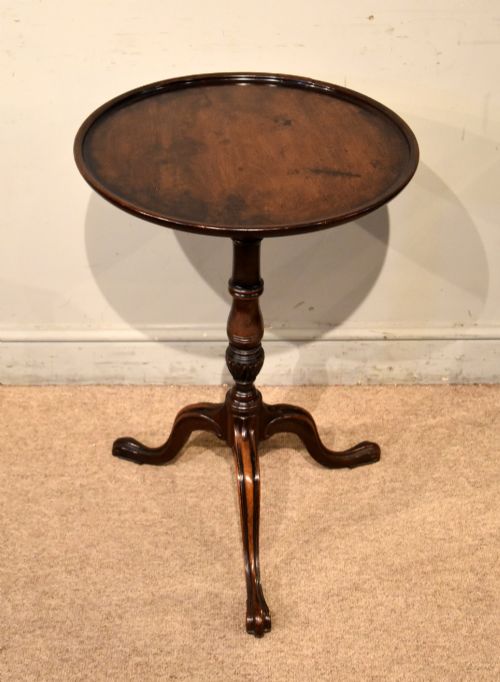
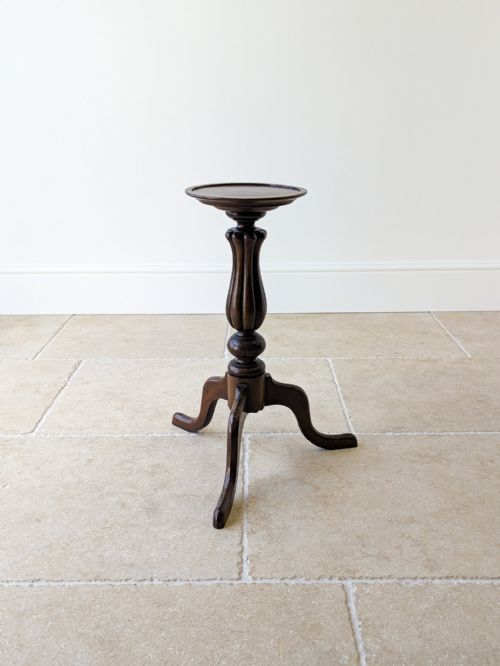
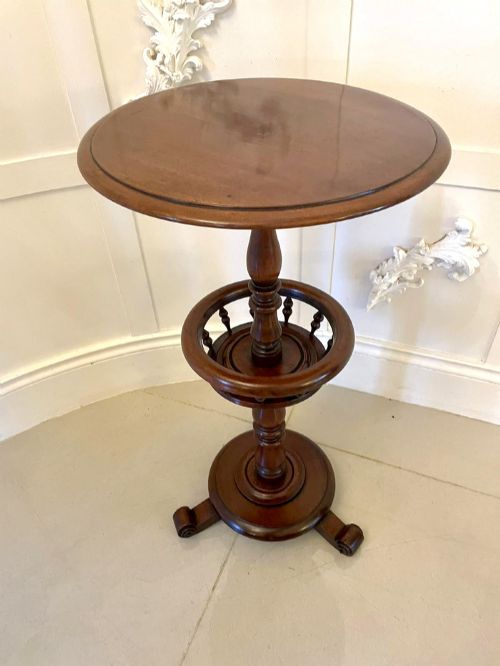
A small mahogany pedestal stand typically takes the form of an occasional table, wine table, lamp table or candle stand supported by a central pillar. These pieces appear across Georgian, Regency, Victorian and Edwardian periods, reflecting changing domestic habits from the eighteenth century onwards.
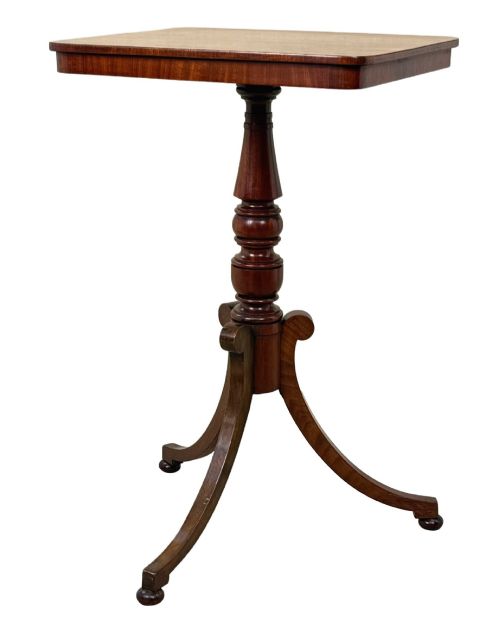
The version most commonly met on this page is the tripod table, often featuring a circular or dished top raised on three legs. Makers also produced rectangular, octagonal and tilt-top variants designed to tuck easily beside seating or into corners.
Beyond standard occasional tables, the listings include related bedside chests and cabinets constructed from the same timber. These diverse forms share a compact footprint and a reliance on pedestal or pillar supports rather than four conventional corner legs.
Assessing Quality and Execution
The distinction between standard utility items and finer examples rests on the selection of timber and the crispness of carved or turned details. Superior pieces display well-figured grain, balanced proportions, and stable pillar attachments that resist wobble.
Refinement in edge treatments, such as shaped pie crust rims or delicate satinwood inlay, elevates the visual weight of a small stand. The integrity of the pedestal base and the smoothness of any tilt mechanism further separate workshop execution.
Small Mahogany Pedestal Stand Retail Price Guide 2026
Typical asking prices for small mahogany pedestal stand among the pieces listed under this phrase on Sellingantiques today, from the lower quarter to the upper quarter. They describe what is for sale here now, not the wider market.
Listings feature numerous examples from the Georgian, Victorian, and Edwardian periods, alongside nineteenth-century Regency designs.
Bulstrode Cambridge
The Small Mahogany Pedestal Stand Glossary
- Tripod table
- A small stand supported by a central pillar resting on three legs. This construction prevents rocking on uneven historical floors.
- Tilt top
- A table top hinged to the pedestal so it can pivot vertically when not in use. This clever mechanism allowed the stand to be stored flat against a wall.
- Wine table
- A compact occasional table originally designed to hold glasses or bottles. These small surfaces sit easily beside a chair or sofa.
- Pie crust rim
- A raised, scalloped edge carved around the perimeter of a table top. This decorative border prevents items from sliding off the surface.
Small Mahogany Pedestal Stand: Frequently Asked Questions
What were small mahogany pedestal stands used for?
These versatile stands served practical domestic functions throughout the Georgian and Victorian eras. Households placed them beside seating to hold candles, glasses of wine, books or small lamps.
The tilting tops on many examples allowed the stands to be stored flat against a wall when floor space was needed, making them adaptable pieces for entertaining.
How can I tell a Georgian stand from a Victorian one?
Georgian stands typically exhibit restrained classical proportions, understated tripod bases, and often feature pad feet or crisp carving. Mahogany from this earlier era tends to have a rich, warm patina developed over centuries.
Victorian examples often introduce heavier turnings like barley twist or bobbin columns, alongside revival styles such as Chippendale. The timber finish and secondary woods inside the construction also help point toward the later nineteenth century.
How do I care for mahogany surfaces?
Maintaining mahogany requires simple dusting with a soft, dry cloth to prevent abrasive particle buildup. Avoid placing these stands in direct sunlight or near heat sources, which can dry out the timber and cause splitting.
Occasional application of traditional beeswax helps nourish the wood and preserve its characteristic lustre without building up synthetic residues.
Are tilt top mechanisms stable?
Original tilt mechanisms rely on a wooden catch or brass latch to secure the top in a horizontal position. When properly adjusted, these joints hold the surface firm during normal daily use.
Over time, pivot pins can wear, so checking the fit of the catch ensures the top remains secure when locked flat.