


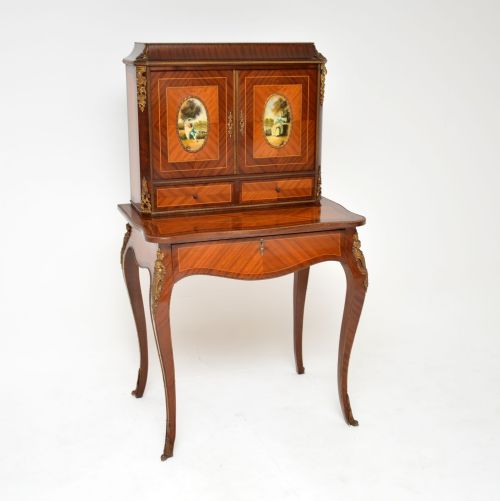
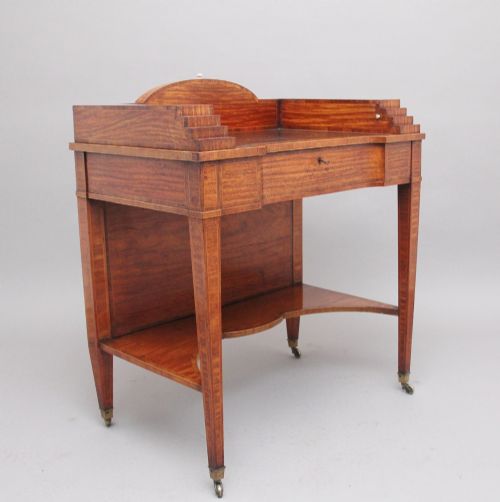


Small Ladies Bureau
A small ladies bureau combines compact proportions with delicate compartments, serving as a dedicated correspondence desk for smaller spaces.
Small Ladies Bureau
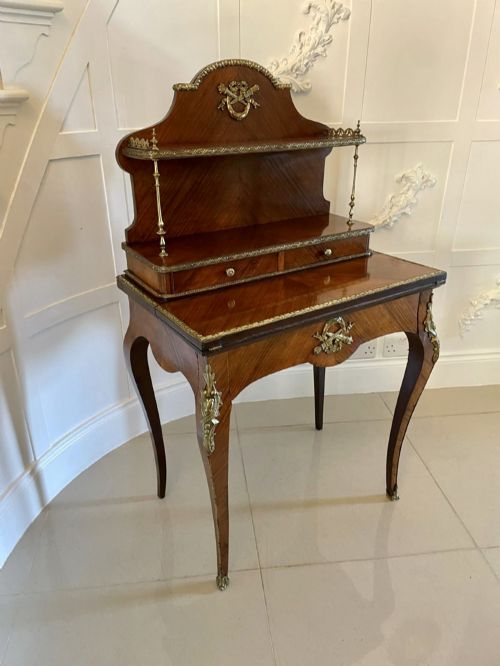
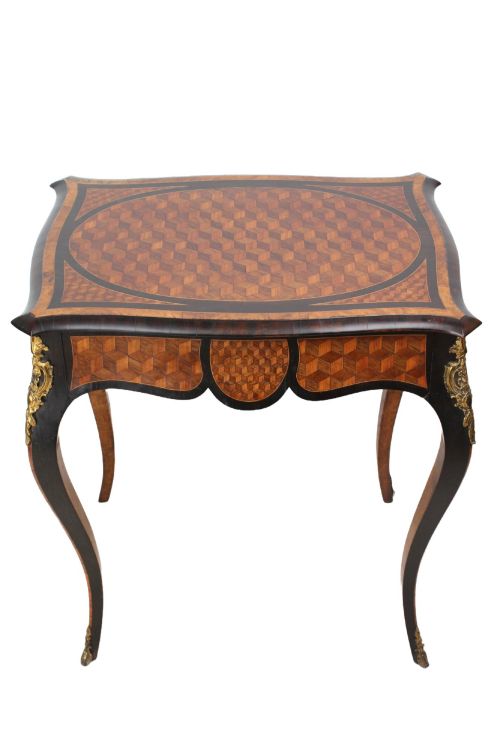
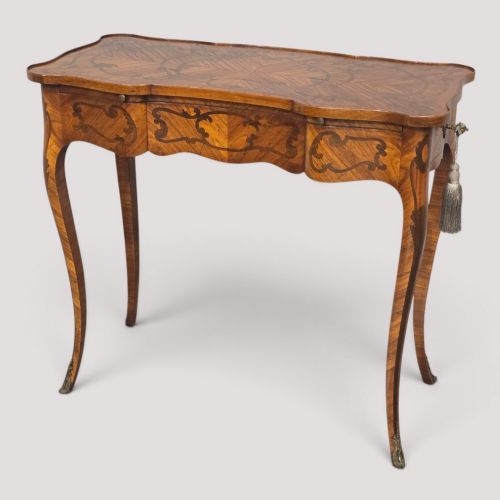
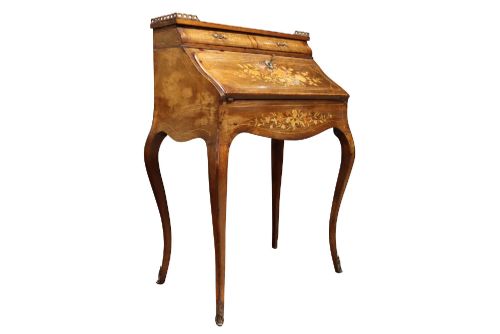
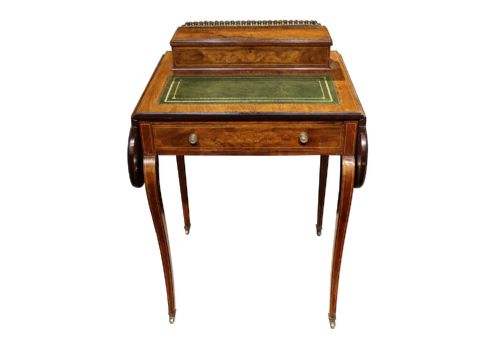
A small ladies bureau spans several compact forms, most frequently appearing as a bonheur du jour, a Davenport, or a refined writing table dating from the Victorian and Edwardian periods.
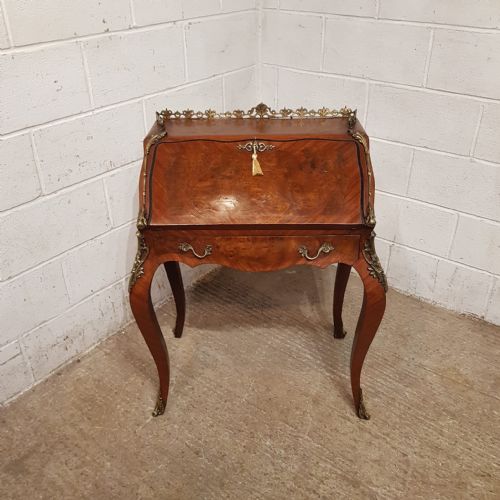
These pieces emerge across the nineteenth and early twentieth centuries in styles ranging from Sheraton Revival to French Louis XV Revival, designed specifically for domestic writing and correspondence.
Buyers seeking this phrase encounter varied timber constructions, from figured walnut and mahogany to exotic kingwood and satinwood, often outfitted with fitted interiors and small drawers.
Materials and Construction
Cabinetmakers constructed these desks using solid hardwoods like mahogany and oak as structural carcasses, overlaid with decorative veneers including burr walnut, satinwood, kingwood, and rosewood.
Fine decorative detailing relied on contrasting marquetry and parquetry inlays, alongside cast or chased ormolu mounts and brass gallery rails.
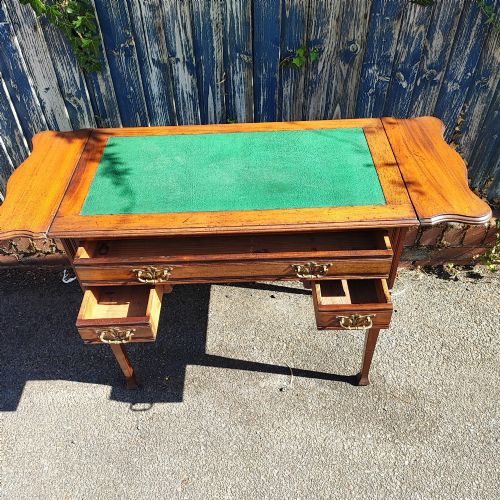
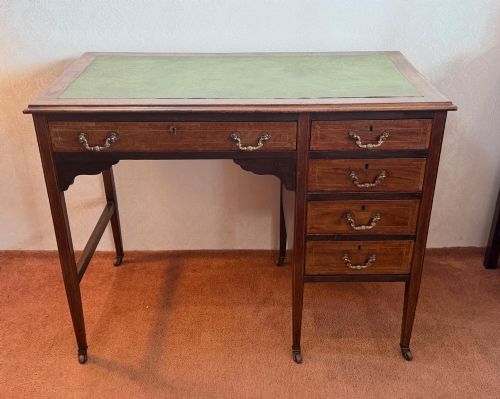
Writing surfaces frequently incorporated inset panels of tooled leather, while interiors utilised fitted pigeonholes, small drawers, and drop fronts hinged for daily correspondence.
Listings feature mahogany, walnut, rosewood, and satinwood alongside brass, leather, and ormolu mounts.
Assessing Quality and Execution
Superior examples display exceptional matching of timber veneers across curved surfaces and drawer fronts, demonstrating a cabinetmaker's eye for grain pattern continuity.
The refinement of internal fittings, such as secret compartments, finely dovetailed drawer construction, and hand-chased metal mounts, distinguishes workshop execution.
Stylistic cohesion, particularly in revival pieces that balance proportion with delicate brass or porcelain embellishments, elevates the standing of a desk.
JAS Shoolbred·Edwards and Roberts·Gillows
The Small Ladies Bureau Glossary
- Bonheur du jour
- A light timber writing desk featuring a small tiered superstructure with shelves, drawers, or a cabinet above the main writing surface. This French form gained popularity during the eighteenth century and saw robust revival production.
- Davenport desk
- A compact box-form writing desk featuring a sloping, hinged writing lid lined with leather and a bank of side drawers accessed from one side. It became a staple Victorian writing cabinet for domestic sitting rooms.
- Bureau de dame
- A lady's writing desk, typically of French origin, incorporating a cylinder or sloping fall front enclosing small inner drawers. These pieces often exhibit elaborate marquetry and gilt-metal mounts.
- Escritoire
- A writing cabinet or desk fitted with drawers and a sloping writing flap. The term often describes upright writing furniture designed for private correspondence.
- Marquetry
- The art of applying decorative veneer pieces in geometric or pictorial patterns onto a furniture structure. Craftsmen used various contrasting woods to achieve complex floral or scrollwork designs.
Small Ladies Bureau: Frequently Asked Questions
What is a bonheur du jour?
A bonheur du jour is a light writing desk featuring a raised superstructure of small drawers or compartments above the main writing surface.
First developed in France, these diminutive desks were intended for ladies to write letters and keep personal papers in intimate rooms.
How do you use a Davenport desk?
A Davenport desk combines a sloping, hinged writing top with a pedestal of side drawers that open away from the seated writer.
Papers and writing implements store neatly inside the upper compartment, while the lower drawers provide additional storage for stationery.
Where were these desks placed?
These compact writing desks suited private sitting rooms, bedrooms, or boudoirs where large partner desks took up too much space.
Their finished backs often allowed them to sit away from the wall in the centre of a room.
What woods were commonly used?
Cabinetmakers selected dense hardwoods such as mahogany and walnut as the primary structural and decorative timbers.
Exotic veneers like satinwood, rosewood, and kingwood added rich colour contrast, particularly when accented with marquetry inlays.