



Decorative Writing Table
A decorative writing table is a refined surface for correspondence that brings period character and practical function to a room.
Decorative Writing Table
When you search for a decorative writing table, you encounter a variety of forms designed for writing, study, and display across multiple centuries. The selection spans compact desks, pedestal forms, and elegant centre tables intended to sit freestanding in a room.
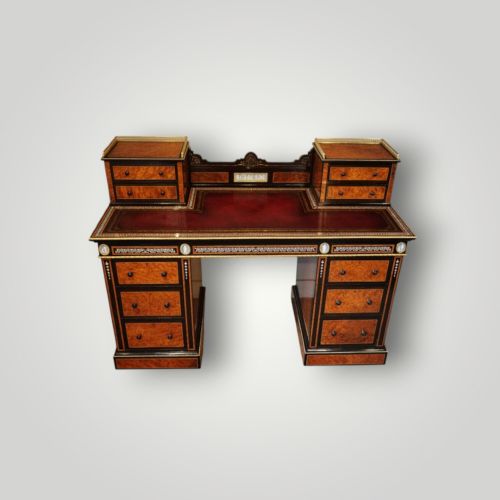
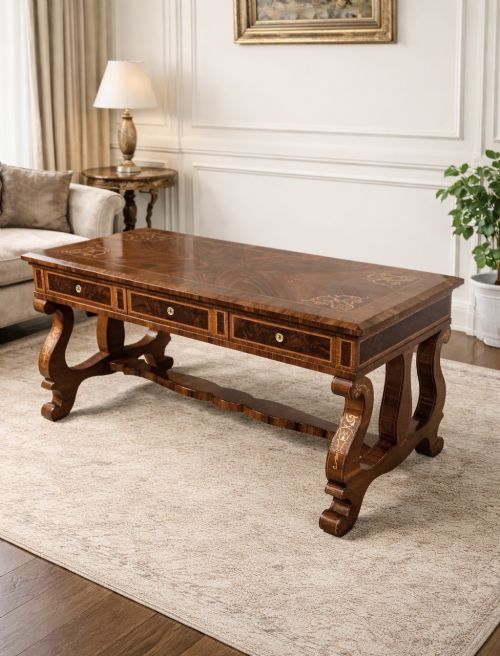
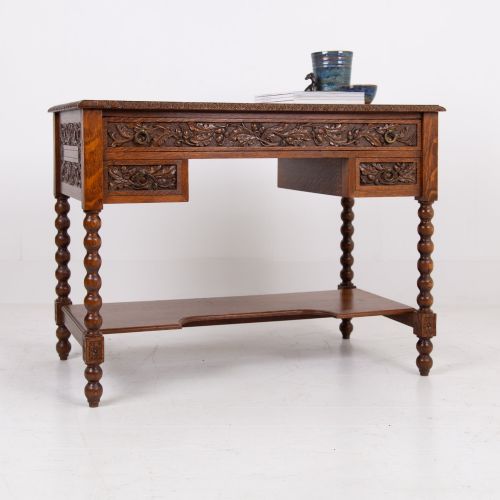
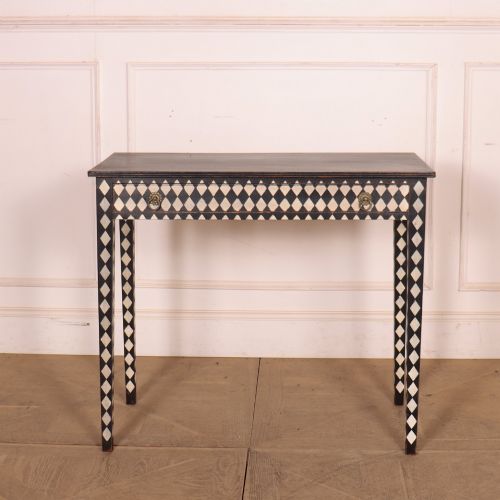
The versions met most frequently on this page belong to the Victorian and later nineteenth-century periods, alongside French revival models and twentieth-century interpretations. These tables range from modest oak side desks with single drawers to elaborate inlaid cylinder desks and walnut bonheur de jour writing cabinets.
Makers and craftsmen of these periods utilised diverse forms, including bureau-plat designs and library tables equipped with leather-lined writing surfaces. Each piece reflects the decorative tastes of its era, combining utility with ornamental woods and mounts.
How they were made
Cabinet makers constructed these tables using a foundation of solid timbers such as oak, mahogany, and walnut, often applying decorative veneers like thuya, amboyna, laburnum, and burr walnut. Surfaces frequently featured detailed inlay, boxwood and feather banding, and marquetry.
Metalwork played a significant role in the ornamentation, with cast brass mounts, ormolu details, and decorative beading fitted to edges and drawers. Many writing surfaces incorporated inset panels of tooled leather to provide a suitable medium for penmanship.
Period origins span from the eighteenth century through the Victorian era and into twentieth-century continental styles.
What varies in quality
The distinction between standard examples and the finest pieces lies in the selection of timber veneers and the precision of the marquetry or inlay. Superior tables display meticulous grain matching, finely cast ormolu mounts, and thoughtful integration of decorative elements such as Wedgwood plaques or ivory inlay.
Construction methods also define the tier of the piece, visible in the dovetailing of drawers, the retention of original hardware, and the quality of the painted finishes. Maker attribution, whether through stamps or signature styles, further elevates the standing of certain examples.
Jackson & Graham·Gill & Reigate
The Decorative Writing Table Glossary
- Bonheur de jour
- A small ladies writing desk featuring a superstructure of small drawers, shelves, or a cabinet above the main writing surface. This French form became popular during the nineteenth century.
- Bureau-plat
- A flat-topped writing table, typically freestanding with one or more drawers in the frieze. It represents a classic French design often embellished with ormolu mounts.
- Cylinder desk
- A desk featuring a curved, quarter-cylinder wooden shutter that rolls back to reveal the writing surface and interior compartments. It conceals papers while offering a smooth mechanical action.
- Ormolu
- Gilt bronze ornamentation applied to furniture and decorative objects. It provides metallic contrast to dark woods like mahogany and walnut.
- Oyster veneer
- Slices cut transversely from small branches or roots to produce circular or oval patterns resembling oyster shells. This technique creates distinct decorative surfaces on tabletops.
Decorative Writing Table: Frequently Asked Questions
Where did people use these tables?
These tables served primarily in private studies, libraries, and drawing rooms for managing correspondence and personal accounts. In larger homes, centre tables occupied the middle of the room as statement furniture.
Smaller ladies writing desks often sat in parlours or bedrooms for daily letter writing and organising stationery.
How do I care for leather writing inserts?
Leather surfaces require gentle cleaning with a slightly damp cloth followed by a suitable leather conditioner to prevent drying and cracking. Avoid using harsh chemical cleaners or excess water.
Keep the leather away from direct sunlight to preserve its colour and suppleness over time.
How do I tell Victorian from Edwardian pieces?
Victorian furniture generally employs heavier timbers, darker finishes, and more ornate carving or heavy brass mounts. Styles often draw on revival movements like Gothic or Rococo.
Edwardian pieces tend toward lighter constructions, brighter woods, and simpler inlaid decoration influenced by neoclassical and Sheraton revivals.
Are these tables suitable for daily computer work?
Many of these writing tables accommodate laptops and modern writing tasks, provided the dimensions and drawer clearances match your equipment. Compact side tables and bureau-plat designs offer sufficient surface area.
Consider the height of the kneehole space to ensure comfortable seating before placing a chair beneath the desk.