


Small Heriz Area Carpet
A small heriz area carpet brings durable Persian village weaving into a room, offering geometric structure and rich vegetable dyes.
Small Heriz Area Carpet
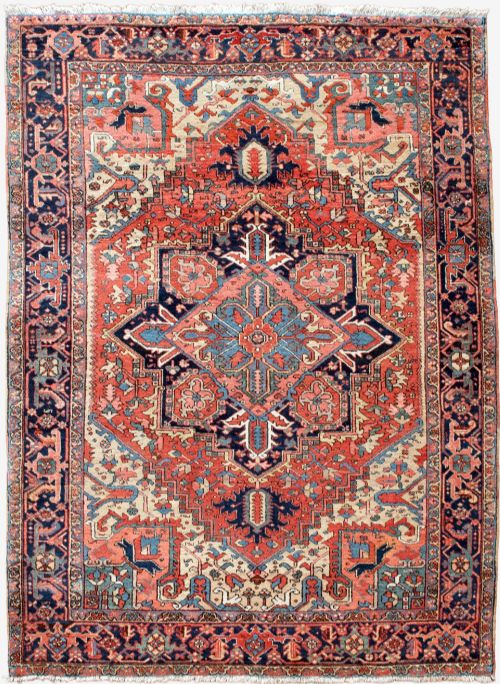
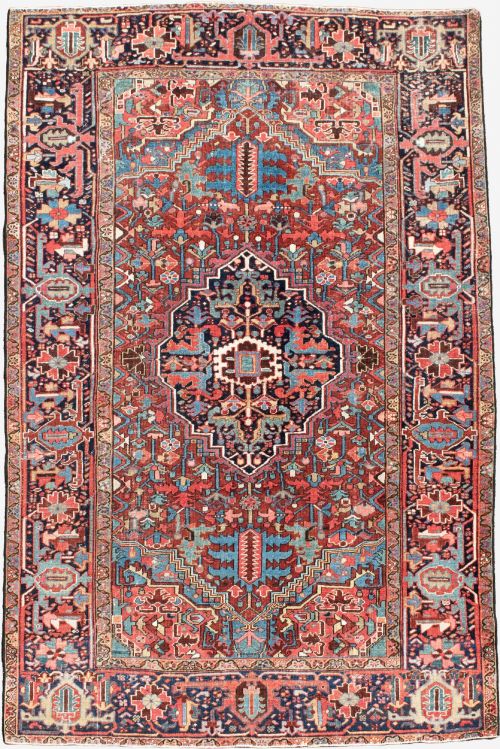
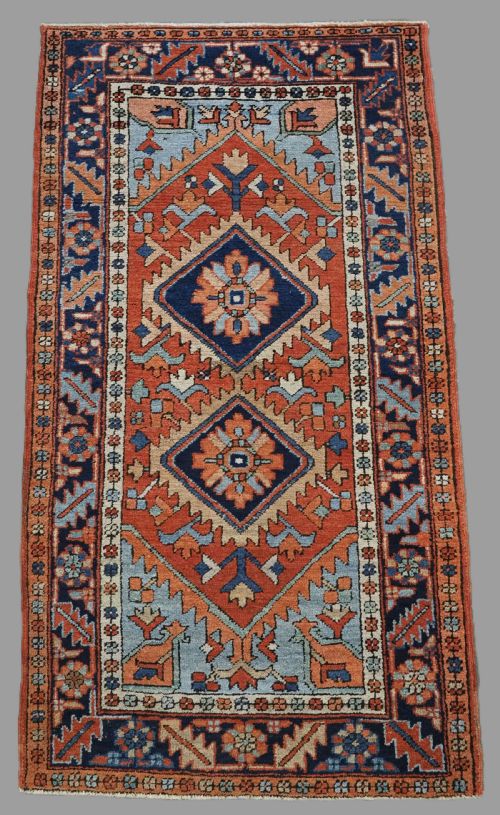
When you search for a small heriz area carpet, you encounter room-sized and compact floor coverings woven in the Northwest Persian region. These pieces often feature bold central medallions and strong geometric borders that anchor a seating area or hallway.
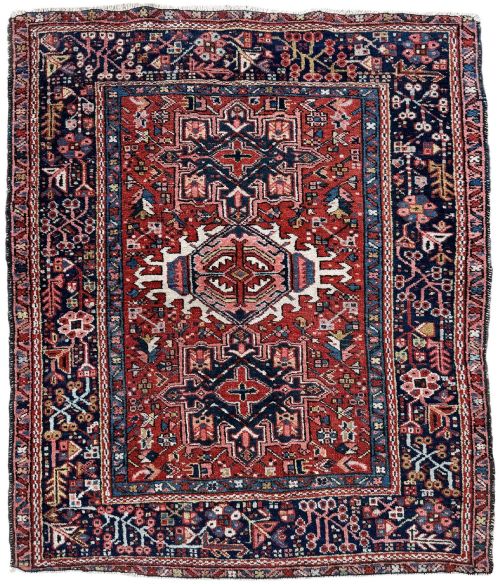
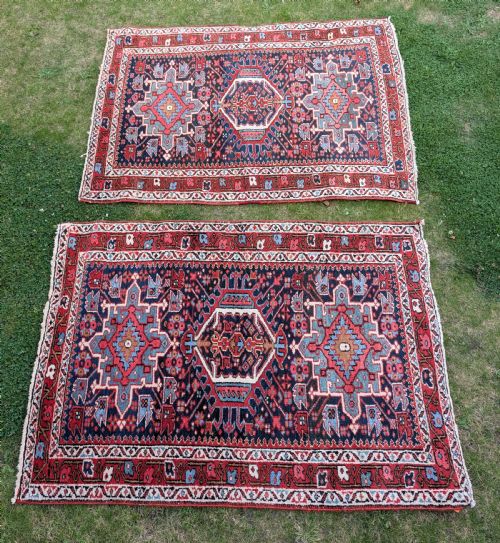
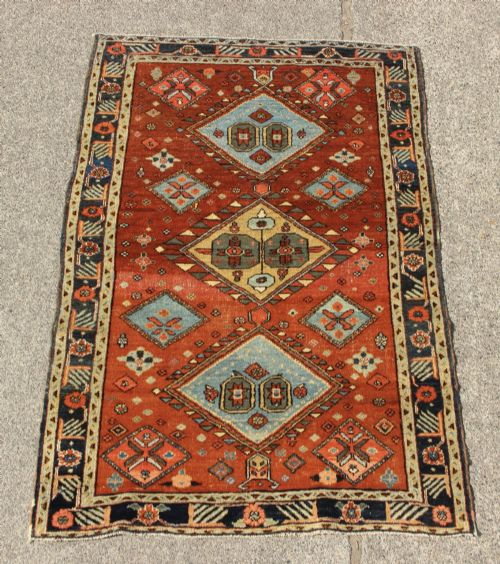
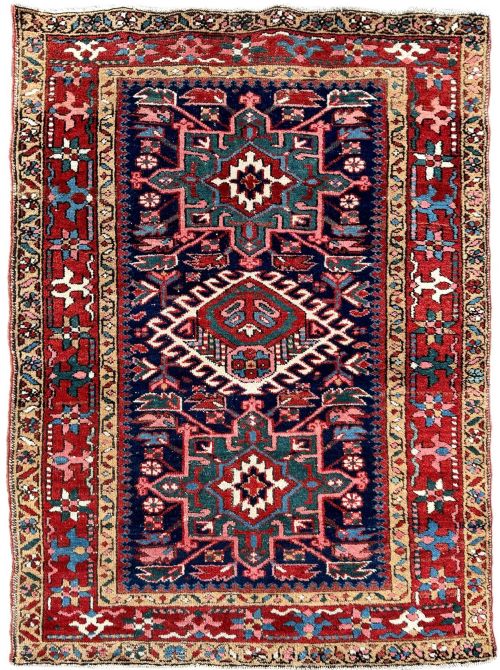
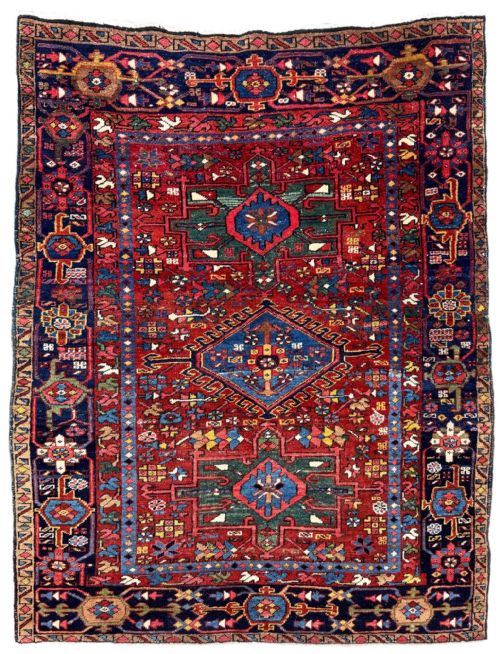
The selections on this page span the late nineteenth century through the early twentieth century, incorporating traditional Persian and tribal village designs. Most examples originate from the Heriz region and nearby weaving centres such as Karaja and Bakshaish.
Buyers frequently find formats ranging from compact scatter sizes to larger room-size rugs and small carpets. Each piece reflects the robust knotting traditions of village weavers working in Northwest Persia.
How they were made
These carpets rely on sturdy wool pile knotted tightly onto cotton warps, creating a heavy and resilient structure. Weavers often utilised hand-spun wool for the pile, which absorbs natural dyes unevenly to produce subtle abrash variations.
The foundations typically consist of durable cotton warps and wefts that keep the heavy wool pile flat and stable on the floor. This combination of materials explains why so many nineteenth and early twentieth-century examples survive in usable condition.
Listings feature wool and cotton materials, spanning the nineteenth century through the 1930s.
What varies in quality
Quality in these carpets rests primarily on the clarity of the geometric design and the depth of the colour palette. Strong contrasts within the central medallion and well-balanced borders distinguish superior weaving from standard production.
The handling of the wool and the precision of the knotting also define the upper tier of pieces. Finer hand-spun wool yields a softer handle and a richer patina that develops gracefully over decades of use.
The Small Heriz Area Carpet Glossary
- Abrash
- A natural variation in shade caused by differences in dye batches or hand-spun yarn. This tonal shift adds visual depth across the field of the carpet.
- Medallion
- The central ornamental motif dominating the field of the rug. In Heriz weaving, this element is typically geometric and bold.
- Warp
- The vertical threads stretched lengthwise on the loom that form the foundation of the carpet. Cotton is the standard material found in these Persian village pieces.
- Weft
- The horizontal threads passed through the warps to bind the knots in place. They secure the structure of the rug row by row.
- Pile
- The cut wool surface of the carpet that forms the nap. Hand-spun wool gives this layer its characteristic durability.
Small Heriz Area Carpet: Frequently Asked Questions
How do I place a small Heriz carpet?
These carpets work well beneath a coffee table, in an entryway, or anchoring a seating arrangement. Their strong geometric designs suit both traditional and modern interiors.
Ensure the rug has enough surrounding floor space to let the border design frame the area properly without feeling cramped.
How do I tell Heriz from Karaja?
Heriz carpets generally feature large, bold geometric medallions with distinct corner spandrels and rectilinear patterns. Karaja rugs often use smaller, repeated geometric motifs or multiple medallions in a more compact format.
Both styles share Northwest Persian village origins and sturdy cotton-and-wool construction methods.
What is a Bakshaish rug?
Bakshaish rugs originate from a village within the broader Heriz region, known for looser village weaving and whimsical, spaced-out geometric patterns. They often display softer colour palettes and larger-scale motifs compared to standard Heriz designs.
Collectors prize them for their artistic freedom and early nineteenth to early twentieth-century origins.
Are these carpets durable for daily use?
The combination of thick wool pile and sturdy cotton foundations makes these pieces exceptionally durable for everyday foot traffic. Regular rotation and a quality underlay will help protect the foundation over time.
Most surviving examples from the early twentieth century remain robust enough for active living spaces.