




Blue Wool Heriz Carpet
These blue wool heriz carpet examples are traditional Persian floor coverings woven from wool and cotton, offering durable construction and distinctive geometric patterns for period interiors.
Blue Wool Heriz Carpet
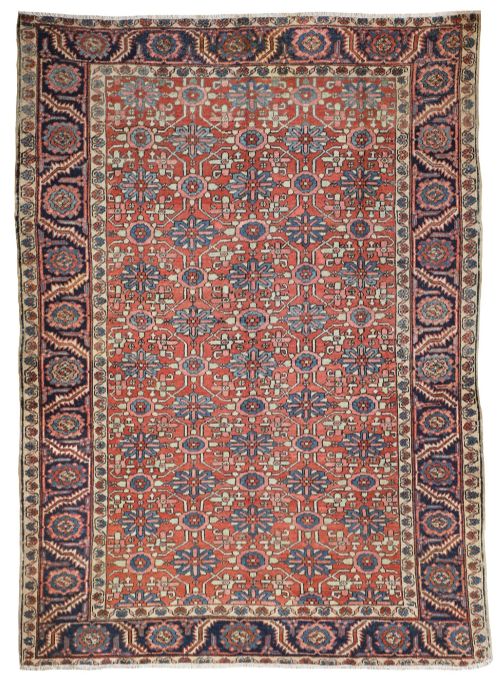
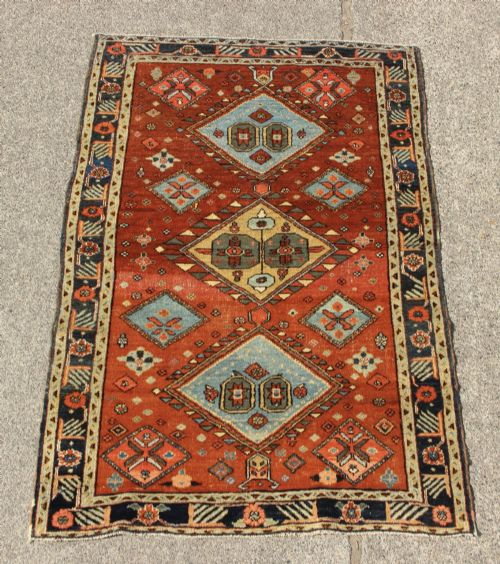
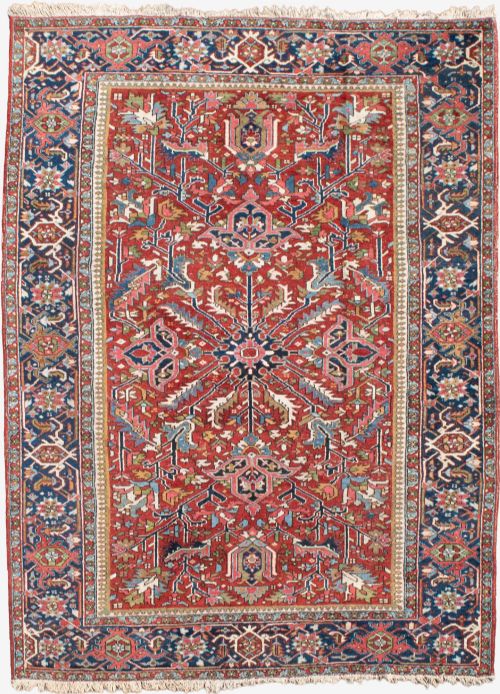
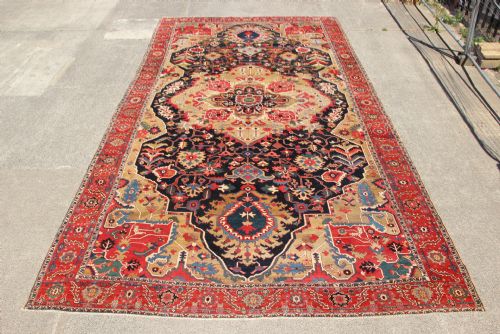
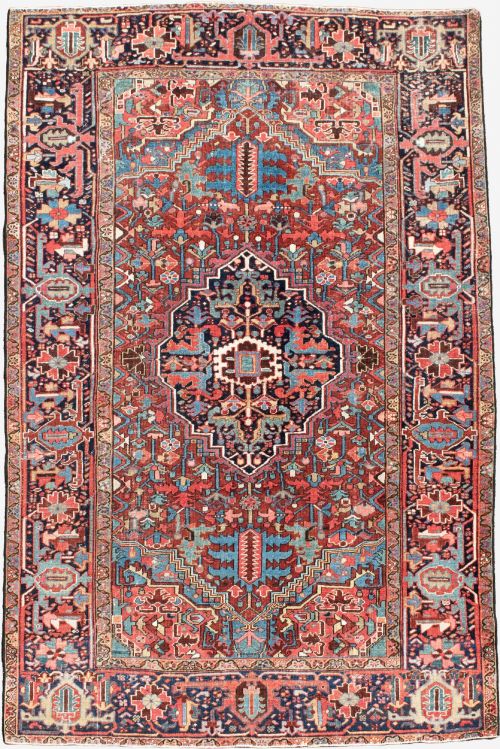
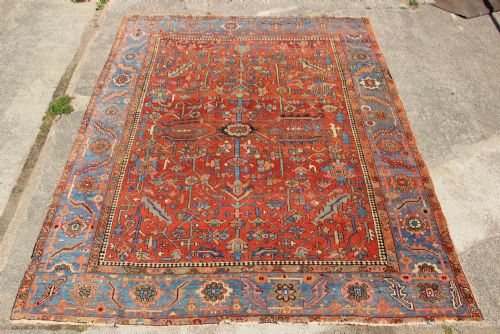
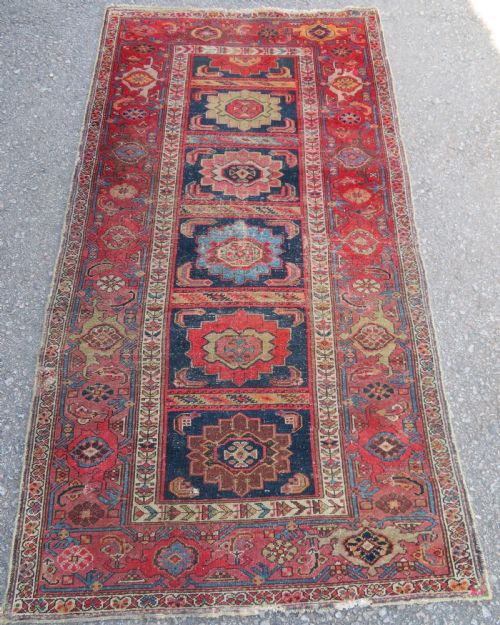
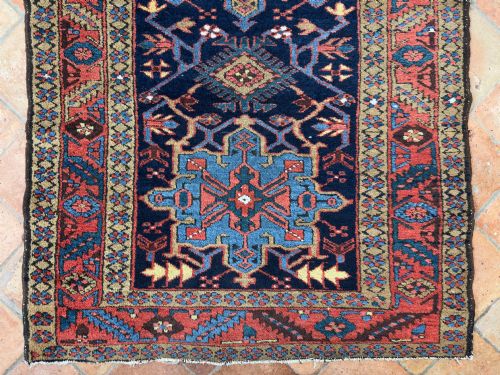
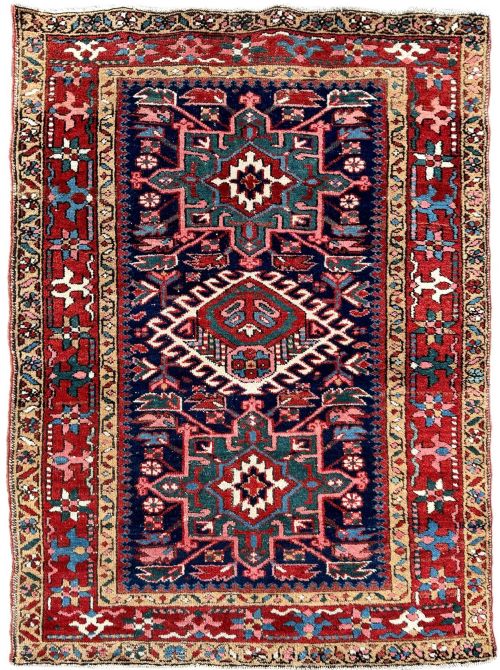
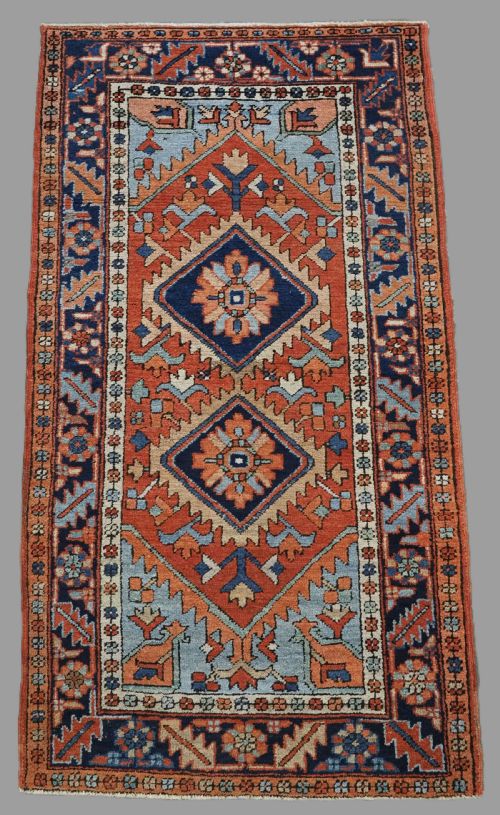
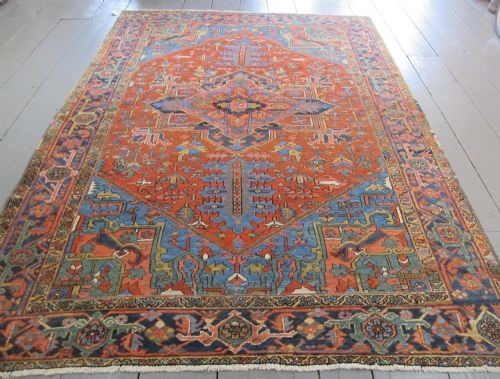
A blue wool heriz carpet is a traditional Persian floor covering originating from the north-west region of Persia, encompassing styles such as Heriz, Serapi, Bakshaish, and Karaja. When exploring this selection, a buyer encounters large room-sized carpets alongside smaller area rugs and hallway runners dating from the mid-nineteenth century through the early twentieth century.
The regional weaving tradition yields robust textiles distinguished by substantial dimensions and durable builds. These pieces range from grand decorative carpets measuring over six metres in length to compact village rugs, all sharing the distinct stylistic traits of North West Persian workshops.
What varies in quality
The fineness of the weave and the complexity of the geometric medallion design separate finer examples from simpler village pieces. Greater knot density allows for sharper definition in the botanical and geometric motifs across the central field.
Condition and scale also influence the character of each piece, with larger room-sized carpets requiring exceptional structural integrity across their broad expanses. The depth and saturation of the natural dye palette contribute significantly to the visual presence of the textile.
Listings span the period from 1850 to 1930, utilising wool and cotton materials across runner and carpet forms.
The Blue Wool Heriz Carpet Glossary
- Heriz
- A style of Persian carpet originating from the village of Heris in north-west Persia, known for bold geometric medallions and durable construction. These carpets typically feature a sturdy cotton foundation with a dense wool pile.
- Serapi
- A sub-style associated with older Heriz carpets, generally characterised by more spacious designs and a refined palette. They often date to the nineteenth century and command attention for their artistic balance.
- Bakshaish
- A neighbouring village style sharing techniques with Heriz weaving, distinguished by more relaxed, whimsical geometric layouts. The older examples frequently display muted earthy tones alongside soft blues.
- Warp
- The vertical threads stretched tightly on the loom that form the skeleton of the carpet. In these pieces, cotton warp provides the necessary tension and stability.
- Karaja
- A regional village type producing smaller rugs and runners with distinct geometric repeat patterns. They utilise the same hand-spun wool materials found in larger Heriz carpets.
Blue Wool Heriz Carpet: Frequently Asked Questions
Where were these carpets made?
These carpets were woven in the north-west region of Persia, specifically in and around the town of Heris and surrounding weaving villages.
Local workshops and village weavers produced these durable floor coverings using materials sourced directly from the region.
How do I care for a wool carpet?
Regular gentle vacuuming without a rotating brush helps maintain the wool pile and removes trapped dust.
Professional cleaning suited to antique textiles preserves the natural lanolin in the hand-spun wool and protects the cotton foundation.
What is the difference between Heriz and Serapi?
Serapi carpets represent an earlier, typically finer subset of Heriz weaving, often featuring more open and balanced geometric compositions.
Standard Heriz carpets tend to have slightly bolder, denser central medallions and heavier geometric framing.
Can these carpets be used in hallways?
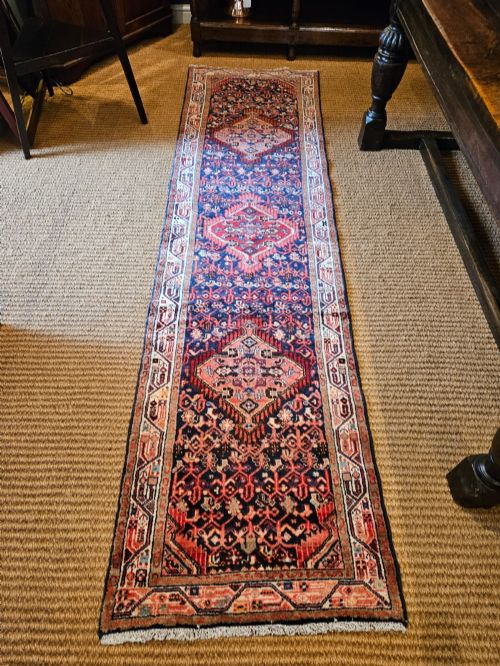
Specific pieces within this group are woven as runners, designed specifically for narrow spaces like hallways and corridors.
Their robust wool and cotton construction handles regular foot traffic while providing traditional Persian aesthetics to transitional areas.