
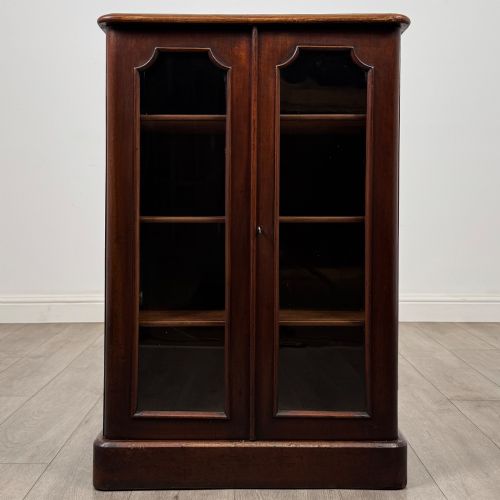
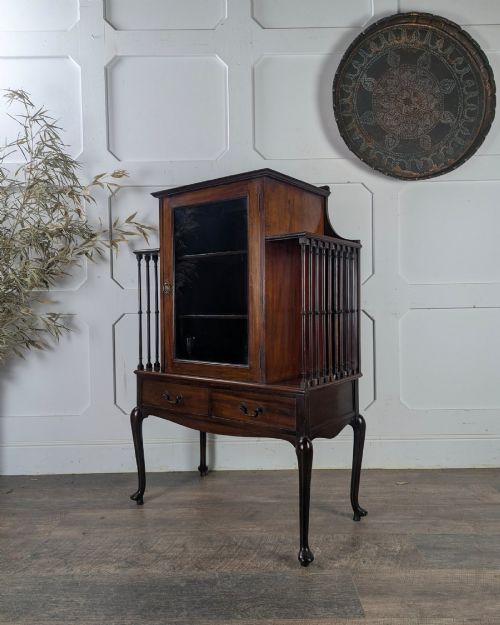
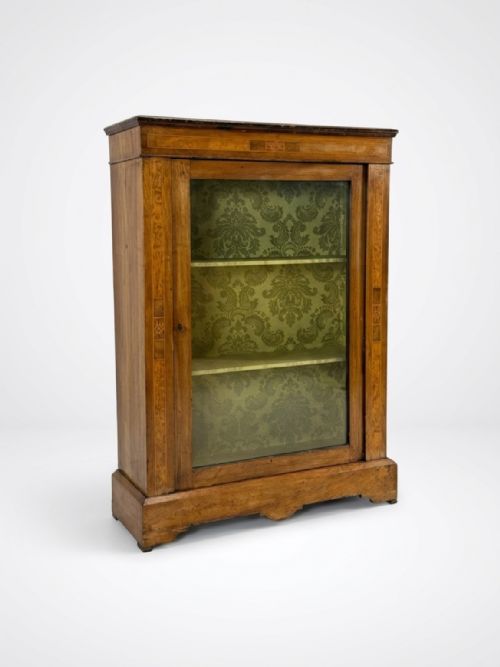
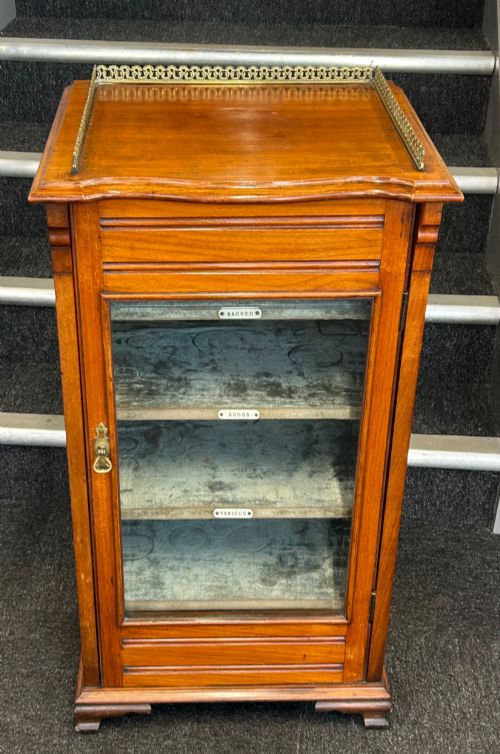
Small Glazed Cupboard
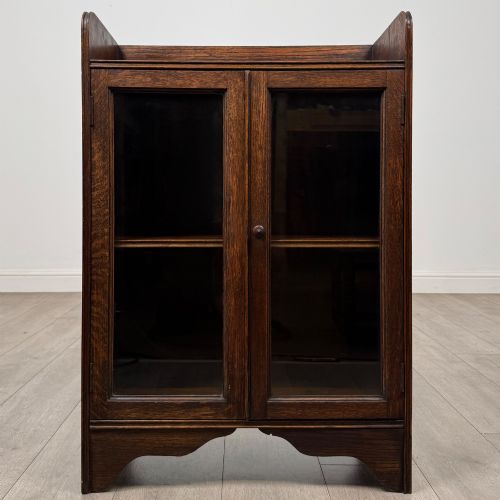
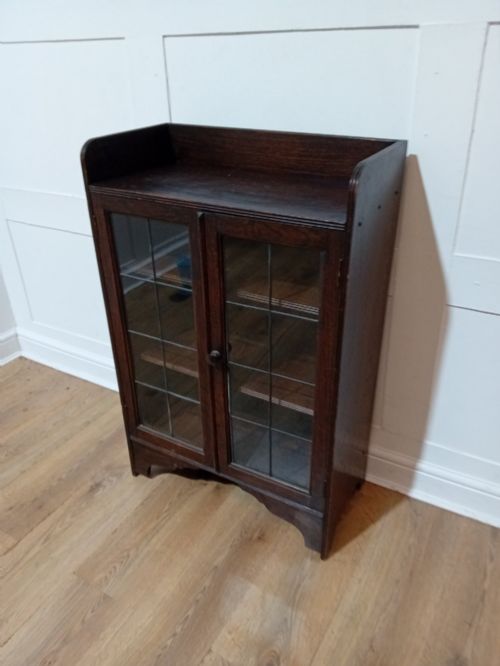
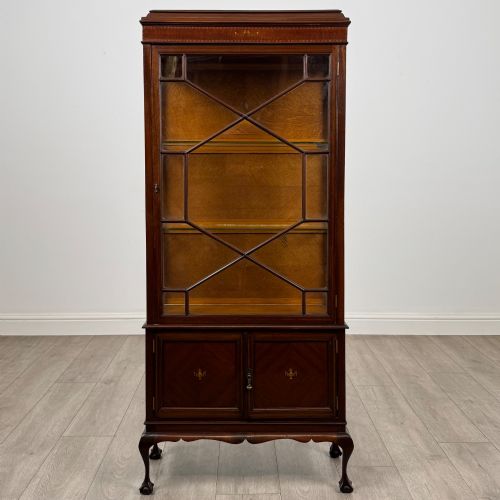
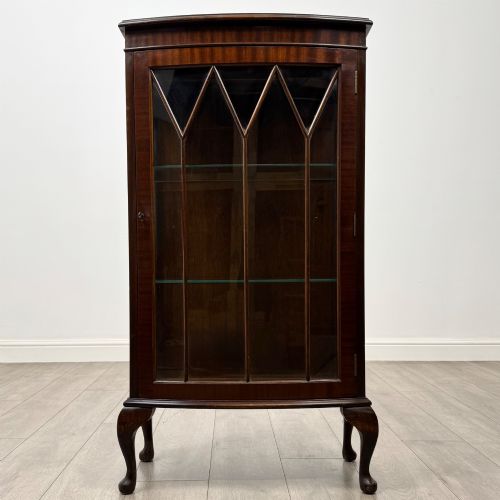
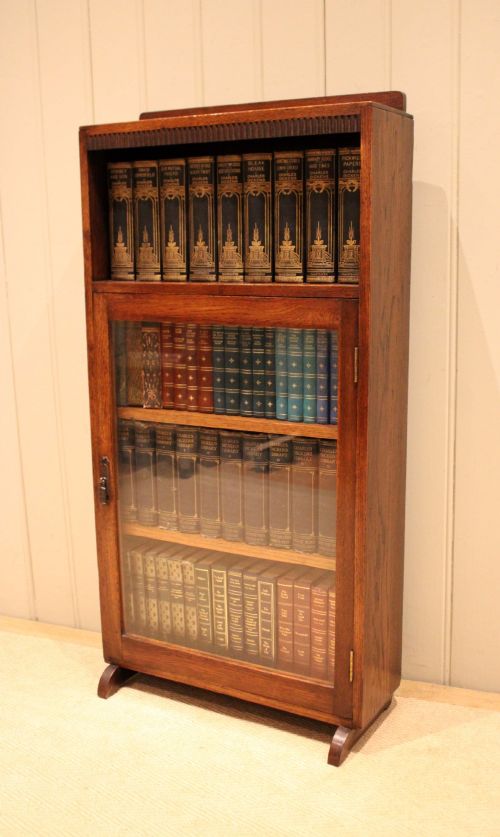
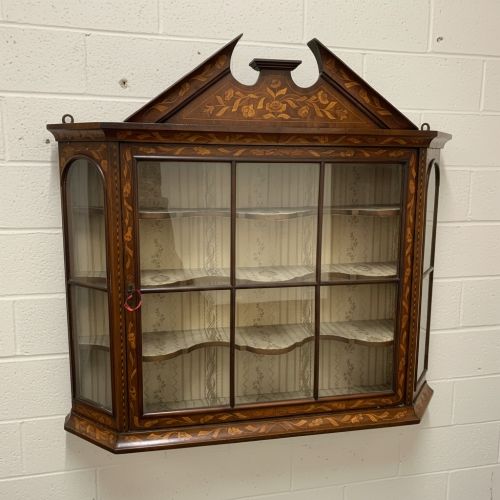
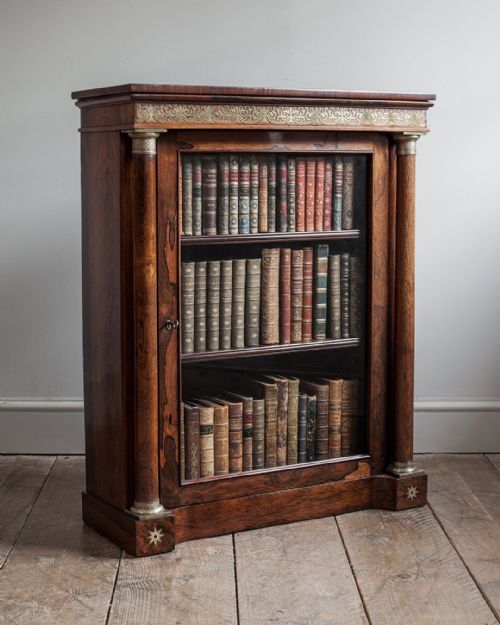
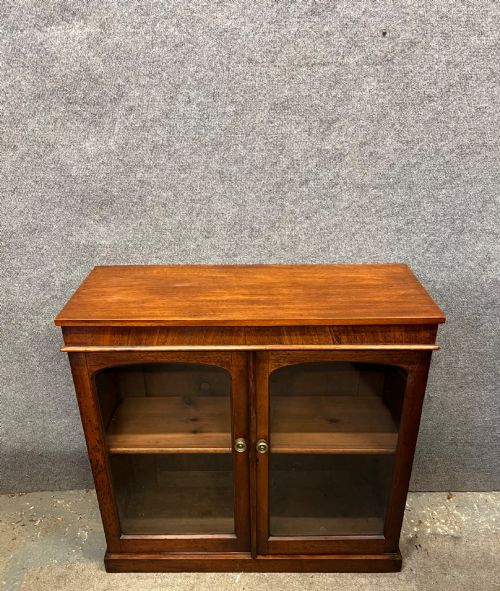
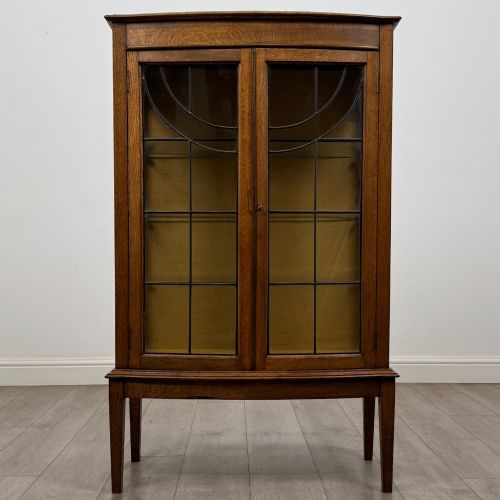
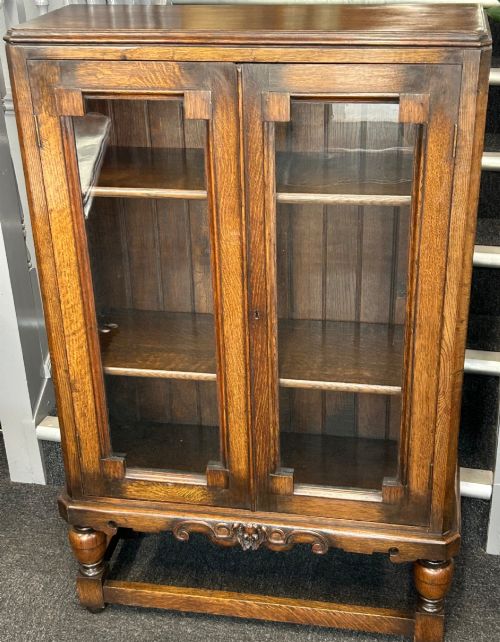
A small glazed cupboard holds books and porcelain behind glass, combining compact proportions with visible storage.
Small Glazed Cupboard
A small glazed cupboard serves multiple domestic functions across periods, appearing as a corner cabinet, a wall-mounted display unit, or a dwarf bookcase. The evidence shows these items span from the Georgian era through the Regency, Victorian, and Edwardian periods up to the 1930s.
How they were made
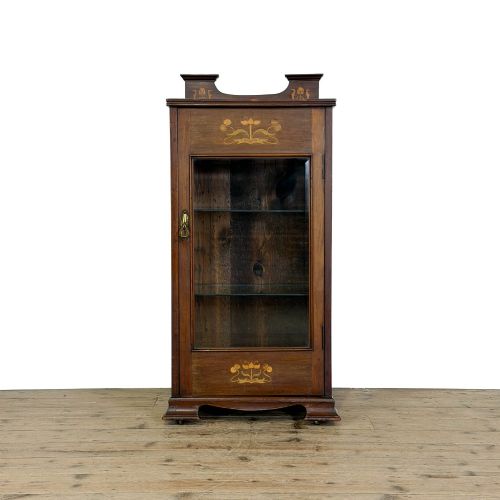
Cabinet makers utilised dense hardwoods such as mahogany, oak, walnut, and rosewood, frequently applying veneers or marquetry inlay to flat surfaces. Brass hardware and glass panes complete the construction of doors and display compartments.
Joinery methods include framed panels for doors, glazed partitions, and fitted shelving, occasionally complemented by fabric linings or painted interiors as recorded in surviving examples.
Listings feature oak, mahogany, walnut, and rosewood across Georgian, Victorian, and Edwardian periods.
What varies in quality
The standard of timber selection and veneer matching defines the upper tier of pieces, where figured walnut or book-matched mahogany display superior grain patterns. Cabinetmakers who invested time in precise inlay work and balanced proportions produced sturdier, more visually harmonious results.
Original hardware, intact glass panes, and sound structural joinery separate well-preserved examples from altered items. The integration of period-correct details, such as gallery rails or carved oak motifs, indicates higher workshop standards.
The Small Glazed Cupboard Glossary
- Pier cabinet
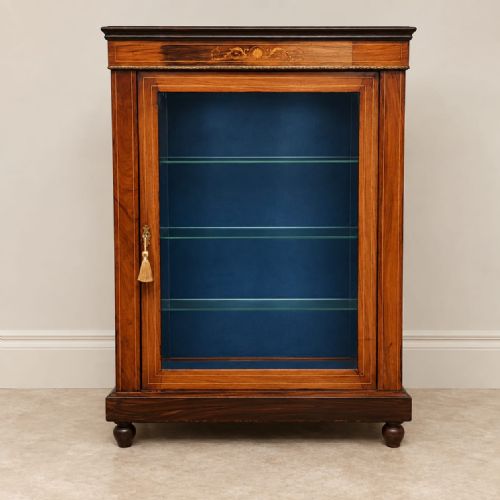
- A low cabinet designed to stand against a narrow pier of wall between windows. These pieces often feature glass doors and rich walnut or rosewood veneers.
- Marquetry
- Decorative veneer work forming pictures or geometric patterns by assembling thin pieces of wood. Makers used contrasting timbers to create detailed surface decoration.
- Veneer
- A thin layer of figured wood applied to a secondary timber base. This technique allowed cabinetmakers to display expensive grain patterns economically.
- Corner cabinet
- A storage unit built with a triangular footprint to fit snugly into room corners. They appear in both wall-mounted and floor-standing formats with glazed doors.
- Vitrine
- A glass-fronted display cabinet intended for showing porcelain and small ornaments. The term denotes a French-influenced style common in Victorian and Edwardian interiors.
Small Glazed Cupboard: Frequently Asked Questions
Where should I place a small glazed cupboard?
These compact cabinets suit hallways, alcoves, and dining rooms where floor space remains limited. Corner models utilise awkward room angles effectively while providing display room behind glass.
Wall-mounted versions fit well above sideboards or desks, keeping surfaces clear below them.
How do I date a mahogany display cabinet?
Cabinet construction methods, wood types, and decorative styles provide clues to age. Georgian and Regency pieces display different proportions and foot styles compared to Edwardian or Victorian equivalents.
Examine the backboards, hinges, and drawer linings for tool marks and material consistency that match the recorded period.
Can these cabinets hold heavy books?
Many examples function as small bookcases with adjustable wooden shelving. Oak and mahogany versions offer sturdy internal support for moderate book collections.
Check the shelf thickness and support fixings before loading heavy volumes behind the glazed doors.
What is the difference between a pier cabinet and a music cabinet?
Pier cabinets were traditionally built to sit between windows and typically feature open display shelving or single glazed doors for decorative items. Music cabinets contain internal drawers or compartments specifically sized for sheet music.
Music cabinets frequently date from the Victorian and Edwardian eras when home piano playing was popular.