
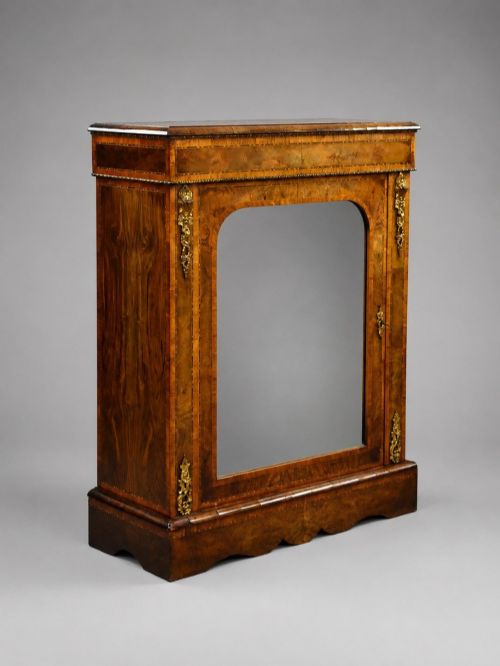
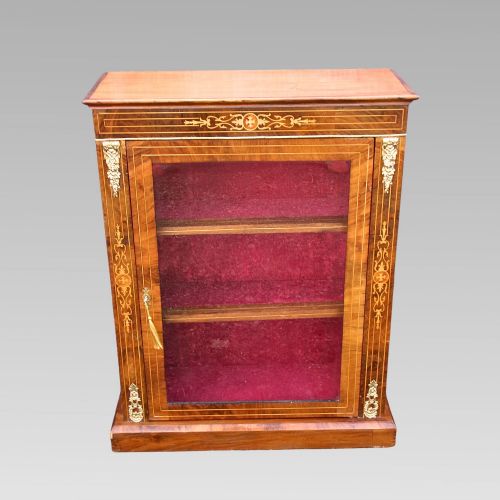


Narrow Walnut Bookcase
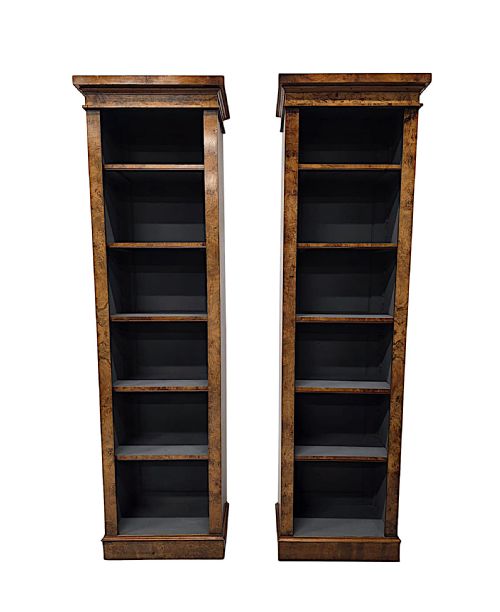
A narrow walnut bookcase brings rich timber grain and compact proportions to smaller rooms, housing a library without dominating the floor space.
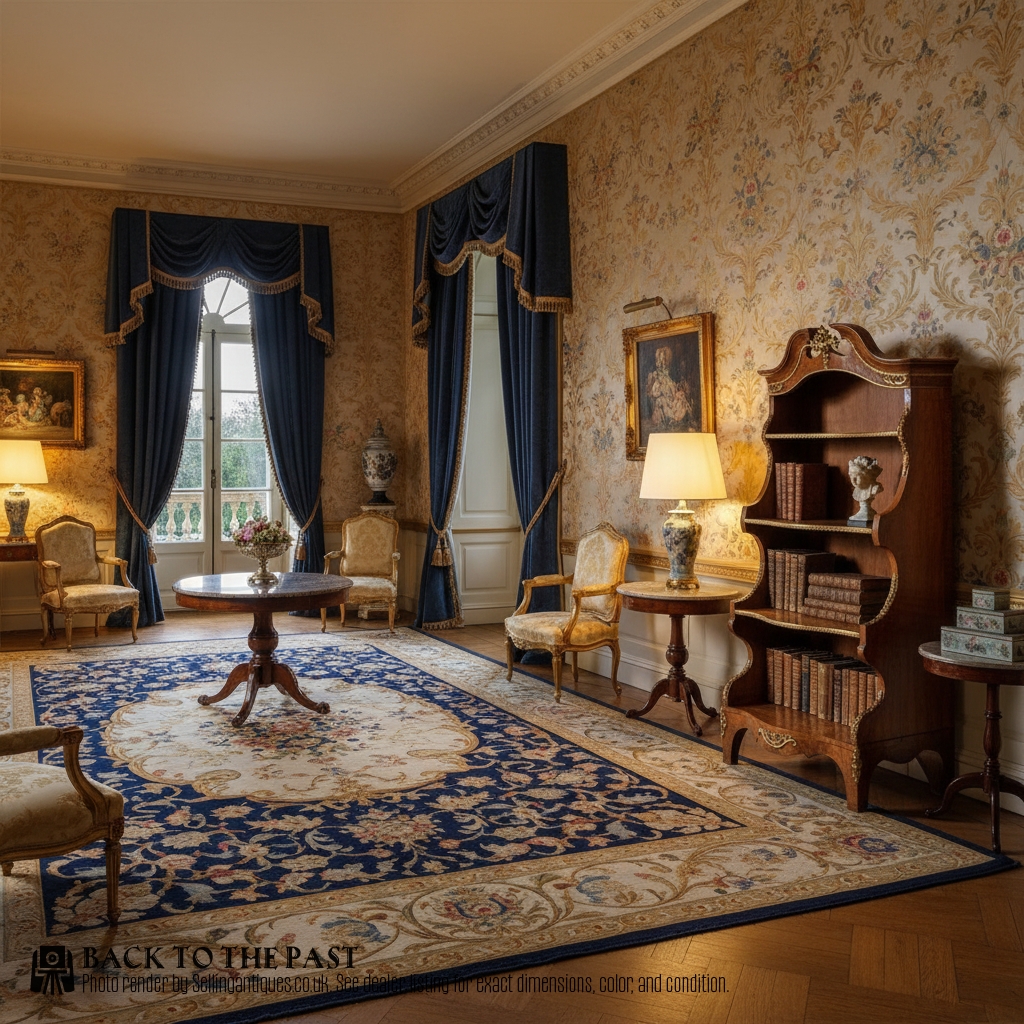
Narrow Walnut Bookcase
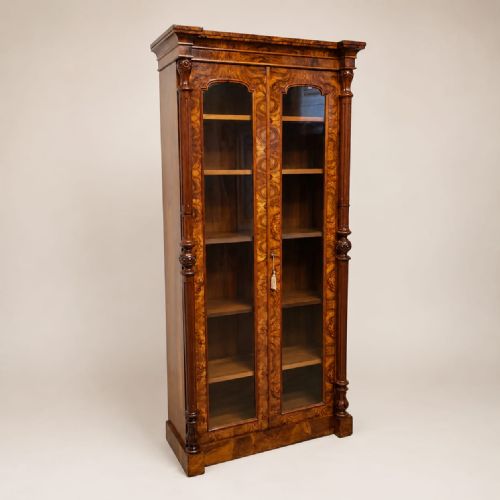
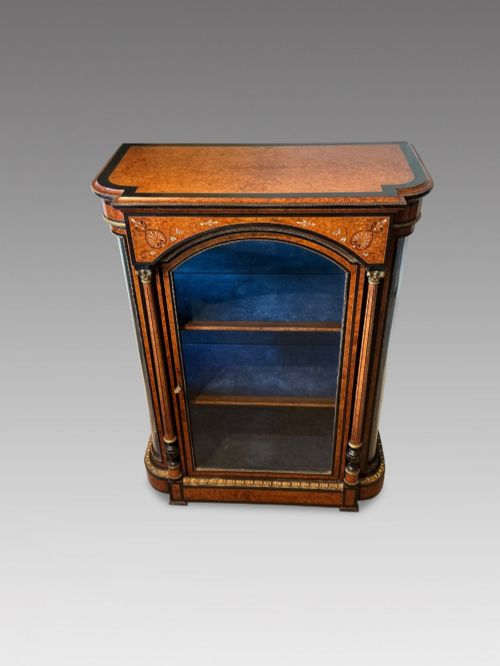
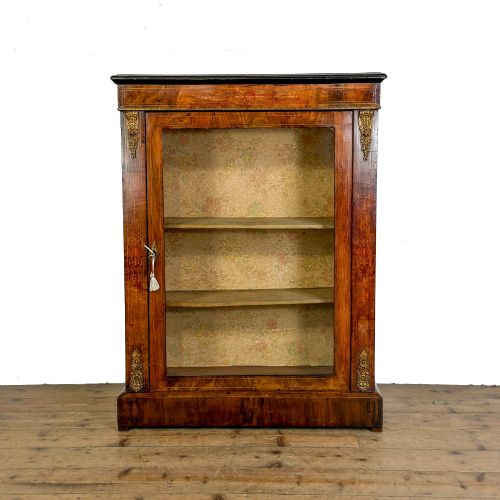
A narrow walnut bookcase serves rooms where floor space is limited yet vertical storage is required. These pieces appear in forms ranging from open bookshelves and glazed cabinets to pier cabinets and bureau bookcases.
Open shelf versions provide immediate access to volumes, while glazed doors protect fragile bindings from dust. Lower cupboards on taller formats offer concealed storage for smaller items.
How they were made
Cabinet makers utilised figured walnut and burr walnut veneers applied over stable secondary timbers to create striking patterned surfaces. Timber selection governed the visual impact, with highly figured grain reserved for visible front panels and doors.
Glass doors frequently feature astragal bars dividing the panes, while brass hardware secures closures and supports adjustable shelving. Inlaid details incorporate materials such as ebonised wood, rosewood, and subtle brass stringing.
A faux burr walnut finish appears among the Victorian selections, offering the swirling look of the prized timber through clever paintwork.
What varies in quality
The refinement of the timber veneer and the crispness of any marquetry inlay dictate the standing of a piece. Finer examples display carefully matched grain patterns across doors and drawer fronts rather than random arrangements.
Structural integrity rests on the stability of the carcass and the fit of the doors or drawers. Superior pieces exhibit precise joinery, original glass where glazed, and well-executed brass or ormolu mounts.
The Narrow Walnut Bookcase Glossary
- Burr walnut
- A highly figured timber harvested from walnut tree growths, prized for its swirling grain patterns. It is typically sliced into thin veneers for cabinet fronts.
- Astragal glazed
- A door construction where wooden bars divide the glass into smaller panes. This technique provides structural support while offering a clear view of the contents.
- Marquetry
- Decorative patterns formed by fitting contrasting veneer pieces onto a solid ground. Makers utilise various woods to create floral or geometric motifs.
Narrow Walnut Bookcase: Frequently Asked Questions
Where should I place a narrow walnut bookcase?
These compact pieces fit well in alcoves, hallways, or smaller studies where standard furniture overwhelms the room. Their restricted footprint preserves floor space while offering substantial vertical storage.
Position them away from direct sunlight and heat sources to protect the walnut veneer and polished finish from drying out over time.
How do I care for antique walnut furniture?
Dust the surfaces regularly with a soft, dry cloth to prevent accumulation. Apply a suitable beeswax polish occasionally to nourish the timber and maintain the lustre of the finish.
Avoid using silicone-based sprays or harsh chemical cleaners, as these can penetrate old finishes and damage the underlying wood.
What is the difference between open and glazed bookcases?
Open bookcases provide direct access to books and allow decorative bindings to become part of the room's decor. They suit frequently read volumes that benefit from immediate handling.
Glazed bookcases protect fragile or older books from dust, sunlight, and handling. The glass doors create a formal presentation while keeping the contents secure.
How do I distinguish Victorian from later walnut bookcases?
Victorian pieces often feature deep, rich patination and specific construction traits like hand-cut dovetails and solid secondary timbers behind the veneers. Styles tend to incorporate heavy moulded cornices or elaborate marquetry.
Twentieth-century revivals, such as Queen Anne style pieces, often present cleaner internal engineering and lighter timber tones while mimicking earlier forms.