




Ornate Bookcase
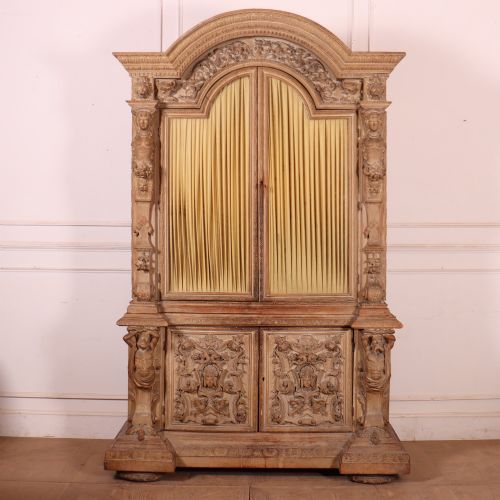
An ornate antique bookcase brings together rich timbers and elaborate metalwork to elevate a room.
Ornate Bookcase
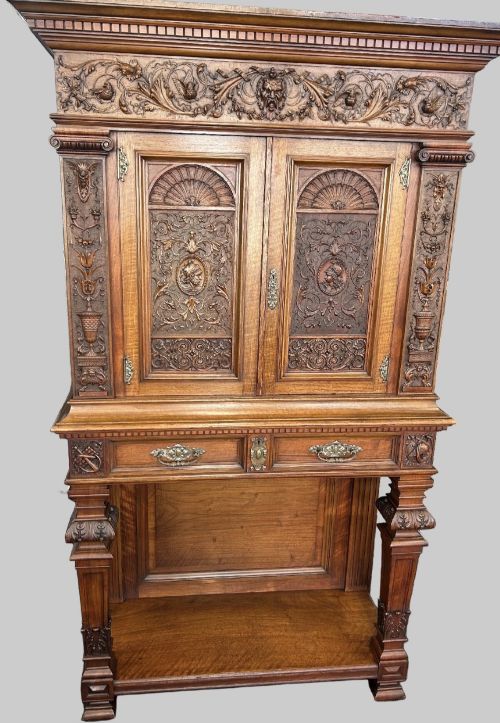
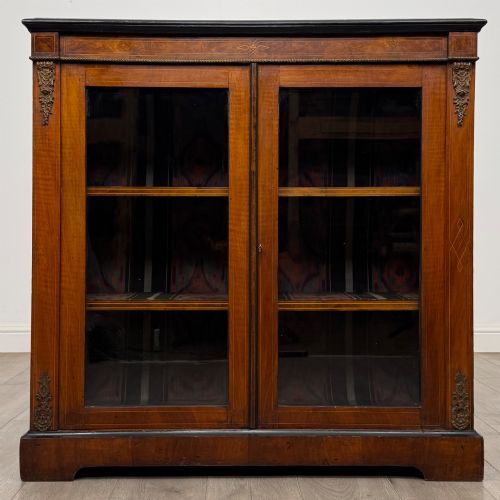
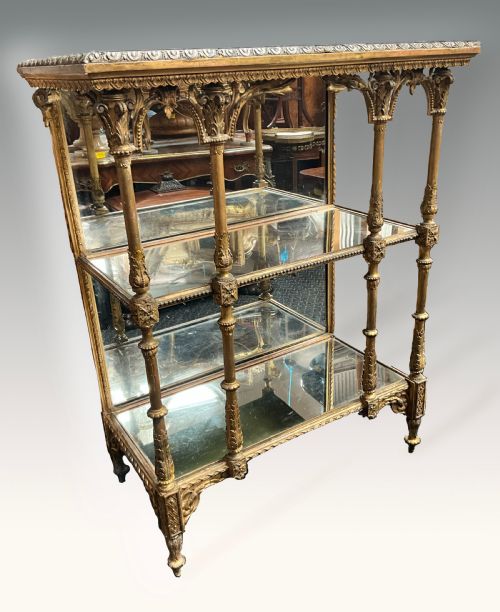
When you search for an ornate antique bookcase, you find pieces that combine practical book storage with decorative display, spanning cabinet work from the eighteenth century to the late nineteenth century. These items include tall open front bookcases, French display cabinets, and pier cabinets featuring glass doors and mirrored backs.
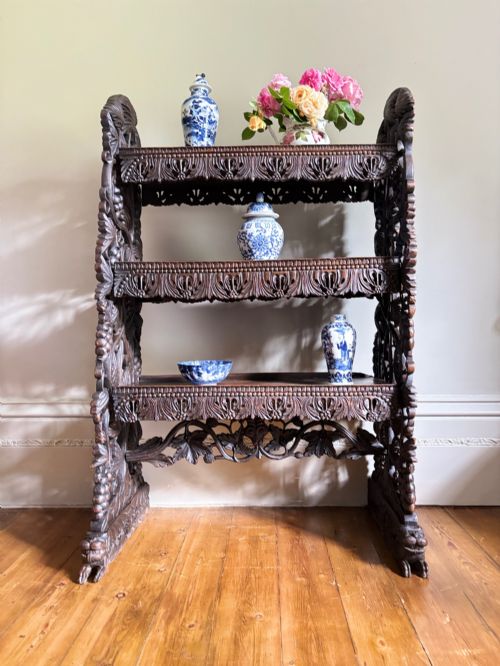
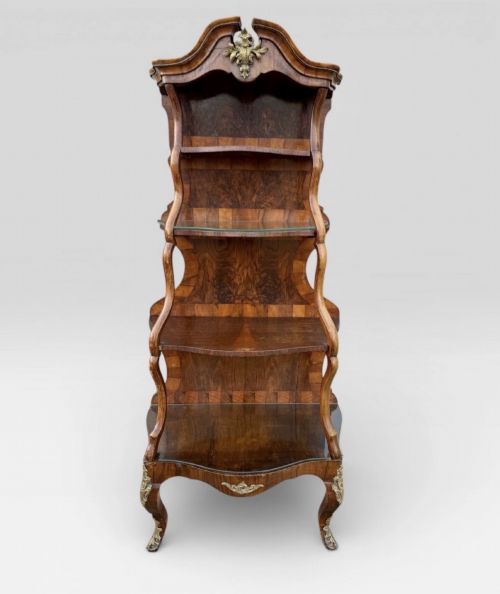
The most common examples on this page belong to the Victorian era and French revival styles, constructed in walnut, kingwood, and rosewood. Alongside traditional bookcases, the selection encompasses etageres, whatnots, gold book troughs, and carved giltwood shelves.
Origins stretch across English workshops, French cabinet makers, and Italian carvers, presenting varied decorative vocabularies from Rococo Revival to Anglo-Indian design. Each piece serves to display treasured volumes or curiosities while acting as a focal point in a traditional interior.
What varies in quality
The standard of an ornate antique bookcase rests on the crispness of the wood carving, the precision of the marquetry or boulle work, and the quality of the cast ormolu mounts. Finer examples show seamless integration between the primary timber frame and the applied decorative metals or giltwood enrichments.
Construction methods also distinguish the work, particularly the thickness of the timber, the grain selection in burr walnut or kingwood veneers, and the finish applied to the surface. Cabinets bearing maker signatures or exhibition provenance reflect higher standards of craftsmanship and design ambition.
Some nineteenth-century French makers hid letters behind brass boulle inlay, leaving secret messages for future restorers to uncover.
Paul Sormani
The Ornate Bookcase Glossary
- Ormolu
- Gilded bronze used for decorative mounts on furniture. It provides bright metallic highlights against dark timbers like walnut and kingwood.
- Pier Cabinet
- A low display cabinet designed to fit against the wall space between windows. These often feature glass doors and elaborate marquetry.
- Boulle
- A form of marquetry using brass and tortoiseshell inlaid in ornate patterns. Developed in France, it adorns luxury cabinets and vitrines.
- Etagere
- A piece of furniture consisting of a set of open shelves for displaying small objects. They appear in carved wood and gilt finishes.
- Vitrine
- A glass-fronted cabinet designed for displaying porcelain, curiosities, and fine books. It keeps dust away while offering all-around visibility.
Ornate Bookcase: Frequently Asked Questions
What is an ornate antique bookcase used for?
These pieces provide functional shelving for books while doubling as display furniture for ornaments and porcelain. Vitrines and pier cabinets protect delicate items behind glass doors.
They serve as prominent decorative anchors in a room, drawing the eye with rich timber grains and gilded metal mounts.
How do I place one in a modern room?
An ornate cabinet works well against a plain wall where its carved details and timber tones can stand out without visual clutter. Keep surrounding decor simple to let the craftsmanship of the piece take centre stage.
Use open shelves for everyday books and glazed sections for objects that need protection from dust.
How do I tell Victorian from eighteenth century pieces?
Eighteenth-century examples often display restrained Italian or French carved woodwork and simpler structural lines. Victorian pieces frequently incorporate heavier revival styles, such as Rococo or Renaissance Revival, with dense burr walnut and elaborate ormolu.
Examine the secondary timbers inside the cabinet, as nineteenth-century workshops used different framing practices than earlier makers.
What woods were commonly used?
Makers relied on walnut, burr walnut, kingwood, rosewood, and padauk for the main structure and veneers. Lighter woods like satinwood and tulipwood provided contrast for stringing and floral inlays.
Carved frames often utilised oak, gesso, and giltwood to support heavy mirrors or decorative crests.