


Small French Writing Desk
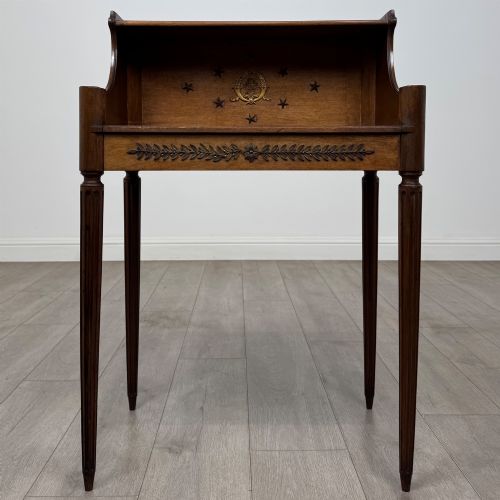
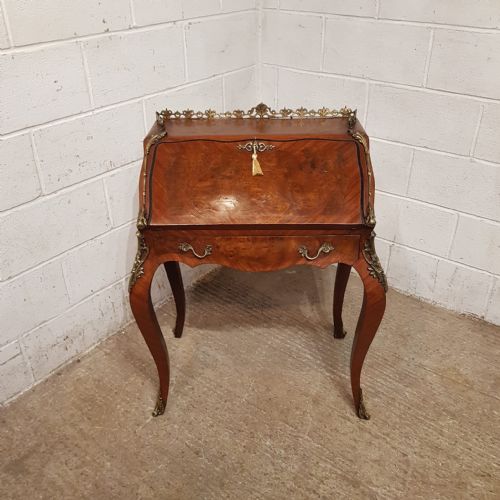
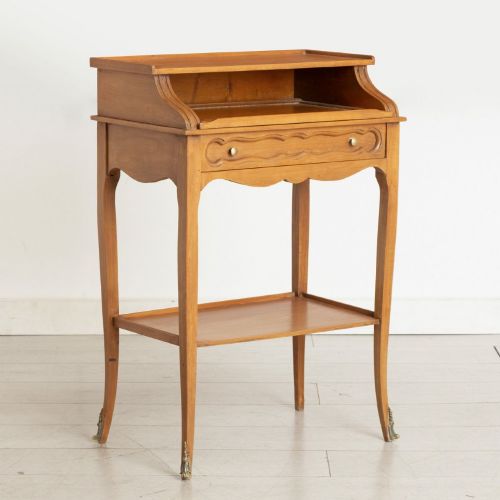
These small french writing desk examples combine compact proportions with decorative cabinetwork, offering practical writing surfaces designed for nineteenth-century boudoirs and reception rooms.
Small French Writing Desk
When you search for a small french writing desk, you encounter compact writing furniture primarily from the nineteenth century, including Victorian interpretations and revival styles. The selection centres on pieces designed for private correspondence, incorporating compartments, drawers, and fitted superstructures.
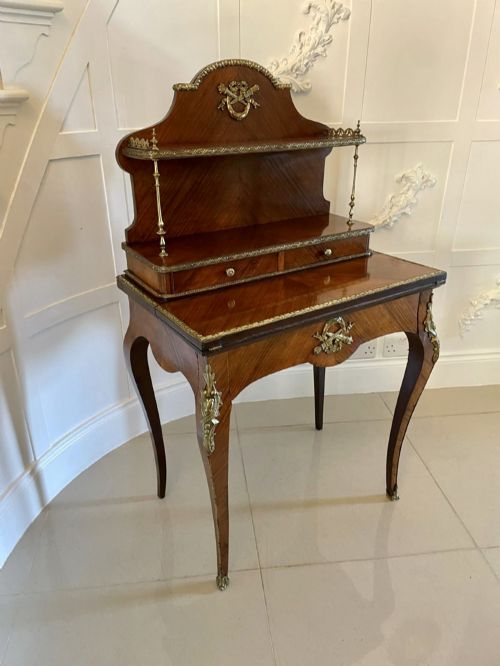
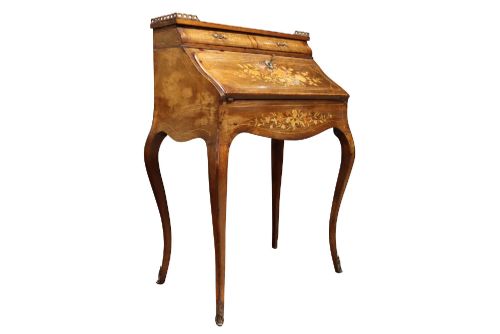
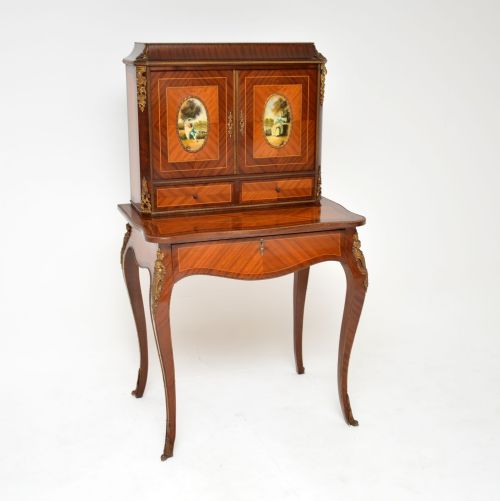
The most common form on this page is the bonheur du jour, a light ladies desk featuring a raised cabinet back above a writing surface. Alongside these, you find writing tables, bureau de dame examples, and miniature desks executed in period timber.
How they were made
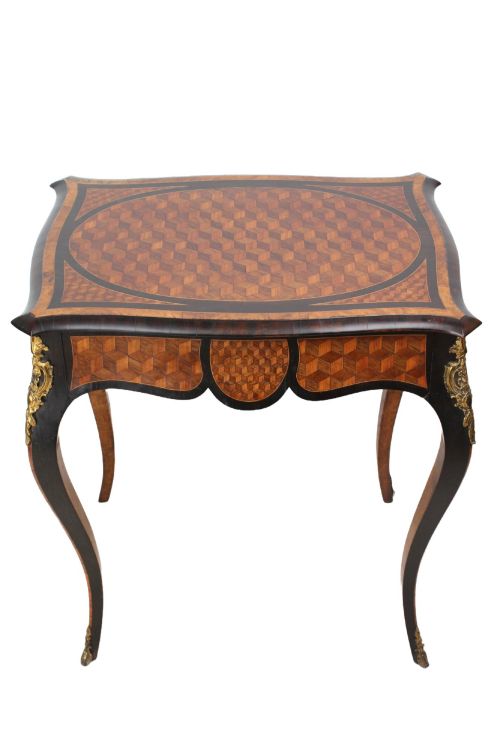
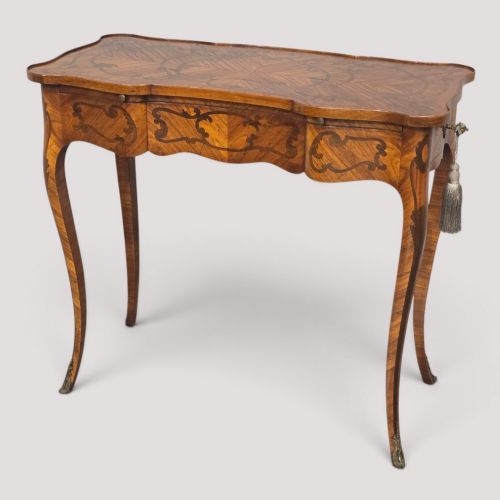
Cabinetmakers utilised dense exotic hardwoods such as kingwood, rosewood, and walnut as foundations for intricate marquetry and parquetry veneers. These timbers were selected for grain pattern and colour contrast, then arranged in geometric or floral compositions across flat surfaces and fall-fronts.
Gilded bronze mounts, known as ormolu, frame corners, aprons, and cabriole legs, while leather inserts often provide a contrasting writing surface. Brass accents and porcelain plaques frequently complete the decorative scheme on refined examples.
Listings feature eighteenth, nineteenth, and twentieth-century examples, with Victorian revivals of Louis XV styles appearing frequently.
What varies in quality
The degree of refinement in the veneer work and the crispness of the cast ormolu mounts distinguish standard examples from exceptional cabinetwork. Hand-cut marquetry details and well-figured burr walnut or kingwood indicate higher workshop standards during production.
Structural integrity of the internal pigeonholes, drawers, and superstructures determines the practical utility of each piece. Drawer linings in secondary timbers and the precision of jointing reflect the original maker's skill.
JAS Shoolbred
The Small French Writing Desk Glossary
- Bonheur du jour
- A small ladies writing desk featuring a raised back with shelves or small drawers above a writing surface. This form appeared during the mid-eighteenth century and remained popular through the nineteenth-century revival periods.
- Ormolu
- Gilded bronze mounts applied to furniture for decorative enrichment. The technique involves coating cast bronze with a gold amalgam before heating.
- Marquetry
- The art of applying veneer slices in floral or pictorial patterns onto a furniture carcass. Cabinetmakers match different wood grains to create tonal variation without paint.
- Parquetry
- Geometric wood veneer work arranged in repeating patterns such as cubes or chequers. This technique contrasts with pictorial marquetry through its strict symmetry.
- Bureau de dame
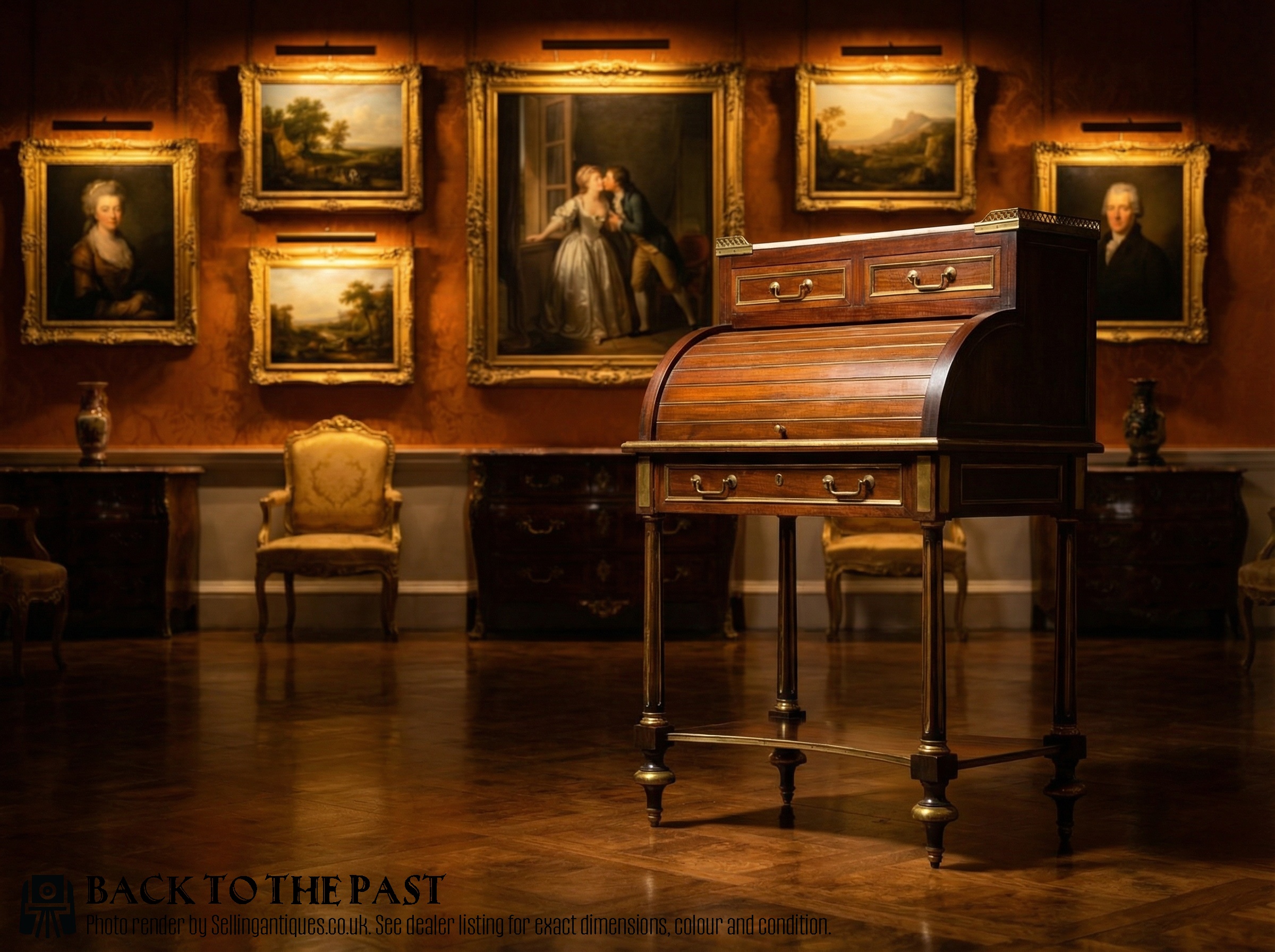
- A lady's desk, often featuring a sloping flap or cylinder front that conceals fitted interior compartments. These desks sit on slender legs and were traditionally used for personal letters.
Small French Writing Desk: Frequently Asked Questions
What is a bonheur du jour?
A bonheur du jour is a small ladies desk featuring a raised cabinet superstructure above a writing surface. These compact pieces were designed for correspondence and light reading in private chambers.
The form emerged in France before becoming popular in Britain during the Victorian era. Surviving examples often incorporate fine veneers and gilt-bronze mounts.
Where were these desks used?
These desks were originally placed in boudoirs, bedrooms, or private drawing rooms. Their modest scale allowed them to fit into intimate residential spaces rather than grand libraries.
Today, buyers frequently utilise them as functional writing stations or laptop desks in modern home offices and living areas.
What woods were used on these desks?
Cabinetmakers employed exotic hardwoods including kingwood, rosewood, mahogany, and walnut. These timbers provided rich natural colour and stable surfaces for decorative veneer work.
Many pieces also feature contrasting fruitwood or satinwood inlay arranged in geometric parquetry or floral marquetry patterns.