


Small French Escritoire
These small french escritoire pieces offer compact writing surfaces and fine cabinetwork, combining practical desks with elegant nineteenth and early twentieth century French revivals.
Small French Escritoire
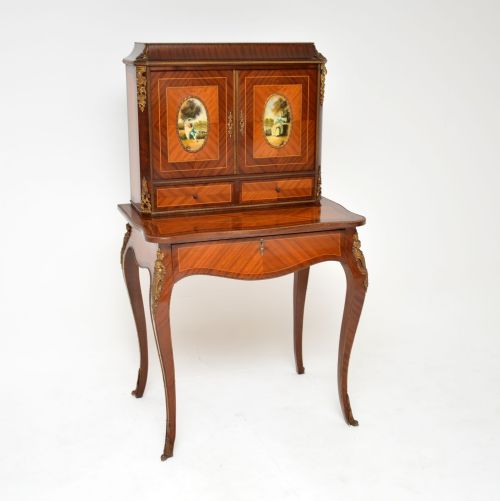
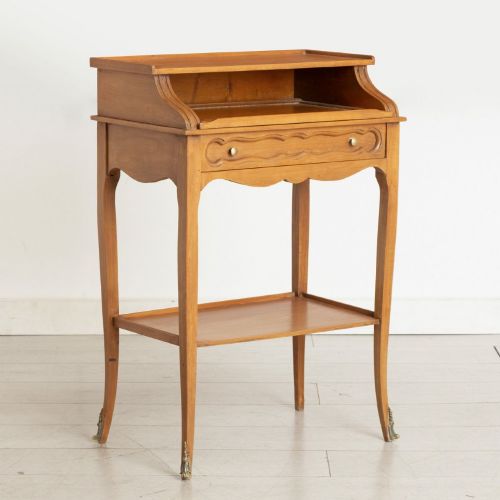
When you search for a small french escritoire, you encounter compact writing furniture designed for domestic use during the nineteenth and early twentieth centuries. The selection on this page centres on desks, writing tables, bureaux, and bonheur du jour pieces.
Most examples date from the Victorian period through to the 1930s, displaying distinct French Louis XV and Louis XVI revival styles. These items serve as functional writing desks while occupying minimal floor space in a room.
How they were made
Cabinetmakers utilised rich timber veneers including burr walnut, walnut, rosewood, fruitwood, and mahogany over solid carcases. Marquetry inlay techniques appear frequently across the surfaces.
Metal ornamentation played a major role in the construction, with brass and ormolu mounts fitted to corners, drawers, and legs to accentuate the revival styling.
Cabinetmakers employed walnut, burr walnut, rosewood, fruitwood, and mahogany, frequently enhancing the timbers with brass ormolu mounts.
What varies in quality
The sophistication of the timber veneer and the precision of the marquetry inlay set superior examples apart from standard production. Richly figured burr walnut and carefully selected rosewood indicate higher workshop standards.
The weight, crispness, and finishing of the brass ormolu mounts reveal the tier of the piece. Finely chased metalwork demonstrates greater craftsmanship than simpler, cast alternatives.
The Small French Escritoire Glossary
- Escritoire
- A small writing desk fitted with drawers and compartments for stationery. It provides a dedicated surface for correspondence.
- Bonheur de jour
- A light day-time writing desk for a lady, typically featuring a small set of drawers or a cabinet on the upper surface. This form gained popularity during the nineteenth century.
- Ormolu
- Gilded bronze mounts applied to furniture for decorative effect. It creates a striking contrast against dark wood veneers.
- Marquetry
- Decorative patterns formed by inserting pieces of coloured wood veneer into a background timber. It showcases intricate floral or geometric designs.
Small French Escritoire: Frequently Asked Questions
What is a small french escritoire used for?
These pieces function primarily as compact writing desks and personal workspaces. Their internal compartments provide storage for letters, stationery, and small valuables.
Historically, they sat in private chambers or drawing rooms where individuals managed their daily correspondence. Today, they serve equally well as decorative writing tables or laptop stations in smaller rooms.
How do I date a french escritoire?
Dating relies on examining the timber veneers, construction methods, and stylistic revival influences present in the piece. Pieces span from the mid-nineteenth century through the 1930s.
Reference to specific periods like Victorian, Louis XV, or Louis XVI helps narrow the timeframe. Subtle shifts in ormolu mount design and inlay patterns further distinguish the decades.
Where should I place an escritoire?
Their compact proportions allow them to fit comfortably in studies, bedrooms, or living spaces. Positioning them against a wall ensures the writing flap or surface remains easily accessible.
Keep them away from direct heat sources and strong sunlight to protect delicate wood veneers and polished finishes over time.