
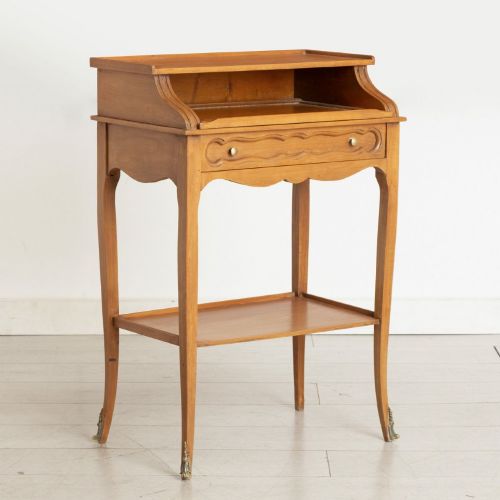


Antique Tier Writing Table
An antique tier writing table brings layered surface space and compact utility to a room, offering refined places for correspondence and display.
Antique Tier Writing Table
When you search for an antique tier writing table, you encounter a selection of refined writing furniture, desks, and side pieces designed for practical work and display. These versatile tables incorporate multiple tiers or upper shelves, offering structured surface areas alongside primary writing spaces.
The examples available here span several distinct periods, most notably the Victorian era, alongside Regency and Edwardian pieces. You will frequently find forms such as compact ladies writing tables, mahogany side tables, and sophisticated walnut library tables.
Makers and workshops of the nineteenth and early twentieth centuries produced these tables in various regional and revival styles. From French Provincial and Louis XVI Revival to Gothic Revival, each piece reflects the specific aesthetic demands of its period.
How they were made
Cabinet makers utilised dense hardwoods such as mahogany, walnut, and rosewood for the primary carcasses and framing. Finer pieces incorporate satinwood, fruitwood, and boxwood for decorative inlay work and contrasting details.
Writing surfaces were frequently fitted with leather panels to provide a smooth, tactile base for correspondence. Brass mounts, hinges, and gallery rails added functional strength and structural definition to the upper tiers.
Listings feature pieces spanning from the Regency period through to Edwardian times, utilising mahogany, walnut, rosewood, and exotic accent woods.
What varies in quality
The calibre of a writing table rests upon the selection of timber veneers and the precision of the marquetry or inlay. Burr walnut and figured mahogany command attention through rich grain patterns that standard timbers lack.
Construction standards are evident in the integration of tiers and superstructure to the main desk body. Exhibition quality pieces demonstrate superior carving, matched timbers, and refined hardware that elevate them above standard utility furniture.
Howard and Sons·Paul Sormani·John MaClean
The Antique Tier Writing Table Glossary
- Bonheur du Jour
- A small ladies writing desk featuring a light framework with drawers, shelves, or a cabinet on the upper tier. This French form became popular during the eighteenth century and saw revivals through the Regency and Victorian periods.
- Davenport Whatnot
- A compact form combining a sloping desk with drawers and open tier shelving above. It provides multi-functional storage in a small footprint.
- Gothic Revival
- An architectural and decorative style drawing inspiration from medieval design. Pieces often feature pointed arches, tracery, and robust proportions.
- Louis XVI Revival
- A neoclassical style referencing French design of the late eighteenth century, characterised by symmetry, straight tapered legs, and refined brass mounts.
- Inlay
- A decorative technique where contrasting woods or materials are set into the surface of the primary timber to create patterns.
Antique Tier Writing Table: Frequently Asked Questions
What is a tier writing table?
A tier writing table is a desk or work table that incorporates additional upper shelves or tiers alongside a writing surface. These extra levels provide space for books, stationery, or decorative objects.
Such tables range from compact ladies desks to substantial library tables. The multi-tiered design maximises vertical space while keeping necessary items within arm's reach.
How do I identify a Victorian writing table?
Victorian writing tables typically feature dense timbers such as mahogany or walnut, often enhanced with carved details or contrasting inlay work. They reflect the diverse revival styles popular during the nineteenth century.
Look for construction hallmarks like dovetailed drawers and traditional cabinet-making methods. The presence of secondary tiers or leather-inset writing surfaces is also common in this period.
Where should I place a library table?
Library tables work well freestanding in the centre of a room or positioned against a wall, depending on whether the back is finished for display. Their finished backs and refined timber grain make them suitable focal points.
Ensure the table sits away from direct heat sources and strong sunlight to protect the timber and any leather writing inserts. Adequate clearance around the tiers allows for comfortable daily use.
What is a Bonheur du Jour?
A Bonheur du Jour is a light, elegant writing desk equipped with an upper tier of small drawers, pigeonholes, or shelves. The name translates from French as day's happiness.
Originating in France, these desks were designed for ladies to write letters and manage correspondence. Regency and Victorian cabinet makers produced fine iterations influenced by these continental forms.