
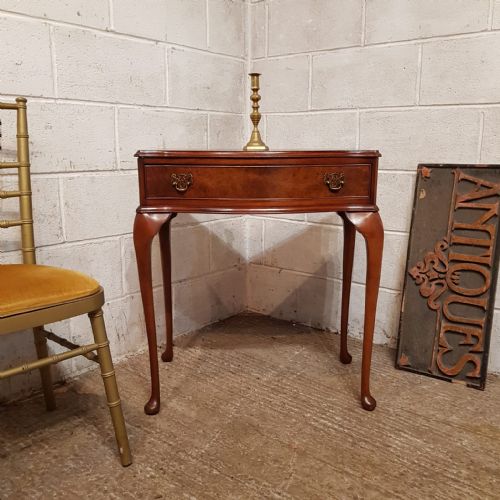


Small Entry Console Tables
Small entry console tables offer compact proportions and refined surfaces, making them ideal for narrow hallways and compact spaces.
Small Entry Console Tables
Small entry console tables serve as space-saving furniture pieces designed for hallways, corridors, and reception areas. These items combine functional surface space with narrow footprints to fit restricted architectural layouts without blocking pathways.
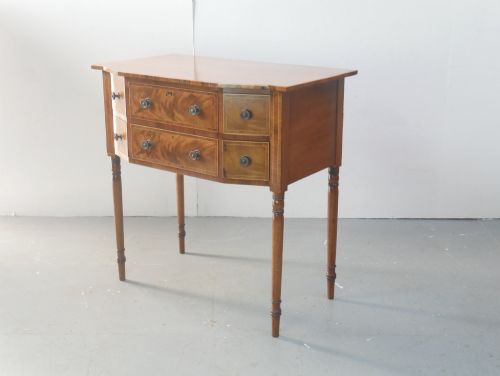
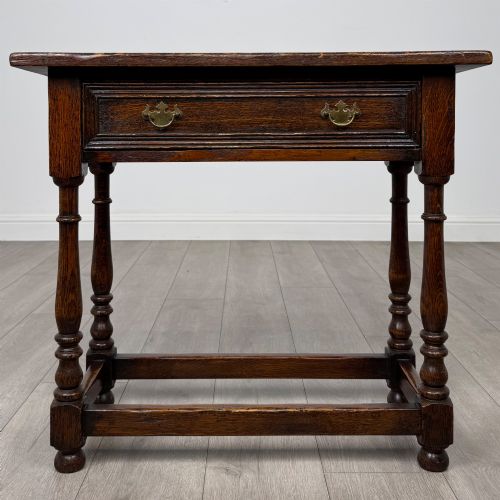
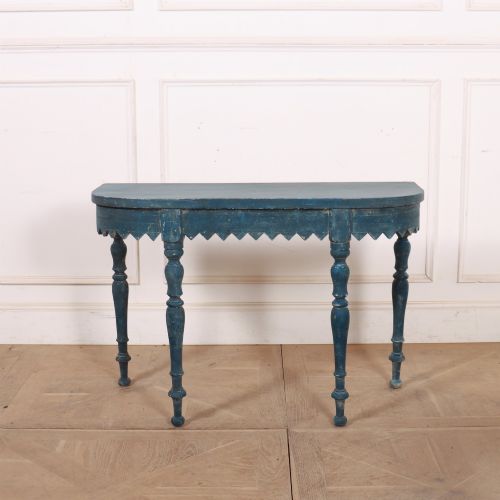
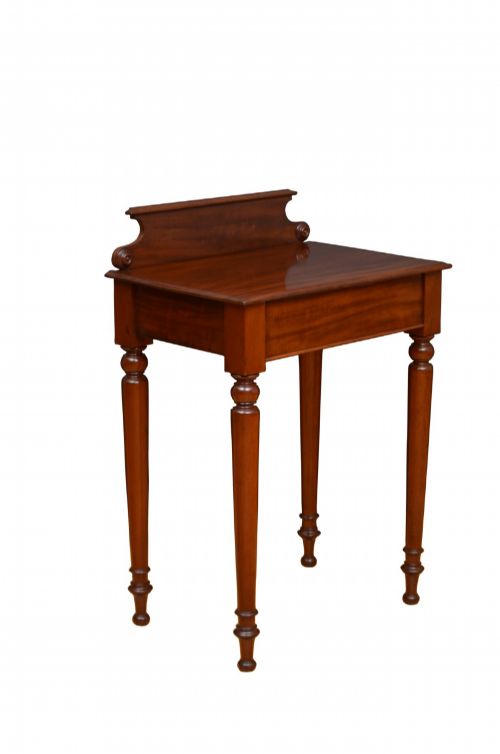
Materials span mahogany, burr walnut, oak, painted wood, and satinwood, reflecting styles from English Country and Victorian to Regency and Queen Anne Revival. The most typical examples are nineteenth-century mahogany hall tables and twentieth-century walnut variants.
How small entry console tables were made
Cabinetmakers utilised dense hardwoods such as mahogany, oak, and walnut to construct the primary frames and tabletops of these furniture pieces. Timber selection ensured structural stability for narrow forms that needed to support lamps, mirrors, or decorative objects against a wall.
Decorative surfaces frequently incorporated burr walnut veneers or painted finishes, sometimes paired with marble tops on nineteenth-century examples. Joinery techniques varied from traditional drawer construction to curved bow-end and serpentine front shaping.
Materials recorded across these tables include oak, mahogany, walnut, burr walnut, satinwood, and painted wood surfaces.
What varies in quality
Quality in small entry console tables distinguishes between standard utilitarian items and finer expressions of period cabinetmaking. Superior examples exhibit deliberate timber selection, such as figured burr walnut or carefully matched mahogany grains across the top.
Refinement of form also separates categories, visible in balanced proportions, clean serpentine or bow-end curves, and well-executed painted decoration rather than heavy or plain execution.
Druce and Co
The Small Entry Console Tables Glossary
- Console table
- A table designed to stand against a wall, traditionally supported by legs or brackets at the front. These pieces often feature narrow depths suited to hallways and entryways.
- Bowfront
- A curved convex front section on a piece of furniture, popular in eighteenth and nineteenth-century cabinetmaking. This shape softens the corners of narrow tables placed in passages.
- Serpentine front
- A furniture front characterised by a double-curved line, curving outward in the centre and inward at the sides. It represents a more complex form of joinery than straight or simple curved designs.
- Burr walnut
- Timber taken from the gnarled growth of a walnut tree, showing intricate swirling grain patterns. Cabinetmakers utilised veneers of this wood for decorative table surfaces.
- Demi lune
- A half-moon shape used for table tops and furniture footprints, allowing pieces to sit flush against a wall while occupying minimal floor space.
Small Entry Console Tables: Frequently Asked Questions
Where should I place a small entry console table?
These tables find their natural home in narrow hallways, entrance lobbies, and reception spaces where floor area is restricted. Their shallow depth allows them to sit against a wall without impeding movement through the doorway or corridor.
They also function effectively in living rooms or bedrooms as lamp tables or side supports when matched with appropriate seating or mirrors.
How do I identify a Victorian console table?
Victorian examples often utilise dense timbers like mahogany and walnut, displaying robust construction alongside characteristic nineteenth-century proportions. Details such as turned legs, useful drawers, and solid secondary woods help distinguish pieces from this era.
Comparing the timber finish and hardware style with established nineteenth-century design markers confirms the period of manufacture.
What is the difference between a console and a hall table?
Console tables traditionally rely on wall support or brackets for stability, though many later versions stand independently on four legs. Hall tables are typically designed as freestanding pieces equipped with one or more drawers for storing correspondence and keys.
Both forms share narrow proportions suited to transitional spaces within a home.
How do I care for a walnut or mahogany surface?
Polished hardwood surfaces benefit from regular dusting with a soft, dry cloth to prevent particulate accumulation. Avoiding direct sunlight and maintaining stable room humidity protects veneers like burr walnut from drying or splitting over time.
Occasional application of appropriate wax polish maintains the lustre of the timber without building up heavy residues.