





Pair of Painted Side Tables
When you search for a pair of painted side tables, you seek matching surfaces that bring colour and symmetry to a room.
Pair of Painted Side Tables
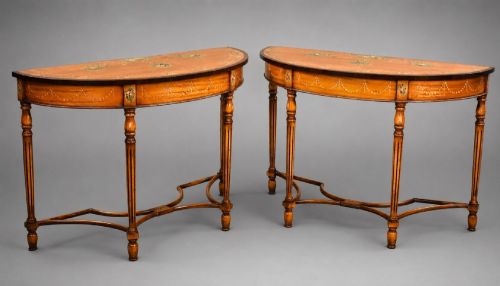
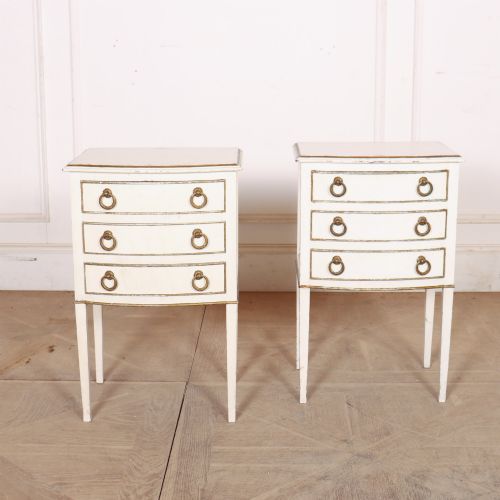
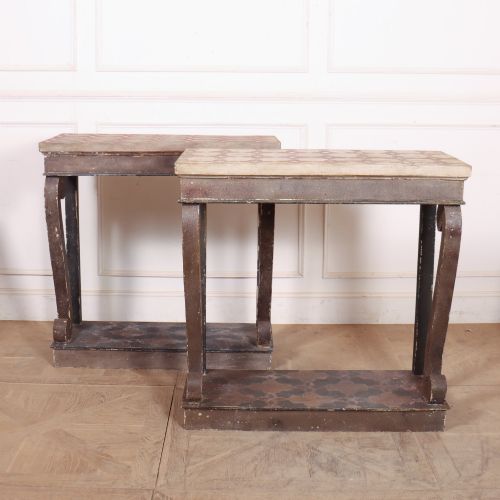
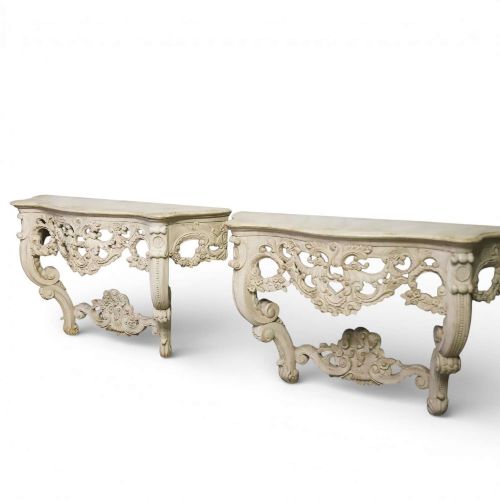
A pair of painted side tables serves dual functions as matching decorative accents and practical furniture for living spaces or bedrooms. When exploring this phrase, buyers encounter various forms including console tables, bedside cabinets, and occasional lamp tables originating from the eighteenth century onwards.
Continental pieces dominate the selection, with numerous examples hailing from Sweden, France, and Italy alongside English designs. These items frequently display regional stylistic traits such as the curved demi-lune shape of Swedish consoles or the refined proportions of French bedside chests.
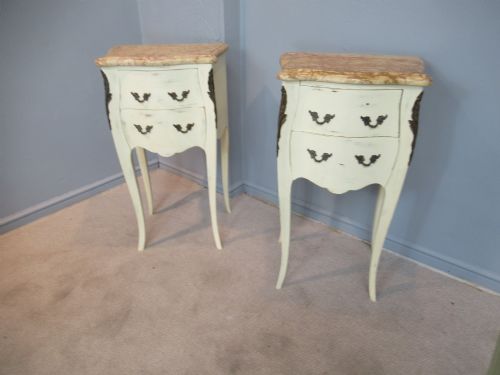
The category spans multiple eras, capturing the robust craftsmanship of nineteenth-century workshops as well as lighter Edwardian and interwar interpretations. Buyers are most likely to meet painted wooden surfaces finished in antique white, soft pastel tones, or decorative schemes like Chinoiserie.
Materials and construction methods
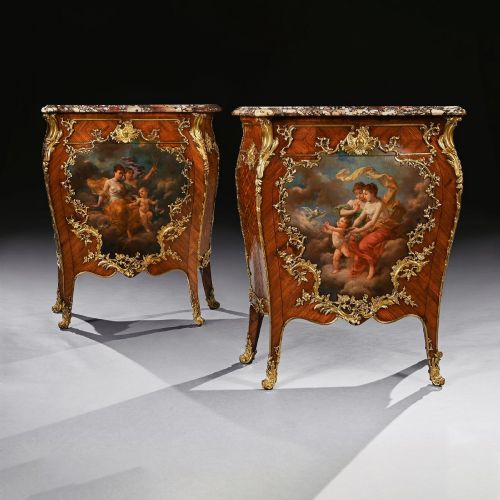
Makers built these tables using foundational timbers such as pine, oak, and satinwood, applying multiple layers of paint to achieve a smooth or distressed finish. Surface ornamentation often involved hand-painted floral motifs, lacquer work, or gilt bronze mounts affixed to structural joints.
Many iterations feature contrasting elements like inset marble tops or specimen marble panels that add weight and durability to the upper surface. Cabinetmakers utilised traditional joinery techniques to construct drawers and carcases, ensuring stability across smaller lamp tables and larger console units.
Listings feature items spanning from the 18th century to the 1930s, constructed primarily from painted wood, pine, and satinwood.
Distinctions in craftsmanship and finish
Quality rests upon the execution of the painted surface and the crispness of any decorative details or hand-carved elements. Superior examples display carefully preserved original pigments or finely rendered motifs, whereas lesser pieces show crude repaint layers or simplified structural mouldings.
The choice of secondary materials marks another tier of distinction, with items incorporating genuine marble slabs, finely figured satinwood veneers, or quality brass fittings sitting above standard pine constructions. Cohesion between the two matching tables also dictates overall desirability, as uniform fading and balanced wear preserve the symmetry expected from a matched pair.
The Pair of Painted Side Tables Glossary
- Demi-lune
- A half-moon shape characteristic of console tables designed to sit flush against a wall. This profile allows the table to occupy minimal floor space while providing a functional upper surface.
- Vernis Martin
- A type of simulated Japanese lacquer developed in eighteenth-century France. The technique involves applying multiple translucent varnish coats over painted decorations to create a lustrous finish.
- Satinwood
- A durable hardwood with a natural golden sheen often utilised in fine cabinetmaking. It provides a smooth base for painted decoration or fine inlay work.
Pair of Painted Side Tables: Frequently Asked Questions
Where should I place a pair of painted side tables?
These tables adapt easily to various rooms, functioning well as matching bedside cabinets in a bedroom or flanking a fireplace in a sitting room.
Console variations work effectively in narrow hallways or entryways when paired with a wall mirror or lamp.
How do I care for antique painted surfaces?
Maintain painted timber by dusting gently with a dry, soft cloth and avoiding harsh chemical cleaning products that strip historic finishes.
Keep wooden items away from direct heat sources and strong sunlight to prevent the underlying paint from cracking or fading unevenly.
How can I tell Swedish tables apart from French ones?
Swedish pieces often exhibit pale, Gustavian-inspired painted finishes with restrained neoclassical carvings and clean geometric lines.
French equivalents tend to feature more ornate Rococo curves, gilt mounts, or elaborate floral motifs.