
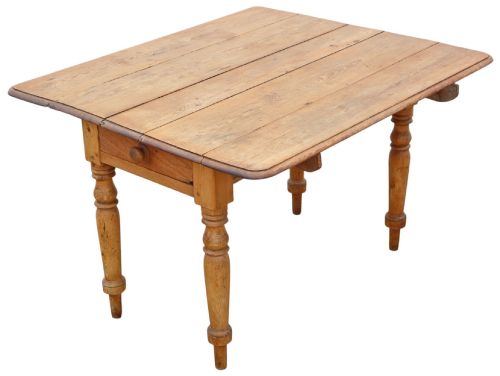
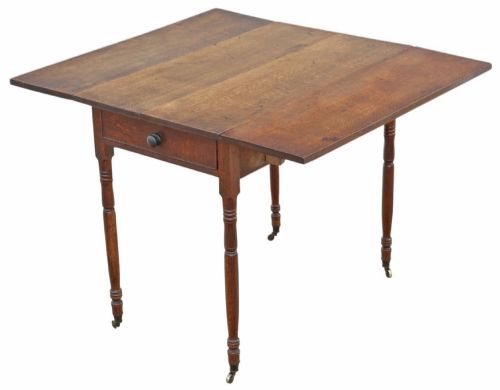
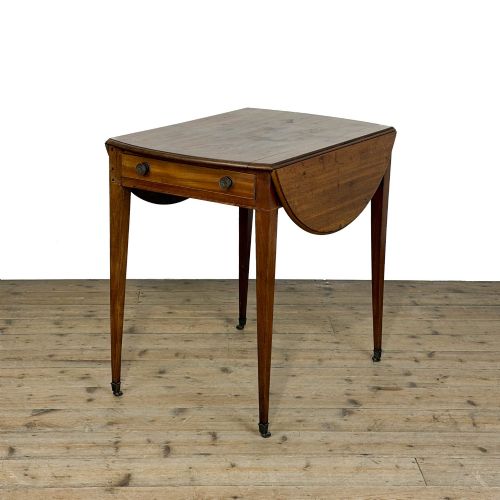
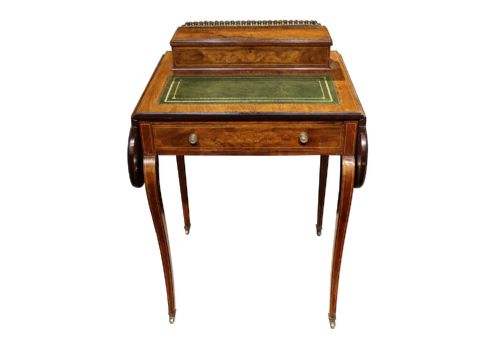
Small Drop Flap Table
A small drop flap table offers versatile surface space in compact rooms through hinged leaves that fold down when not in use.
Small Drop Flap Table
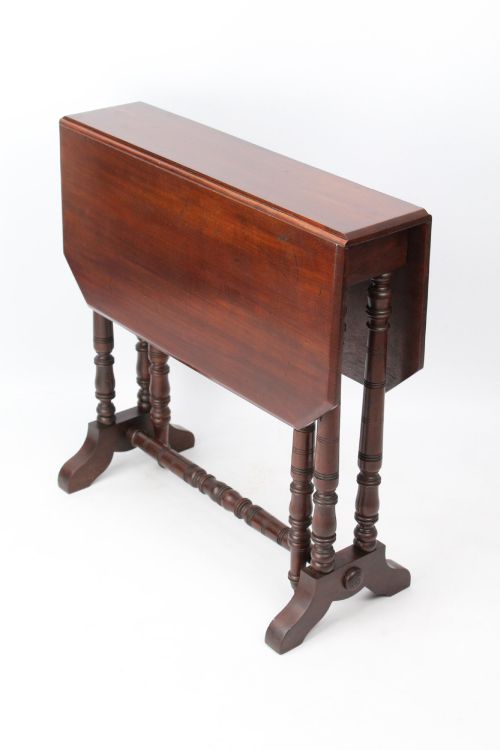
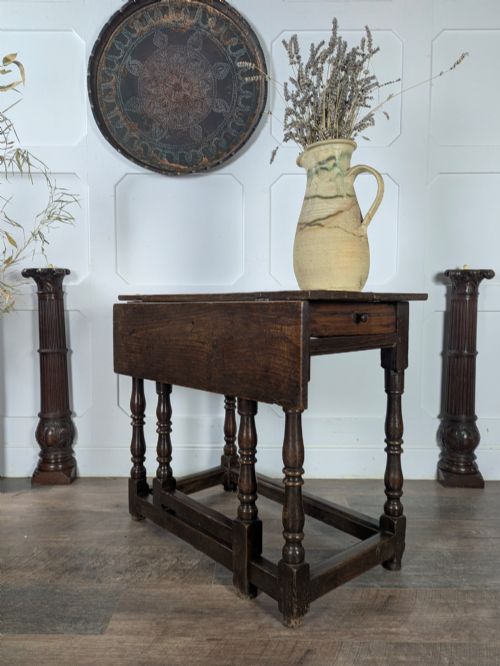
A small drop flap table is designed to save space while providing an extendable surface for dining, writing or occasional use. The selection spans centuries of British cabinet making, ranging from rustic oak gateleg designs to refined mahogany Pembroke and Sutherland tables.
Victorian and Edwardian versions appear frequently alongside 18th-century oak and Regency satinwood or mahogany pieces. These tables serve multiple functions in domestic interiors, operating as side tables, lamp stands, games tables and compact dining surfaces.
How they were made
Cabinet makers built these tables using durable timbers such as mahogany, oak, walnut and rosewood, frequently incorporating brass hinges and castors for mobility. Gateleg and drop leaf actions relied on hinged flaps supported by swing legs, pivot arms or butterfly brackets.
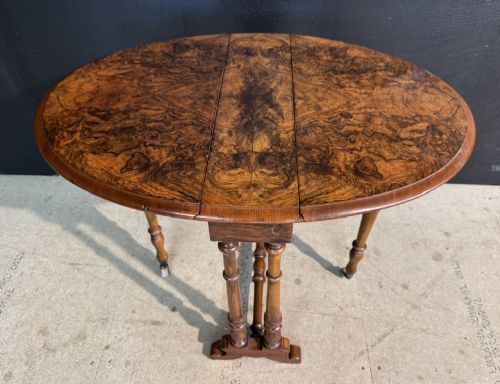
Surface decoration involved wood veneers, inlay, fruitwood banding and polished finishes that highlighted the natural grain of mahogany and burr walnut. Joinery techniques included sturdy mortise and tenon joints for early oak frames and precise dovetailing for drawers.
What varies in quality
The standard of a small drop flap table depends on the selection of timber, the crispness of the turning on legs and the integrity of the hinged joints. Superior examples display dense, well-figured mahogany or burr walnut alongside hand-cut joinery that ensures the drop leaves align level when raised.
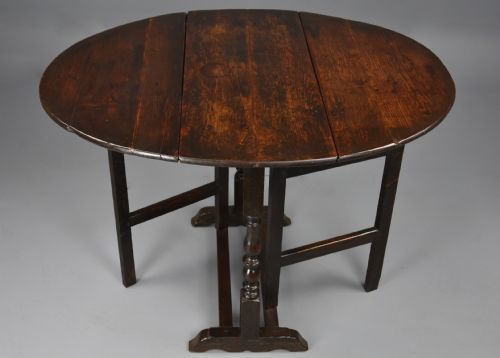
Proportion and original surface patination distinguish finer examples from standard utility pieces. Tables retaining untouched patination on solid oak or rosewood demonstrate greater craftsmanship and historical integrity than heavily restored alternatives.
Gillow
The Small Drop Flap Table Glossary
- Drop flap table
- A table equipped with hinged side leaves that lower to reduce its footprint. These pieces adapt easily to smaller rooms by extending only when needed.
- Pembroke table
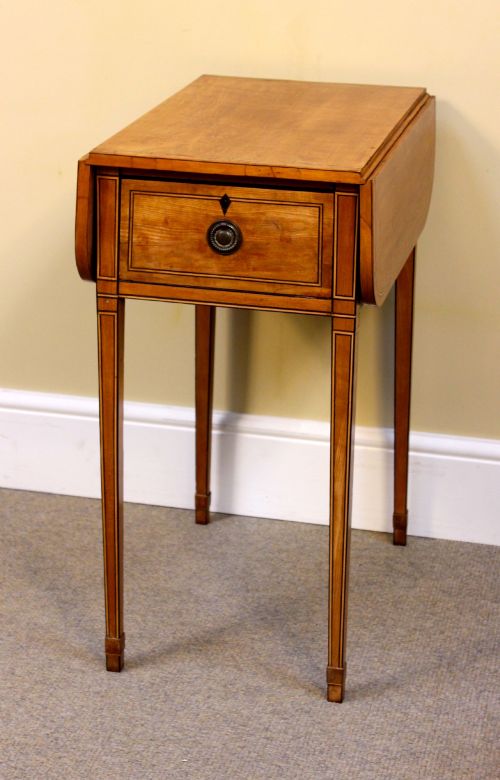
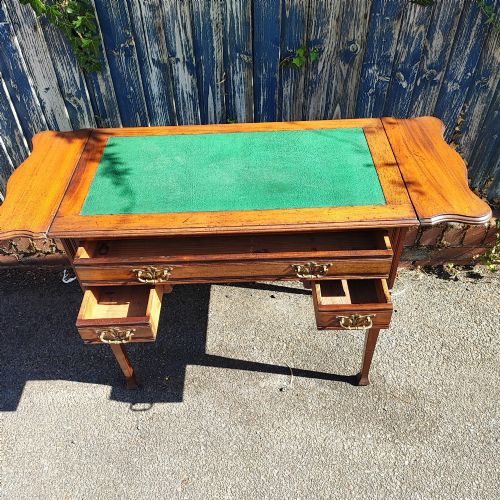
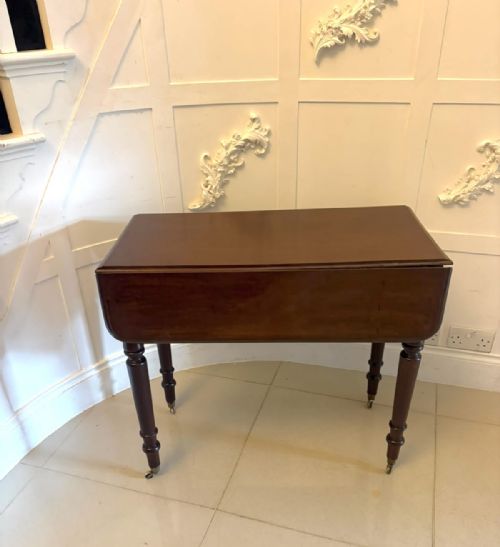
- A rectangular table with hinged flaps on opposite sides and usually one or two drawers. It emerged during the 18th century as a versatile piece for breakfast or writing.
- Gateleg table
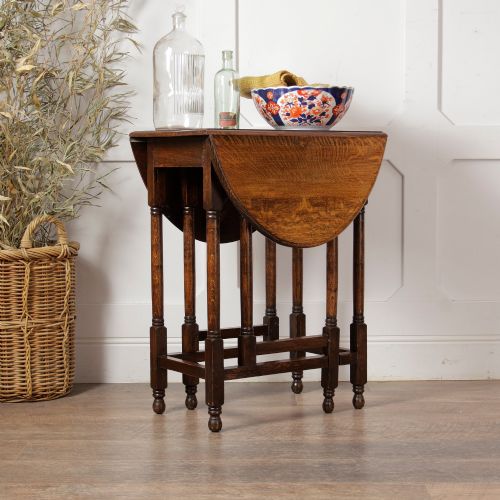
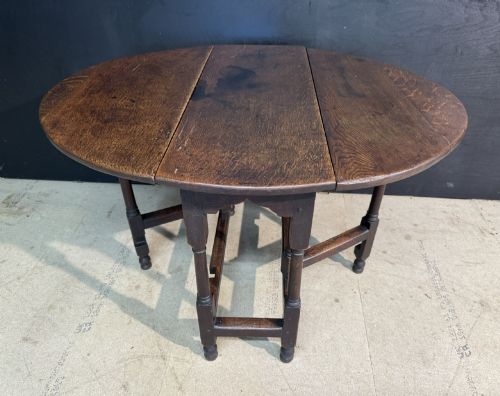
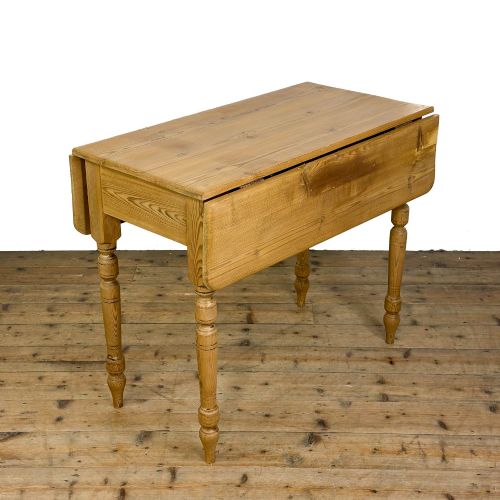
- A table with hinged leaves supported by legs that swing outward like a gate. This construction provides robust support for large drop leaves.
- Sutherland table
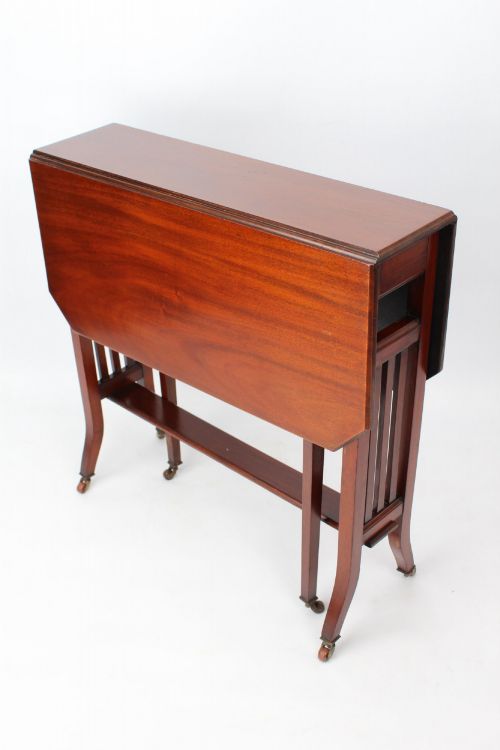
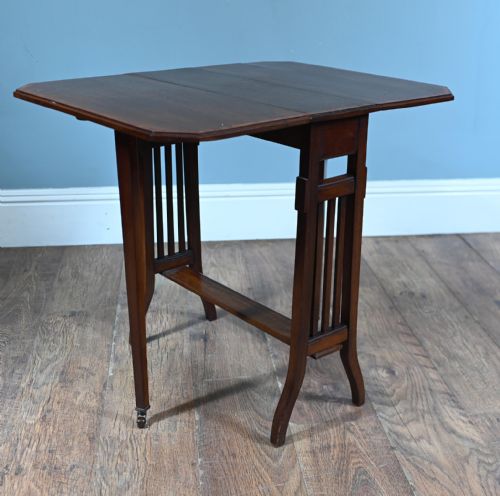
- A narrow drop leaf table with exceptionally slender leaves and low-swept legs. Introduced in the Victorian era, it folds into a very slim profile.
- Patina
- The surface sheen and colour developed by wood through age, handling and light exposure. Collectors value original patination for its historical depth.
Small Drop Flap Table: Frequently Asked Questions
What is a small drop flap table used for?
These tables function as compact side surfaces, lamp stands or occasional desks in rooms with limited space. Raising the hinged leaves creates additional surface area for dining or writing.
They adapt easily to changing domestic needs because the leaves fold down flat against the base when space is required.
How do I identify a Georgian drop flap table?
Georgian examples often feature solid mahogany or oak construction with slender tapering legs and subtle bracket details. The joinery relies on hand-cut dovetails within any integrated drawers.
Cabinet makers of this period prioritized balanced proportions and understated elegance over heavy ornamentation.
What is the difference between a gateleg and a Pembroke table?
A gateleg table utilises swinging leg frames to support large drop leaves that often span the entire length of the top. Pembroke tables feature fixed central sections with smaller drop leaves supported by hinged brackets or pivoted wooden arms.
Pembroke tables also frequently incorporate one or two small drawers at the ends.
How do I care for an antique wood drop flap table?
Keep the wood away from direct heat sources and strong sunlight to prevent the timber from warping or the finish from fading. Regular dusting with a dry, soft cloth maintains the polished surface without building up residue.
A light application of appropriate wax polish occasionally helps nourish older timber.