

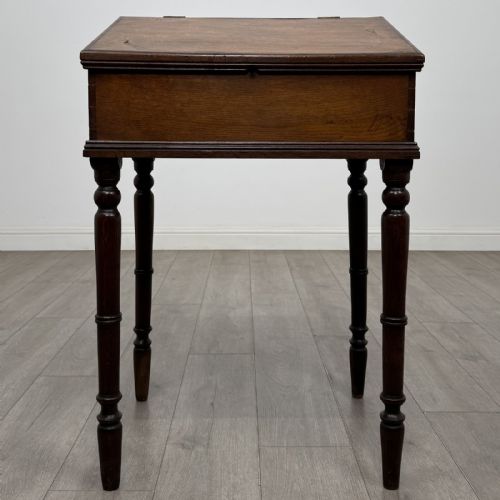
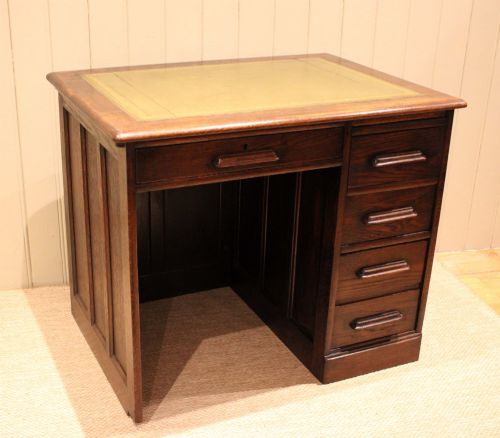
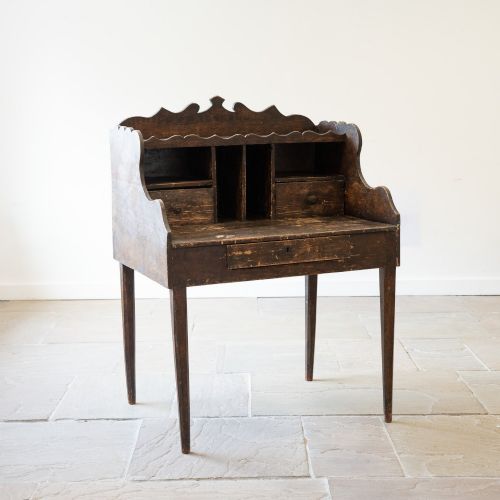
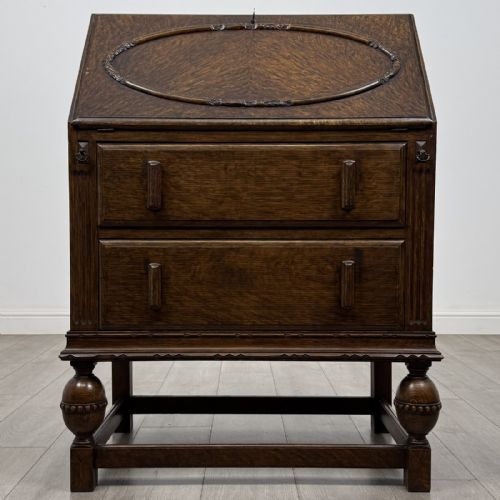




Small Dark Oak Desk
These small dark oak desk pieces offer compact writing surfaces and storage built from solid timber across several centuries.
Small Dark Oak Desk
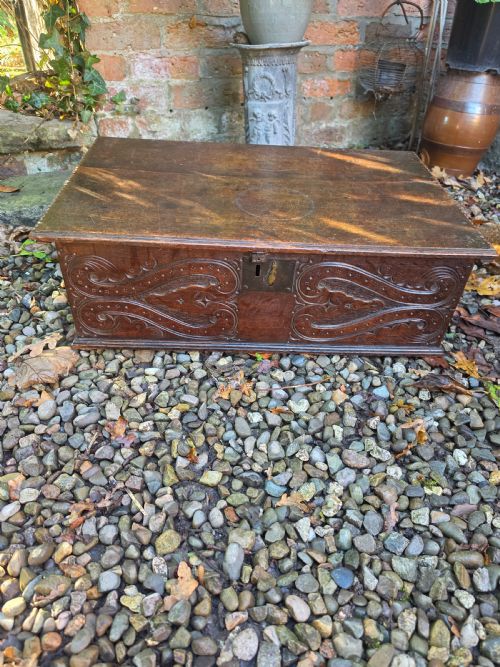
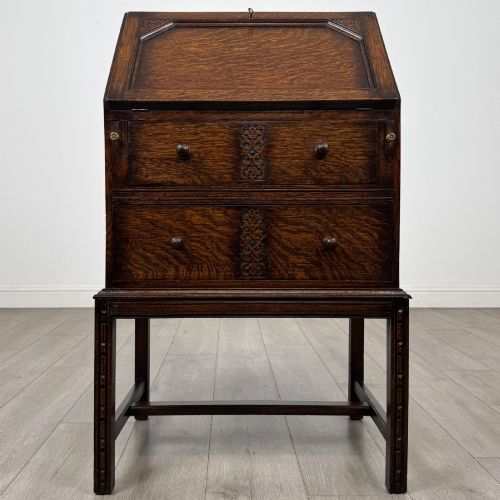
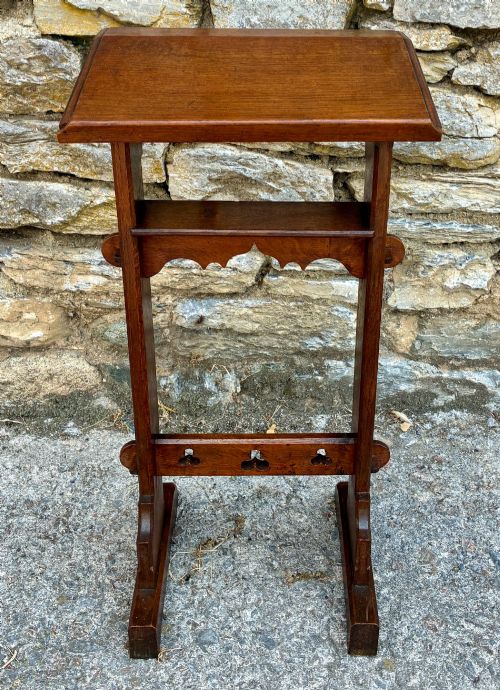
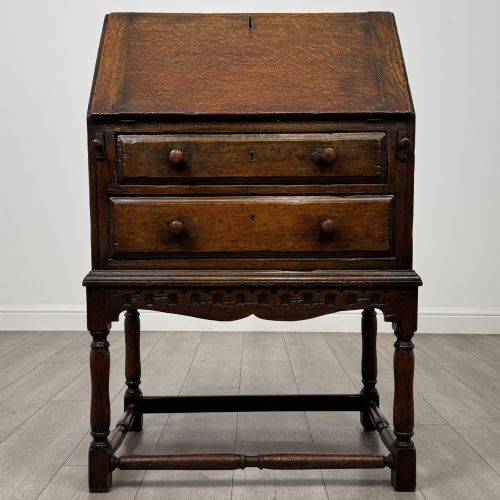
A small dark oak desk encompasses a range of compact writing furniture, document boxes, and bureaux made in Britain from the seventeenth century through to the Edwardian period and the early twentieth century. You will frequently encounter sloping writing boxes, miniature chests, and narrow side tables adapted for correspondence rather than grand library use.
The material palette centres firmly on oak, often paired with brass handles, iron hinges, and leather inserts. While older seventeenth and eighteenth-century examples display deeply patinated grain and hand-carved details, later Edwardian and Victorian pieces utilise workshop techniques that streamline production while retaining the dark timber finish.
How they were made
Joinery relies on traditional methods such as dovetailing for drawers and mortise and tenon joints for frames, ensuring structural stability in compact items. Cabinet makers utilised solid oak boards alongside secondary timbers like pine and mahogany for drawer linings and internal dividers.
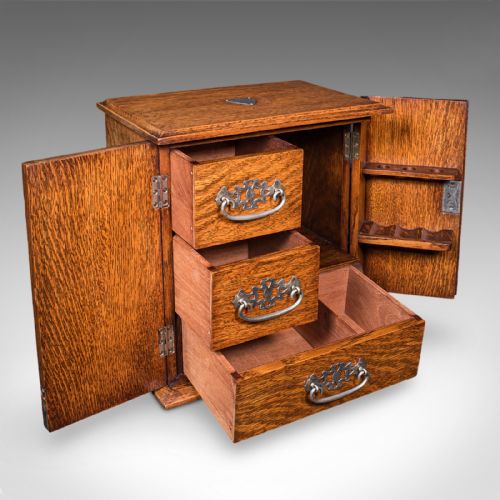
Hardware consists principally of cast brass drop handles, escutcheons, and iron strap hinges fixed with hand-turned screws. Surface finishing involves wax polishing applied directly to the timber, developing a deep patina through decades of handling.
Small Dark Oak Desk Retail Price Guide 2026
Typical asking prices for small dark oak desk among the pieces listed under this phrase on Sellingantiques today, from the lower quarter to the upper quarter. They describe what is for sale here now, not the wider market.
Listings span periods from the 17th century through Georgian, Victorian, and Edwardian eras, predominantly featuring oak alongside brass, iron, and leather.
What varies in quality
Quality rests upon the crispness of hand-carved panels, the thickness of the solid oak used in primary surfaces, and the integrity of the original construction joints. Early pieces with untouched surfaces and period brassware command greater appreciation than later adaptations.
Proportion and utility dictate distinction, where neat dimensions, well-figured timber grain, and smoothly operating drawers elevate a desk above standard utility furniture.
Pairs MFG Co
The Small Dark Oak Desk Glossary
- Bureau
- A writing cabinet featuring a sloping hinged flap that opens to reveal internal pigeonholes and small drawers. These pieces provide compact workspace combined with enclosed storage.
- Document box
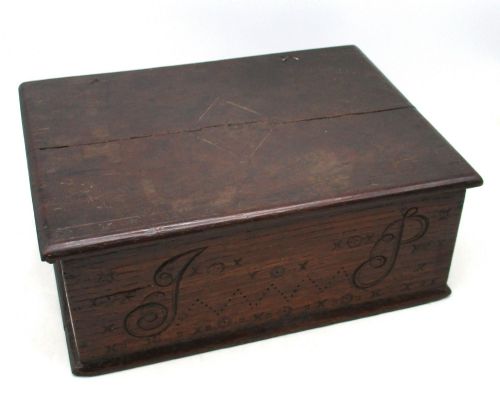
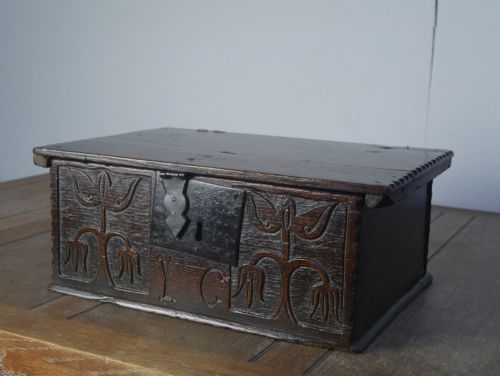
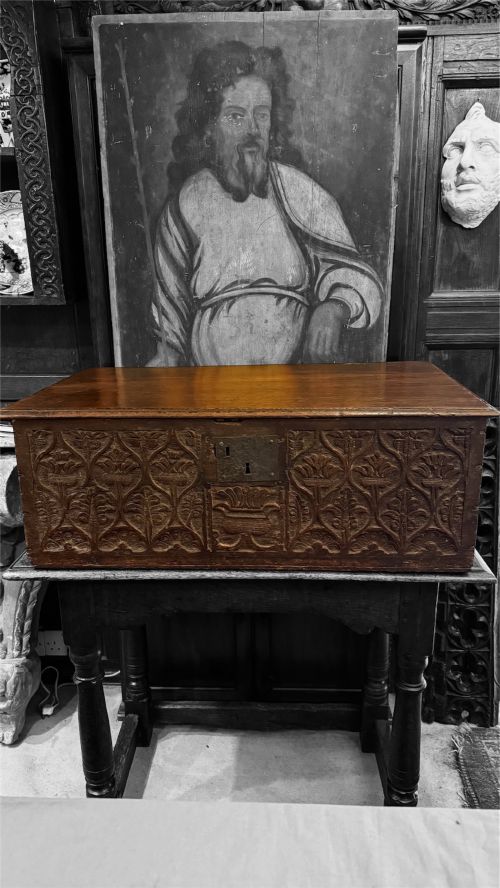
- A rigid container fitted with a hinged lid, utilised historically for storing legal papers and correspondence. Early versions frequently feature carved decoration and iron lock plates.
- Secretaire
- A piece of furniture containing a drawer or compartment that pulls out to form a writing surface. The mechanism conceals fitted pigeonholes within the main carcass.
- Gateleg table
- A drop-leaf table supported by hinged legs that swing outward to hold the leaves in place. This construction allows a compact footprint to expand when needed.
- Escutcheon
- A protective brass plate surrounding a keyhole. It prevents the surrounding timber from wearing away through repeated use of the key.
Small Dark Oak Desk: Frequently Asked Questions
How do I identify a 17th century oak box?
Seventeenth-century boxes typically display hand-carved geometric or floral motifs, pegged mortise and tenon joints, and heavy iron strap hinges. The timber shows deep shrinkage and a dark, dry patina acquired over centuries.
Internal construction relies on hand-split boards rather than mechanically sawn planks, and nails are hand- forged rather than modern wire types.
Where were small writing desks used?
These compact items served domestic purposes in parlours, bedrooms, and studies where space was limited. They provided a secure place to store writing equipment and personal correspondence.
Many examples functioned as portable writing slopes or tabletop chests before being placed on dedicated stands or side tables.
How should I clean dark oak furniture?
Maintain the surface using a traditional beeswax polish applied sparingly with a soft cloth and buffed gently. Avoid modern silicone sprays and keep the timber away from direct heat sources.
Regular dusting with a dry microfibre cloth prevents particle buildup without risking the antique wax finish.
What is the difference between a bureau and a desk?
A bureau specifically incorporates a sloping fall-front lid that conceals an inner compartment of small drawers and pigeonholes. A desk generally refers to a table or cabinet with a fixed horizontal writing surface.
Both forms appear across seventeenth, eighteenth, and Edwardian periods in various dimensions.