

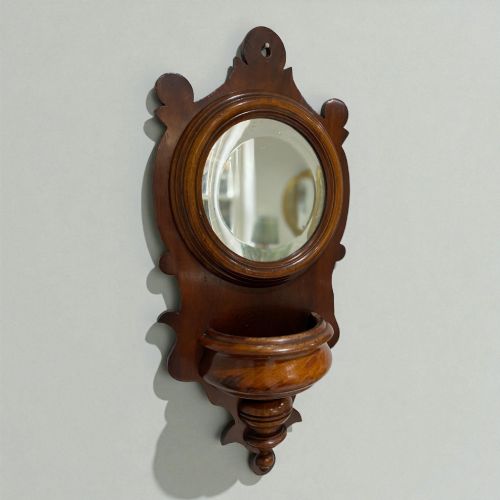
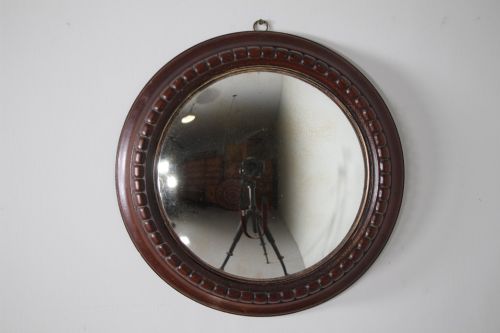

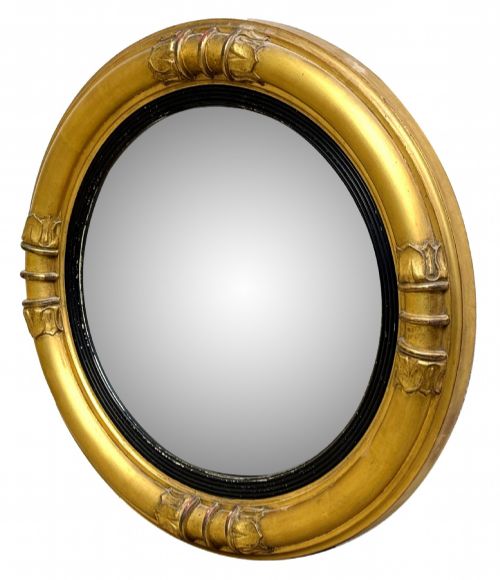
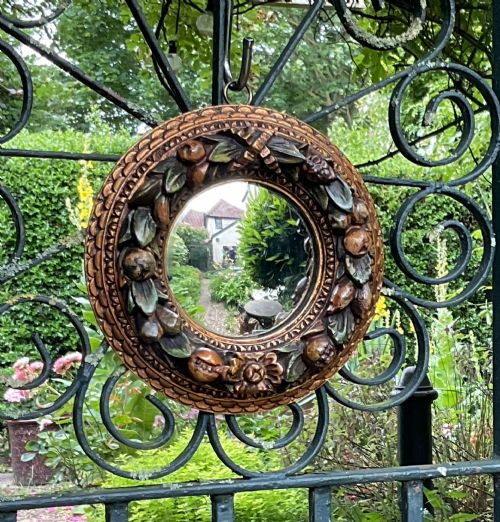


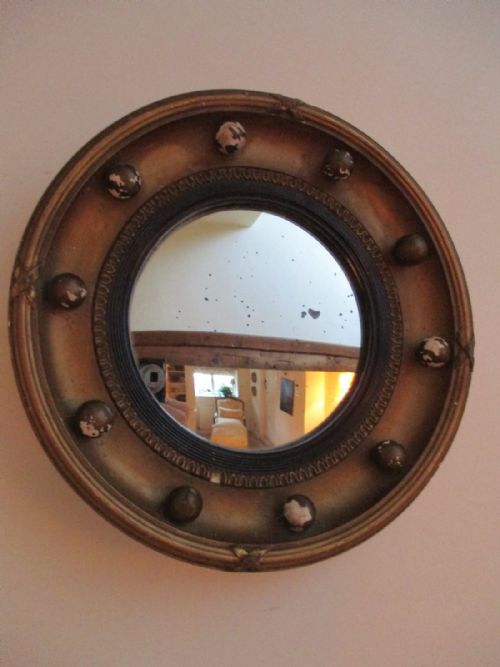
Small Convex Wall Mirror
These small convex wall mirrors bend the room into a single curved sphere, bringing light and depth into tight spaces.
Small Convex Wall Mirror
A small convex wall mirror offers a curved circular glass plate that captures a wide reflection of the interior within a compact frame. When looking for a small convex wall mirror, you encounter circular forms originating from the nineteenth century, including the Regency and Victorian periods.
The evidence shows forms spanning the Regency era, the Victorian period, and around nineteen-twenty, alongside French Chateau and Arts and Crafts influences. Many examples rely on a gilded finish or contrasting ebonised wood to frame the circular glass.
How they were made
These frames utilise carved wood, gesso, and giltwood, finished with gold leaf or japanned surfaces. The application of gesso over carved wood allowed makers to build up crisp decorative details before applying the gold leaf.
The convex glass plates require specialist blowing or forming techniques to achieve the distinctive curved surface that distorts the reflection into a wide-angle view.
Small Convex Wall Mirror Retail Price Guide 2026
Typical asking prices for small convex wall mirror among the pieces listed under this phrase on Sellingantiques today, from the lower quarter to the upper quarter. They describe what is for sale here now, not the wider market.
Listings for small convex wall mirrors span the nineteenth century, including Victorian, Regency, and nineteen-twenty examples.
What varies in quality
Quality rests in the crispness of the carved wood and the depth of the gilding on the frame. Better pieces maintain smooth, unbroken curves in the gesso ornamentation.
The clarity and distortion of the glass plate itself also separate standard examples from finer ones. The cohesion between the frame design and the proportions of the circular mirror dictates the overall visual weight.
The Small Convex Wall Mirror Glossary
- Convex mirror
- A curved circular looking glass that reflects a wide, bulging field of view. It is often called a bull's eye or sorcerer's mirror.
- Giltwood
- Timber coated with gold leaf or gold paint. This material catches the light and defines the edge of the circular frame.
- Gesso
- A plaster mixture applied to wood frames to create a smooth surface for gilding. It holds sharp decorative relief work.
- Japanned
- A European imitation of East Asian lacquerwork using dark varnishes. It provides a glossy, dark finish on the frame.
- Regency
- An architectural and design period dating from the early nineteenth century. Pieces from this era often feature classical motifs and round gilded frames.
Small Convex Wall Mirror: Frequently Asked Questions
What is a sorcerer's mirror?
A sorcerer's mirror is an alternative name for a convex mirror, derived from its curious optical distortion that bends light and room reflections into a singular spherical view.
Historically, these mirrors were placed in grand rooms to monitor guests or simply to amuse onlookers with the fisheye perspective.
How do I date a convex mirror?
Dating relies on examining the construction of the wood frame, the composition of the gesso, and the silvering technique behind the glass. Regency examples typically show sharper neoclassical carving details.
Later Victorian and early twentieth-century pieces often employ simpler mouldings or distinct surface patination that marks their era of production.
Where should I hang a small convex mirror?
Because of their compact size and wide-angle reflection, these mirrors suit narrow hallways, alcoves, or above small mantelpieces where they pull in light from across the room.
They work particularly well when hung at eye level to maximise the curved reflection of the opposing interior space.
Are these mirrors heavy?
Despite their modest dimensions, frames built from carved wood, gesso, and thick glass carry a surprising amount of weight. They require secure wall fixings anchored directly into masonry or studs.
Proper hanging hardware ensures the frame remains safely supported against the wall without straining the structure.