
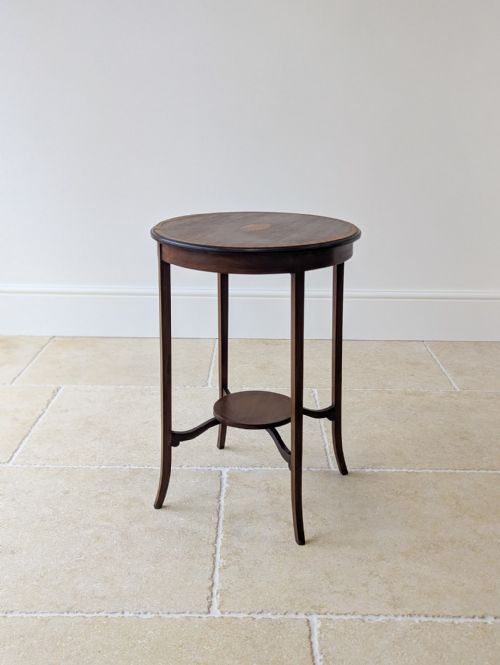
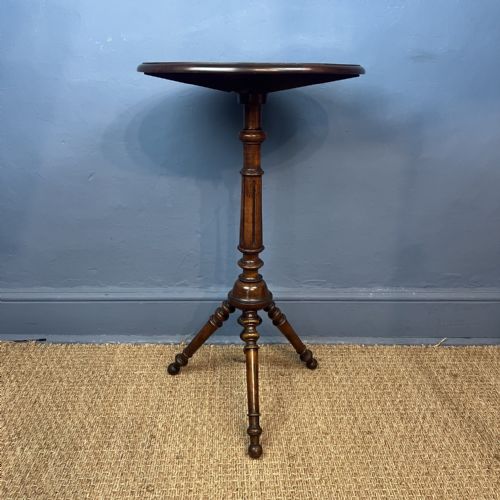
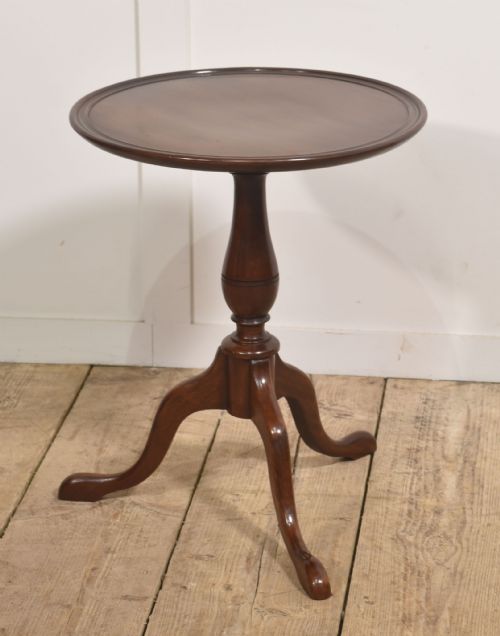
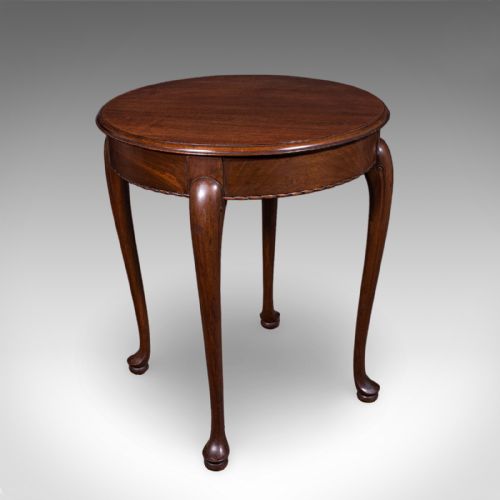


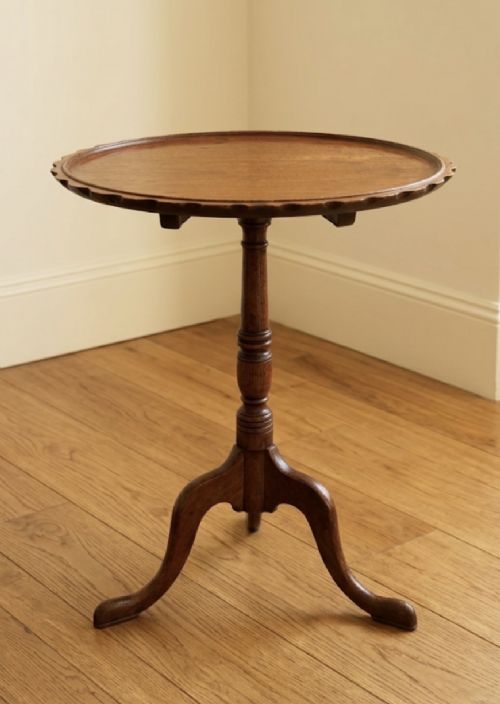

Small Circular Accent Table
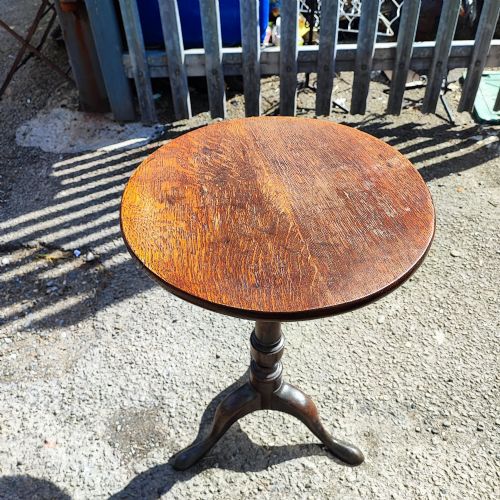
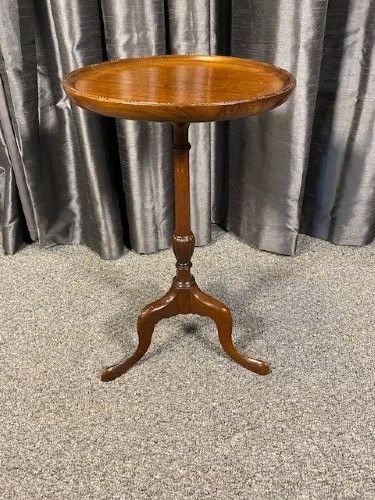
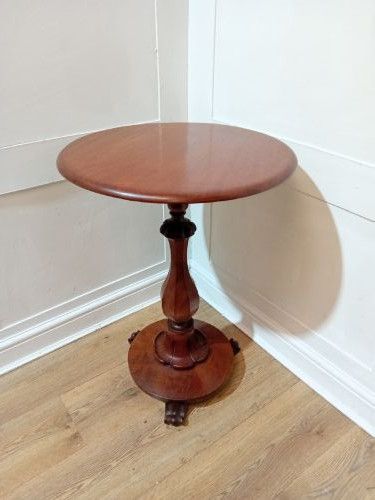
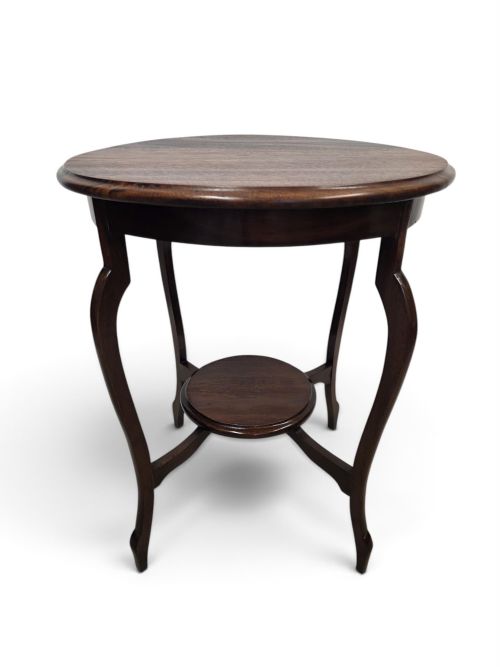
A small circular accent table brings practical surface space to tight corners, offering rich timber grains and traditional tripod bases.
Small Circular Accent Table
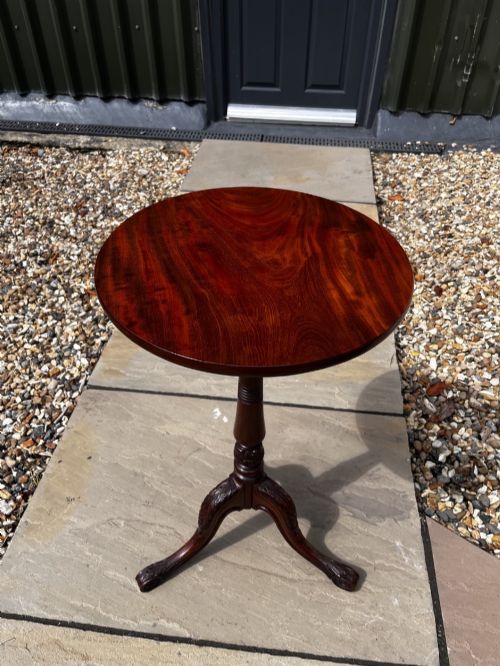
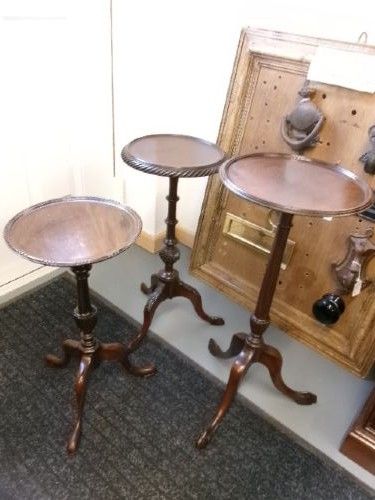
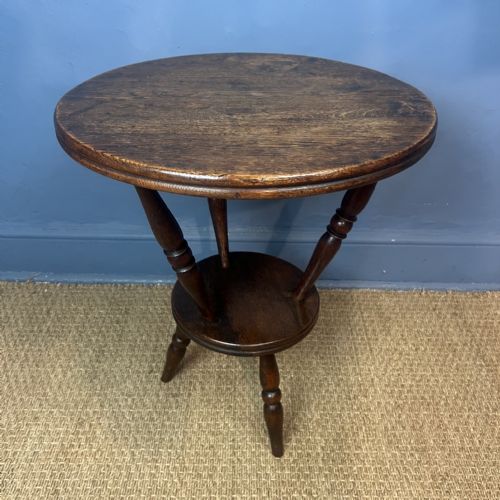
A small circular accent table encompasses utilitarian wine tables, occasional tables, and cricket tables spanning the eighteenth century through the Edwardian era. These pieces appear frequently in mahogany, walnut, and oak, often standing on slender tripod pedestals or central columns.
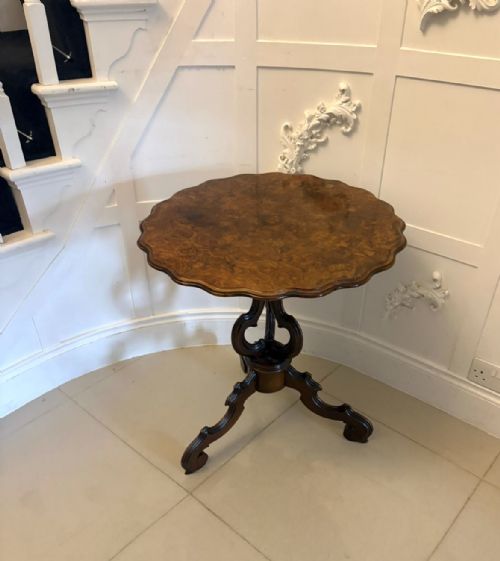
Victorian and Edwardian iterations dominate the selection, bringing turned legs, dish tops, and occasional drop leaves into domestic interiors. Earlier Georgian examples present simpler timber tops supported by sturdy three-legged frames designed for stability near seating.
Makers utilised diverse regional influences, producing French bouillotte and gueridon designs alongside traditional British occasional furniture. Buyers encounter variations ranging from plain oak surfaces to finely inlaid mahogany and marble-topped variants.
Materials and construction methods
Carpenters constructed these tables using solid hardwoods like mahogany, walnut, and oak, frequently selecting burr veneers for decorative tabletop surfaces. Timber components were joined using traditional methods such as tenons and dovetails, ensuring durability across centuries of use.
Metal elements including brass mounts and drop handles appear on specific French and Aesthetic Movement pieces, complementing polished wood grains. Marble inserts feature on heavier bouillotte and occasional tables, requiring stable wooden framing to support the stone weight.
The listings span the 18th century through the 1930s, featuring mahogany, walnut, oak, brass, and marble.
Assessing craftsmanship and finish
Quality rests upon the selection of timber veneers and the precision of the turning on pedestals and legs. Finer examples display balanced proportions, crisp edge moulding, and well-fitted joints that remain rigid without movement.
Surface patination distinguishes superior items, showing natural wear through polished wax rather than heavy modern refinishing. The integration of decorative elements like wood inlay or brass details reveals the maker's original skill.
Waring & Gillow·A Hugnet Paris
The Small Circular Accent Table Glossary
- Tripod table
- A small freestanding table supported by three legs radiating from a central pillar. This format prevents wobbling on uneven historic floorboards.
- Wine table
- A compact single-pedestal table historically used to hold glasses and bottles near seating. They usually feature circular timber tops, sometimes with raised edges.
- Bouillotte table
- A French neoclassical card table featuring a raised brass gallery around a circular marble top. These designs typically include small pull-out candle slides beneath the rim.
- Gueridon
- A small ornamental stand or round table originating in seventeenth-century France. They often feature decorative painted finishes or marble surfaces supported by a central column.
- Cricket table
- A small sturdy round table featuring three splayed legs and an under-tier for storage. The design derives its name from early utilitarian pieces used in domestic spaces.
Small Circular Accent Table: Frequently Asked Questions
What rooms suit a small circular accent table?
These compact pieces fit easily beside armchairs, beside beds, or in narrow hallways where floor space is limited. Their rounded profiles allow smooth movement through congested circulation areas without sharp corners.
Their varied heights and surface materials enable them to function as lamp stands, plant pedestals, or casual display surfaces without dominating a room's layout.
How do I care for antique wood surfaces?
Maintain polished timber surfaces by applying natural beeswax periodically to nourish the grain and protect against moisture. Avoid placing wooden tables near direct heat sources or strong sunlight to prevent timber splitting.
Clean surfaces using a soft dry cloth and avoid chemical sprays that can degrade historic French polish finishes over time.
Were these tables used for dining?
Most wine tables and occasional tables served to hold small items like portable lighting, books, or drinking vessels rather than full meals. Their modest top diameters were designed for convenience beside seating rather than communal dining.
Heavier bouillotte and gueridon designs accommodated card games or writing materials in sitting rooms rather than serving as dining furniture.
How can I identify a Georgian piece?
Georgian tables typically feature heavy solid mahogany or oak construction with heavy single-piece timber tops. Their tripod bases often show deep hand-carved cabriole legs terminating in pad or claw feet.
Examining the underside reveals hand-cut timber fixings, peg joints, and natural oxidation that distinguish eighteenth-century workshop practices from later revival furniture.