




Small Round Tea Table
A small round tea table brings centuries of British domestic tradition into a room, offering compact surface space with sturdy central pillar supports.
Small Round Tea Table
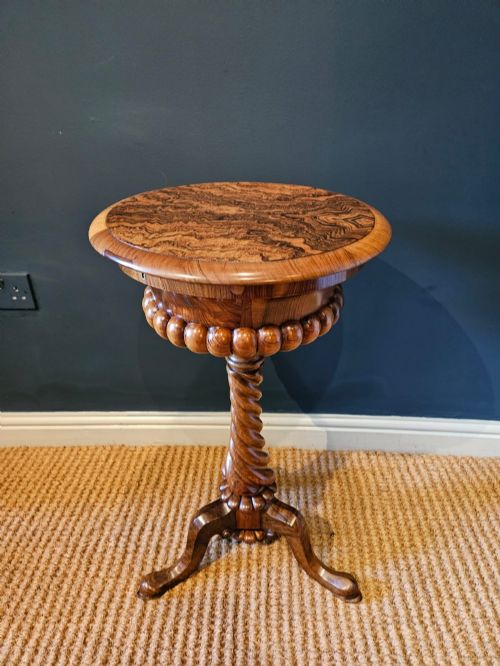
A small round tea table serves as a versatile piece for modern interiors, originally designed to hold social beverages in historic parlours. The listings show a strong presence of 19th Century and Georgian examples, alongside Edwardian and 1930s interpretations.
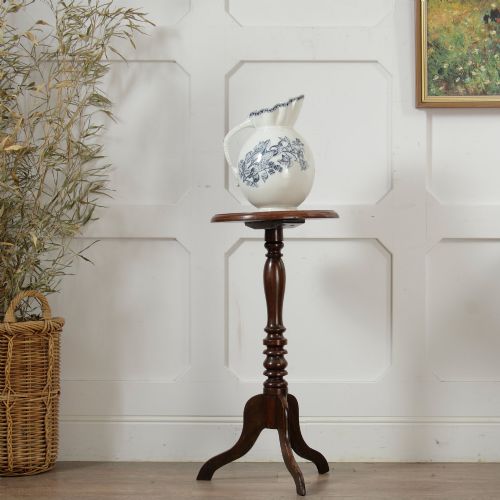
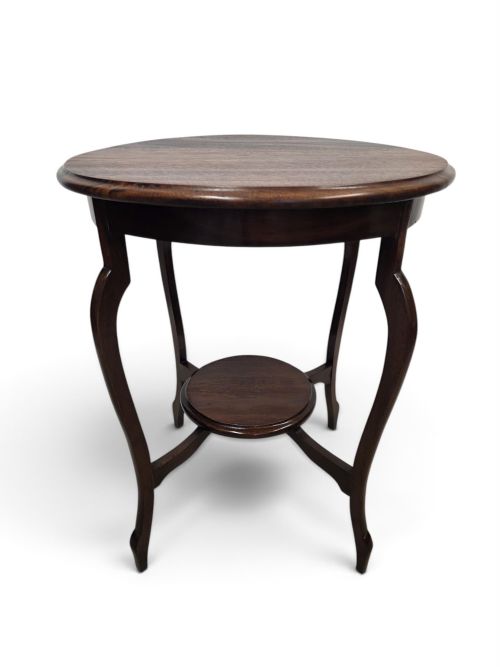
Most pieces encountered on this page take the form of tripod tables with central pedestals or occasional tables with side support. These objects function equally well as wine tables, side tables, or compact coffee tables in contemporary rooms.
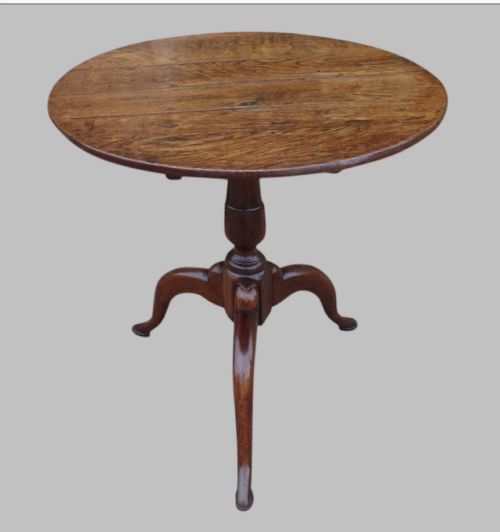
Originating largely from British workshops, these tables span rustic country pine cricket tables to refined mahogany tilt-top designs. Buyers also encounter walnut and oak variants, reflecting diverse regional tastes across different historic periods.
Distinguishing quality across examples
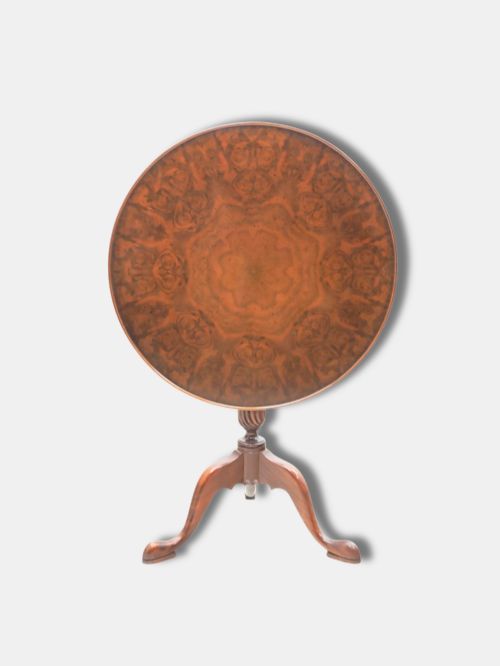
The sophistication of the timber selection largely determines the standing of an individual piece, from plain pine planks to figured mahogany and burr walnut veneers. Higher quality examples display balanced grain matching and careful selection of native or imported woods.
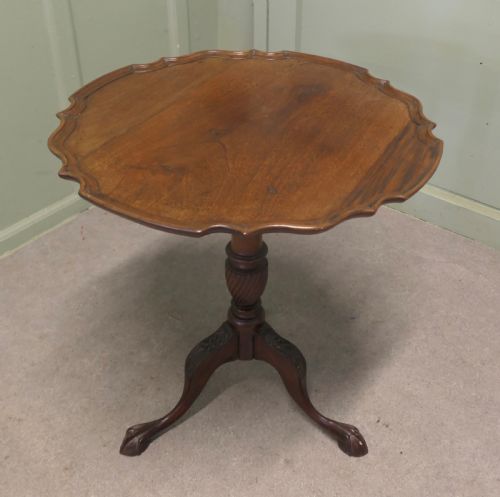
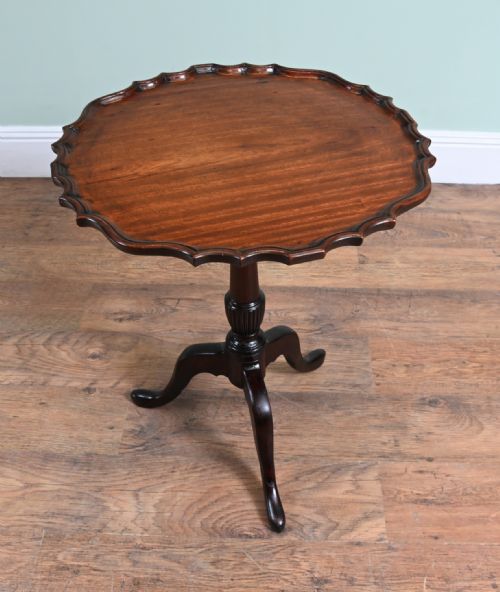
Construction fidelity separates standard utility items from finer workshop output, particularly in the stability of the central tripod and the crispness of turned columns. Details such as dish tops, pie crust rims, or inlaid mahogany borders indicate greater maker investment.
Bobbin turned legs on a rustic pine cricket table give it the charming appearance of being built from stacked wooden spools.
The Small Round Tea Table Glossary
- Tripod table
- A small round table supported by three legs radiating from a central pillar. This format allowed the top to tilt vertically when not in use.
- Tilt top
- A hinged table top that folds flat against the pedestal for convenient storage. This mechanism is common on 18th and 19th Century examples.
- Pie crust edge
- A carved, undulating raised rim around the perimeter of a table top. This decorative feature appears on refined Georgian and revival pieces.
- Cricket table
- A small three-legged round table of sturdy rustic construction, traditionally utilising a lower undertier or stretcher frame. Pine and oak are typical materials for this vernacular form.
- Gate-legged table
- A table with hinged leaves supported by swing-out legs. This construction provides an expandable surface area within a compact footprint.
Small Round Tea Table: Frequently Asked Questions
How were these tables used historically?
These pieces originally served domestic spaces for holding tea service items, wine decanters, or reading materials during social gatherings. Their portable nature allowed servants to move them easily around the drawing room.
Over time, their roles adapted to suit changing household habits, transitioning from dedicated beverage stands to general occasional furniture. Today, their compact proportions make them suitable for bedside placement or next to armchairs.
What is a tilt-top mechanism?
A tilt-top mechanism uses a hinged block beneath the table surface that allows the top to pivot ninety degrees into a vertical position. This clever engineering enabled historic households to store multiple tables compactly against a wall when the room was needed for other activities.
In daily use, a brass catch or wooden wedge secures the top horizontally. When inspecting these mechanisms, look for original hinges and stable locking pins that hold the surface firm.
How do I distinguish between Georgian and Victorian tables?
Georgian tables, particularly those from the George III period, often exhibit restrained classical proportions, finer timber selections, and understated carved details on the tripod base. Their construction prioritises lightweight agility combined with structural strength.
Victorian examples tend to feature heavier proportions, darker finishes, and sometimes more exuberant turning or decorative inlays. They reflect the industrial advancements and eclectic revival styles of the later nineteenth century.
Where should I place a small round tea table?
These tables fit comfortably beside low seating arrangements, deep armchairs, or in tight corners where rectangular furniture would block circulation. Their rounded profiles soften linear room layouts and create welcoming focal points.
Avoid placing them in direct sunlight or beside active heat sources to protect the historic timber and veneer surfaces from drying out or warping over time.