

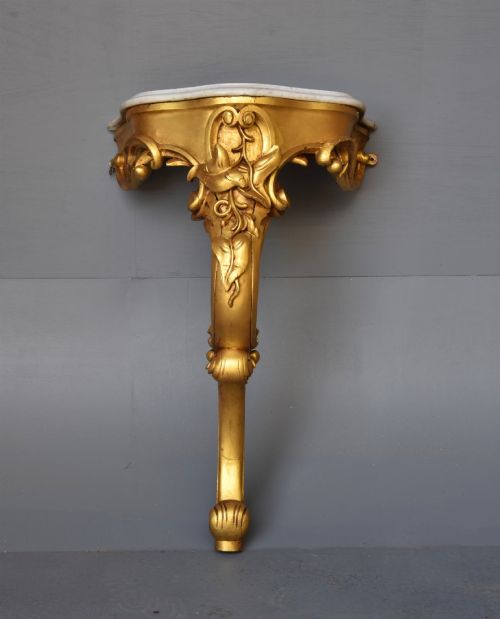
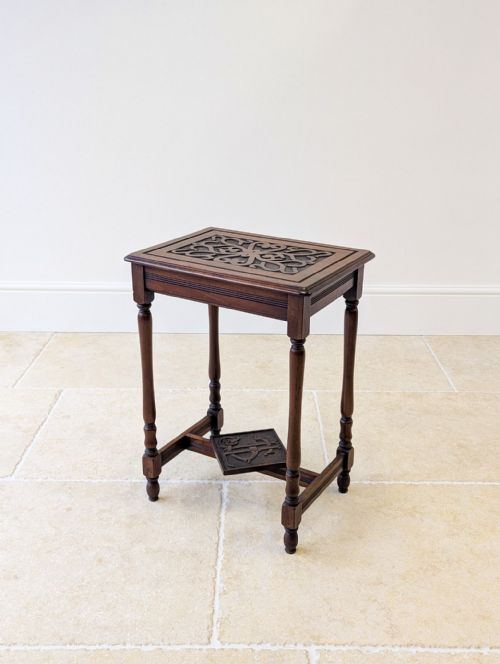
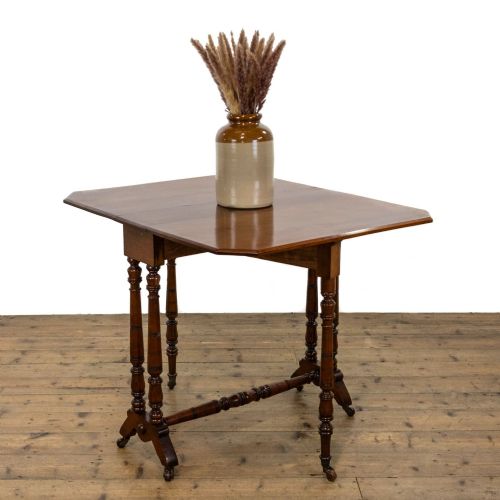

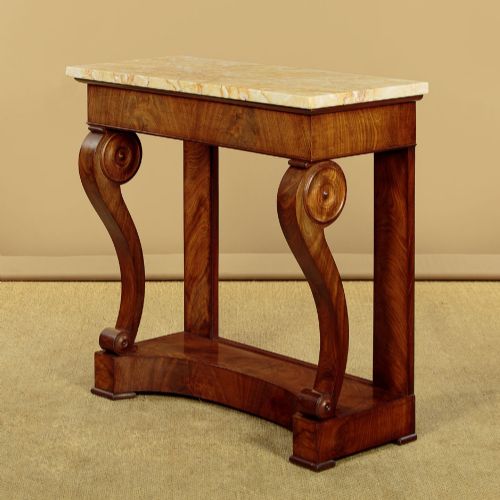

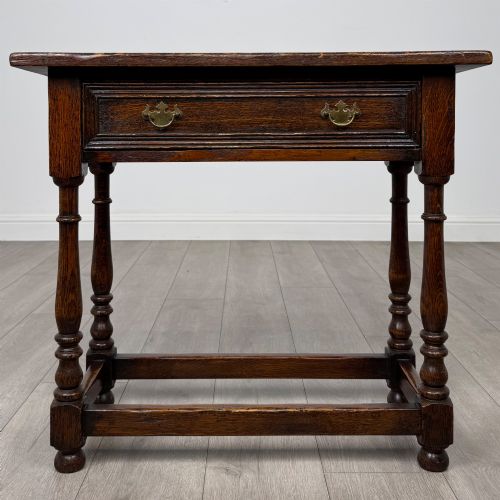
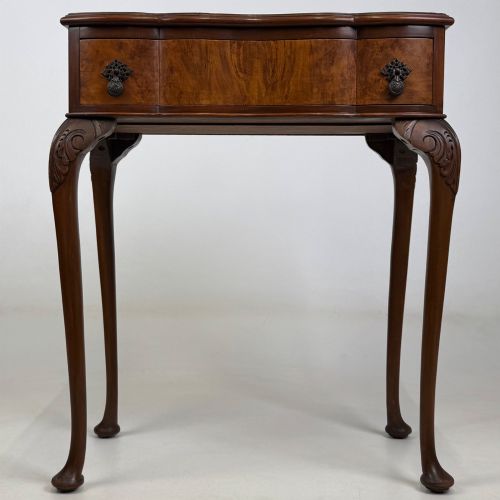
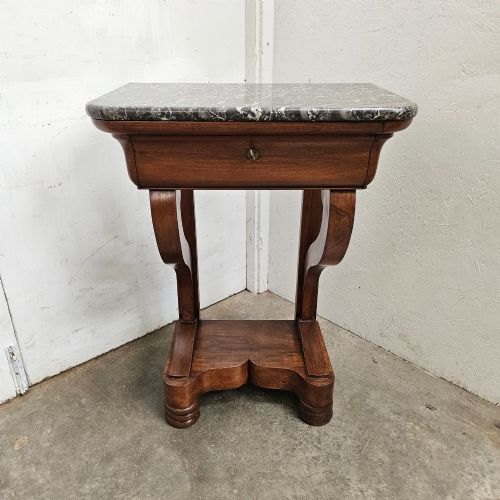
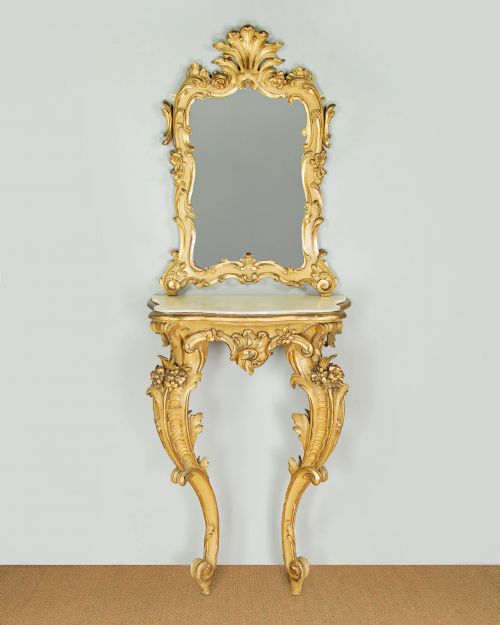
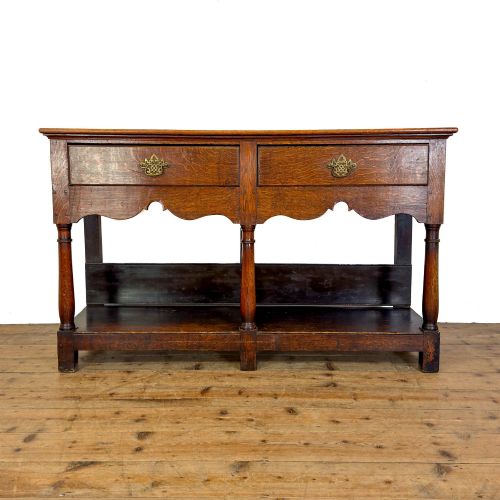
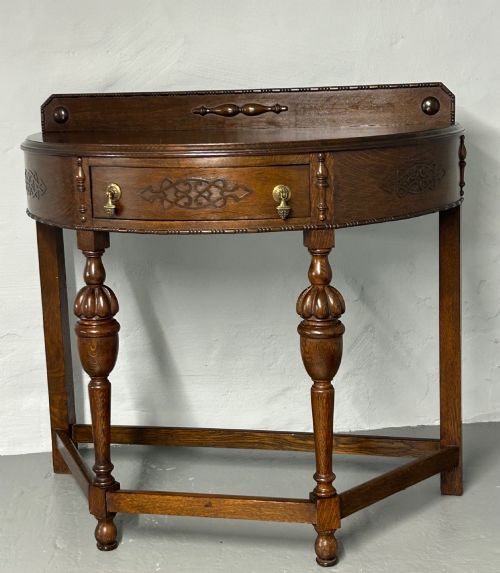


Small Carved Console Table
A small carved console table brings architectural presence and surface utility to a hallway or drawing room without crowding the floor.
Small Carved Console Table
A small carved console table is typically designed to stand against a wall, appearing in forms such as console tables, side tables, occasional tables, and lowboys. The selection ranges from compact Victorian and Edwardian examples to earlier pieces from the eighteenth and nineteenth centuries.
The materials and styles span giltwood, marble, oak, walnut, and mahogany, reflecting influences from the Regency, Jacobean Revival, and Rococo Revival periods. Many pieces combine carved timber frames with inset marble tops or feature applied mouldings and drawers.
Buyers seeking a small carved console table will encounter items originating from English workshops as well as French and Italian makers. These tables serve practical functions in halls and reception rooms while providing distinct historical character.
How they were made
Cabinet makers utilised solid timbers like oak, mahogany, and walnut alongside decorative veneers such as burr walnut and figured walnut. Carving was executed by hand directly into the timber or onto applied gesso on giltwood frames.
Marble tops, particularly white and coloured varieties, were cut and polished to fit exact frame dimensions, often resting upon the wooden structure or secured with mouldings. Joinery techniques included traditional mortise and tenon joints for structural stability in tables and dresser bases.
Small Carved Console Table Retail Price Guide 2026
Typical asking prices for small carved console table among the pieces listed under this phrase on Sellingantiques today, from the lower quarter to the upper quarter. They describe what is for sale here now, not the wider market.
Listings feature oak, walnut, and mahogany alongside marble and giltwood, spanning periods from the eighteenth century to the 1930s.
What varies in quality
Quality in a small carved console table depends heavily on the crispness and depth of the hand carving on the frame. Crisp, undercut foliage and moulding show the hand of a skilled carver, whereas soft or shallow relief indicates standard production.
The choice of materials dictates the standing of a piece, with figured walnut veneers, heavy solid mahogany, and thick marble slabs marking out finer examples. Structural integrity and the preservation of original gilt or polished surfaces also separate ordinary items from superior ones.
The Small Carved Console Table Glossary
- Console table
- A table designed to be fixed or to stand against a wall, frequently supported by two front legs and secured to the structure behind.
- Giltwood
- Timber that has been coated with gold leaf or metal leaf over a prepared gesso ground.
- Lowboy
- A small oak or walnut table with one or more drawers, originating in the late seventeenth century and used primarily as a side table.
- Demi-lune
- Having a half-moon shape, commonly applied to the tops and frames of tables designed to sit flush against a wall.
- Gesso
- A plaster-like mixture applied to wood surfaces as a smooth base for gilding and fine decorative carving.
Small Carved Console Table: Frequently Asked Questions
Where should I place a small carved console table?
These tables are traditionally positioned in entrance halls, narrow corridors, or against living room walls where floor space is limited. Their shallow depth allows them to sit comfortably behind seating or beneath wall mirrors.
They also function effectively in dining rooms as serving surfaces or in studies beneath windows, providing a stable platform for lamps and decorative objects.
How do I care for a marble top table?
Marble surfaces require regular dusting with a soft, dry cloth and immediate wiping of any spilled liquids to prevent staining. Acidic substances like citrus juice or wine can etch polished stone if left unattended.
Apply a neutral stone soap or specialised marble cleaner periodically and avoid abrasive scouring pads that can dull the polished finish over time.
How can I tell a Victorian piece from an Edwardian one?
Victorian tables often display heavier proportions, darker woods like solid walnut or mahogany, and deep, robust carving reflecting revival styles such as Jacobean or Rococo.
Edwardian pieces generally exhibit lighter construction, brighter oak or figured walnut finishes, and more restrained decorative motifs influenced by earlier Georgian designs.
Can these tables be used as writing desks?
Certain forms within this category, specifically those designated as writing tables or featuring integrated drawers, were built for correspondence and light desk work.
When using an antique table for writing, ensure the working height aligns with your seating and consider placing a protective leather pad on the surface to prevent ink or scratch marks.