


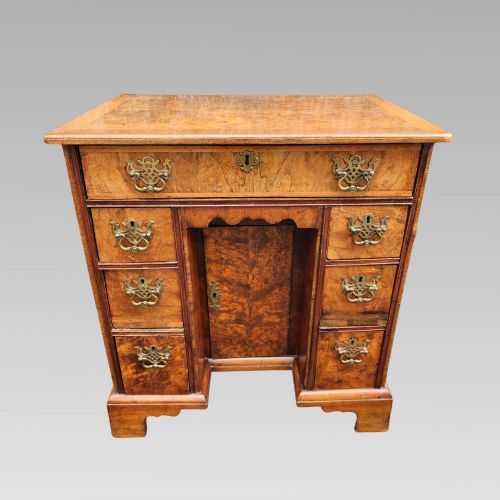

Small Burr Walnut Cupboard
A small burr walnut cupboard brings rich, swirling grain and compact storage to any room.
Small Burr Walnut Cupboard
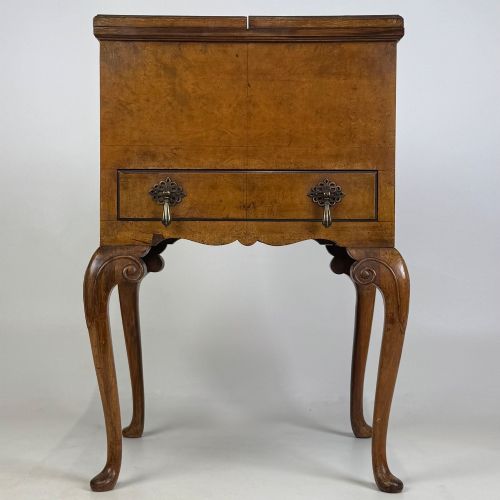
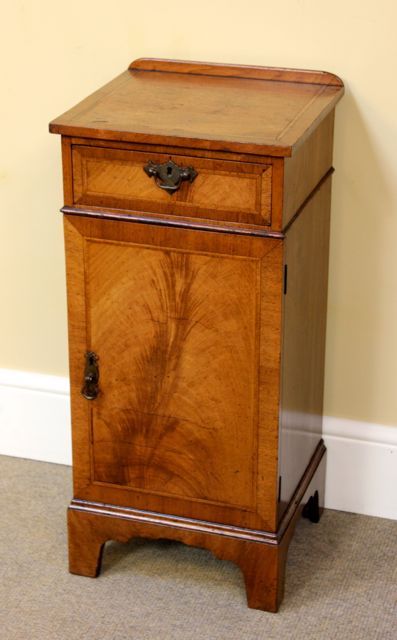
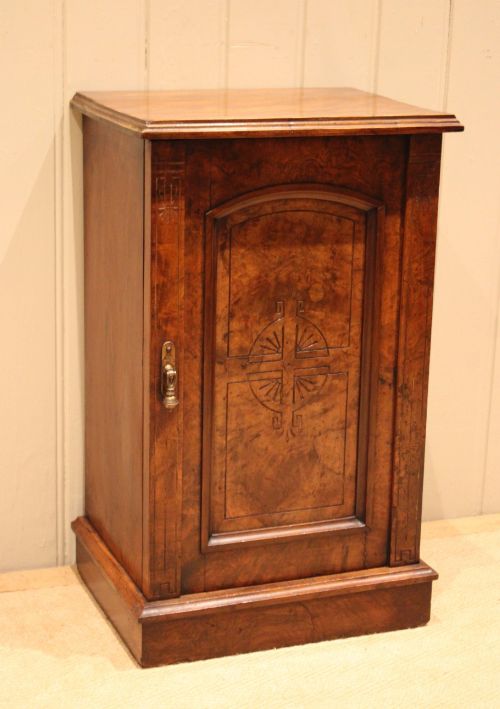
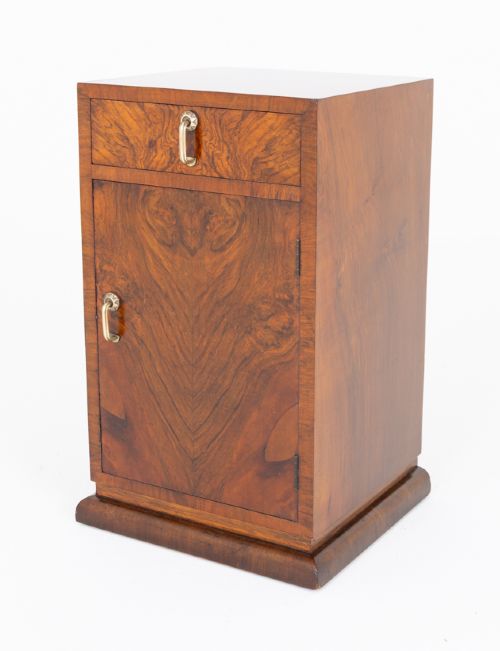
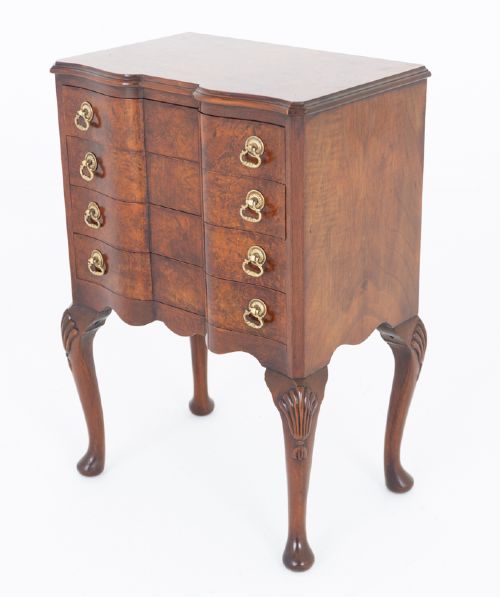
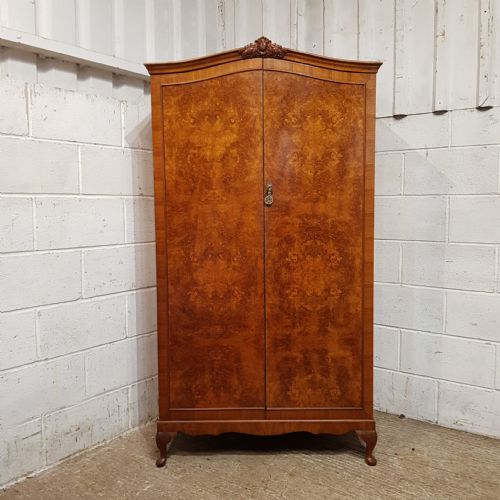
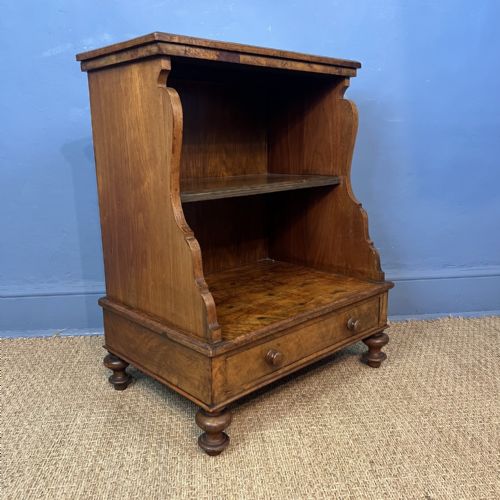
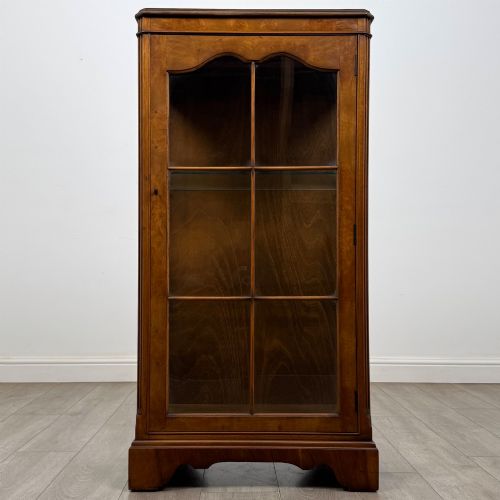
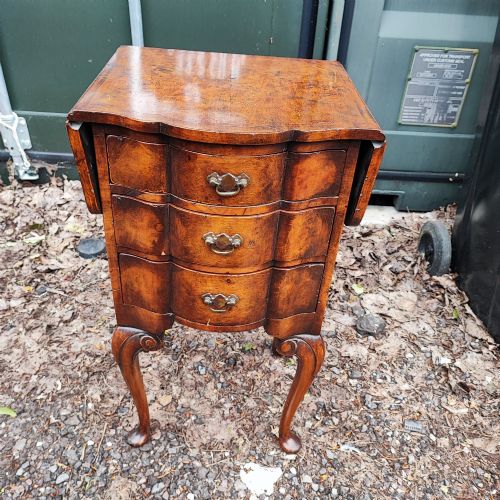
A small burr walnut cupboard offers compact storage wrapped in highly figured timber, appearing frequently in bedside formats, miniature chests, and glazed display pieces. These timber pieces emerge across the Victorian, Edwardian, and Art Deco periods, alongside revival styles looking back to Queen Anne and George II designs.
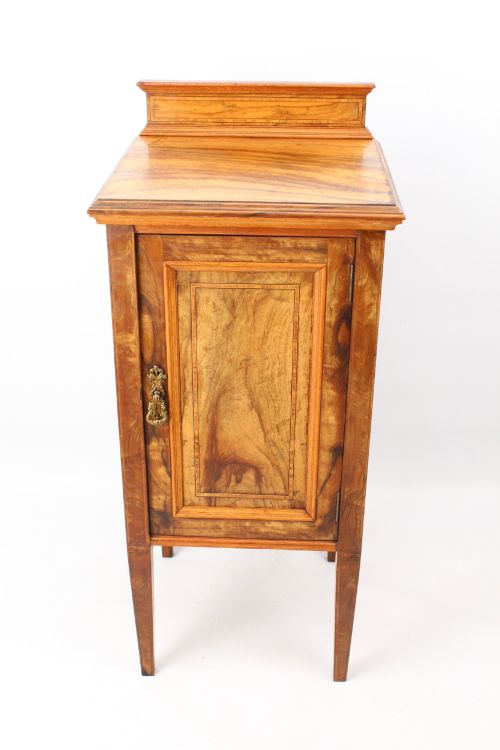
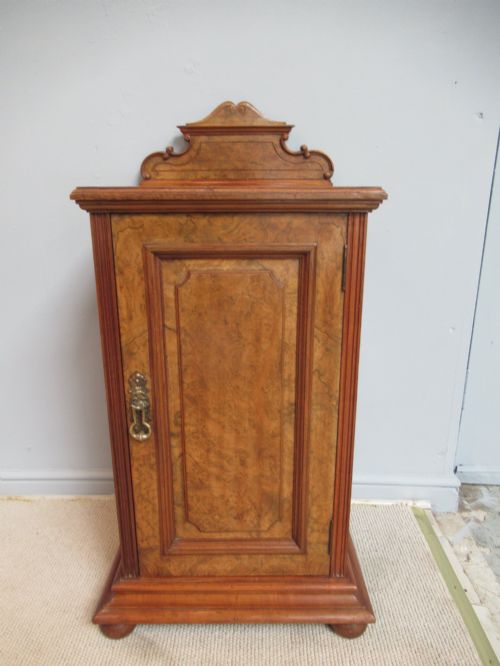
Buyers seeking this form will most commonly find bedside cabinets and small lockers dating from the late nineteenth century through to the nineteen-twenties. The selection ranges from simple door cupboards to fitted bedside chests, low open bookcases, and corner units suited to smaller spaces.
The enduring appeal of these compact items lies in their combination of rich wood patterns and practical proportions. Whether rendered in clean Art Deco lines or curvaceous Queen Anne Revival shapes, each piece provides closed storage while displaying the characteristic knotty grain of walnut.
Materials and construction
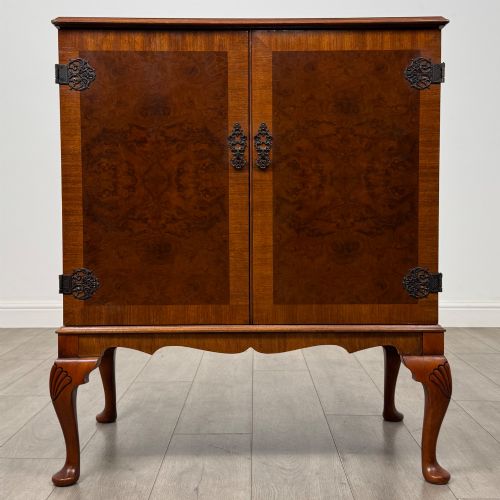
Cabinet makers utilised burr walnut veneer laid over solid secondary woods like oak or pine to create the mesmerising swirling patterns across the doors and top surfaces. This thin slice of timber, cut from the growths where branches meet the trunk, required great skill to lay evenly without splitting.
Brass hardware, including hinges, locks, and drop handles, frequently accents the dark timber, whilst occasional glass panels are integrated into display cabinets and bookcases. Interior fittings often include simple wooden shelving or fitted drawers built with traditional joinery.
Miniature apprentice chests served as portable portfolios for nineteenth-century woodworkers to demonstrate their fine joinery skills to prospective clients.
What separates the best from the rest
The mastery of the veneer work defines the top tier of these cabinets, where grain patterns are symmetrically matched across doors and drawer fronts to create a balanced, mirror-image effect. Lesser examples show mismatched grain direction or careless patching where the wood has split.
Construction depth dictates longevity, seen in the solidity of the internal drawer linings and the smoothness with which doors and locks operate. Superior items maintain crisp moulding details and retain their original brass fittings and keys, showing little compromise in secondary timbers.
Maple and Co
The Small Burr Walnut Cupboard Glossary
- Burr walnut
- Timber cut from walnut tree excrescences, yielding a dense cluster of swirls and knots. This decorative veneer defines the aesthetic of these cabinets.
- Veneer
- A thin layer of figured wood applied over a stable base timber. This technique allows cabinet makers to display expensive grain patterns economically.
- Pier cabinet
- A glazed display piece designed to sit against a narrow wall space between windows. These often feature inlaid details and rich walnut surfaces.
- Kneehole desk
- A compact writing table with a recessed central space flanked by small drawers. They frequently share the burr walnut surfaces seen on cupboards.
- Demi-lune
- A half-moon shape used for table and cabinet tops. This curved form fits neatly against walls in hallways and bedrooms.
Small Burr Walnut Cupboard: Frequently Asked Questions
Where should I place a small burr walnut cupboard?
These compact pieces suit bedrooms as bedside cabinets, hallways as small storage chests, or living rooms as corner display units. Their modest proportions allow them to fit into tight spaces without dominating a room.
The rich grain patterns look particularly striking against neutral walls where the timber can catch natural light. Placing them away from direct sunlight and heat sources protects the delicate veneer from drying out.
How do I tell Victorian pieces from Edwardian ones?
Victorian examples tend to have heavier proportions, darker finishes, and sometimes campaign-style brass bindings or heavy mouldings. Edwardian and later twentieth-century pieces often display lighter walnut tones and cleaner, more restrained silhouettes.
Revival styles from different decades can sometimes blur these lines, making construction methods and secondary timbers inside the drawers the most reliable indicators of age.
How do I care for burr walnut veneer?
Maintain the wood by dusting regularly with a soft, dry cloth and applying traditional beeswax sparingly to nourish the grain. Avoid chemical sprays and excessive moisture, which can damage the polished surface.
Keep the cabinet away from radiators and direct sunlight to prevent the thin walnut veneer from lifting or cracking over time.