


Small Bowfront Chest
A small bowfront chest brings curving elegance and compact storage to a room, offering period charm without dominating the floor space.
Small Bowfront Chest
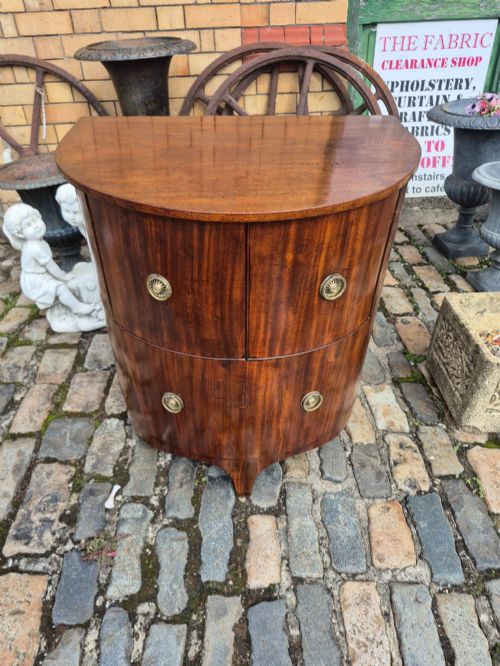
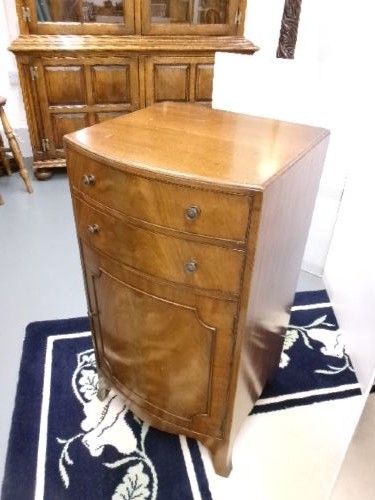
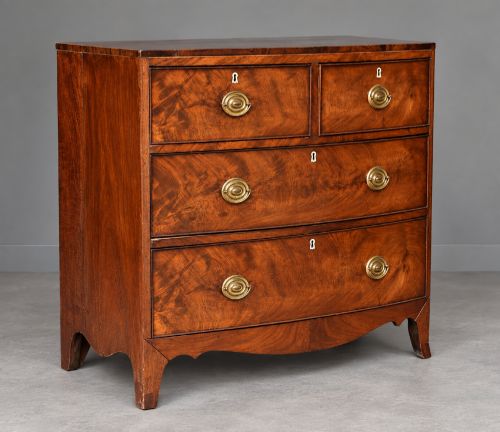
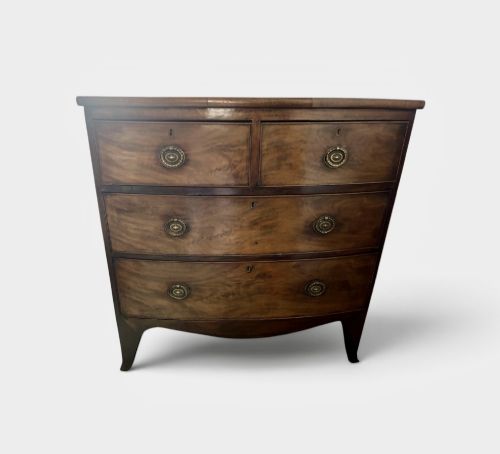
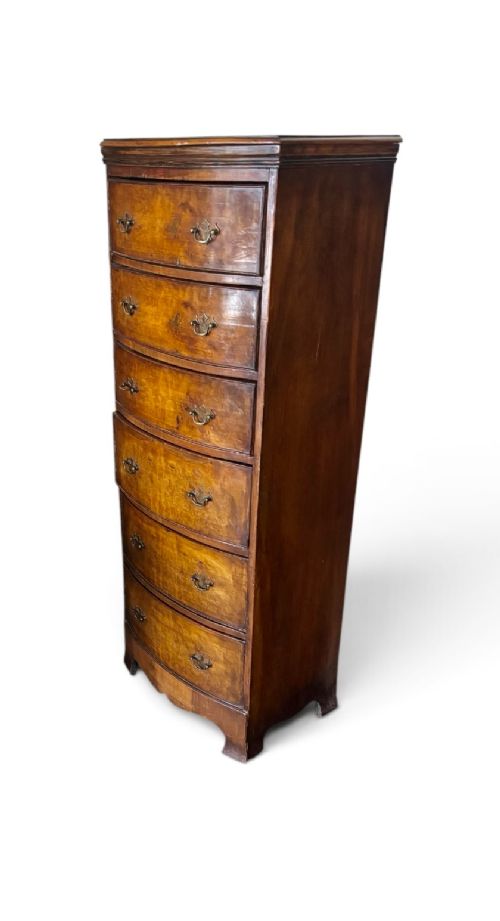
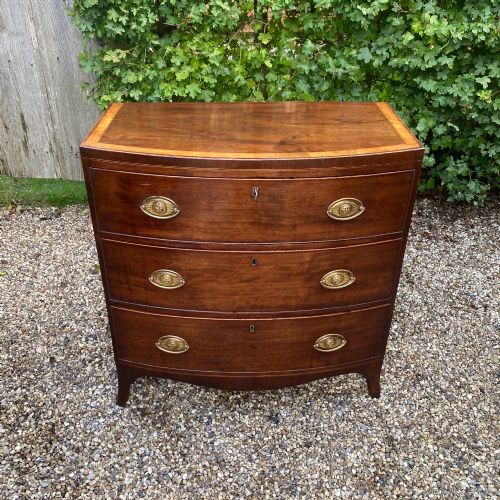
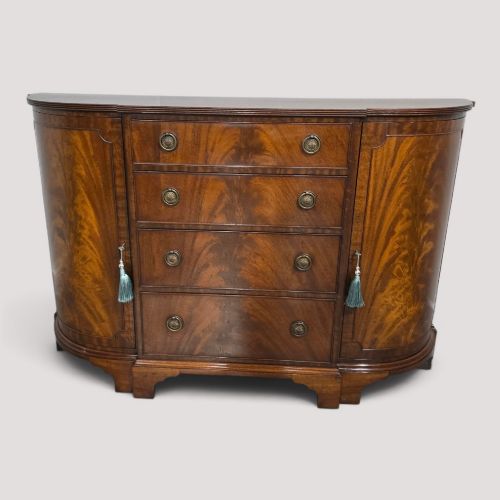
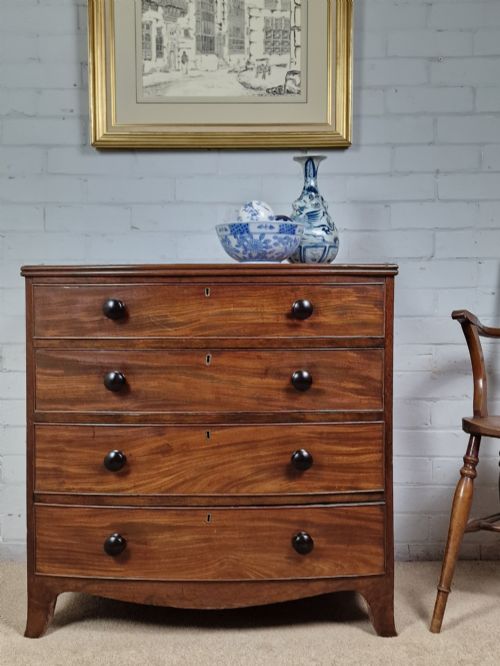
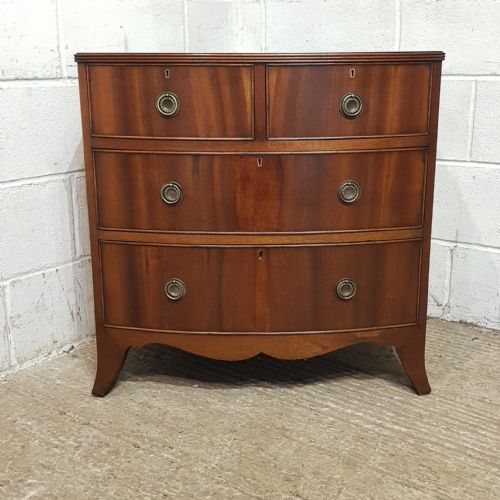
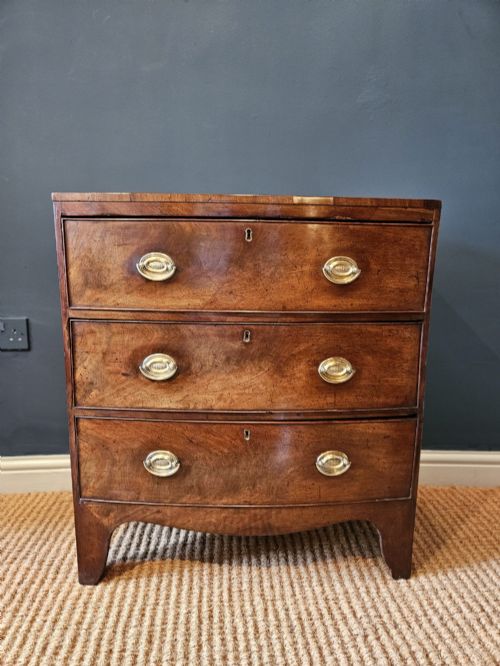
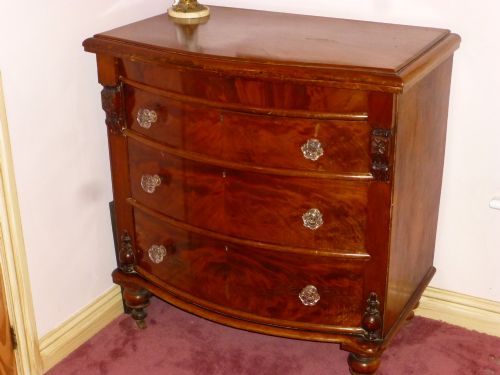
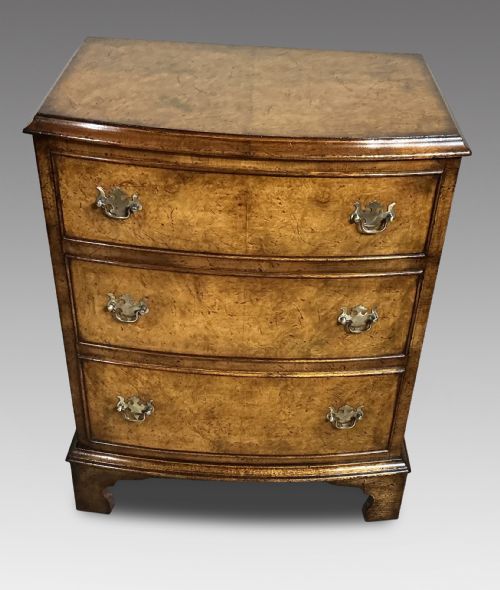
A small bowfront chest is a compact storage piece defined by its gently curving convex front, which softens the angles of a traditional room. These chests appear across several periods, most notably in Georgian, Regency, and Victorian incarnations, alongside later revivals from the twentieth century.
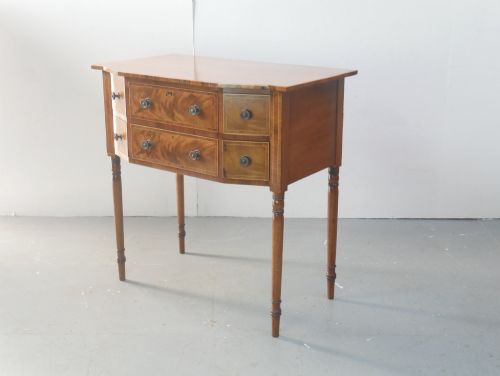
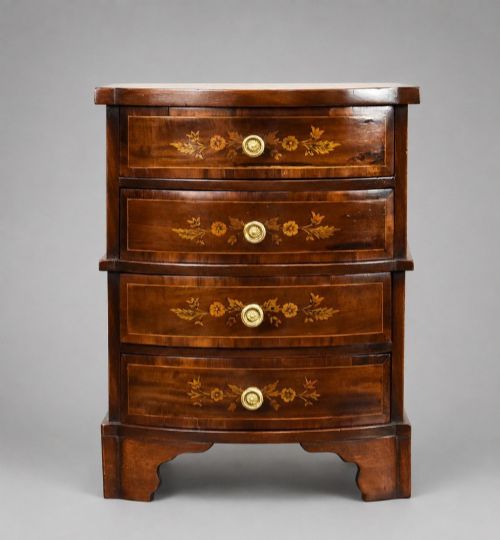
Buyers frequently encounter mahogany timbers, often enhanced by satinwood stringing, walnut veneers, or burr walnut figure. The forms vary from standard drawer configurations to bachelors chests equipped with sliding writing trays, miniature display models, and bedside cabinets.
Proportions remain modest, making these pieces practical for placement in tighter spaces such as hallways or bedrooms. The curved facade demands precise carpentry, setting them apart from flat-fronted equivalents of similar dimensions.
Materials and Construction
Cabinetmakers utilised dense timbers like mahogany and walnut for structural stability, applying fine veneers such as satinwood or burr walnut to create decorative surfaces on the drawer fronts and top panels. Solid woods formed the carcase and drawer linings, ensuring the curved framework held its shape over centuries.
The distinctive convex curve required specialised joinery, with curved drawer rails and front frames shaped meticulously from solid timber or built up with laminated veneers. Brass hardware, including drop handles and escutcheons, was fitted to complement the warm tones of the polished wood.
Miniature chests were once created by ambitious learners to prove their mastery before the strict eyes of the guild.
Assessing Quality and Finish
Quality rests in the harmony of proportions and the selection of timber figure, where well-matched mahogany grains or rich burr walnut elevate the visual presence of the curve. Superior examples display tight dovetail joints in the drawers and careful attention to secondary timbers like oak or pine inside.
Subtle details such as inlaid stringing, crossbanding, and original brass hardware distinguish finer workshops from standard production. The crispness of the curved mouldings and the smooth operation of the drawers indicate the level of care invested by the original maker.
Edwards and Roberts
The Small Bowfront Chest Glossary
- Bowfront
- A convex, curved front profile that projects outward in the centre, softening the linear appearance of a cabinet.
- Brushing slide
- A pull-out shelf positioned above the top drawers, historically used for dusting clothes or writing correspondence.
- Caddy top
- A raised, moulded tabletop profile with rounded edges, reminiscent of the lid found on tea caddies from the period.
- Crossbanding
- A strip of veneer applied perpendicularly to the grain of the surrounding surface to create a decorative border.
Small Bowfront Chest: Frequently Asked Questions
What is a small bowfront chest?
A small bowfront chest is a compact set of drawers featuring a rounded, convex front profile designed to save space while adding decorative presence.
These pieces were produced primarily during the Georgian, Regency, and Victorian eras, utilising timbers like mahogany and walnut.
How were these chests used historically?
They served as practical bedroom storage for clothing and personal items, with some variants including brushing slides for temporary workspace.
Miniature versions were often displayed on tabletops or created as demonstrations of fine cabinetmaking skill.
Where do small bowfront chests fit best today?
Their modest proportions allow them to fit comfortably in hallways, compact bedrooms, or living spaces as accent storage furniture.
They pair well with both traditional interiors and modern rooms seeking a touch of antique character.
How can I tell the period of a chest?
Dating relies on observing timber choices, handle styles, construction methods, and overall design characteristics associated with specific eras.
For instance, Georgian pieces often show linear stringing and bracket feet, while Victorian examples display heavier proportions.