

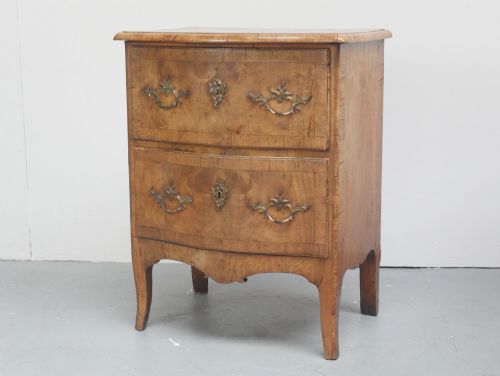

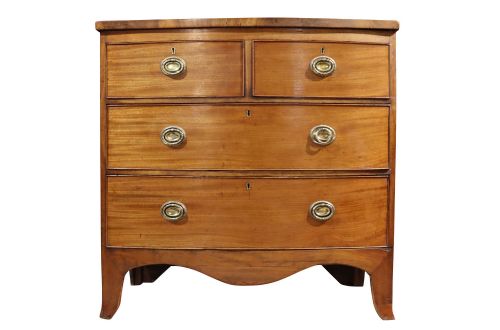

Small Bow Front Drawers
Small bow front drawers bring curved elegance and compact storage to a room, offering timeless craftsmanship in a remarkably space-efficient footprint.
Small Bow Front Drawers
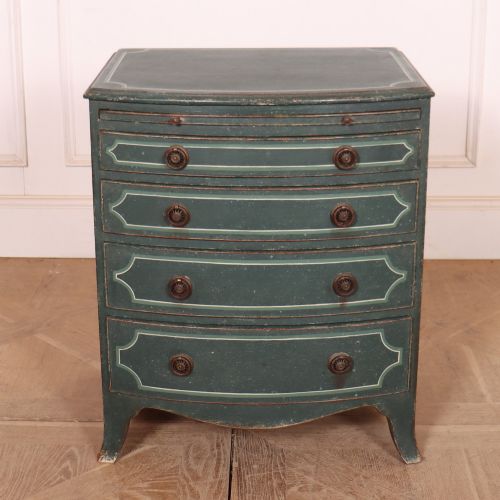
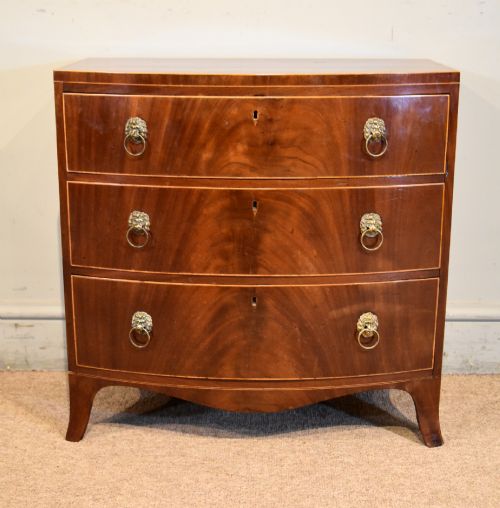
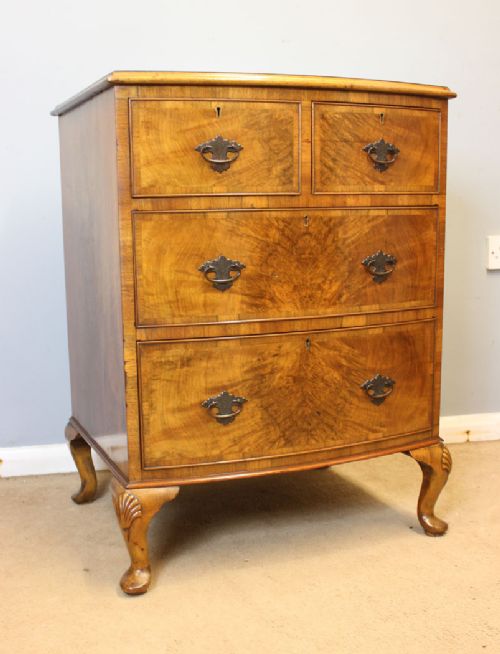
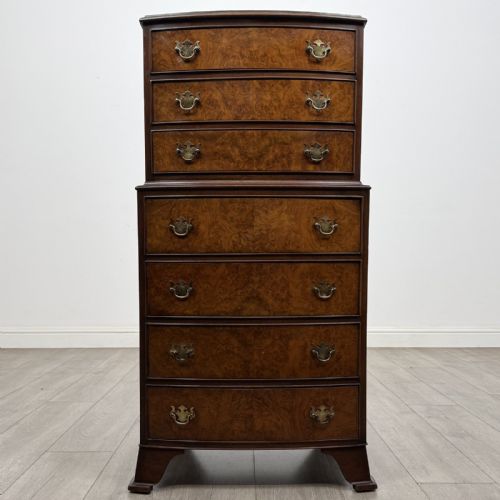
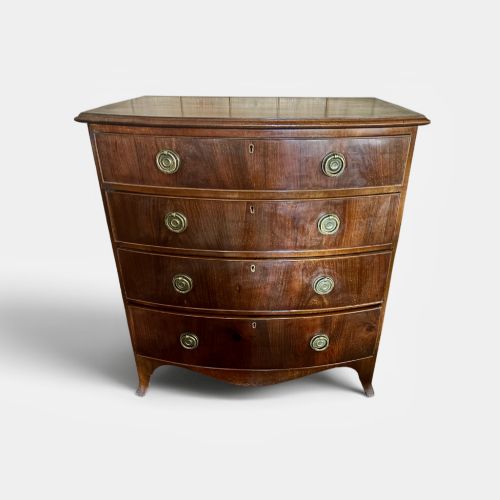
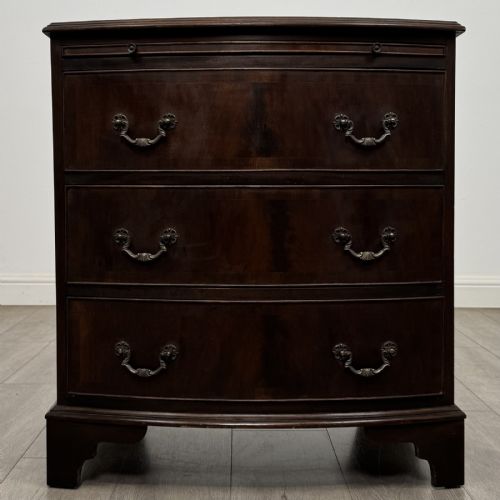
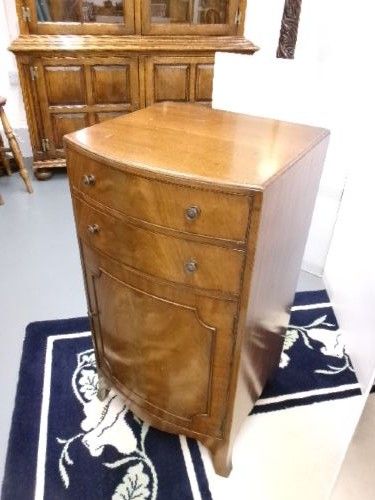
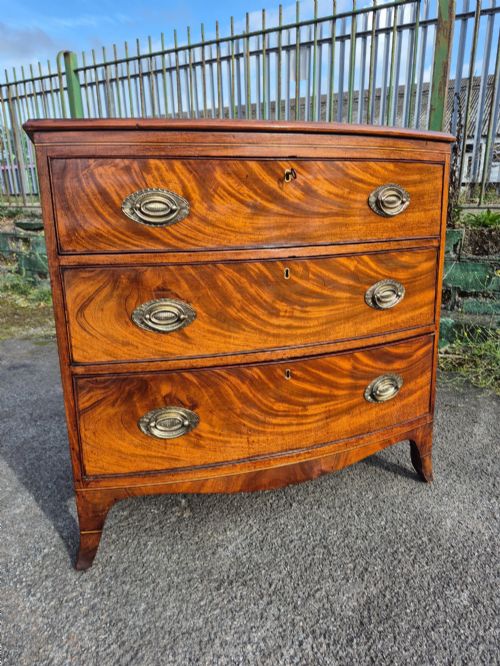
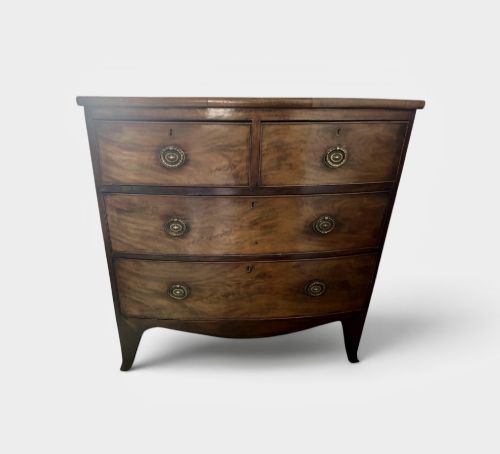
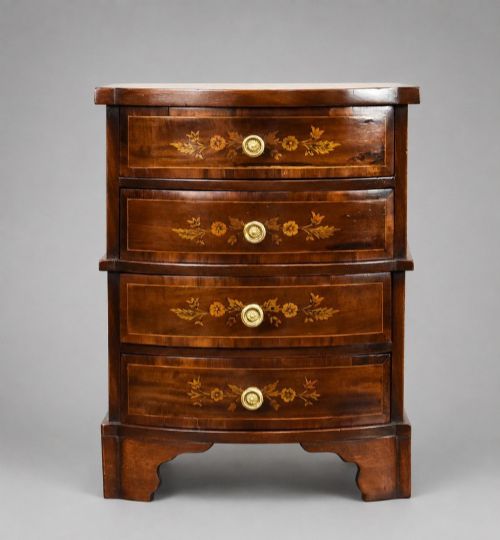
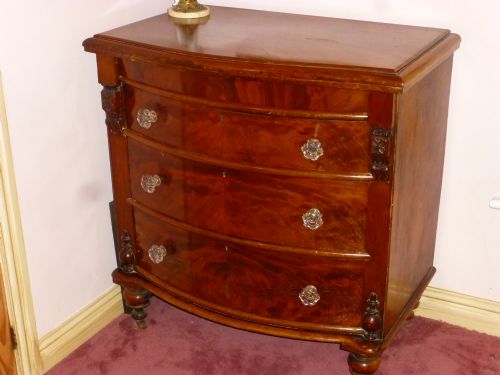
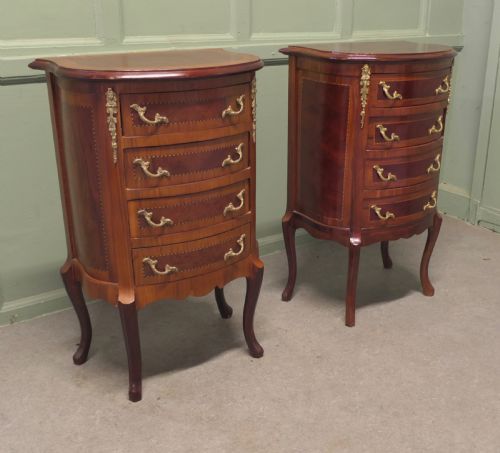
Small bow front drawers are compact case pieces featuring a gently convex front curve that softens the hard angles of a traditional room. When you search for small bow front drawers, you encounter a variety of forms including chests of drawers, tallboys, bedside cabinets, and miniature furniture.
The pieces appearing here span several centuries and design movements, stretching from the Georgian and Regency eras through the Edwardian period and into 20th century revivals. Mahogany and burr walnut dominate the selection, often complemented by boxwood stringing or marquetry details.
How they were made
Cabinet makers constructed these pieces using solid timbers and decorative veneers such as mahogany, burr walnut, and amboyna applied to secondary woods. The characteristic curved drawer fronts required skilled sawing and bending techniques to maintain structural integrity along the radius.
Detailing often included contrasting inlay, boxwood stringing, and brass hardware such as ring pulls or drop handles. Drawers were typically hand-dovetailed, and smaller examples sometimes incorporated secret compartments or fitted interiors.
Small Bow Front Drawers Retail Price Guide 2026
Typical asking prices for small bow front drawers among the pieces listed under this phrase on Sellingantiques today, from the lower quarter to the upper quarter. They describe what is for sale here now, not the wider market.
Keep your secrets close with pieces featuring hidden compartments tucked away behind the main drawers.
What varies in quality
Quality in these pieces rests largely on the choice of timber and the handling of the curved grain. Finely figured burr walnut or rich mahogany with a deep natural patina elevate a piece above standard workshop production.
Construction standards also set examples apart, visible in the tightness of the dovetail joints, the smooth action of the graduated drawers, and the precision of any inlaid stringing or marquetry work.
The Small Bow Front Drawers Glossary
- Bow front
- A convex curved cabinet or drawer front that swells outward from the centre. This shape gained popularity during the Georgian and Regency periods to soften room layouts.
- Burr walnut
- A highly prized wood grain derived from the wart-like growths on walnut trees. It yields intricate, swirling patterns used for decorative veneering.
- Tallboy
- A tall chest of drawers made by stacking one cabinet on top of another. They provide substantial storage while maintaining a narrow floor footprint.
- Stringing
- Thin inlay lines of contrasting wood used to outline drawer fronts and panels. Cabinet makers utilised boxwood or ebony for this subtle linear decoration.
- Graduated drawers
- A series of drawers that decrease in depth from bottom to top. This arrangement creates pleasing visual proportions on tall and small chests alike.
Small Bow Front Drawers: Frequently Asked Questions
Where do I put a small bow front chest?
These compact chests fit easily into hallways, alcoves, and bedrooms where floor space is limited. Their curved profile prevents them from catching on passing traffic in narrow passages.
They also function effectively as bedside cabinets or lamp tables, combining decorative presence with practical enclosed storage.
How do I clean mahogany surfaces?
Dust the timber regularly with a soft, dry cloth to prevent grit accumulation. Avoid modern silicone sprays that can build up and dull the finish over time.
Apply a traditional beeswax polish sparingly once or twice a year to nourish the wood and maintain its natural lustre.
Are miniature chests actually dollhouse furniture?
Miniature chests were rarely intended as toys for children. Master cabinet makers often produced them as apprentices' demonstration pieces to prove their skill in miniature joinery.
Alternatively, wealthier households used them on tabletops to store small valuables, documents, or jewellery.
How do I identify a Georgian piece?
Georgian furniture typically displays hand-cut dovetailing, solid oak or pine drawer linings, and understated classical proportions. Look for timber selection that relies on natural grain rather than heavy applied decoration.
Later revival pieces from the Edwardian era or the 1920s often mirror these forms but utilise machine-cut elements or different secondary woods.