

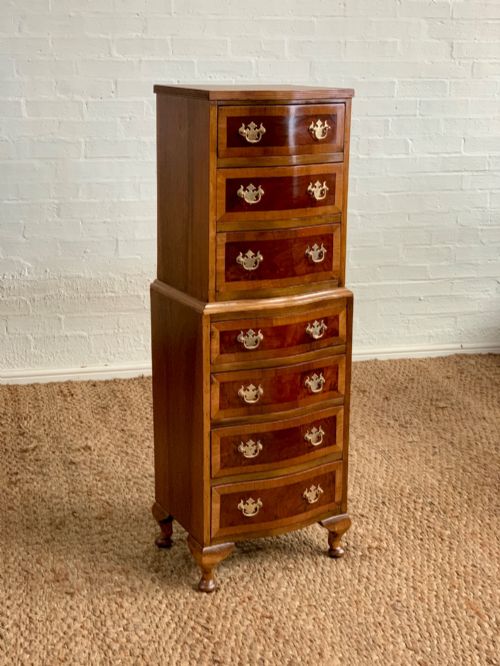


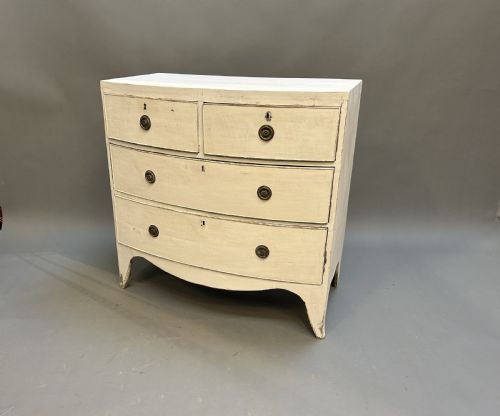
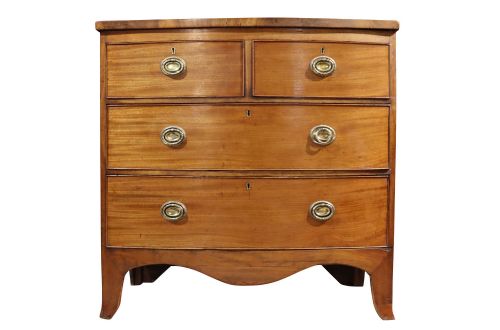


Georgian Style Bow Chest
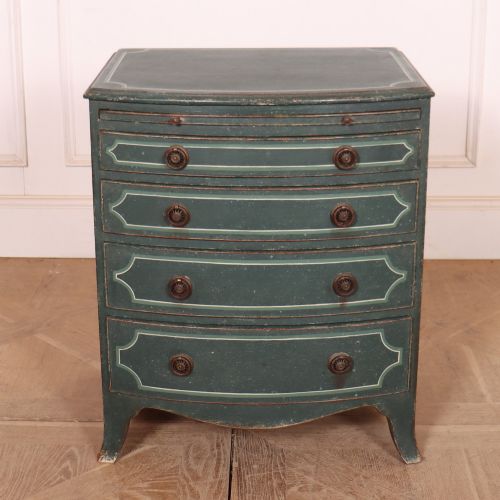
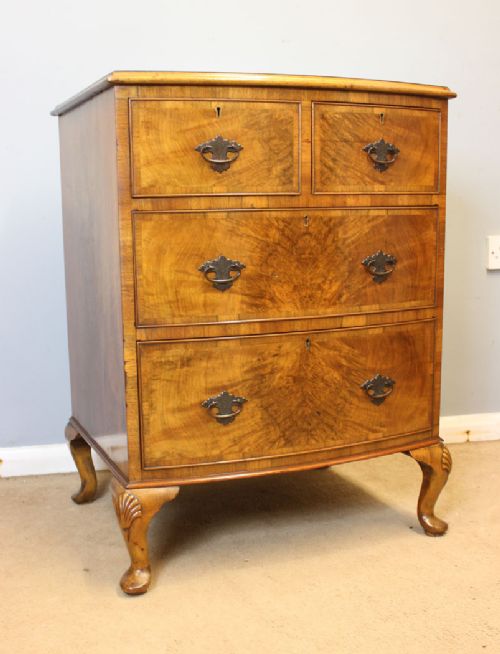
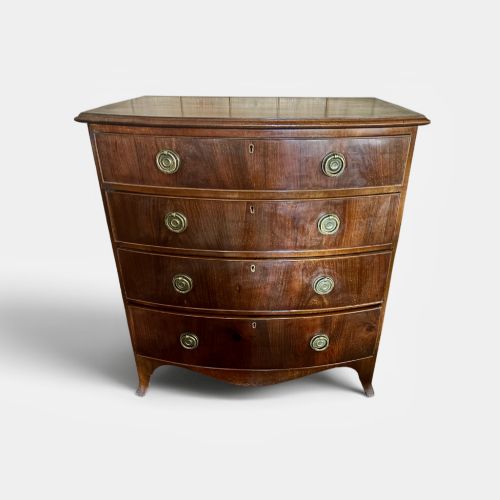
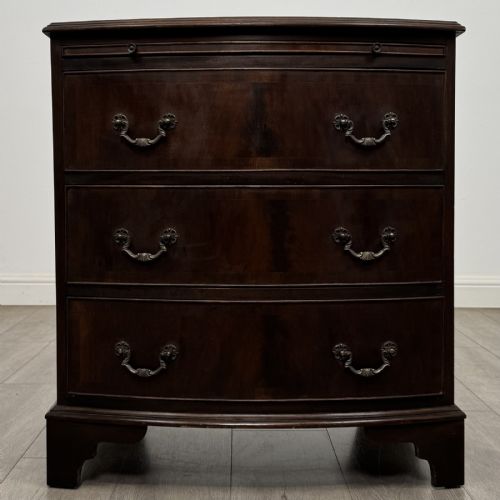
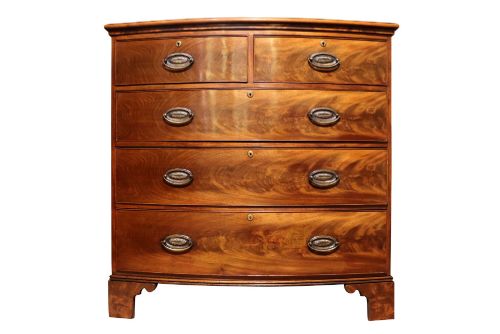
A georgian style bow chest brings the graceful curve of a convex front and rich timber figuring directly into a room.
Georgian Style Bow Chest
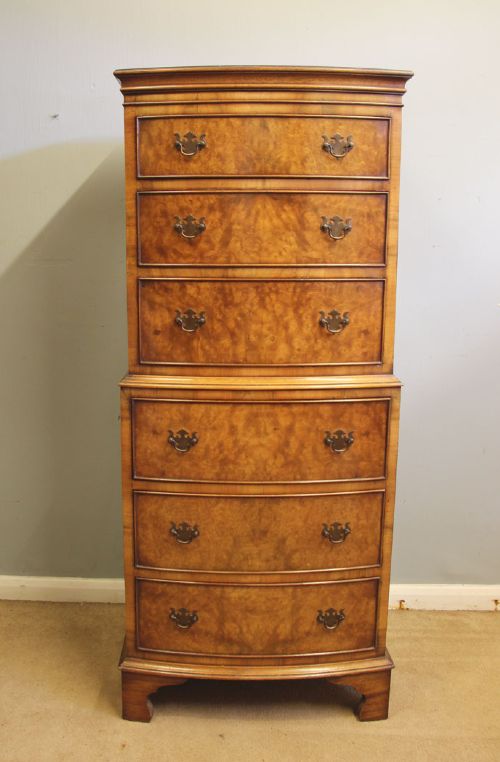
A georgian style bow chest provides generous drawer storage within a characteristic curved silhouette that projects outward at the centre. Buyers seeking this form will find examples ranging from authentic period pieces of the nineteenth century through to twentieth-century revival interpretations.
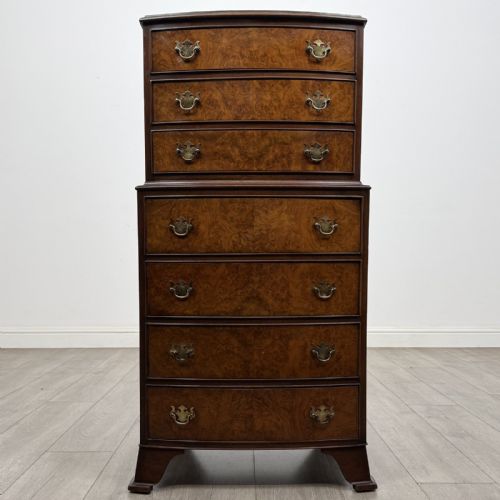
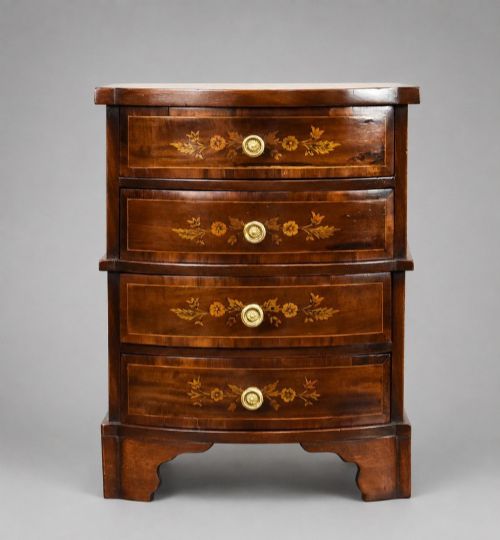
The selections span several distinct formats, including compact bedside cabinets, diminutive miniature furniture, and towering tallboys or chest on chest constructions. Mahogany and burr walnut dominate the forms, frequently paired with smaller auxiliary pieces such as sideboards.
The stylistic influences stretch across Georgian, Regency, and Edwardian periods, alongside occasional Queen Anne and French revival expressions. Many items emphasise modest proportions, making them well-suited for contemporary bedroom and living spaces.
How they were made
Construction relies heavily upon solid timber frames faced with figured veneers, particularly burr walnut and mahogany, which are often enhanced by decorative crossbanding and inlaid wood details. Cabinetmakers shaped the curved fronts using steam-bending techniques or carefully carved solid stock to achieve the signature sweep.
Hardware such as drop handles and escutcheons are cast from brass, securing firmly to drawer fronts that frequently feature graduated depths. Structural support is provided by bracket feet or slender legs, depending upon whether the specific form is a low chest or a taller chest on chest.
Georgian Style Bow Chest Retail Price Guide 2026
Typical asking prices for georgian style bow chest among the pieces listed under this phrase on Sellingantiques today, from the lower quarter to the upper quarter. They describe what is for sale here now, not the wider market.
Listings feature oak, painted wood, and mahogany alongside highly figured burr walnut across the twentieth-century revival and nineteenth-century periods.
What varies in quality
The standard of timber selection and veneer matching defines the visual impact of each piece, with continuous grain patterns across curved drawer fronts denoting superior cabinetmaking. Finely figured burr walnut and cleanly contrasted crossbanding require significant skill to execute smoothly without lifting or warping.
Structural integrity reveals itself in the smoothness of the drawer action and the crispness of the joinery around the curved corners and bracket feet. Original brass hardware, well-fitted dust boards, and intact marquetry inlay further separate exceptional examples from standard production.
The Georgian Style Bow Chest Glossary
- Bow front
- A convex, curved front elevation that projects outward in the centre, softening the linear geometry of traditional case furniture.
- Crossbanding
- A narrow strip of veneer applied perpendicularly to the grain of the main surface around the border of a drawer front or top.
- Tallboy
- A tall chest of drawers, often built in two stacked sections, providing substantial vertical storage capacity.
- Bracket foot
- A simple, right-angled foot supporting the corners of a case piece, frequently moulded or shaped at the inner edges.
- Burr walnut
- A highly prized wood veneer sourced from the deformed growth knots of walnut trees, noted for its swirling, intricate patterns.
Georgian Style Bow Chest: Frequently Asked Questions
Where should I place a bow front chest?
These chests work well in bedrooms as primary storage or in hallways where their curved profile prevents them from obstructing walkways.
Their modest footprints also allow them to function effectively as living room side tables or decorative focal points beneath a mirror.
How do I care for walnut veneer?
Keep walnut furniture away from direct sunlight and strong heat sources to prevent the delicate veneers from drying out or fading over time.
Dust regularly with a dry cloth and occasionally apply a quality wax to maintain the natural lustre of the polished wood.
What is the difference between a tallboy and a standard chest?
A standard chest of drawers offers a low, horizontal profile designed to sit comfortably beneath window heights or wall art.
A tallboy stacks additional drawer tiers vertically, often in two separate sections, to maximise storage capacity while occupying a smaller floor area.
Are these chests suitable for modern homes?
The smaller revival and antique variations provide practical storage solutions that integrate easily into contemporary interior schemes without overwhelming the room.
Their warm timber tones and curved lines complement both traditional spaces and minimalist modern settings.