
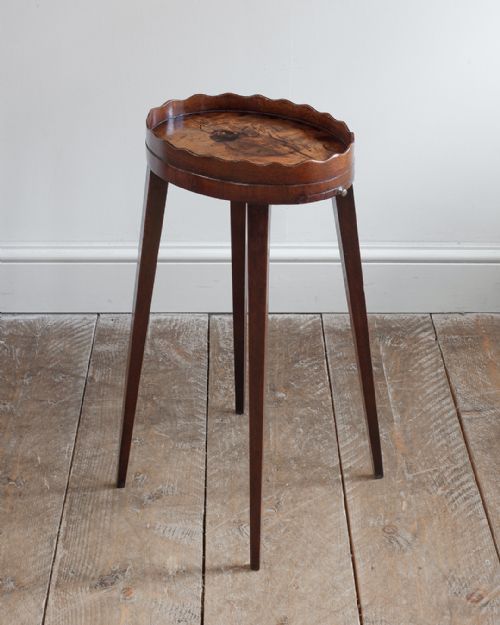
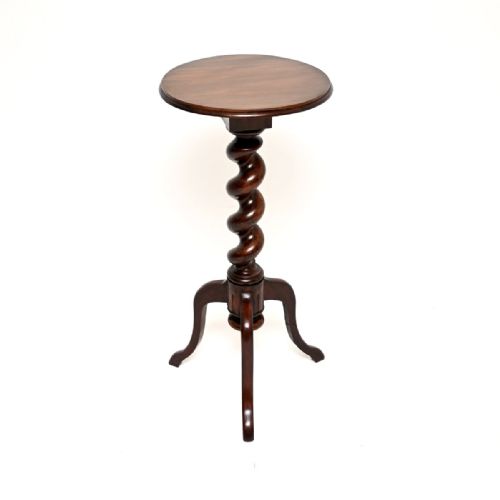
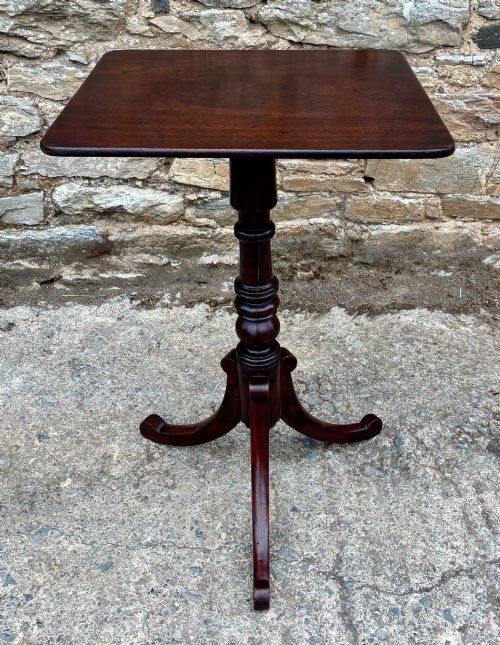
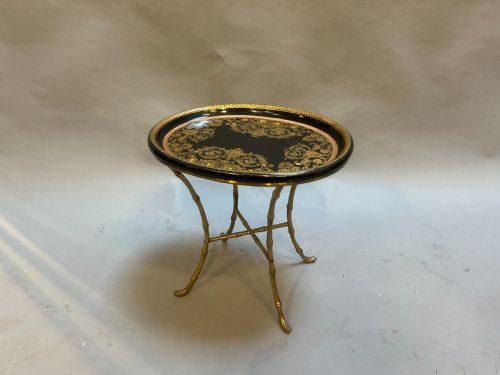


Small Wine Table
A small antique wine table offers a compact surface for drinks or lamps, combining practical proportions with historical timber craftsmanship.
Small Wine Table
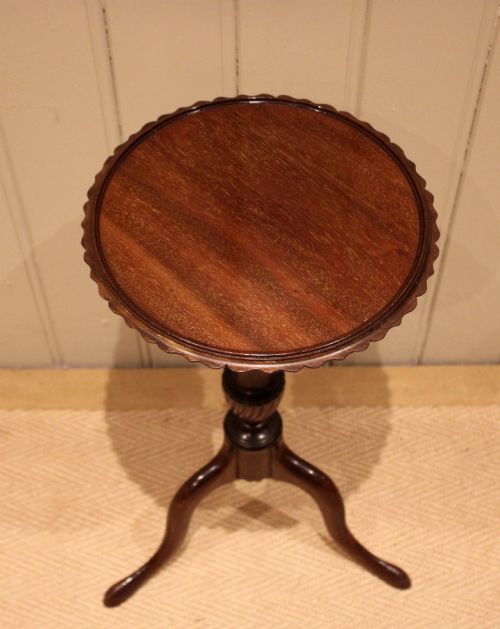
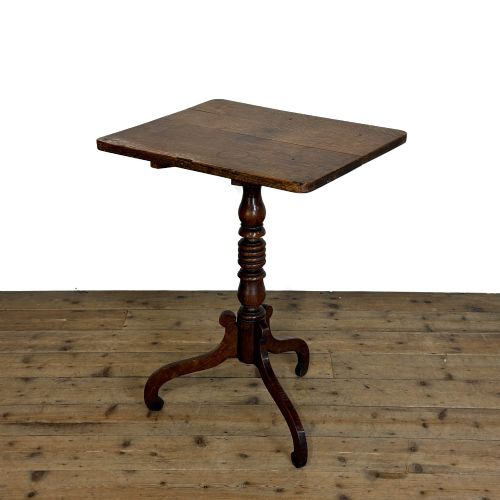
A small antique wine table serves primarily as a portable surface for drinks or candle lighting, designed to stand beside chairs or in corners. Buyers searching for this phrase encounter circular or occasional tables raised on central pedestals with tripod legs.
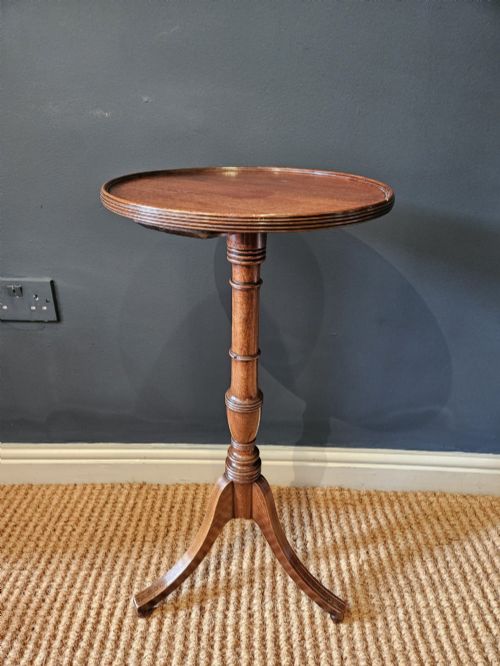
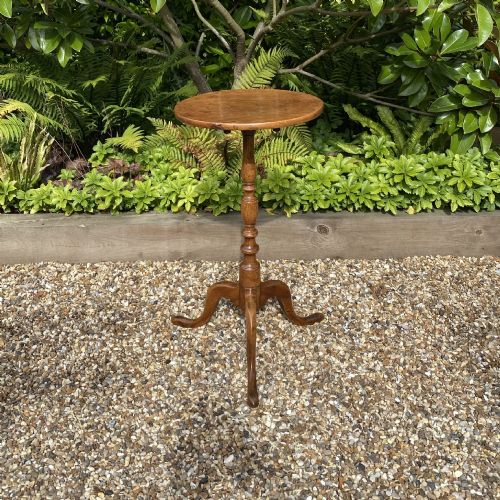
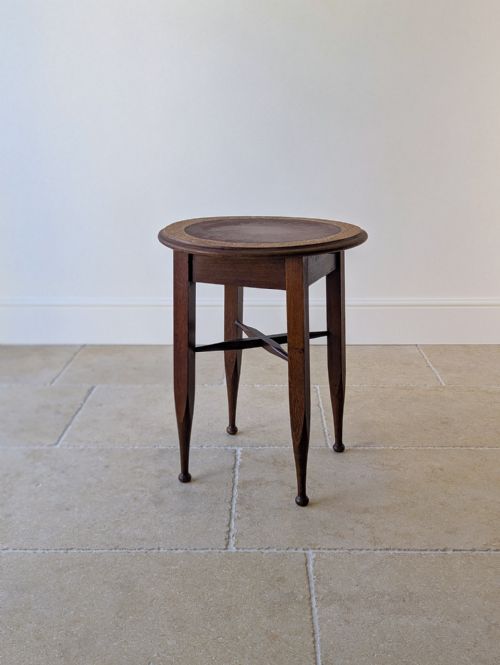
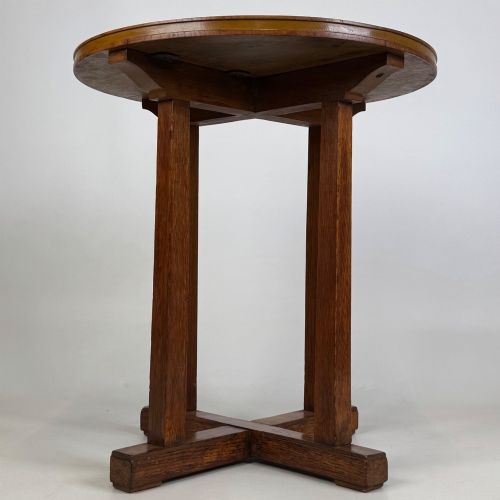
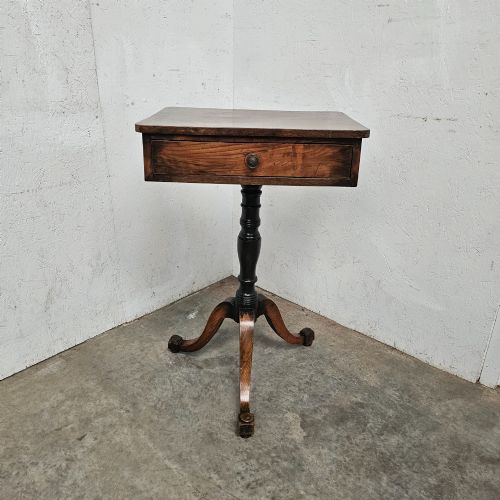
The pieces appearing on this page span the Georgian, Victorian, Edwardian, and Regency periods, alongside later twentieth-century interpretations. Most examples utilise mahogany, oak, or walnut timbers, frequently taking the form of tripod tables with solid or tilt tops.
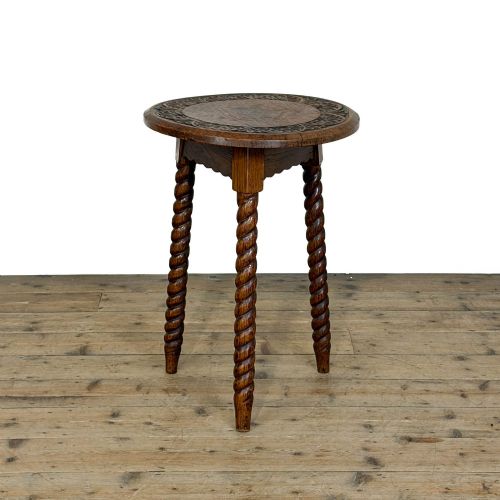
Vernacular country pieces such as cricket tables sit alongside formal Georgian tripod designs and Edwardian revival items. Buyers will find occasional tables, side tables, and candle stands grouped under this heading due to their similar dimensions and uses.
Assessing Quality
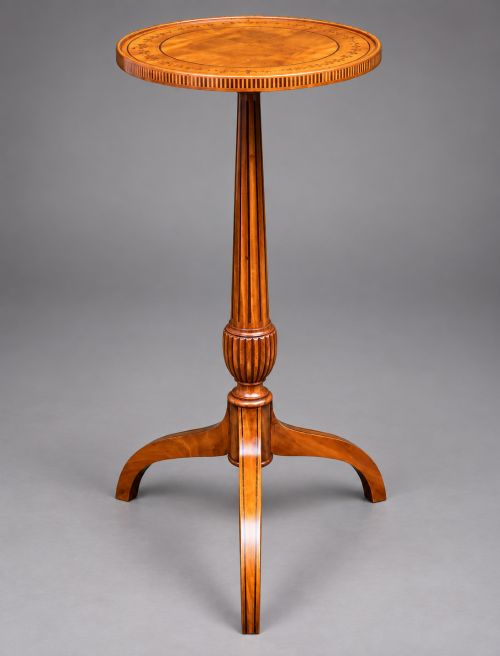
Quality rests in the crispness of the timber carving, the choice of figured grain veneers, and the stability of the pedestal joint. Superior examples display well-proportioned tripod legs that taper cleanly and fit flush into the central column.
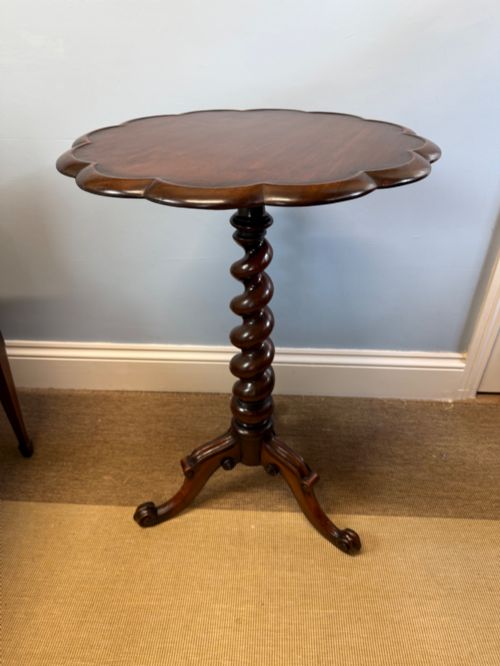
Plain vernacular pieces rely on honest timber selection and sturdy construction, whereas formal revival pieces depend on accurate period detailing like pie crust edges or fine inlay work.
Some tilt-tops spent centuries pivoting away to save floor space, only to spend the next century holding car keys.
The Small Wine Table Glossary
- Tripod table
- A small stand supported by three legs radiating from a central pillar. This format provides stability on uneven floorboards.
- Tilt-top
- A tabletop hinged to the pillar so it can be folded vertically when not in use. This mechanism allowed the table to be stored against a wall.
- Cricket table
- A low wooden table with three legs and a circular top, traditionally used in English cottages. These vernacular pieces often feature painted pine or oak construction.
- Pie crust rim
- A carved, undulating raised edge around the perimeter of a tabletop. It prevents items from sliding off the surface.
- Pedestal
- The central vertical shaft supporting the table top. It typically joins the legs via a pegged or tenoned joint.
Small Wine Table: Frequently Asked Questions
What is a wine table used for?
These pieces were originally designed to hold glasses and bottles near seating areas during evening gatherings. Today they function as compact side tables for lamps, books, or decorative objects.
Their small footprint allows them to fit easily into narrow spaces, hallways, or beside armchairs without cluttering a room.
What woods were used for these tables?
Mahogany is the most frequent timber found in these listings, alongside oak, walnut, and fruitwood. Finer pieces incorporate burr veneers or decorative wood inlay on the surface.
Country vernacular examples often utilise native woods like elm, pine, or regional oak rather than imported hardwoods.
Are these tables sturdy enough for daily use?
Tripod tables offer a stable three-point contact with the floor, making them remarkably steady on even surfaces. Solid hardwood construction ensures they handle everyday placement of lamps and cups.
Care should be taken with tilt-top variants to ensure the locking catch is fully engaged before placing heavy items on the edge.
How do I tell a Georgian table from a later revival?
Georgian pieces generally show signs of hand-tooling, older timber shrinkage, and simpler structural wear appropriate to their age. Revival pieces from the Edwardian era often utilise machine-sawn components and brighter, uniform finishes.
Examining the underside of the top and the joint where the pillar meets the legs reveals the construction methods of the period.