

Small Server
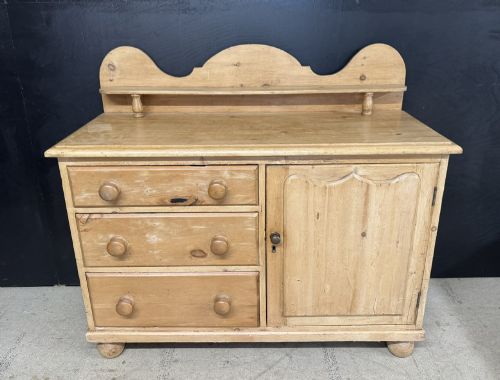
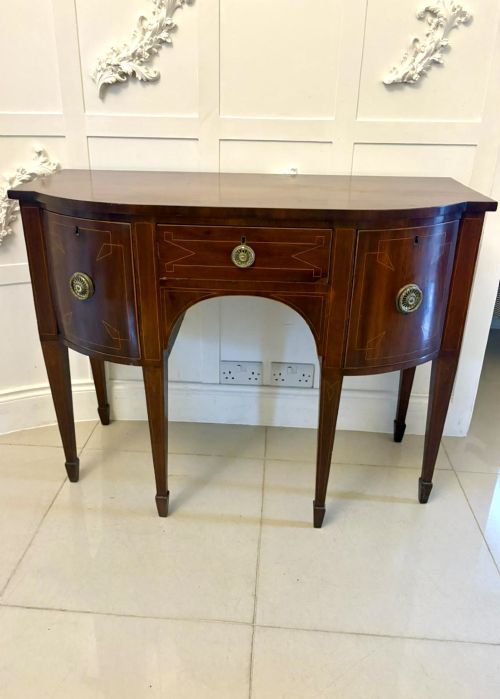
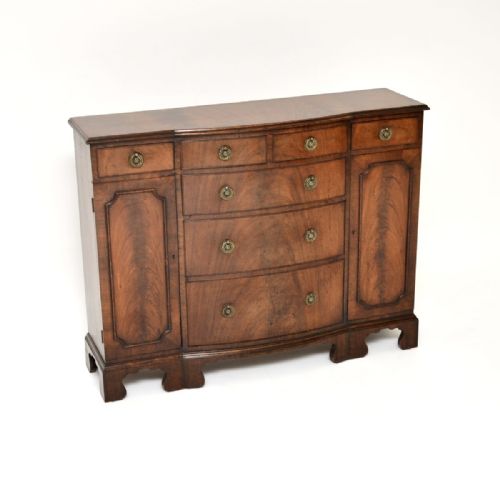
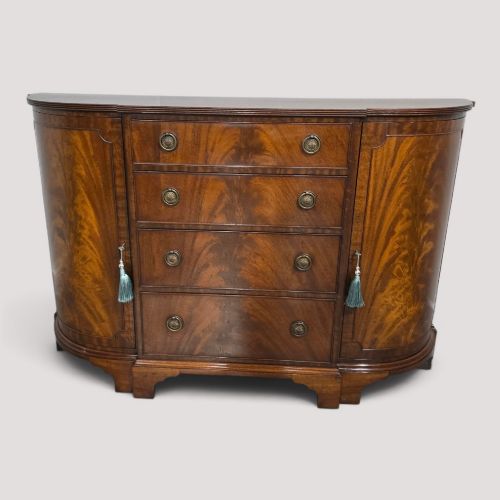
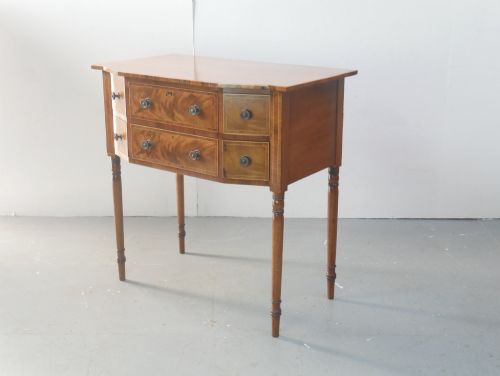
A small antique server provides essential dining room storage without dominating the floor space, spanning periods from the Georgian era to the early twentieth century.
Small Server
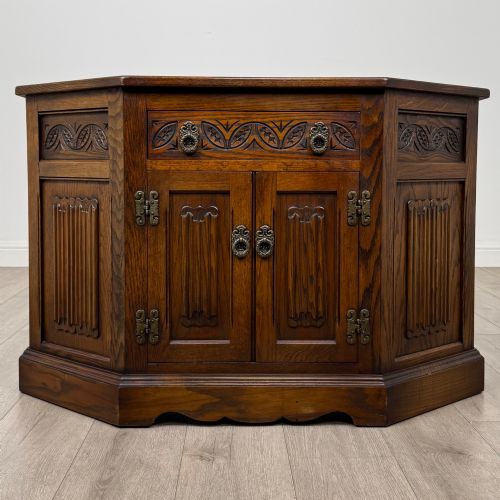
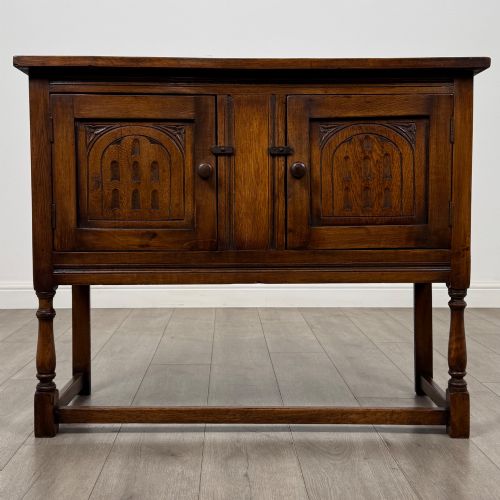
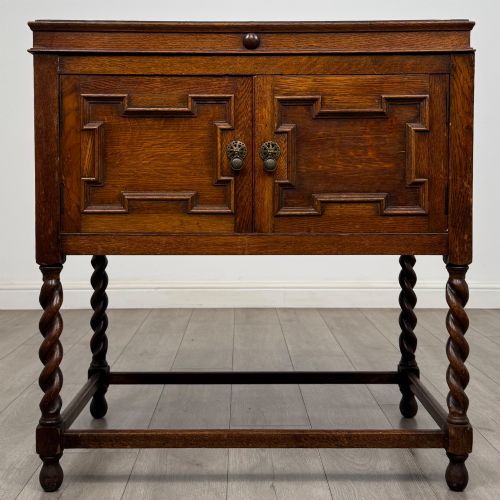
A small antique server encompasses compact sideboards, serving tables, lowboys, and dressers designed for dining room service and storage. These pieces appear most frequently in mahogany, oak, and walnut from the eighteenth and nineteenth centuries.
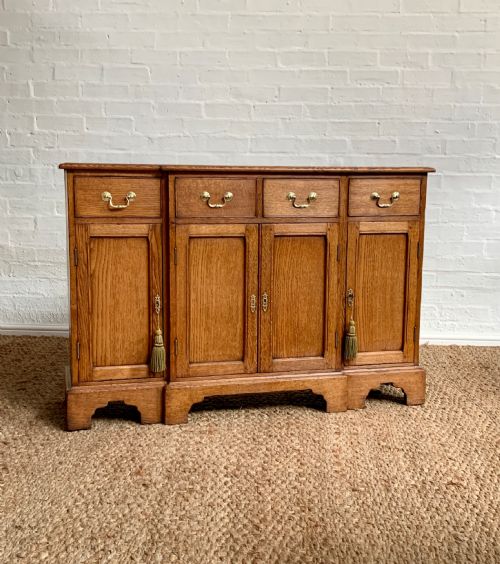
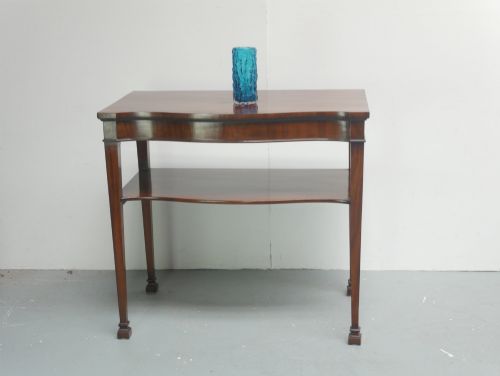
The selection ranges from Georgian bowfront sideboards and Regency servers to Edwardian oak cupboards and Victorian lowboys. Buyers searching for a small antique server will discover various formats tailored for serving food, storing cutlery, and displaying tableware in restricted spaces.
How they were made
Cabinetmakers constructed these servers using solid timbers and decorative veneers such as flame mahogany, burr walnut, and satinwood, often enhanced with boxwood stringing and inlay. Oak and mahogany serve as the primary structural woods across the Georgian, Victorian, and Edwardian periods.
Joinery techniques include traditional dovetailing for drawers and mortise and tenon joints for frames. Later revival pieces incorporate carved ornamentation like linenfold panels, while earlier examples rely on figured timber grains and banded edges for visual depth.
Early servers kept the cheese safe and the port closer at hand, proving that history's best furniture solves human priorities.
What varies in quality
The refinement of timber selection distinguishes standard items from superior pieces, particularly the choice of figured mahogany or matched burr walnut veneers. Master cabinetmakers achieved harmonious grain patterns across drawer fronts and top surfaces, whereas lesser pieces display random or mismatched timber selection.
Proportion and execution of detail define the upper tier of production. Crisp inlay work, delicate boxwood stringing, and balanced proportions on compact frames demonstrate superior craftsmanship compared to heavier, unrefined revival pieces.
Heals of London
The Small Server Glossary
- Bowfront
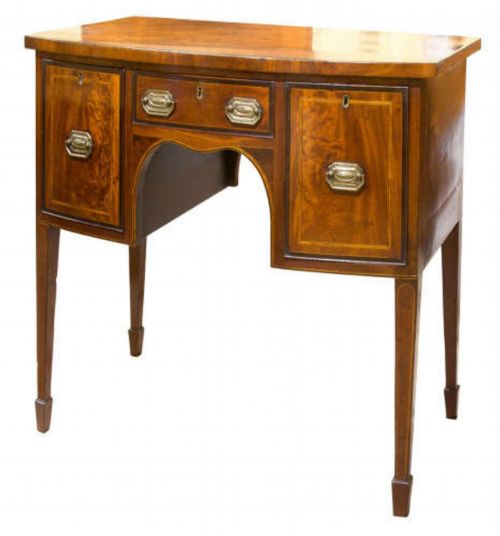
- A curved convex front typical of eighteenth and nineteenth-century sideboards and servers. This shape softens the corners of dining room furniture and maximises internal storage capacity.
- Lowboy
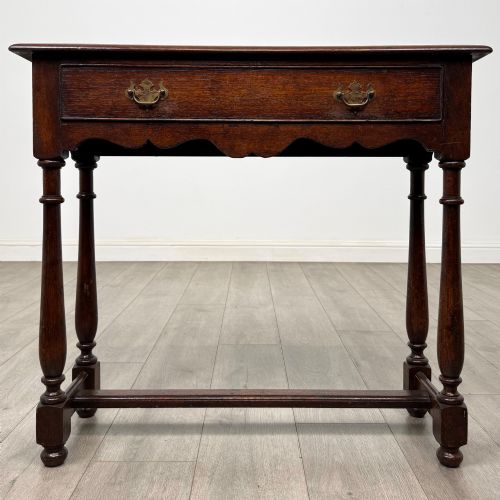
- A small oak or walnut table with drawers, originating in the late seventeenth century and used as a side table or dressing table. These low tables provide compact surface space and accessible drawer storage.
- Potboard
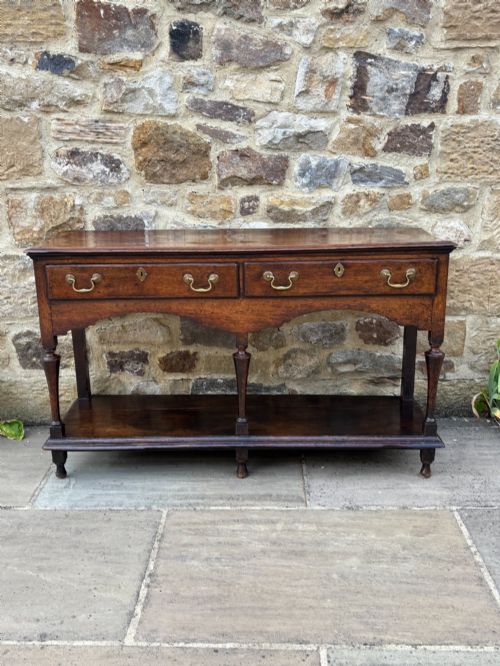
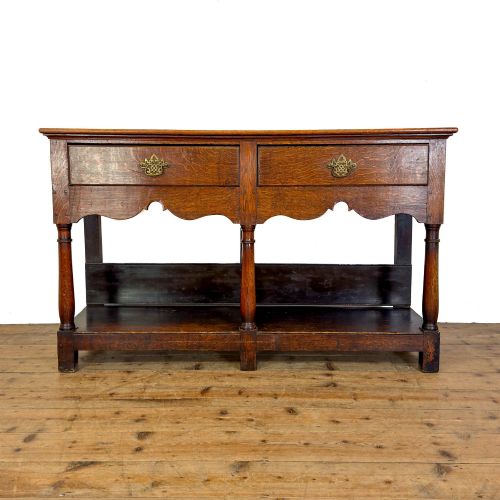
- An open lower shelf fitted beneath a dresser base or server. Originally utilised for displaying earthenware pots and serving dishes.
- Stringing
- A thin inlay of contrasting wood, such as boxwood, used to outline drawer fronts and table tops. This technique adds linear definition to mahogany and walnut furniture.
- Dovetail
- A traditional interlocking joint used to construct sturdy drawer corners. Hand-cut dovetails indicate earlier craftsmanship before the introduction of machine manufacturing.
Small Server: Frequently Asked Questions
What is a small antique server used for?
These compact pieces served dining rooms by holding serving dishes, cutlery, and glassware during meals. Their modest footprint allows them to function equally well in modern hallways or living rooms.
Today, they provide practical surface space and concealed storage without overwhelming smaller interior spaces.
How do I identify a Georgian server?
Georgian servers and sideboards typically feature solid mahogany or flame mahogany veneers with fine boxwood stringing. They often display elegant bowfront shapes, tapering legs, and hand-cut dovetail joints.
Earlier examples from the eighteenth century focus on clean architectural proportions and rich timber patination.
Where should I place a lowboy?
A lowboy works effectively in entryways, bedrooms, or dining rooms as a compact side table. Their shallow depth ensures they fit comfortably against narrow walls.
Pairing a lowboy with a simple mirror creates a functional dressing or display surface.
What is the difference between oak and mahogany servers?
Oak servers generally date from earlier vernacular periods like the seventeenth and eighteenth centuries, often presenting as dressers, cupboards, or lowboys with robust frames. Mahogany servers frequently emerge from the Georgian and Regency eras, showcasing finer veneers and formal dining room styling.
Choosing between them depends on whether you prefer warm, golden oak patination or deep reddish-brown mahogany tones.