
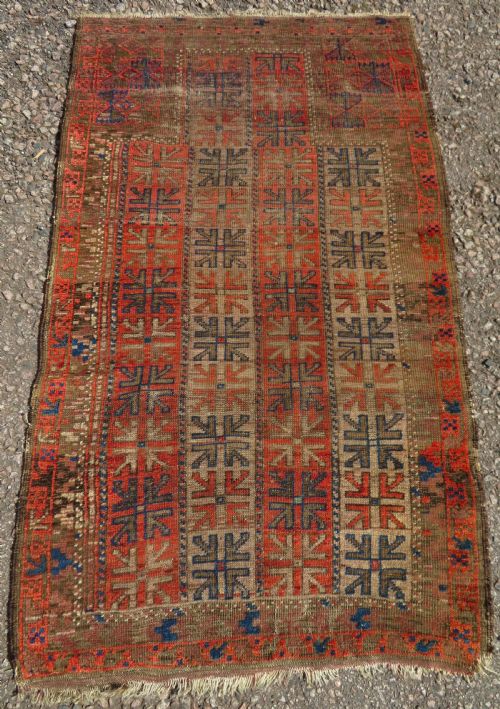
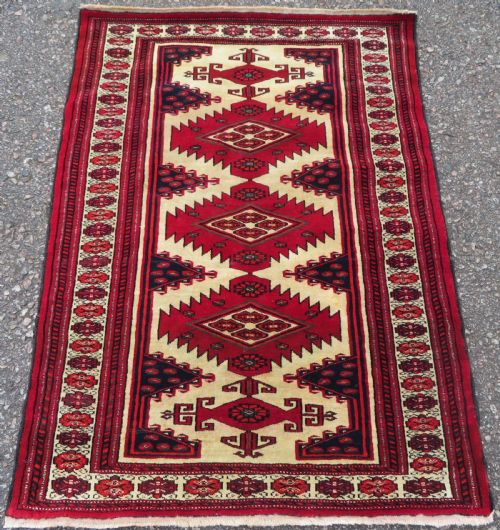
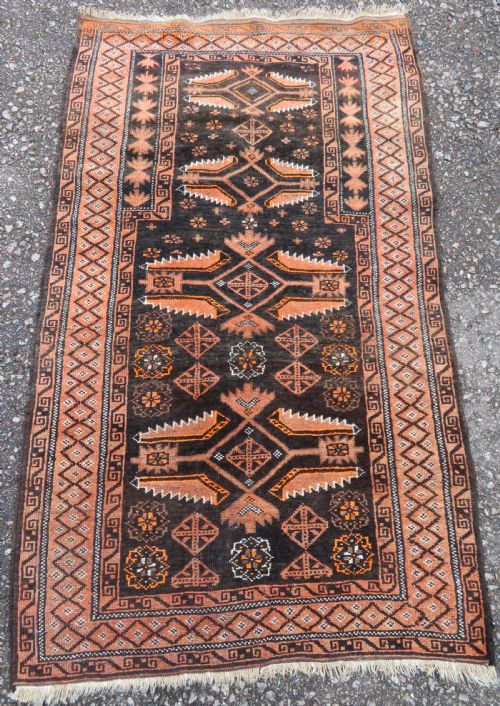


Small Afghan Carpet
A small afghan carpet brings tactile tribal weave and rich wool texture into an interior space.
Small Afghan Carpet
A small afghan carpet encompasses tribal rugs, village weaves, and prayer rugs originating from regions such as North and West Afghanistan. These floor coverings are rooted in the nomadic and village traditions of Afghan, Turkmen, and Baluch tribes.
The format typically manifests as a compact area rug or a dedicated prayer rug designed for personal devotion. Pieces frequently display specific regional identifiers such as Aqcha, Herat, or Kizil Ayak.
Dating ranges from the late nineteenth century through to the early decades of the twentieth century. Village pieces and tribal variations dominate the selection, each carrying distinct regional iconography.
Materials and construction methods
The construction relies fundamentally on wool, often hand-spun to create a dense and durable pile. Certain examples incorporate camel hair into the ground or foundation for a natural variation in tone and texture.
Natural dyes provide the palette, producing deep reds, browns, golds, and muted secondary shades that age with a soft faded patina over decades. Hand-knotting techniques executed by tribal weavers ensure structural integrity across the rug field.
The listings span from the late nineteenth century through to the 1930s, featuring wool, camel hair, and natural dyes.
Distinctions in quality and execution
Quality separates standard village production from finer tribal weaving through the precision of the knotting and the complexity of the design elements. Tighter pile density and crisp execution of motifs such as the seh mihrab or lotus leaf indicate superior craftsmanship.
The harmony and saturation of natural dyes contribute significantly to the visual merit of the piece. Well-preserved wool texture and balanced proportions elevate certain rugs above standard decorative examples.
Baluch Tribes·Turkmen Tribes·Kizil Ayak·Ersari Turkmen·Taimani
The Small Afghan Carpet Glossary
- Seh Mihrab
- A prayer rug design featuring three arches or prayer niches at one end. This layout is frequently encountered in Baluch and Taimani tribal weaves.
- Dokhtar-e-Qazi
- A specific traditional Baluch pattern name associated with particular tribal weaving groups. It appears in several nineteenth and early twentieth-century prayer rugs.
- Kizil Ayak
- A subtribe of Turkmen weavers known for distinctive rug geometries and coloration. Their work often bridges Afghan and Turkmen stylistic traditions.
- Gul
- A medallion or primary motif repeated across Turkmen and Afghan carpets. These octagonal or goul-like forms identify specific tribal origins.
- Tree of Life
- A symbolic design motif depicting a branching tree rising from a base, often utilised in camel ground prayer rugs. It represents spiritual growth and eternal life.
Small Afghan Carpet: Frequently Asked Questions
How do I identify a prayer rug?
Prayer rugs feature a distinctive architectural arch motif, known as a mihrab, pointing toward Mecca during daily devotions. Multiple arches may appear as a seh mihrab arrangement.
These pieces are typically smaller in scale to accommodate individual kneeling use, distinguishing them from standard floor carpets.
What is camel hair used for?
Camel hair provides a durable, naturally resilient foundation or ground colour within specific tribal rugs. It yields a characteristic warm, golden-brown tone without requiring synthetic dye.
Over time, camel hair develops a soft handle and subtle variations in shade across the rug surface.
How do I care for antique wool rugs?
Antique wool rugs require gentle regular vacuuming without a rotating brush roll to protect the hand-spun pile. Professional cleaning suited for natural dyes preserves the integrity of the wool.
Keeping the rug out of direct, continuous sunlight prevents the natural dye colours from fading unevenly.
How are tribal rugs dated?
Dating relies on stylistic analysis of traditional motifs, structural characteristics, and material wear patterns. Certain pieces feature woven dates in the Islamic calendar, such as 1347 AH.
Comparative study of nineteenth-century and early twentieth-century weaving styles helps narrow the period of origin.