



Sloping Oak Box
A sloping oak box offers a sturdy repository for correspondence, journals and household records, bridging practical utility with honest country craftsmanship.
Sloping Oak Box
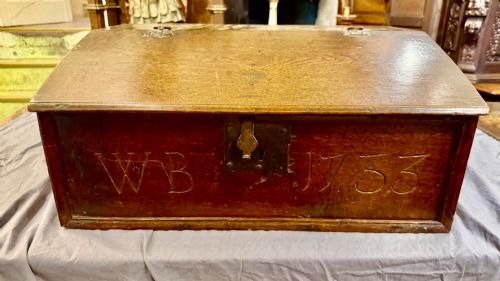
When you examine a sloping oak box, you are looking at utilitarian desktop furniture designed for writing, storage or the safekeeping of family Bibles. These pieces emerge from domestic and ecclesiastical settings spanning the seventeenth century through to the Victorian era and the early twentieth century.
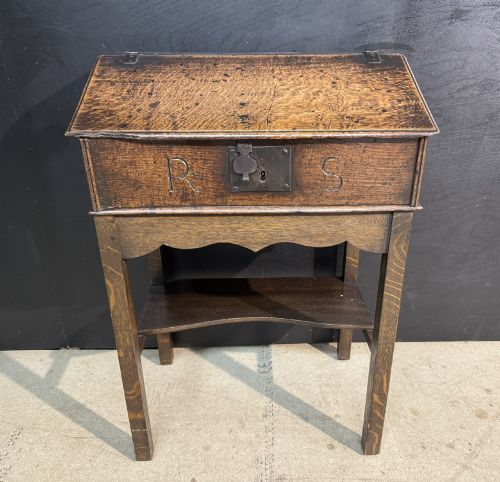
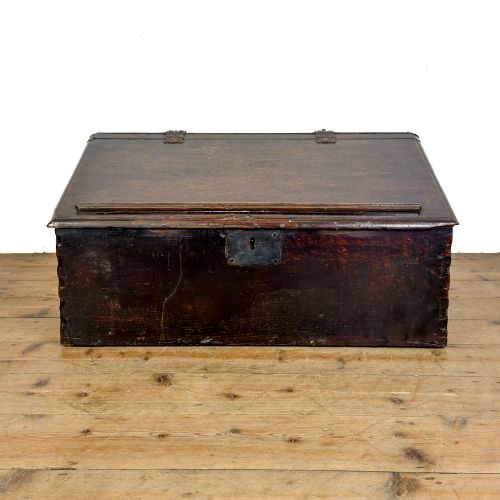
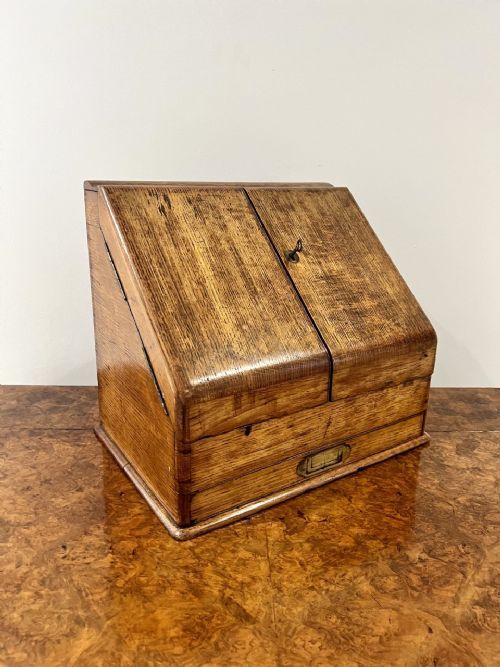
The most common formats on this page include seventeenth-century bible boxes with slanted lids, eighteenth-century desks and letter chests, and nineteenth-century stationery cabinets or writing slopes. Many double as table-top bureaus, featuring internal compartments for ink and paper.
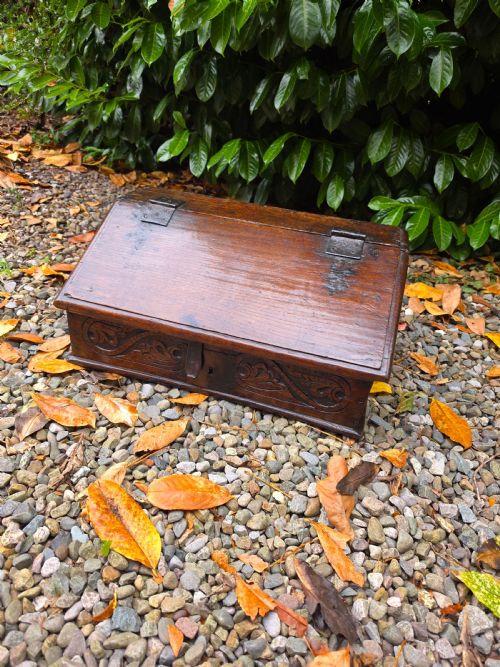
Makers shaped these items using regional English, Welsh and Scottish traditions, occasionally adding carved motifs, initials or dates. Their enduring appeal lies in straightforward construction that prioritized daily writing tasks and the protection of important documents.
Materials and Construction
Carpenters built these boxes primarily from solid oak, sometimes utilising pollard oak, elm or walnut for varied grain patterns. Surfaces frequently display pegged joinery, panelled lids and hand-planed boards.
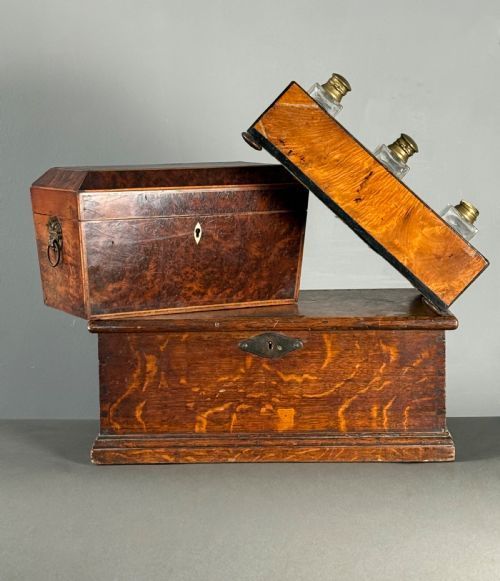
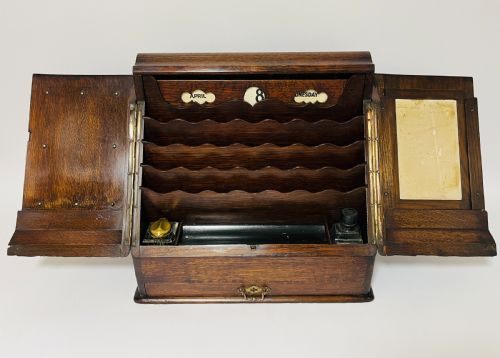
Metalwork played a functional role, incorporating brass hinges, iron locks and carrying handles. Finer examples integrated decorative details such as holly and bog oak inlay, mother-of-pearl, bone highlights or fitted leather writing surfaces.
Several seventeenth-century Welsh boxes preserve personal ownership initials and dates carved directly into the oak by the original users.
Assessing Craftsmanship and Age
Distinction across these pieces rests on the integrity of the timber, the depth of period carving and the survival of original brass or iron hardware. Early seventeenth-century examples exhibit robust hand- cleft boards and pegged joints that differ markedly from later machine-sawn Victorian adaptations.
The sophistication of the internal layout defines the tier of a piece, separating simple storage receptacles from elaborate stationery cabinets with pigeonholes, secret drawers and fitted ink bottles. Original stands, untouched patination and documented provenance elevate certain table-top bureaus and desks above standard utility boxes.
The Sloping Oak Box Glossary
- Bible Box
- A lidded wooden box originally intended to store a family Bible, often featuring a sloping lid that doubled as a reading or writing rest.
- Writing Slope
- A portable desk with an angled hinged lid that opens to reveal compartments for stationery, pens and inkwells.
- Stationery Cabinet
- An upright desktop piece with multiple internal slots and a fall-front or panelled door designed for organising letters and paper.
- Table Top Bureau
- A small desk housing a sloping writing flap above drawers or pigeonholes, designed to sit upon a table or a dedicated stand.
- Pollard Oak
- Timber taken from trees that were pollarded, producing dense wood with highly decorative knot clusters and variegated grain patterns.
Sloping Oak Box: Frequently Asked Questions
What is a sloping oak box?
A sloping oak box is a desktop storage chest featuring an angled lid designed to hold writing materials, documents or religious texts. These pieces range from seventeenth-century bible boxes to Victorian stationery cabinets.
Their slanted tops served a dual purpose as a firm surface for handwriting before the widespread use of freestanding desks.
How do I date a wooden box?
Dating relies on observing construction methods, joinery types, hardware and timber selection. Seventeenth-century examples typically show pegged panel construction and hand- cleft oak.
Later nineteenth-century pieces incorporate machine-sawn boards, brass locks and more elaborate internal stationery compartments.
Were these boxes used for writing?
Many examples functioned as portable or table-top writing desks containing slots for ink bottles, quills and paper. The angled lid provided a comfortable ergonomic slope for letter writing.
Other variants served strictly as storage repositories for ledgers, receipts and family Bibles.