
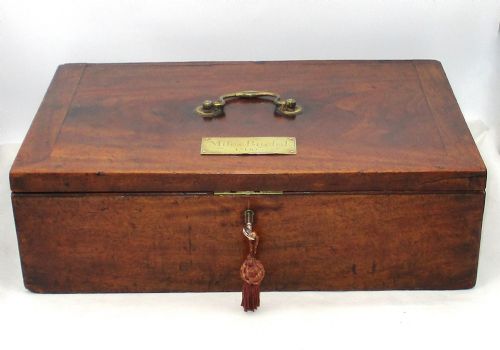
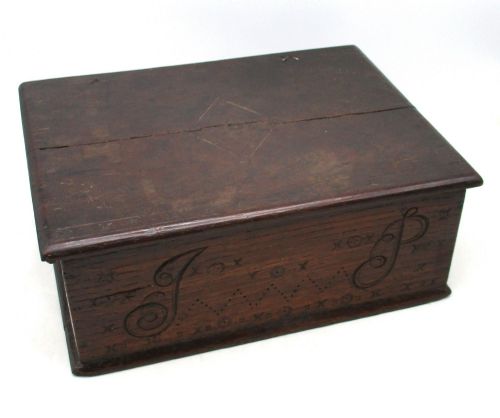
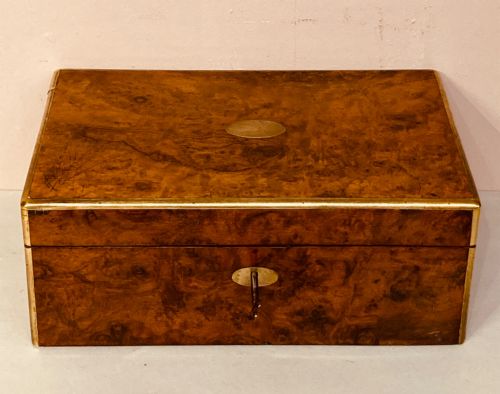
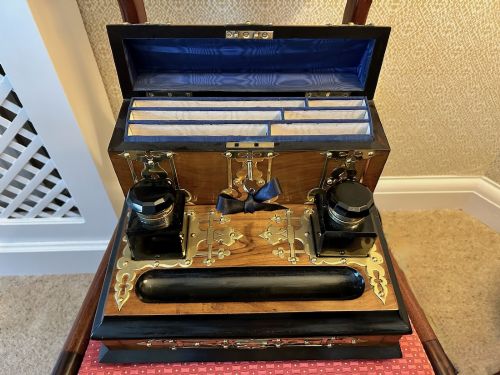

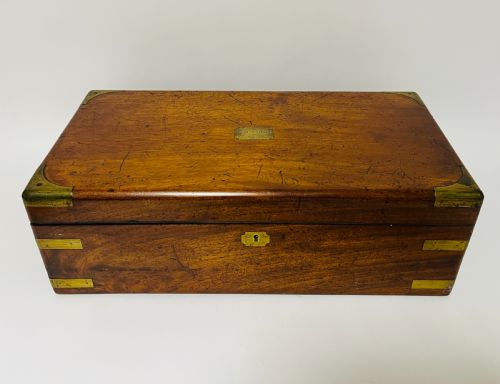


Brown Wooden Writing Box
A brown wooden writing box is a portable desk or correspondence chest built to hold papers, ink and seals.

Brown Wooden Writing Box
A brown wooden writing box encompasses portable writing slopes, stationery cabinets, deed boxes and Bible boxes spanning several centuries. These pieces provided a secure, portable workspace for correspondence and record keeping before the widespread use of fitted modern desks.
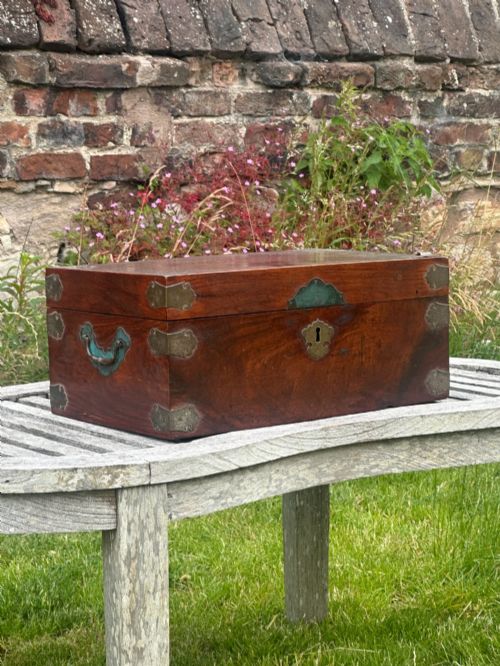
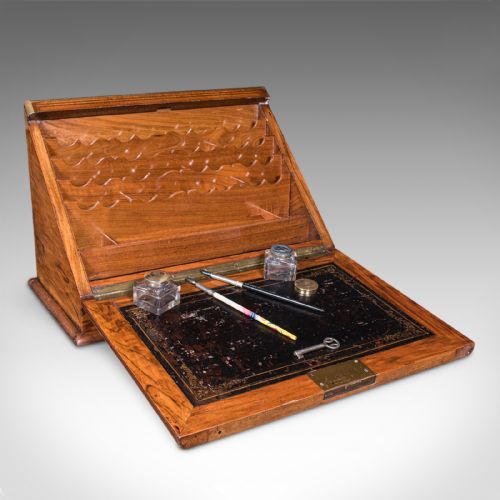
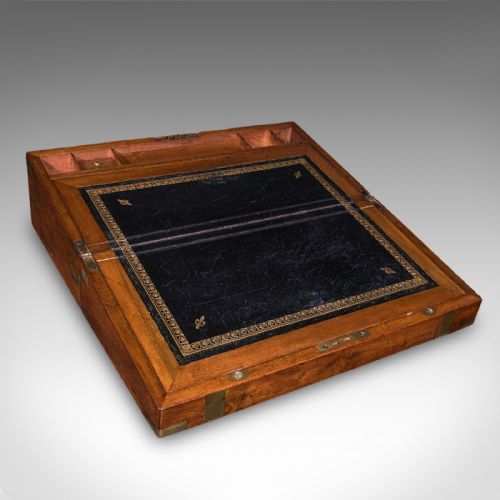
The most common examples encountered here date from the Georgian and Victorian eras, often constructed in mahogany, oak or walnut. Many incorporate hinged lids that fold down to form a sloping writing surface lined with leather or velvet.
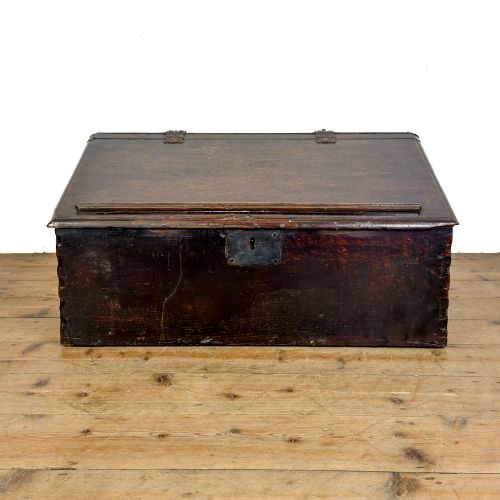
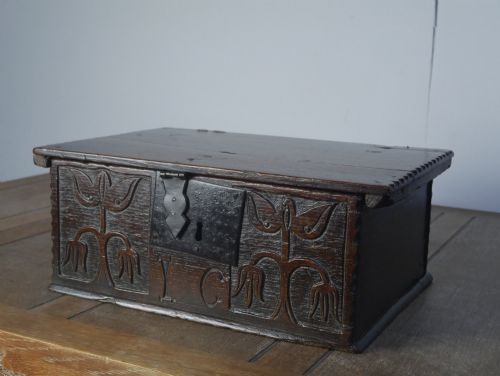
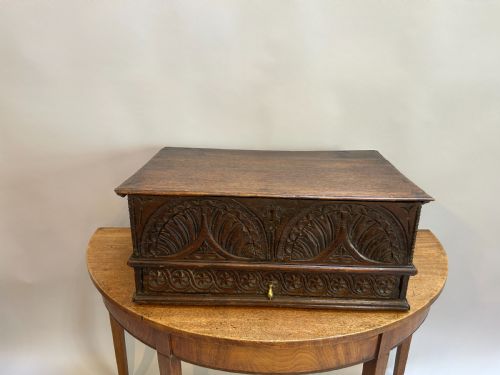
Earlier iterations include heavy 17th century and 18th century carved oak Bible boxes and document chests designed for domestic or ecclesiastical use. These simpler forms contrast with the heavily fitted interior compartments found in later campaign writing slopes.
Materials and construction methods
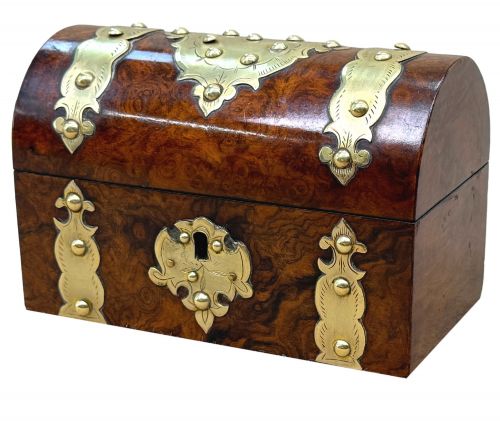
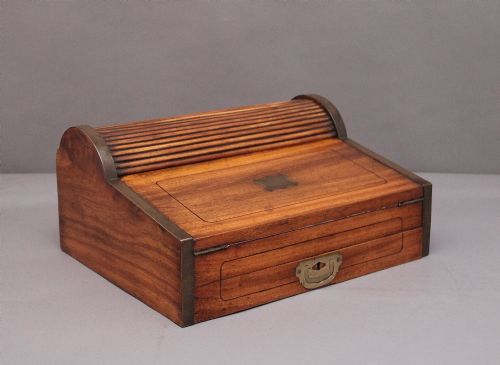
Cabinet makers utilised dense hardwoods such as mahogany, oak and walnut, frequently enhancing figured surfaces with veneers of burr walnut or rosewood. Brass mounts, corner braces and campaign handles reinforced the edges and protected the timber during transport.
Interior architecture relied on precision joinery to create secret drawers, pen trays, inkwell recesses and compartments for folded letters. Locks by makers such as Bramah secured the main fall front or lid alongside auxiliary keys.
The listings feature diverse forms including stationery boxes, campaign writing slopes, document chests and Bible boxes spanning the 17th, 18th and 19th centuries.
Distinctions in craftsmanship
The distinction between standard boxes and superior examples lies in the selection of timber veneers and the intricacy of the interior fittings. Matched burr walnut, finely cut parquetry and specialised decorative techniques like Tunbridge ware elevate a piece significantly.
Structural integrity, the survival of original brass hardware, working locks with operational keys, and complete internal partitions dictate the desirability of any given box. Simpler utilitarian oak Bible boxes rely entirely on sturdy joinery and honest patination.
William Austin·Edmund Nye
The Brown Wooden Writing Box Glossary
- Writing slope
- A portable box with a hinged sloping lid that opens to reveal compartments for stationery and a flat or angled writing surface.
- Campaign box
- A piece designed for travel, typically featuring recessed brass handles, reinforced corners and rugged timber construction to withstand military transport.
- Secret drawer
- A concealed compartment hidden behind removable partitions or triggered by a secret spring mechanism within the box interior.
- Tunbridge ware
- A form of decorative woodwork characterised by mosaic banding created from thousands of tiny tinted wood blocks arranged in geometric patterns.
- Bramah lock
- A high-security cylindrical lock patented in the late eighteenth century, commonly fitted to superior quality antique boxes and desks.
Brown Wooden Writing Box: Frequently Asked Questions
What is a brown wooden writing box?
A brown wooden writing box is a portable desk or storage chest designed to hold writing materials, correspondence and personal documents. These pieces range from simple 17th century oak Bible boxes to elaborate Victorian walnut stationery cabinets.
When opened, many of these boxes reveal a sloping writing surface alongside fitted compartments for inkwells, pens and folded paper.
How were writing boxes used?
Before fitted household desks became standard, a writing box allowed owners to carry their writing materials from room to room or across long journeys. Officers, travellers and writers used the sloping lid to provide a stable surface for writing letters.
Interior compartments kept ink, wax seals, stamps and nibs organised and secure while the box remained closed and locked.
How do I date a wooden writing box?
Dating relies on timber choices, construction techniques, hardware style and overall form. Earlier 17th and 18th century pieces typically employ solid oak with hand-cut joinery, while Regency and Victorian examples frequently feature mahogany, rosewood or burr walnut veneers.
Brass corner reinforcements, flush campaign handles, and the complexity of secret drawers or locking mechanisms also help narrow down the period of manufacture.
What are secret drawers used for?
Secret drawers provided a concealed space to store valuables, sensitive letters or money inside the box. They are usually hidden behind false partitions, removable pen trays or activated by small wooden spring catches.
Finding these hidden compartments requires examining the internal framework and testing movable wooden stops within the stationary fittings.
How do I care for antique wood boxes?
Antique wooden boxes require stable indoor humidity away from direct sunlight and heat sources to prevent the timber from warping or veneers from lifting. Regular gentle dusting with a dry cloth maintains the surface finish.
Applying a traditional beeswax polish occasionally helps nourish hardwood surfaces and preserves the natural patina accumulated over centuries.